
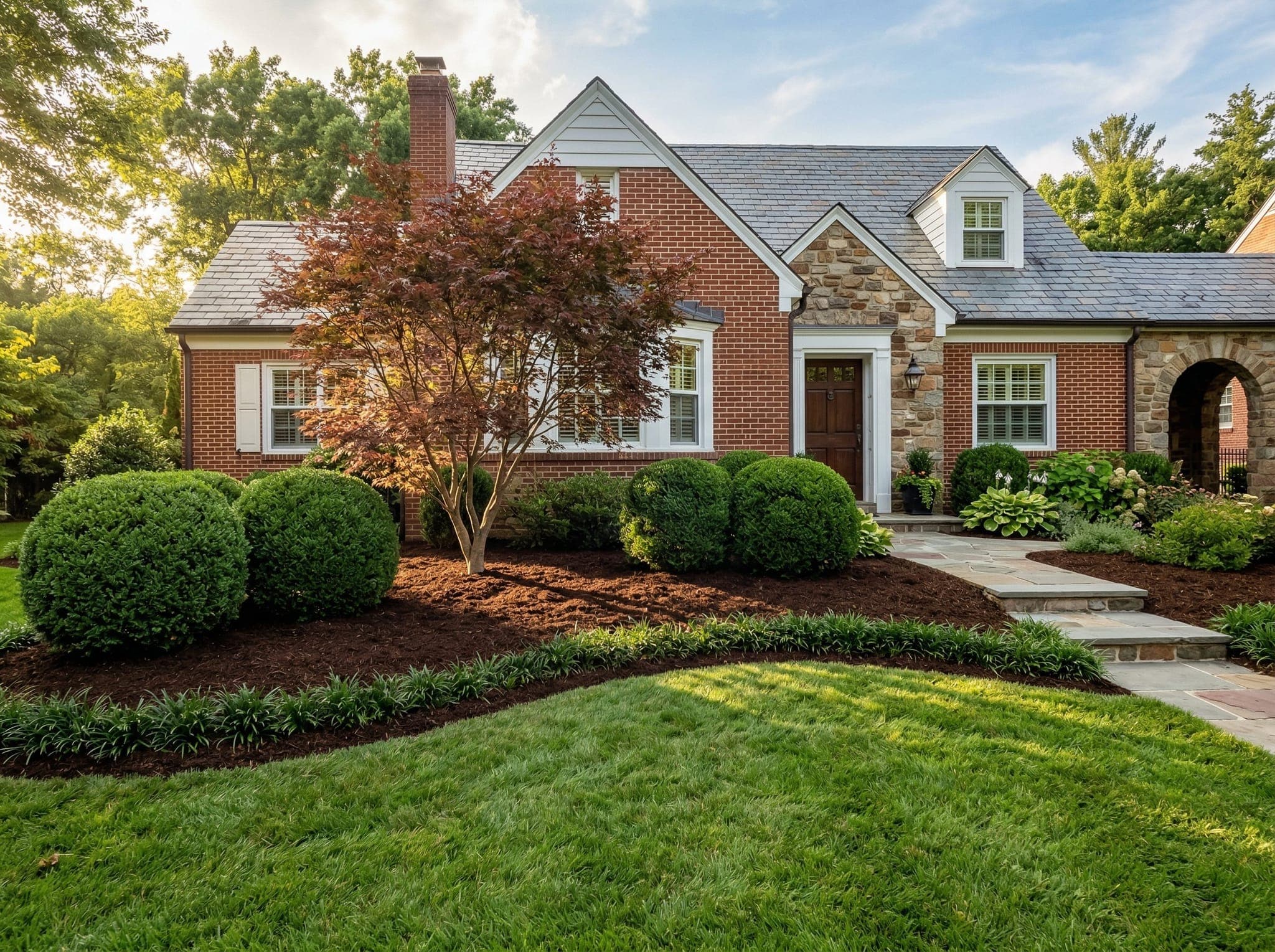
Pruning & Shaping
Shaping for Health and Form
Healthy plants, natural shapes, and a landscape that looks intentional from every angle.
Shaping that puts plant health first
Proper pruning removes the right growth at the right time so your plants stay healthy, maintain their natural form, and bloom the way they should. Across Newburgh and the Evansville area, we work with the species that thrive here: boxwood, holly, hydrangea, crape myrtle, ornamental grasses, Japanese maple, arborvitae, and dozens more.
Shrub shaping
Your shrubs are pruned to maintain their natural form and proportional scale within the landscape. Not sheared into flat boxes or unnatural shapes.
Structural pruning
Crossing branches, dead wood, and weak growth are removed early so your shrubs and small trees develop strong, balanced frameworks that hold up for years.
Canopy management
Lower limbs, interior congestion, and overgrown canopies are thinned to improve airflow, let light reach the plants beneath, and restore a clean silhouette.
Seasonal scheduling
Every species has an ideal pruning window. Spring bloomers are handled after flowering. Summer bloomers are pruned in late winter. Your schedule is built around the biology of your specific plantings.
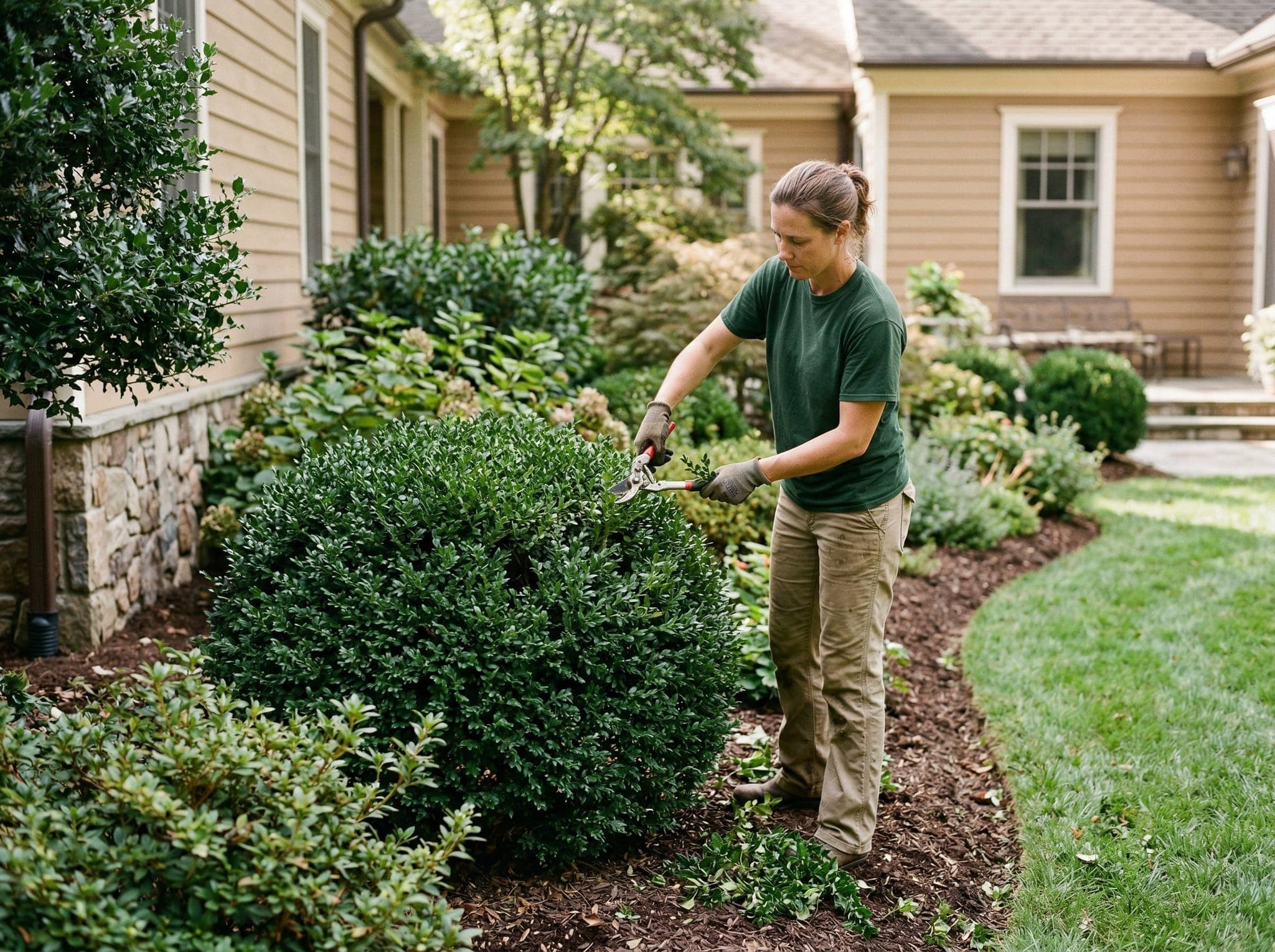
Why this is different from a mow-and-go crew
Your pruning team brings the same plant knowledge that stocks a 15-acre garden center. That expertise shows up in every visit.
Species-specific timing
Azaleas, hydrangeas, and ornamental grasses all need different timing. Pruning at the wrong time can eliminate an entire season of blooms.
Proper cut technique
Every cut is made at the right angle and node with sharp, clean tools. Proper technique keeps wounds small, promotes fast healing, and preserves natural branch collars.
Disease prevention
Your crew spots early signs of fungal infection, borer damage, or canker and removes affected wood before problems spread.
Year-round pruning done right
The right cut at the right time keeps your landscape healthy and looking intentional all year. Here is how your pruning schedule breaks down in southern Indiana's Zone 6b/7a climate.
Spring
March - MaySpring-blooming shrubs like azaleas, forsythia, and lilacs are pruned right after flowering so they have time to set buds for next year. Dead and winter-damaged wood is removed from all plantings.
Common species: Azaleas, forsythia, lilacs, viburnums
Summer
June - AugustHedges and formal shrubs get their shaping cuts to stay crisp through the season. Light corrective pruning keeps fast growers in check. Spent blooms are deadheaded on hydrangeas and crape myrtles.
Common species: Boxwood, holly, hedges, crape myrtles
Fall
September - NovemberOrnamental grasses and spent perennials are cut back before winter. Light pruning tidies up summer growth without stimulating tender new shoots before the first frost.
Common species: Ornamental grasses, perennials, roses
Winter
December - FebruaryDeciduous shrubs and small trees are pruned while dormant when the branch structure is fully visible. This is the ideal time for major structural work on Japanese maples and arborvitae.
Common species: Japanese maples, arborvitae, deciduous trees
Pruning pairs perfectly with these services
Professional pruning is one part of a complete property care plan. Combine it with mulching, fertilization, or seasonal cleanup and your landscape stays polished all year.
Mulching & Bed Care
After pruning, fresh mulch completes the look and protects the root zone of your freshly shaped plantings.
Fertilization & Weed Control
Well-pruned shrubs benefit even more from targeted nutrition. Fertilization keeps your plantings thick and vibrant after each pruning cycle.
Seasonal Cleanup
Pair your pruning with spring or fall cleanup for a complete seasonal refresh across your entire property.
“Colonial Classics does a truly beautiful job on our property and consistently goes above and beyond our expectations. Their attention to detail and overall quality of work are outstanding. Our account manager Adam is proactive and genuinely goes out of his way to ensure we receive the best possible service.”
Lauren Gray
Property Maintenance
Pruning questions answered
When is the best time to prune shrubs in southern Indiana?
It depends on the species. Spring bloomers are pruned after flowering, summer bloomers in late winter, and evergreens in late spring or early summer.
How often should shrubs and small trees be pruned?
Most shrubs need one thorough pruning per year with light touch-ups as needed. Fast growers like privet may need two or three shapings.
Will pruning hurt my plants?
Proper pruning promotes healthier growth. The key is clean cuts at the right location and right time of year.
Do you handle large tree pruning and removal?
We cover shrubs and small trees reachable from the ground or standard ladder. For large tree work we can coordinate with a certified arborist.
What areas do you serve for pruning services?
We serve Newburgh, Evansville, Boonville, Chandler, and the greater Tri-State area including western Kentucky and southern Illinois.
Can I include pruning in a full property care plan?
Yes. Pruning is included in our Full-Season Management plan alongside mowing, fertilization, mulching, and seasonal cleanup.
Your custom pruning plan is three steps away
Tell us about your property
Request a quote online or give us a call. Let us know what types of shrubs and trees you have and what you are looking for.
Free property walkthrough
A crew member visits your property to assess your plantings, discuss your goals, and note any species that need special attention or timing.
Custom plan with clear pricing
You receive a detailed proposal covering which plants get pruned, when each species is scheduled, and exactly what it costs. No hidden fees.