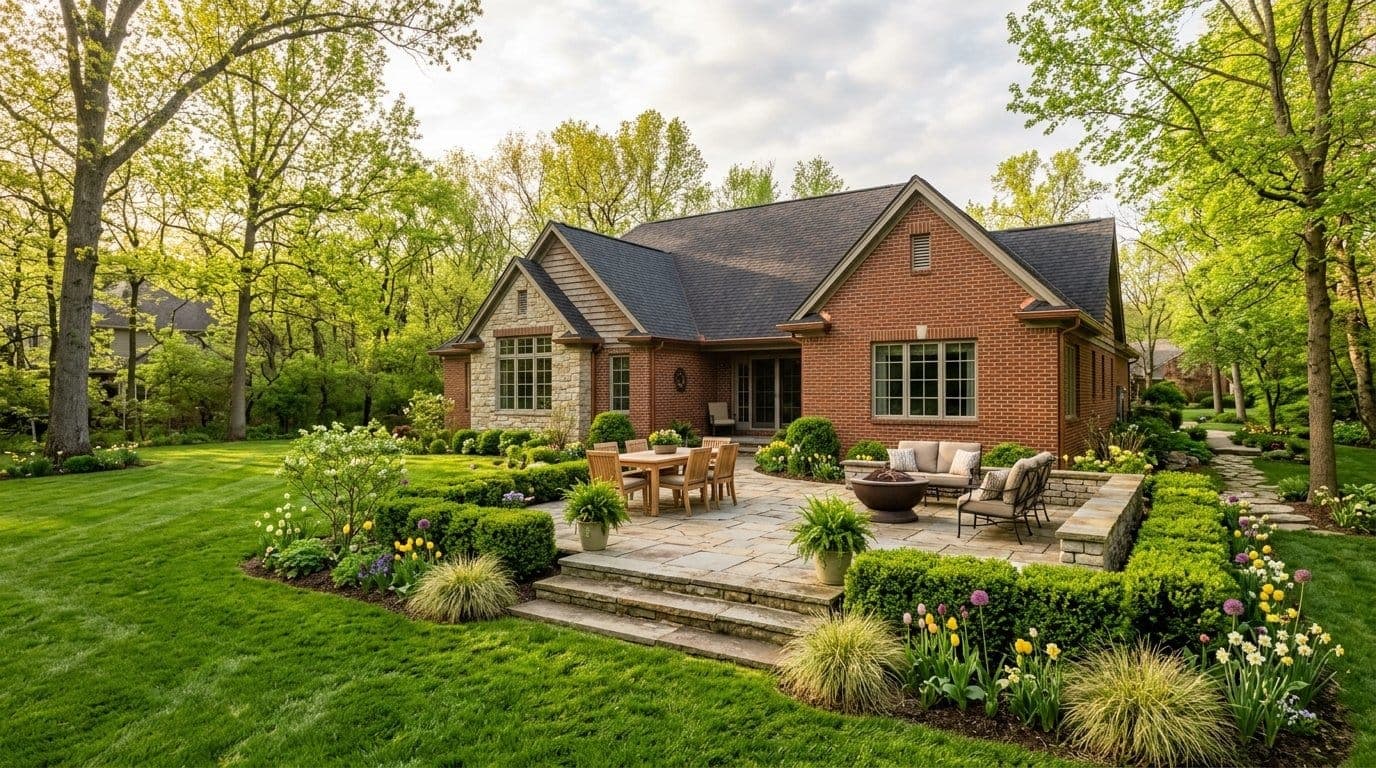
Your outdoor space looks great during the day. But after dark it disappears. Landscape lighting changes that. It extends your evenings, highlights the features you have already invested in, and makes your property safer and more inviting.
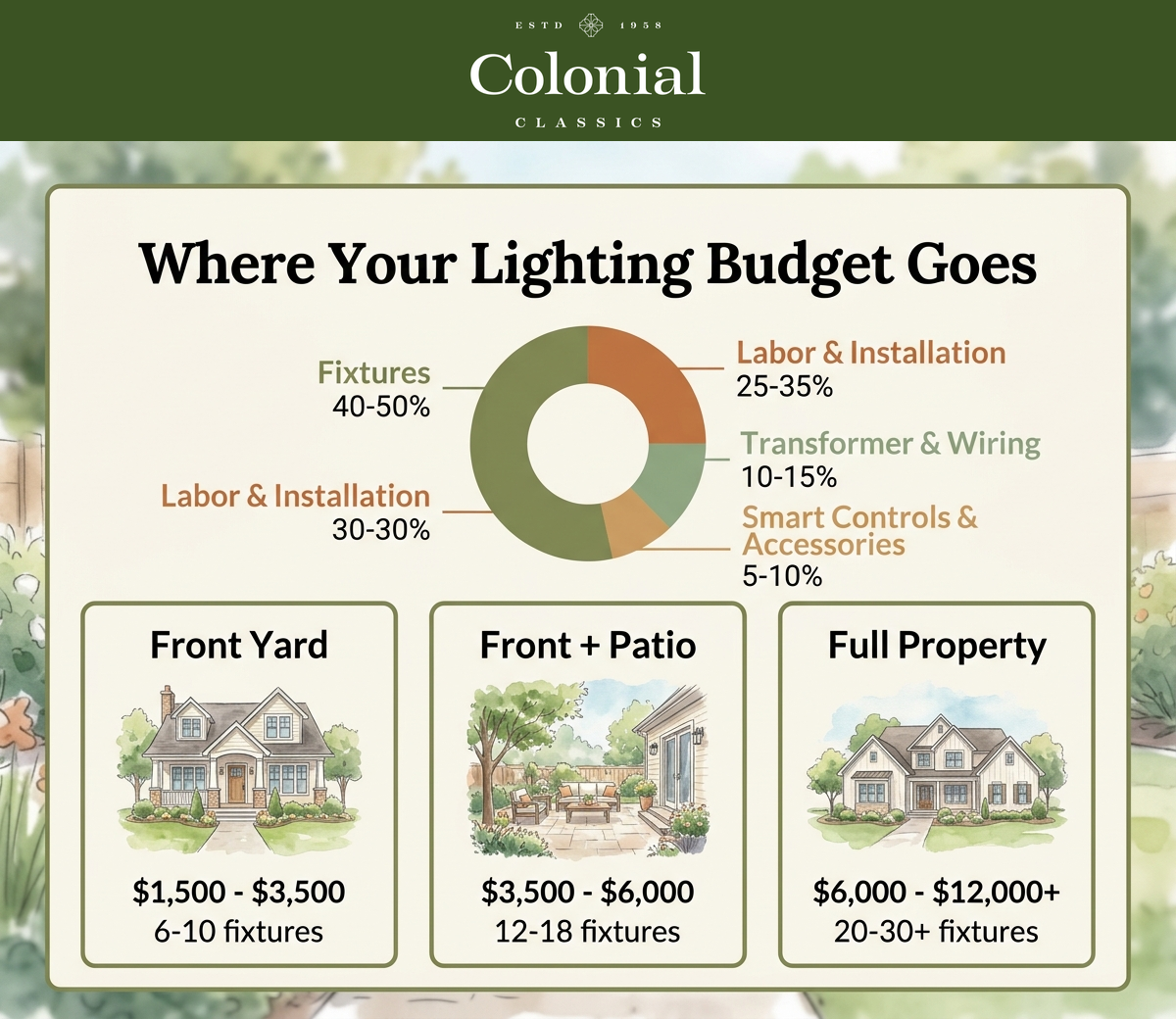
The first question most homeowners ask: how much does landscape lighting cost? For the Evansville, Newburgh, and greater Tri-State area, professionally installed landscape lighting typically runs $2,000 to $6,000 for most residential projects. Smaller front-yard systems start around $1,500. Full-property designs with 20 or more fixtures can reach $12,000 or more.
That range is wide because every property is different. The number of fixtures, the type of lighting, fixture quality, and your site conditions all affect the final price. This guide breaks down exactly what drives that number so you can plan with real expectations.
The prices in this guide reflect professional installation costs in the Evansville and Newburgh area as of 2026. Your actual cost depends on fixture count, fixture quality, site conditions, and layout complexity. Use these ranges for planning. A site visit is the only way to get an accurate quote for your property.
Landscape Lighting Cost by Project Scope
The biggest factor in your total cost is how much of your property you want to light. Here is what each tier looks like.
Front Yard Only
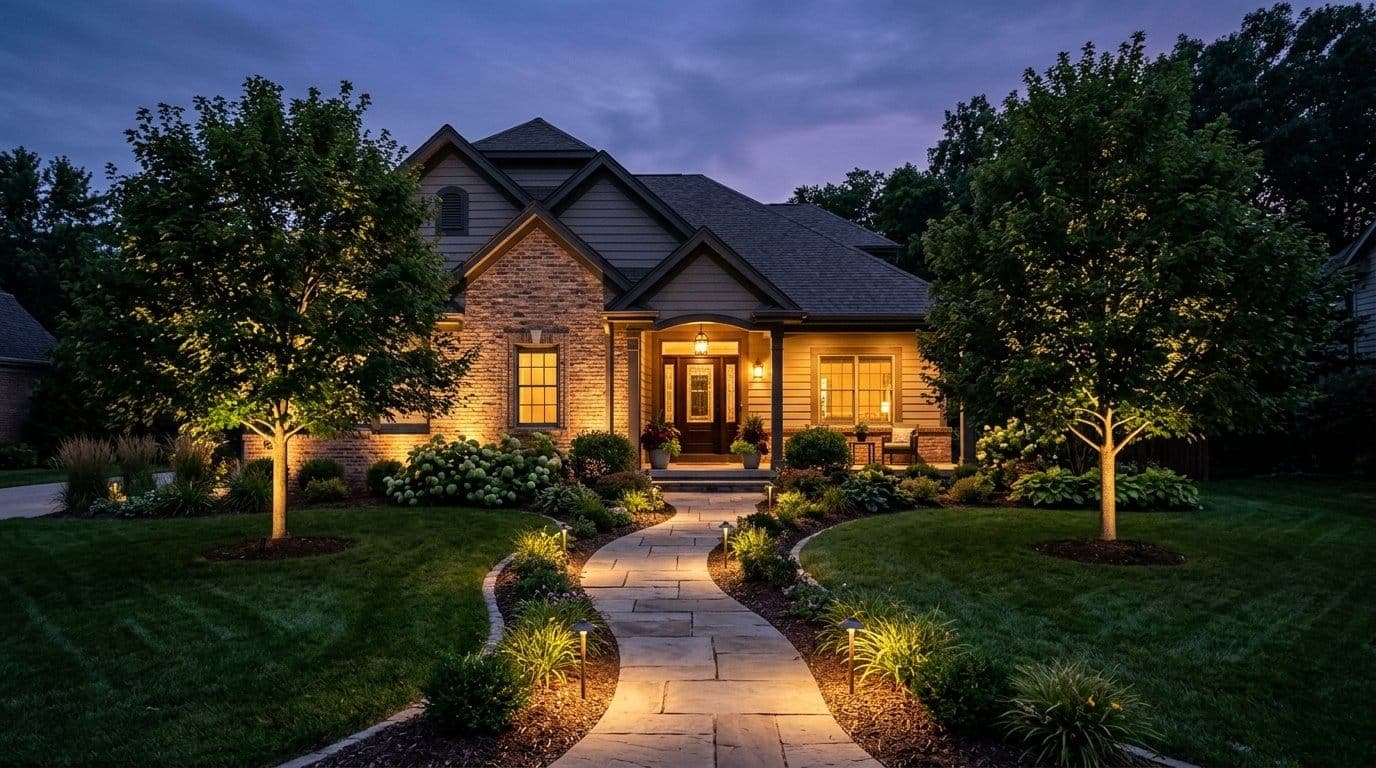
A front-yard package typically runs $1,500 to $3,500. It focuses on curb appeal and safety. You get uplights on your home's facade, a few path lights along the walkway, and accent lighting on one or two focal trees or garden features. This is typically 6 to 10 fixtures.
This tier makes the most visible difference for the lowest investment. Your home goes from dark and flat at night to warm and dimensional. Guests can find your front door without guessing. And your property stands out on the street in a way that feels polished without being overdone.
What is typically included:
- 2 to 4 architectural uplights on the home's facade
- 3 to 5 path lights along the walkway and entry
- 1 to 2 accent spotlights on trees or landscaping
- Transformer and wiring
- Timer or photocell controller
Front Yard Plus Patio or Outdoor Living Area
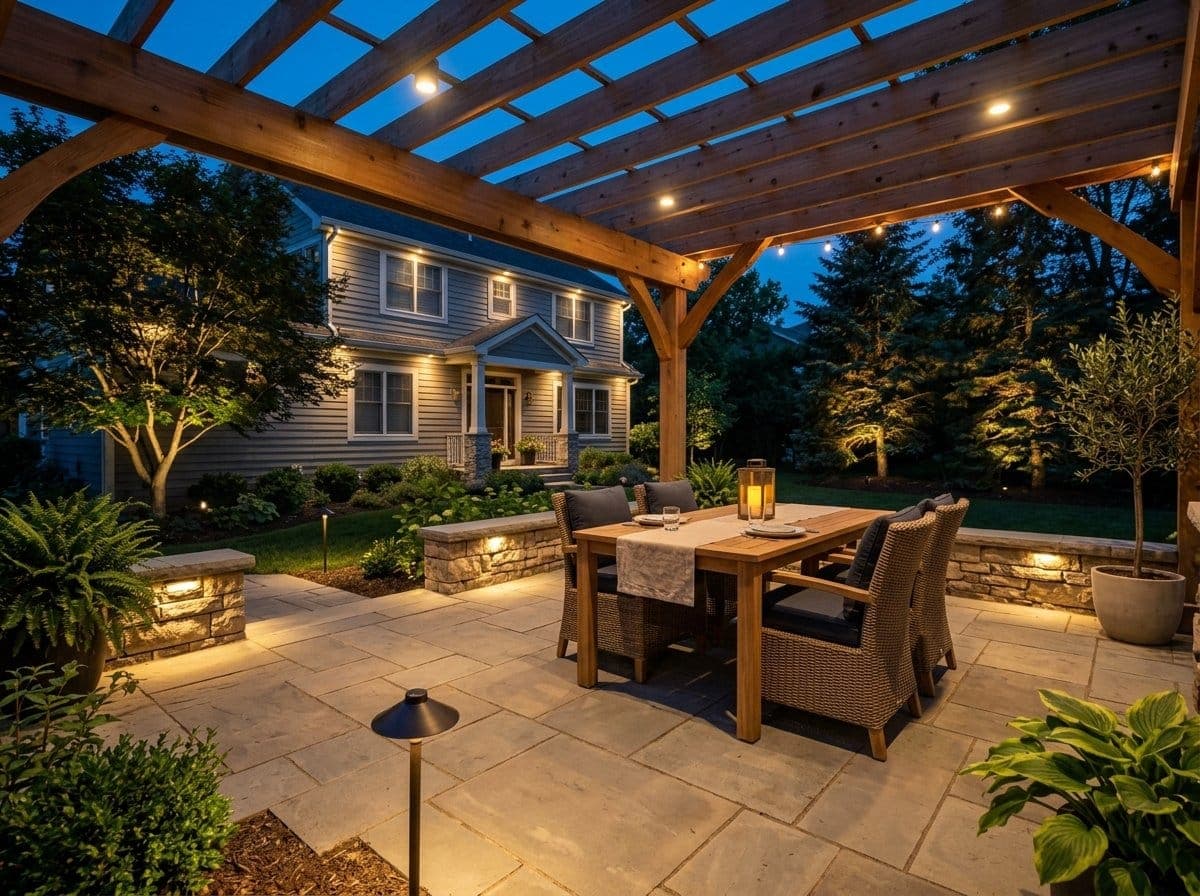
This tier typically runs $3,500 to $6,000. It is the most popular scope for homeowners in the Tri-State area. You get everything in the front-yard package plus lighting for your patio, deck, or outdoor kitchen area. The system typically includes 12 to 18 fixtures.
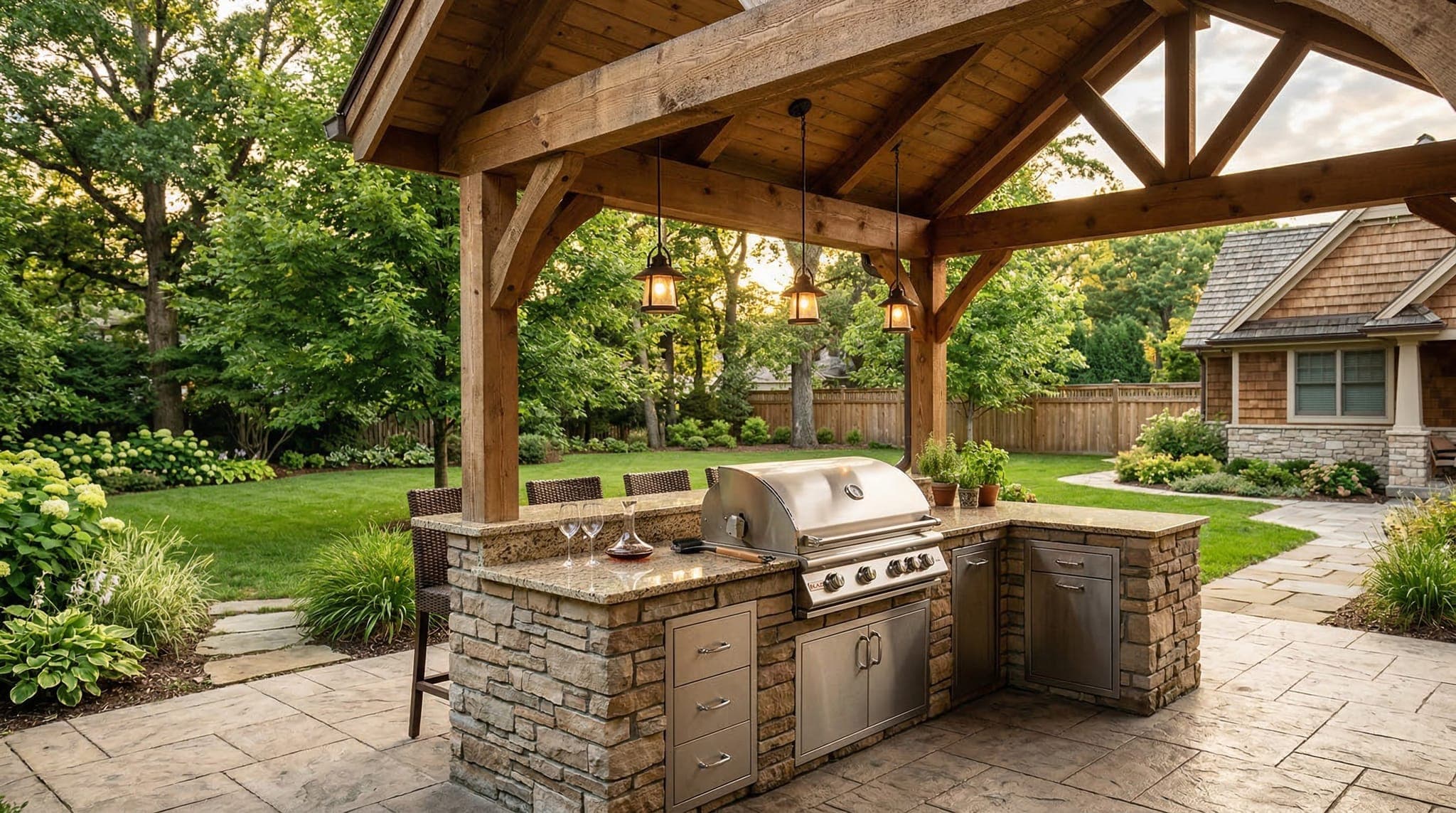
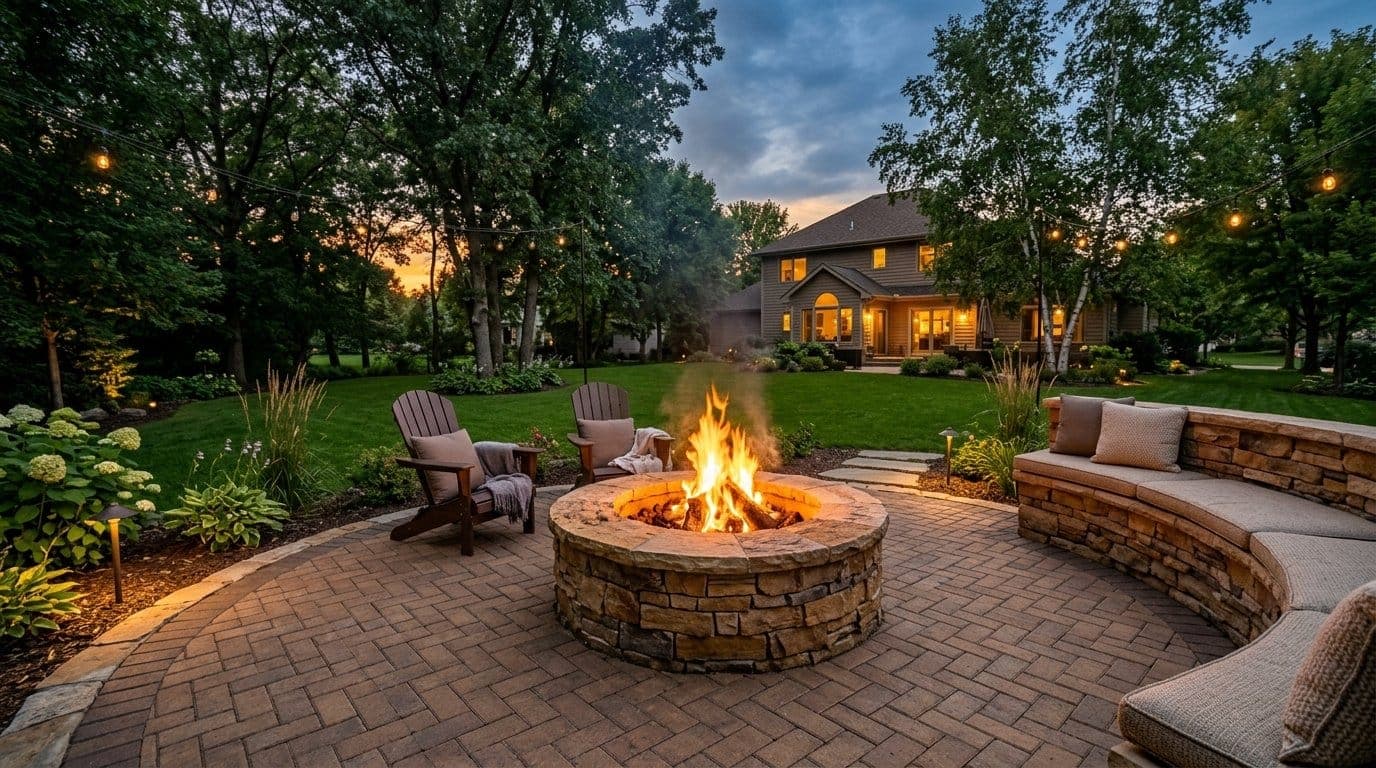
Adding the outdoor living zone means your evenings do not end at sunset. You can cook, eat, and entertain on your patio with comfortable ambient light instead of a single floodlight washing everything out. Layered lighting zones let you set the mood: bright for cooking, soft for conversation.
What is typically included:
- Full front-yard package (uplights, path lights, accent lights)
- Downlights in pergola or overhead structure
- Step lights on patio edges or retaining walls
- Under-cap hardscape lights on seat walls
- Additional transformer capacity and wiring
Full Property
A full-property design runs $6,000 to $12,000 or more. It covers the front, sides, and outdoor living areas with a cohesive plan. This scope includes 20 to 30+ fixtures and addresses architectural lighting, path and safety lighting, accent lighting, and outdoor living zones as one integrated system.
At this level, the design matters as much as the fixtures. A professional lighting designer walks your property at night, identifies focal points and dark spots, and creates a layered plan that looks intentional from every angle. The result is a property that feels completely different after dark.
What is typically included:
- Architectural uplighting on all visible home facades
- Full path and driveway lighting
- Accent lighting on specimen trees and garden features
- Patio, deck, and outdoor living area lighting
- Landscape bed edge lighting
- Multiple transformer zones for independent control
- Smart controller with app-based scheduling
What Does Each Fixture Type Cost?
The fixtures themselves make up roughly 40 to 50 percent of your total project cost. Here is what each type costs for the fixture alone, before installation.
| Fixture Type | Price Per Fixture | Best Used For |
|---|---|---|
| Path lights | $75 to $200 | Walkways and driveways |
| Spotlights and uplights | $150 to $300 | Trees and home facades |
| Well lights (in-ground) | $100 to $300 | Uplighting from ground level |
| Step and wall lights | $100 to $250 | Stairs and retaining walls |
| Downlights (moonlights) | $200 to $350 | Mounted in trees for soft ambient light |
| Hardscape lights | $75 to $200 | Under wall caps and seat walls |
| Transformer | $150 to $500 | Powers the entire low-voltage system |
Fully installed (fixture + wiring + labor), expect to pay $200 to $350 per fixture on average. This is the number most contractors quote when estimating a project.
What Drives Your Landscape Lighting Cost Up or Down?
Several factors move your project above or below the typical range. Understanding these helps you make tradeoffs that match your budget.
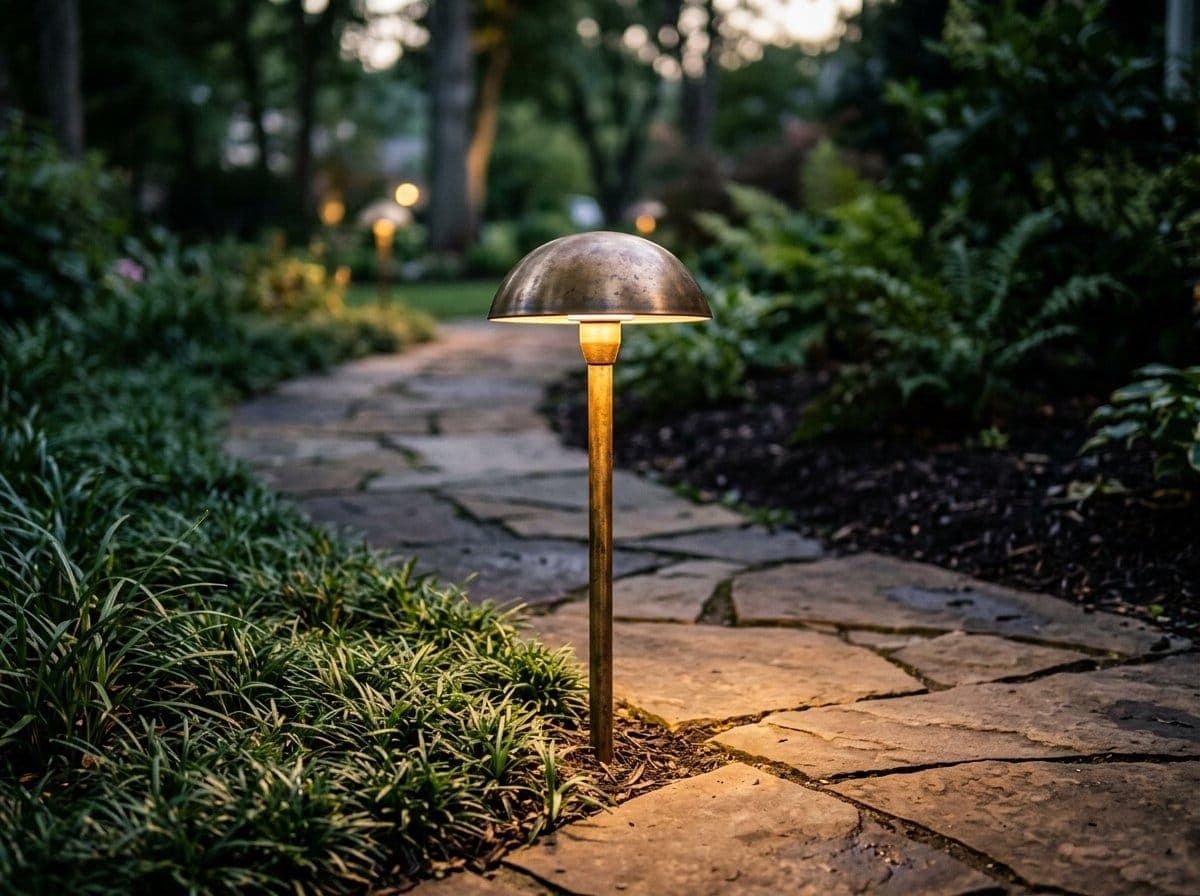
Fixture quality. A brass path light costs $80 to $150 for the fixture alone. An aluminum path light costs $20 to $50. The difference is longevity. Brass and copper fixtures last 20 to 30 years without corroding. Aluminum and plastic fixtures may need replacement in 3 to 7 years. You pay more upfront for brass, but you pay once.
Number of fixtures. This is the most straightforward cost lever. Fewer fixtures means a lower total. A skilled designer can create dramatic results with fewer well-placed fixtures rather than blanketing the yard with light. Sometimes 12 thoughtfully positioned fixtures outperform 20 poorly placed ones.
Site complexity. If your property has long wire runs, rocky soil, extensive tree roots, or steep slopes, installation takes longer and costs more. A flat lot with beds close to the house is the most straightforward install. The clay soil common across Southern Indiana can require more careful trenching but does not typically add significant cost.
Smart controls. A basic photocell or timer adds $50 to $100 to the system. A Wi-Fi-enabled smart controller with app-based zone control, dimming, and scheduling runs $200 to $500. Smart controls are not a necessity, but they make the system more usable and allow you to adjust lighting without walking outside.
Electrical requirements. Low-voltage systems (12V) plug into a standard outdoor outlet near the transformer. If you do not have a GFCI-protected outlet in the right location, adding one costs $150 to $400 for an electrician. Line-voltage systems (120V) require permits and licensed electrical work, which can add $1,000 to $3,000 or more. Nearly all residential landscape lighting today uses low voltage.
Low Voltage vs. Line Voltage: Which System Is Right?
Low-voltage LED landscape lighting is the standard for residential properties and what Colonial Classics installs exclusively. Here is how it compares to line voltage.
| Feature | Low Voltage (12V) | Line Voltage (120V) |
|---|---|---|
| Cost | $2,000 to $6,000 typical | $5,000 to $15,000+ typical |
| Safety | Safe to touch and handle | Requires licensed electrician |
| Installation | Minimal disruption to yard | Conduit and deeper burial required |
| Energy use | Very low (LED standard) | Higher energy draw |
| Permits | Rarely required | Required in most jurisdictions |
| Flexibility | Easy to move or add fixtures | Permanent installation |
| Best for | Residential landscape lighting | Commercial and municipal projects |
Low voltage is the better choice for almost every residential project. The fixtures are safer, more energy-efficient, easier to install, and significantly less expensive. A low-voltage system also lets you reposition fixtures later if your landscape changes. For more details on what Colonial Classics offers, visit the outdoor lighting service page.
DIY vs. Professional Installation
A low-voltage path light kit from a home improvement store costs $150 to $500 for 6 to 10 lights. You can install it yourself in a weekend. So is professional installation worth the difference?
The honest answer: it depends on your goals.
DIY works for: Simple path lighting along a straight walkway where placement is obvious and aesthetics are secondary to function. If you just want to see where you are walking, a kit will do that.
Professional installation is worth it when: You want your property to look designed, not just lit. A professional lighting designer considers sight lines, shadow patterns, fixture angles, and light intensity to create a result that looks natural and intentional. They also handle transformer sizing, proper wire gauge for long runs, and waterproof connections that will not fail in two winters.
The biggest difference is design. A kit lights a path. A professional system transforms a property. That is the gap between $300 and $3,000, and for most homeowners who care about how their home looks, the professional result is not something you can replicate with off-the-shelf products.
How to Get the Most Value From Your Lighting Budget
If you are working within a fixed budget, these strategies help you maximize impact:
- Start with the front. Front-yard lighting delivers the most visible improvement per dollar. You see it every time you pull into the driveway, and so does everyone else
- Light fewer things well. Three perfectly aimed uplights on your home's best features create more drama than ten fixtures scattered without a plan
- Invest in fixture quality. Brass fixtures cost more upfront but eliminate replacement costs for decades. Over 15 years, a $120 brass fixture is cheaper than three $40 aluminum replacements
- Plan for expansion. Ask your installer to size the transformer for future additions. Adding fixtures to an existing system is significantly cheaper than starting from scratch
- Combine with other projects. If you are already planning a patio, outdoor kitchen, or full landscape project, including lighting in that scope saves on mobilization, trenching, and design fees. This is one of the reasons scheduling your landscape project early pays off
Spring and early summer are peak seasons for landscape lighting installation in the Tri-State area. If you are planning a project for this year, starting the conversation now gives your contractor time to design and schedule before the busiest months.
Does Landscape Lighting Increase Home Value?
Yes. Landscape lighting is one of the most cost-effective outdoor upgrades for curb appeal and property value. The National Association of Realtors' Remodeling Impact Report consistently ranks outdoor lighting improvements among the highest-return exterior upgrades.
Beyond resale numbers, landscape lighting changes how buyers experience your property. A well-lit home looks finished, safe, and maintained. A dark property at night raises questions. Real estate agents in the Evansville and Newburgh area will tell you that evening showings sell differently when the landscape is lit.
For energy cost: a typical 15-fixture LED system uses about $5 to $15 per month in electricity. That is $60 to $180 per year to completely transform how your property looks and functions after dark. LED fixtures also last 25,000 to 50,000 hours before needing replacement, which means 10 to 20 years of use at typical residential run times.
How to Start Your Landscape Lighting Project
The best first step is a property walkthrough with a lighting designer. At Colonial Classics, that starts with a free consultation. Here is what you can expect:
- Site walk. You walk your property with a designer, ideally at dusk or after dark, to identify focal points, dark spots, and areas where lighting would make the biggest impact
- Design goals. You talk through what matters most: curb appeal, safety, entertaining, or all three
- Budget alignment. You get honest cost estimates for your property size and goals so there are no surprises
- Design and proposal. You receive a custom lighting plan with fixture selections, placement, and a detailed quote
Colonial Classics Landscape & Nursery has been designing and installing outdoor spaces in the Tri-State area for over 65 years. Landscape lighting is one of the final layers that ties a property together, and the before-and-after difference is visible every single evening.
Landscape lighting costs $2,000 to $6,000 for most residential projects in the Evansville and Newburgh area. The biggest cost drivers are fixture count, fixture quality, and project scope. Start with your front yard for maximum curb appeal per dollar, invest in brass fixtures that last, and plan the transformer for future expansion.