You want an outdoor kitchen, and your first question is probably what it will cost. That is the right place to start. The answer depends on how you cook, how you entertain, and what your property can support. But here is the straightforward version: a custom outdoor kitchen in the Evansville and Newburgh area runs anywhere from $5,000 for a basic island setup to $80,000 or more for a fully equipped covered kitchen.
The range is wide because outdoor kitchens are not one-size-fits-all. A simple grill island on your existing patio is a different project than a full cooking station with running water, refrigeration, and a pergola overhead. This guide breaks down real costs by tier and component so you can figure out where your project falls before you talk to a contractor.
The prices in this guide reflect professional installation costs in the Evansville and Newburgh area as of 2026. Your actual cost depends on site conditions, materials, layout complexity, and appliance selections. Use these ranges for planning. A site visit is the only way to get an accurate quote for your property.
How Much Does an Outdoor Kitchen Cost?
An outdoor kitchen costs between $5,000 and $80,000 or more depending on size, materials, and features. Most homeowners in the Tri-State area spend $15,000 to $35,000 on a mid-range custom kitchen. Here is what each tier looks like in practice.
Basic Outdoor Kitchen: $5,000 to $15,000
A basic outdoor kitchen starts with a prefabricated grill island. You get a built-in gas grill, a few feet of counter space on either side, and storage underneath. The island sits on your existing patio and connects to a propane tank or natural gas line.
This tier works well if you already have a solid patio and want a permanent cooking station without a major construction project. You are upgrading from a standalone grill to something that looks and functions like it belongs there.
What is typically included:
- Prefab or modular grill island (6 to 8 feet long)
- Built-in gas grill ($1,000 to $3,000)
- Granite or concrete countertop
- Access doors and storage drawers
- Basic gas line connection
Mid-Range Custom Kitchen: $15,000 to $35,000
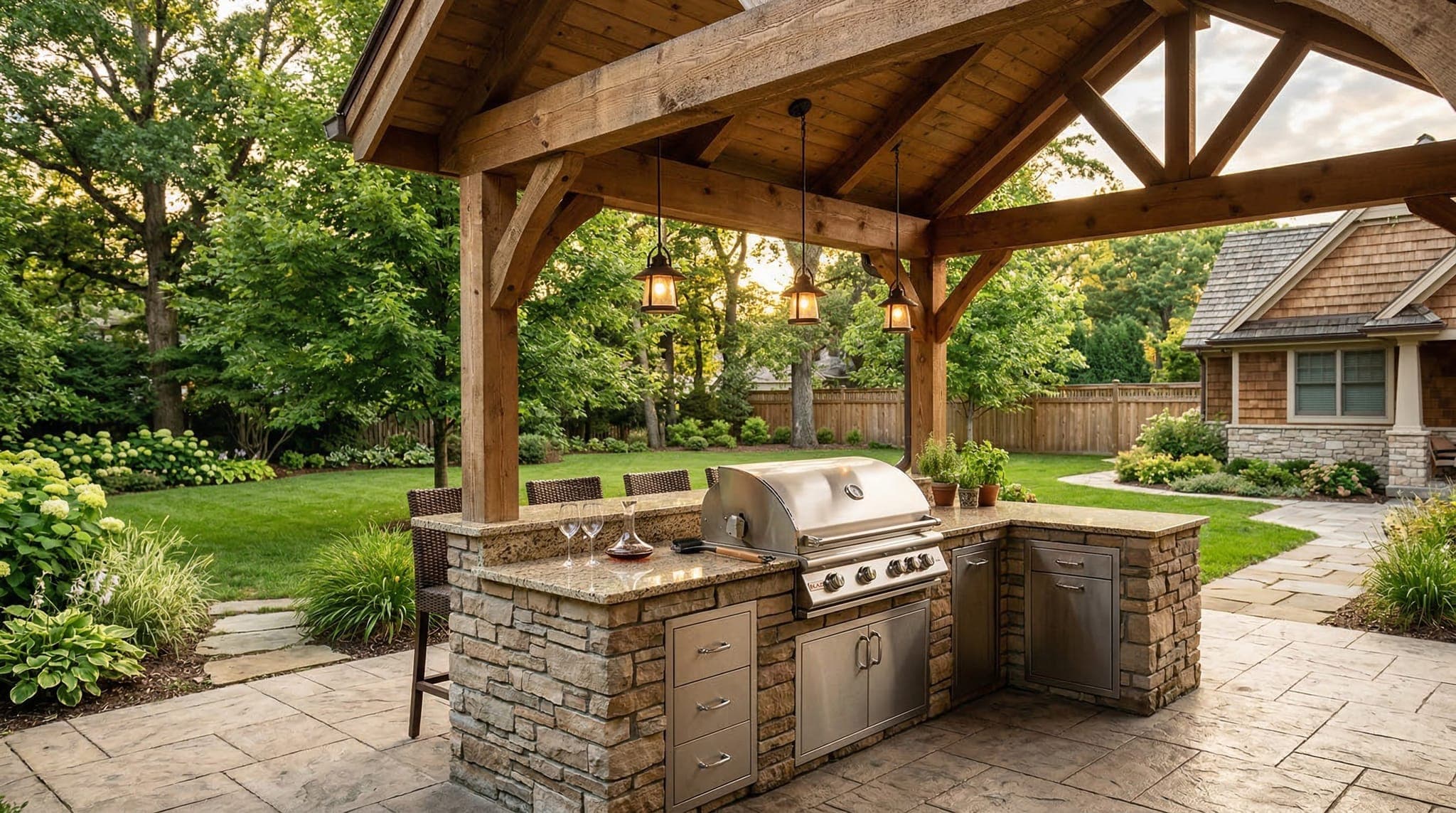
This is where most outdoor kitchen projects in the Tri-State area land. You are building a custom island or L-shaped counter from block or stone, adding a sink with running water, and choosing countertops that match your patio materials.
A mid-range kitchen gives you a real cooking zone. You can prep, cook, and serve without walking inside. You also have room for a beverage cooler or small refrigerator, which changes how you use the space for entertaining.
What is typically included:
- Custom stone or block island (8 to 14 feet)
- Built-in grill with side burner ($2,000 to $5,000)
- Granite or concrete countertops ($65 to $95 per square foot installed)
- Outdoor-rated sink with plumbing ($1,500 to $4,000)
- Under-counter refrigerator ($500 to $2,000)
- Electrical for outlets and lighting ($1,000 to $3,000)
- Veneer stone or stucco finish to match your landscape
High-End Custom Kitchen: $35,000 to $80,000+
A high-end outdoor kitchen is a full outdoor room. You are building a covered structure with a complete cooking station, bar seating, and premium appliances. These projects often include a pizza oven, smoker, ice maker, and dedicated beverage station.
At this level, the kitchen is designed as part of a larger outdoor living space. It connects to your patio, fire pit area, and landscape in a way that feels like one cohesive project. The structure overhead protects your investment from weather and extends your season.
What is typically included:
- Custom U-shaped or L-shaped layout (14 to 20+ feet)
- Premium grill and appliances ($5,000 to $12,000+)
- Pizza oven ($2,000 to $8,000)
- Full plumbing with hot and cold water
- Covered structure or pavilion ($6,000 to $15,000)
- Natural stone countertops and veneer
- Built-in lighting, speakers, and electrical
- Bar seating for four to eight guests
Outdoor Kitchen Cost Breakdown by Component
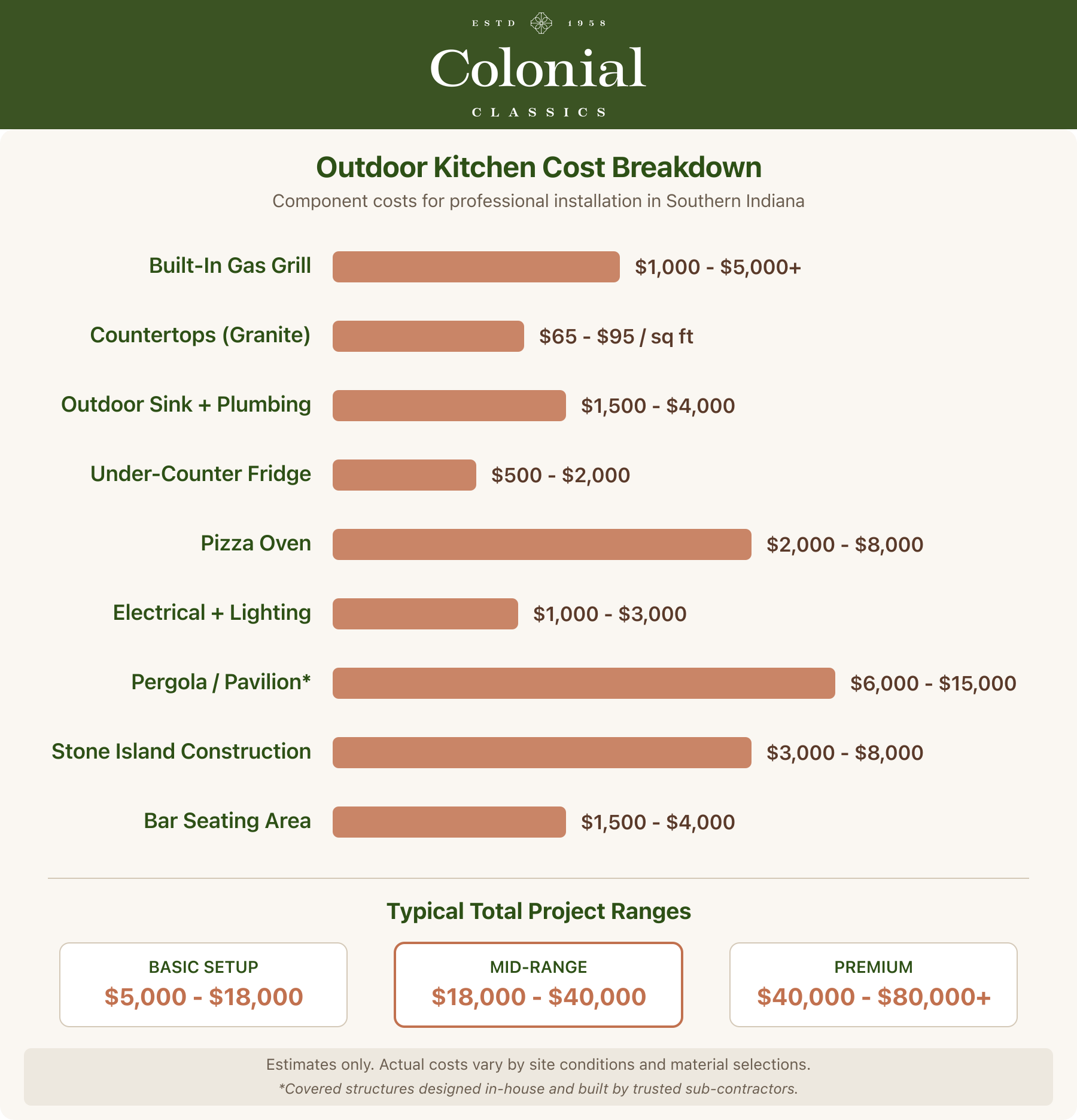
The total price of your outdoor kitchen is the sum of its parts. Here is what each component costs on its own so you can prioritize what matters most to you.
The biggest variable is your grill. A basic 4-burner built-in starts around $1,000 while premium brands like Summerset or Blaze run $4,000 to $8,000+. The covered structure is the single best upgrade for both comfort and durability. Here is how all the components stack up.
Which Layout Works Best for Your Space?
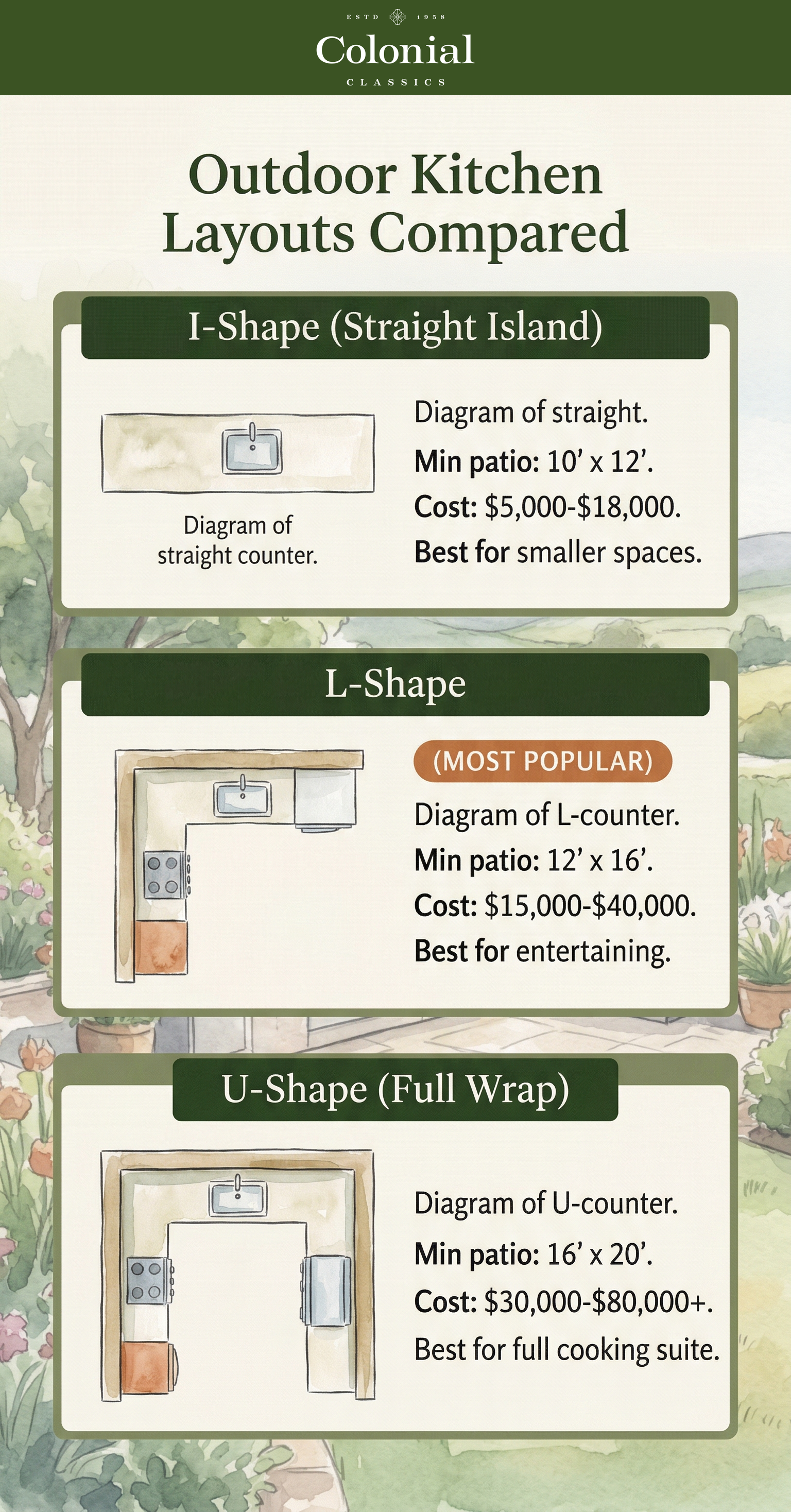
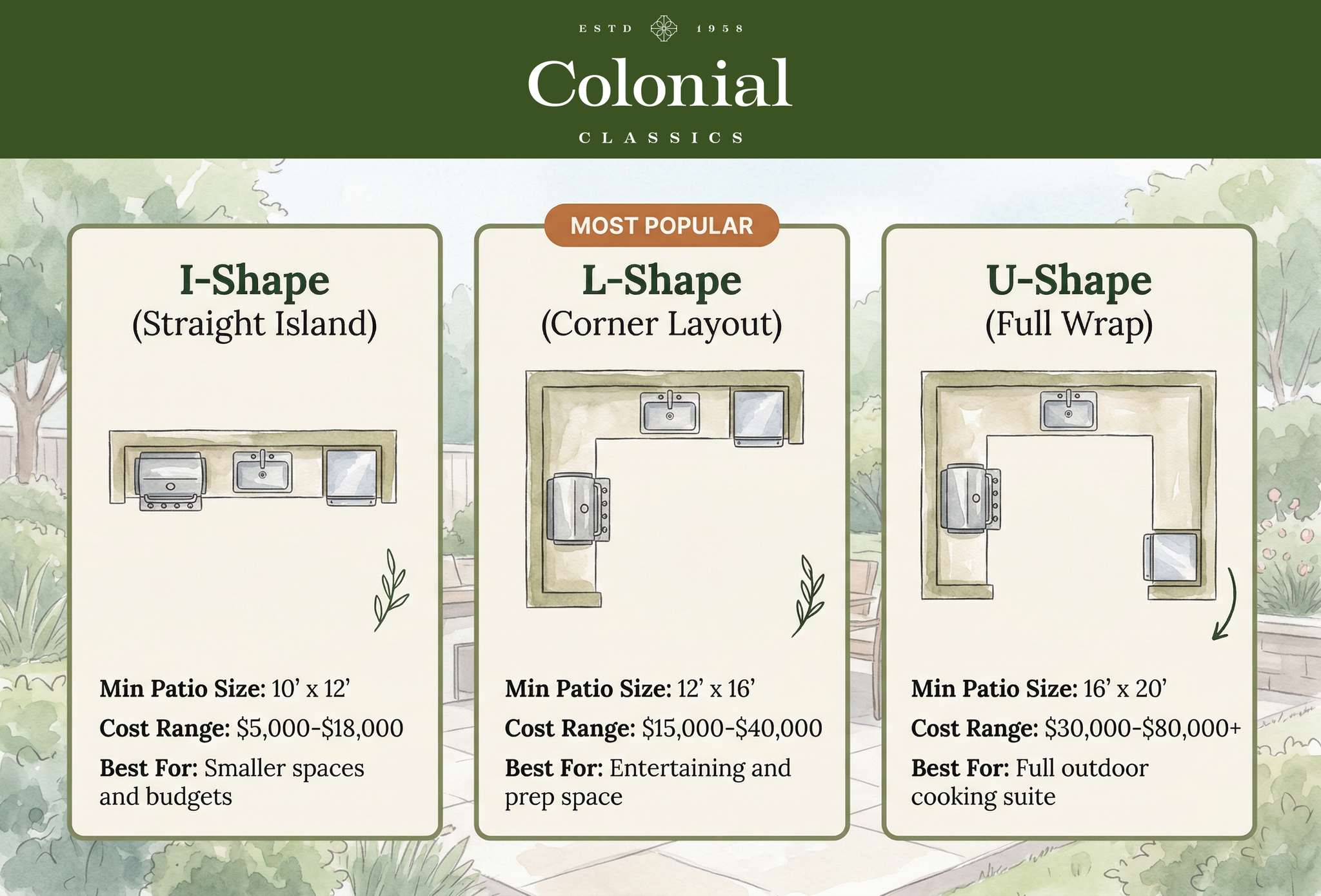
Your outdoor kitchen layout determines how the space flows for cooking and entertaining. Three layouts dominate residential projects. The right choice depends on your patio size, how many people you typically host, and how seriously you cook.
Straight Island (I-Shape)
A straight island is a single run of counter space, typically 6 to 10 feet long. It is the most affordable layout and fits on patios as small as 10 by 12 feet. You get a grill in the center with counter space on each side.
Best for: Smaller patios, budget-conscious projects, homeowners who primarily grill. Typical cost: $5,000 to $18,000.
L-Shaped Kitchen
An L-shaped layout adds a perpendicular counter section, giving you a dedicated prep area or bar top separate from the cooking zone. This is the most popular layout in the Tri-State area because it balances function and footprint.
Best for: Mid-size patios (12 by 16 feet or larger), homeowners who want prep space and a social zone. Typical cost: $15,000 to $40,000.
U-Shaped Kitchen
A U-shaped layout wraps counter space around three sides, creating an enclosed cooking station. You have room for a full appliance lineup and bar seating on the outer edge. This layout requires a larger patio and typically pairs with a covered structure.
Best for: Large patios, serious entertainers, homeowners who want a complete outdoor cooking and dining setup. Typical cost: $30,000 to $80,000+.
Design Ideas That Work in Southern Indiana
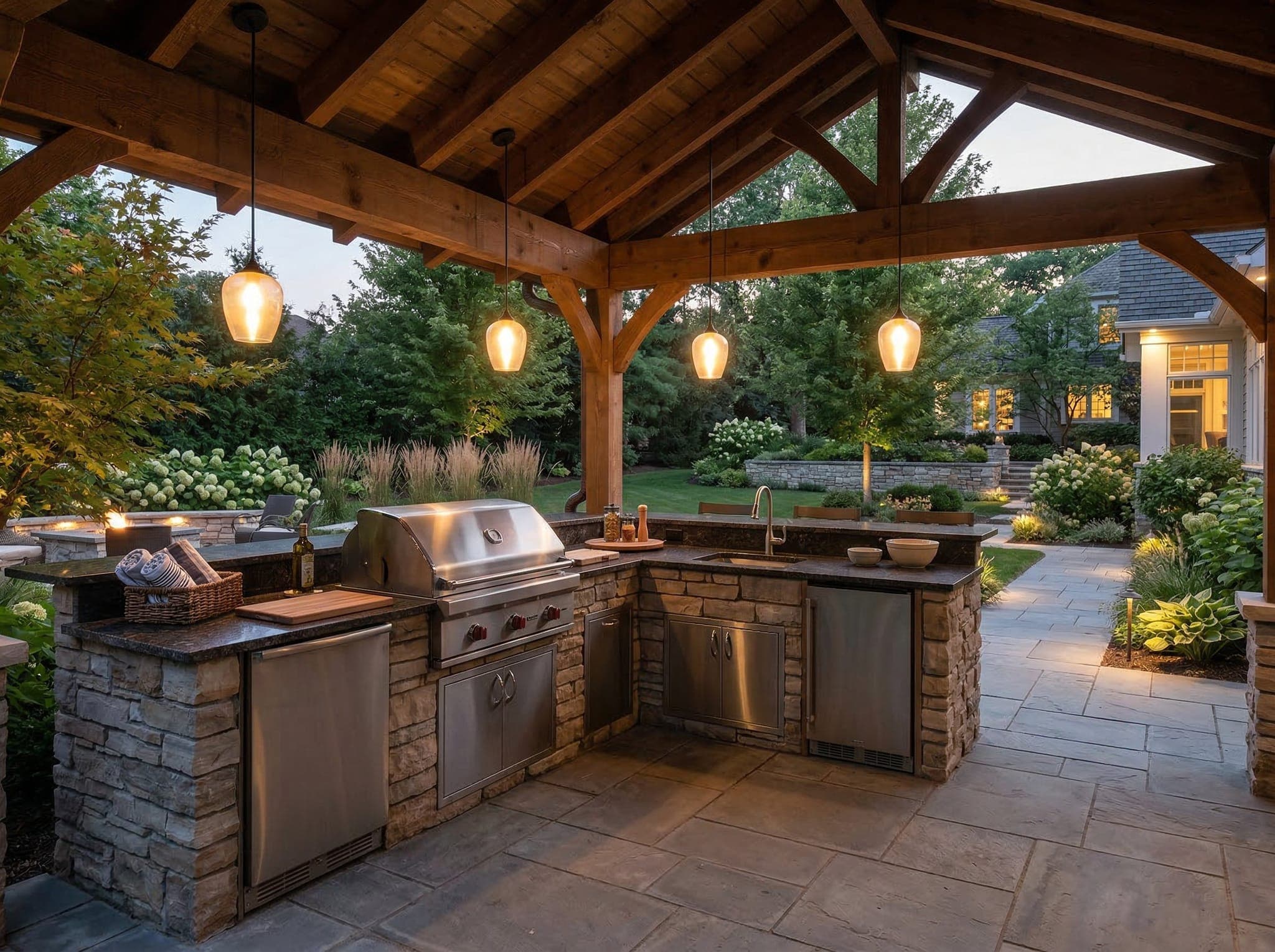
An outdoor kitchen in Zone 7a (Southern Indiana) needs to handle hot summers, cold winters, and the freeze-thaw cycles in between. The best designs account for these conditions from the start.
Add a Covered Structure
A covered pavilion or pergola is the most impactful upgrade you can make. It protects your appliances from rain and UV damage, keeps the cooking area comfortable in summer heat, and extends your usable season by two to three months. In the Evansville and Newburgh area, a covered kitchen is usable from early April through late October or even November.
Colonial Classics designs outdoor kitchens with covered structures in mind and coordinates with trusted sub-contractors for pavilion and pergola construction. That means you get one team managing the full project from design through completion.
You can add a ceiling fan to move air in summer and an infrared heater or fireplace for cooler evenings. These additions push your season even further without a full enclosure.
Connect to Your Patio and Landscape
The best outdoor kitchens do not look like afterthoughts. They are designed alongside your patio and landscape so the materials, elevations, and sightlines work together. If you are planning a new patio or full landscape project, including the kitchen in that scope saves money on site prep, materials, and labor.
Design for Entertaining
Think about where your guests will stand. A raised bar top with seating keeps people gathered around the cooking area instead of scattered across the yard. Face the grill toward your guests so you are part of the conversation while you cook. Leave at least 36 inches of clearance behind the cook for foot traffic.
Choose Materials That Last
The region's clay soil shifts. Freeze-thaw cycles stress joints and surfaces. Choose materials that handle this:
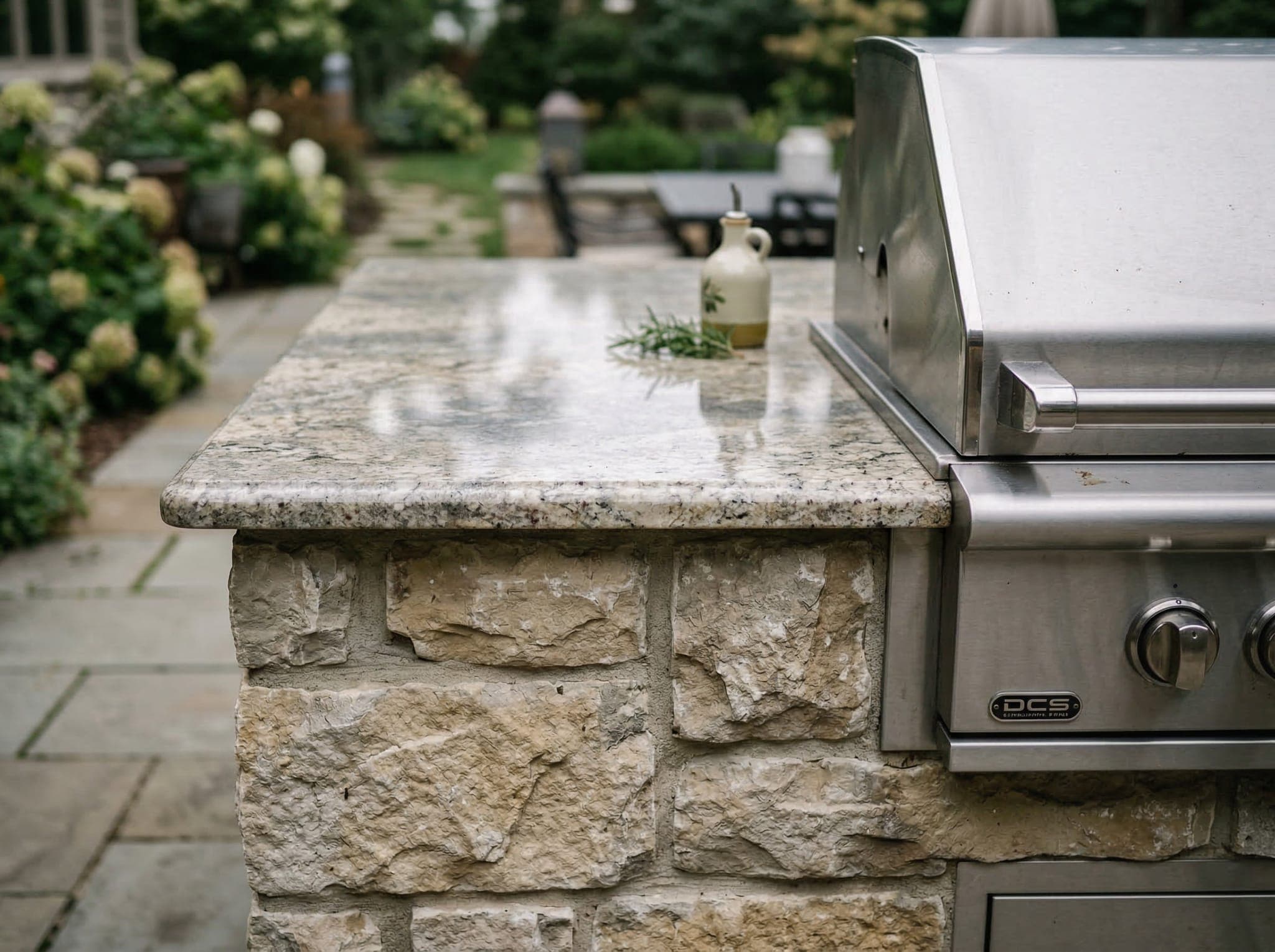
- Granite countertops resist heat, staining, and freeze-thaw cracking
- Natural stone veneer (limestone or bluestone) weathers gracefully and complements most home exteriors in the area
- Stainless steel appliances rated for outdoor use will not rust or warp
- Concrete countertops work well at a lower price point but need resealing every one to two years
Avoid materials like marble, standard interior tile, or wood countertops. They will not hold up to four seasons of Indiana weather.
What Drives Your Outdoor Kitchen Cost Up?
Several factors can push your project above the typical ranges. Knowing these in advance helps you budget realistically.
Utility Runs
If your outdoor kitchen sits far from your home's gas, water, and electrical lines, the cost of running those utilities increases significantly. Every additional foot of gas line, water pipe, or electrical conduit adds to the total. A kitchen positioned near an exterior wall with existing utility access is the most cost-effective setup.
Site Preparation
Not every patio can support an outdoor kitchen. If you need a new concrete pad, retaining wall, or grading work before the kitchen goes in, those costs add $2,000 to $10,000 or more depending on your site. The clay soil common across the region often requires deeper footings and better drainage than you would need in sandier regions.
Permits and Inspections
Gas line connections, plumbing, and electrical work require permits in Warrick and Vanderburgh counties. Your contractor should handle the permit process, but the fees and inspection requirements add time and modest cost to the project. All outdoor electrical work must meet National Electrical Code requirements for GFCI protection in wet locations. A licensed contractor ensures everything is built to code the first time.
Appliance Choices
The grill is usually the single most expensive component. A solid 4-burner built-in grill starts around $1,000 to $1,500. A premium brand with infrared burners and rotisserie can run $5,000 to $8,000+. Add a pizza oven, smoker, and warming drawer, and your appliance budget alone can reach $15,000 to $20,000.
Does an Outdoor Kitchen Increase Home Value?
Yes. An outdoor kitchen is one of the highest-return outdoor investments you can make. Industry data from the National Association of Realtors suggests outdoor living improvements recoup 60 to 200 percent of their cost depending on the quality of the build and the local market.
In the Tri-State area, outdoor kitchens are increasingly expected on higher-end properties. A finished outdoor kitchen signals that the property is designed for living, not just sitting. Buyers notice the difference between a house with a grill on the patio and one with a built-in cooking and entertaining space.
The key to maximizing return: build it to match your home and landscape. A well-integrated kitchen that uses matching stone, professional-grade construction, and a covered structure holds its value. A prefab island sitting on a cracked concrete slab does not.
How to Start Planning Your Outdoor Kitchen
Planning an outdoor kitchen follows the same process as any landscape design project. Start with these questions:
- How do you cook? If you grill once a week, a straight island is probably enough. If you host regularly and want a full prep-to-serve setup, plan for an L or U-shaped layout
- What is your realistic budget? Decide your range before talking to a contractor. A $15,000 budget and a $50,000 budget lead to very different conversations
- Where will it go? Consider proximity to your home's utilities, prevailing wind direction (you do not want smoke blowing into the house), sun exposure, and how the kitchen relates to your existing patio and landscape
- Covered or open? A covered structure adds cost but dramatically improves comfort, durability, and resale value. If your budget is tight, plan the footings and structure to add a roof later
- Timeline? Spring is the most popular time to build outdoor kitchens in the region. Planning in late winter gives your contractor time to design, permit, and schedule the project for early spring construction
When you are ready to move forward, schedule a free consultation with our design team. We will walk your property, talk through your goals, and put together a design and estimate based on your specific site.
An outdoor kitchen in the Evansville and Newburgh area typically costs $15,000 to $35,000 for a mid-range custom build. The biggest cost drivers are your grill, countertop material, and whether you add a covered structure. Start by deciding how you cook and entertain, then match your layout and features to that vision.