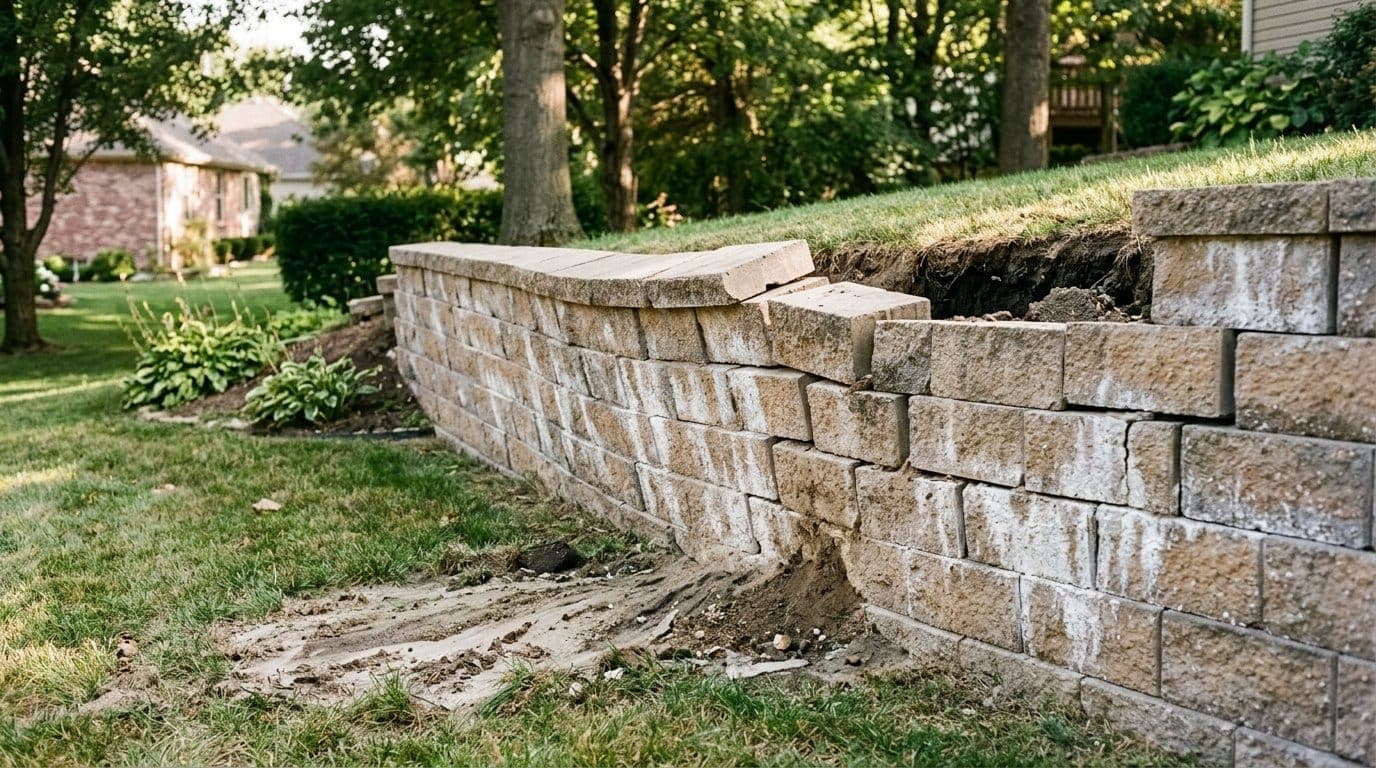
You have a slope that is washing out, a yard you cannot use, or a hillside that creeps closer to your foundation every year. A retaining wall solves all three problems. Here is what it costs.
A retaining wall costs $20 to $50 per square foot installed. Most homeowners in the Evansville, Newburgh, and greater Tri-State area spend $3,500 to $10,000 on a professionally built retaining wall. A small garden wall under 3 feet tall might cost $2,000 to $4,000. A large structural wall over 4 feet that requires engineering and permits can run $15,000 to $25,000 or more.
This guide breaks down real pricing by material, height, and project type so you know what to budget before calling a contractor.
Every project is different. The pricing and timelines discussed here are general estimates based on typical projects in our area. Your actual costs and schedule will depend on your property, materials, scope of work, and other factors. Contact us for a personalized estimate.
Retaining Wall Cost by Project Type
Most retaining walls fall into one of three categories based on purpose and complexity. The project type determines the material, engineering, and labor your wall needs.
Garden and Landscape Walls: $2k to $6k
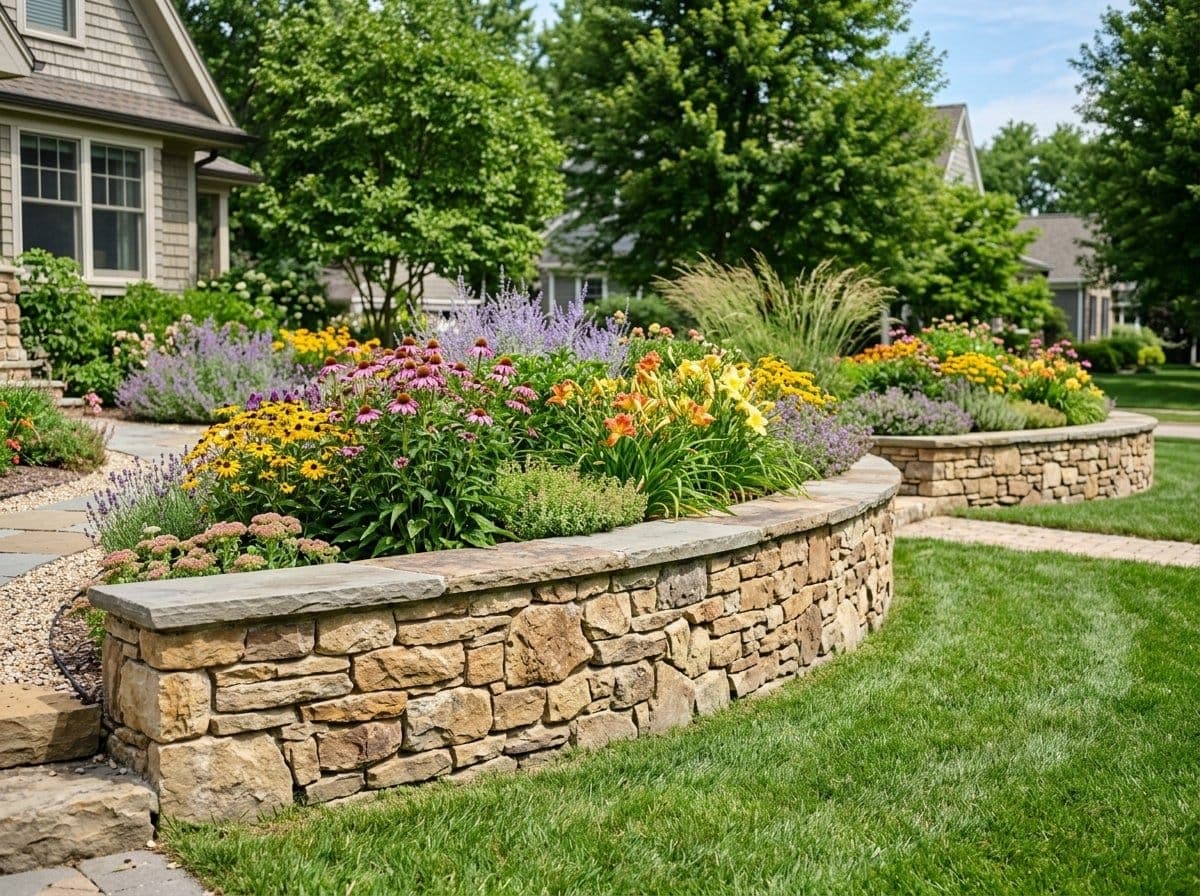
A garden or landscape retaining wall costs $2,000 to $6,000 for walls under 3 feet tall and 20 to 40 feet long. These walls define planting beds, create terraced garden areas, and add visual structure to your landscape without major structural demands.
This is the most common retaining wall project for homeowners. You are turning a gentle slope into level planting areas or adding a low border wall to separate your lawn from a garden bed.
What is typically included:
- Segmental block or natural stone up to 3 feet tall
- Compacted gravel base (6 to 8 inches deep)
- Drainage aggregate and perforated pipe behind the wall
- Cap stones on top for a finished look
- Basic grading and site preparation
Structural Slope Walls: $6k to $15k
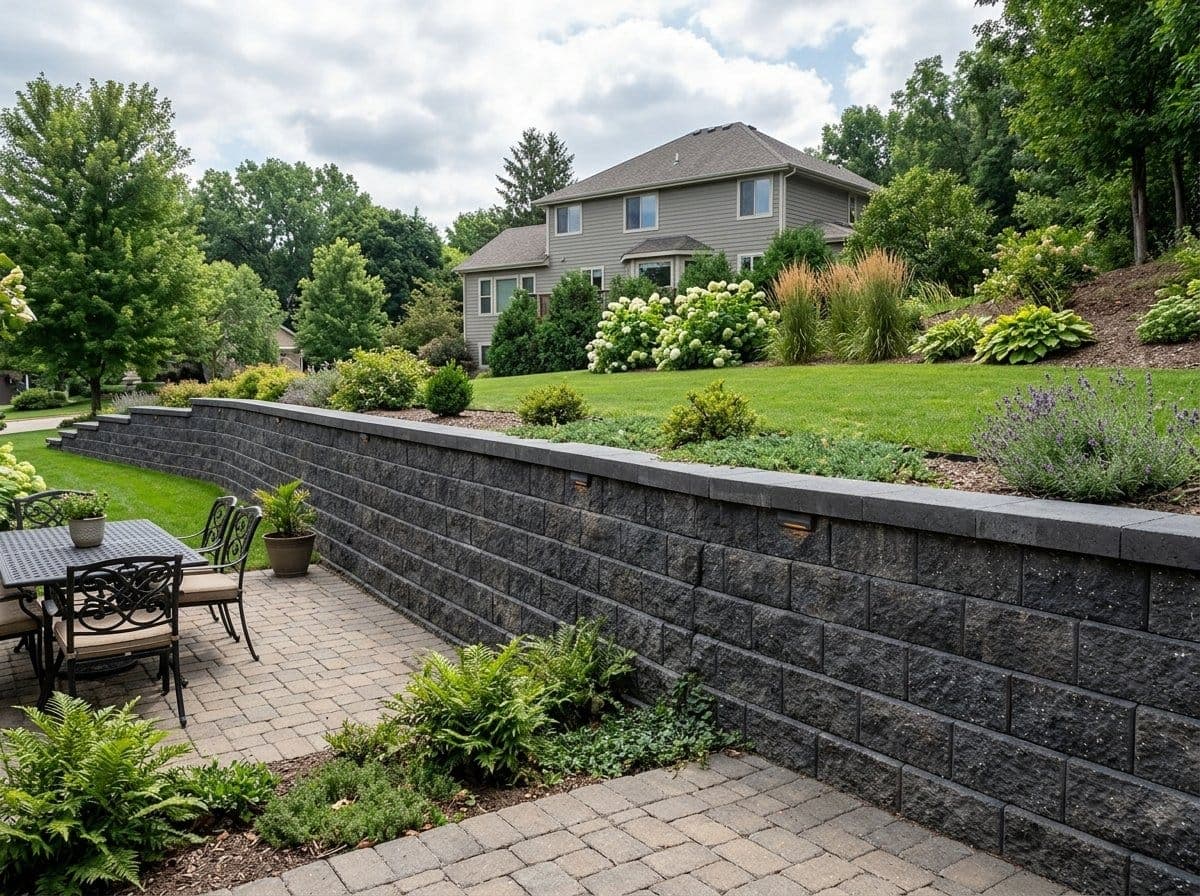
A structural retaining wall runs $6,000 to $15,000 for walls 3 to 5 feet tall and 30 to 60 feet long. These walls hold back significant soil loads and require proper engineering, deeper footings, and geogrid reinforcement.
This is the wall you need when a slope threatens your foundation, your yard is too steep to use, or you want to create a level area for a patio or outdoor living space. The wall is doing real structural work.
What is typically included:
- Segmental block with geogrid reinforcement layers
- Engineered design (required for walls over 4 feet in most jurisdictions)
- 10- to 14-inch compacted gravel base
- Full drainage system with aggregate, filter fabric, and perforated pipe
- Grading and soil removal or redistribution
- Building permit (if required)
Multi-Level Terraced Walls: $12k to $25k+
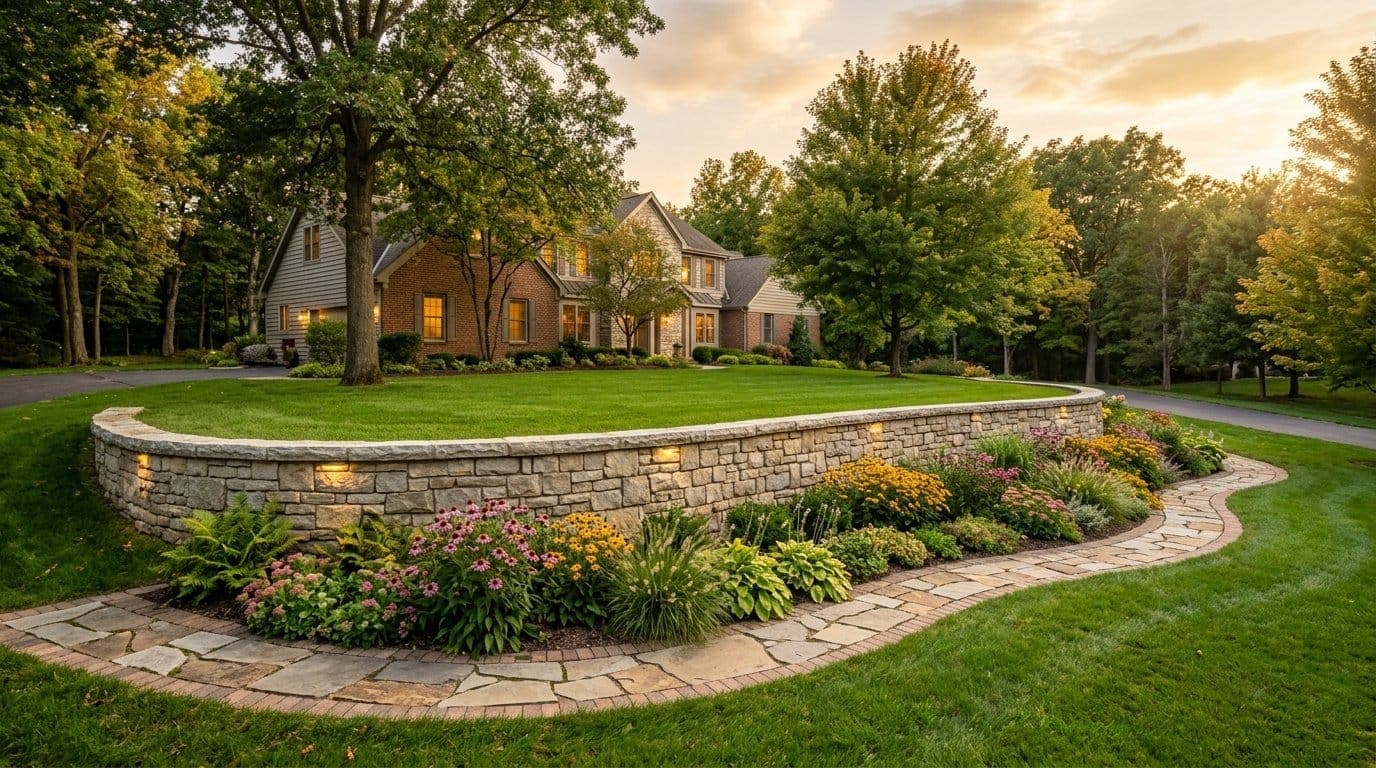
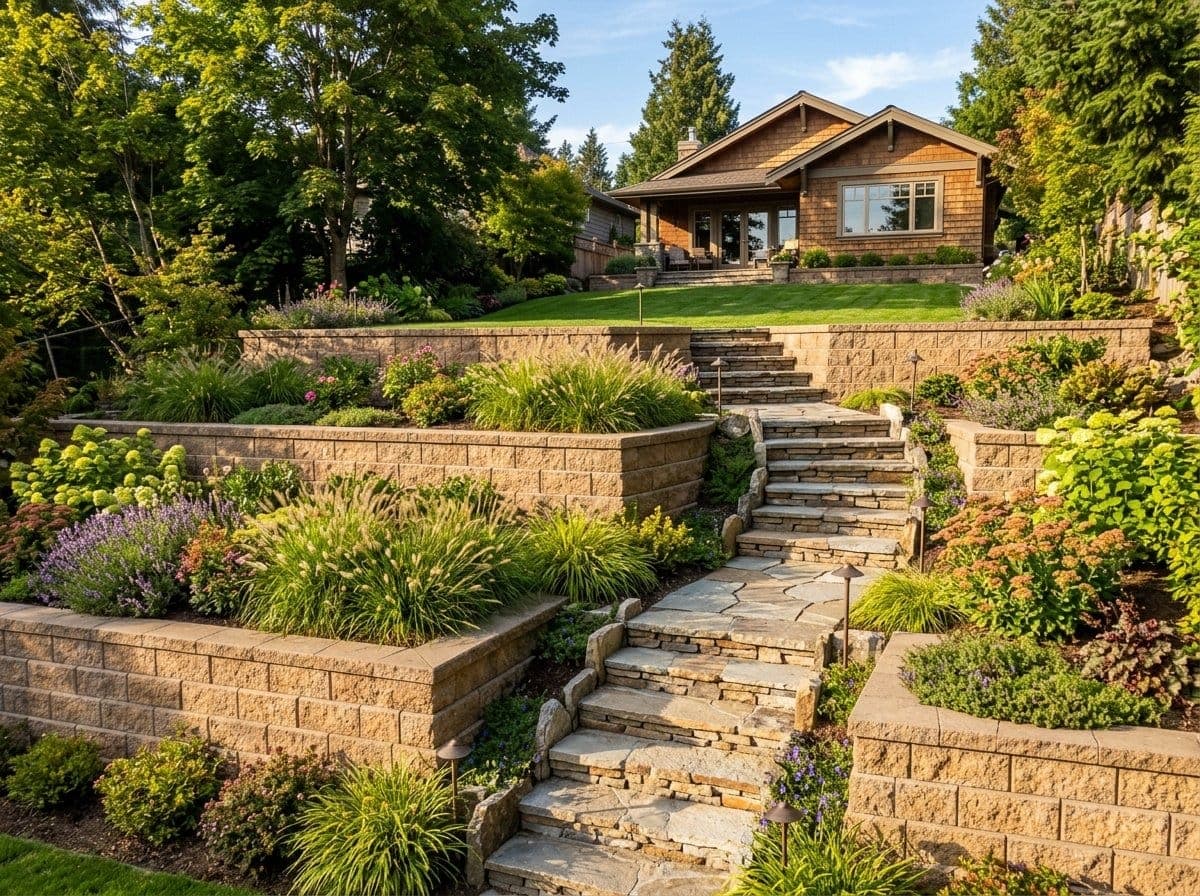
A multi-level terraced retaining wall system runs $12,000 to $25,000 or more for two or three tiered walls that step up a steep grade. Terracing a hillside is one of the most effective ways to turn an unusable slope into a functional landscape with level areas for gardens, walkways, or seating.
Each terrace wall is shorter than a single tall wall would be, which reduces the structural load on each wall and creates planting areas between the tiers. Two 3-foot walls with a 4-foot planting area between them are often more cost-effective than one 6-foot wall that requires heavy engineering.
What is typically included:
- Two or three tiered walls (typically 2 to 4 feet each)
- Engineered design for the overall system
- Full drainage behind each wall tier
- Planting areas between tiers
- Steps or a path connecting the levels
- Landscape lighting on the walls and steps
- Significant grading and earthwork
Retaining Wall Cost by Material
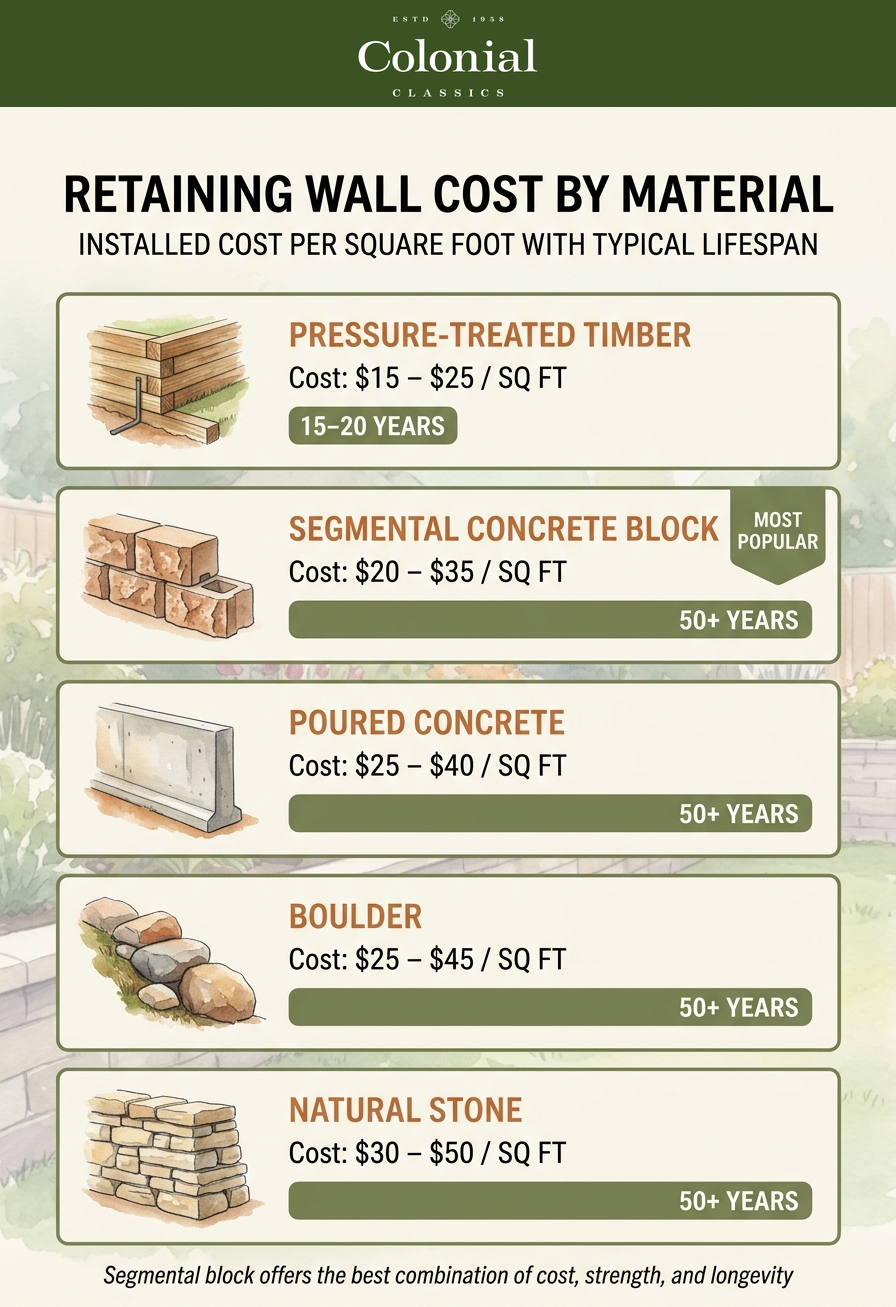
The material you choose affects both the price and the look of your wall. Here is how the most common options compare for the Tri-State area's climate (USDA Zone 7a with regular freeze-thaw cycles). National pricing benchmarks from sources like HomeAdvisor's 2025 retaining wall cost data track closely with the ranges below for the Evansville and Newburgh area.
| Material | Cost Per Sq Ft (Installed) | Lifespan | Best For |
|---|---|---|---|
| Pressure-treated timber | $15 to $25 | 15 to 20 years | Budget projects under 3 feet |
| Segmental concrete block | $20 to $35 | 50+ years | Most residential walls |
| Poured concrete | $25 to $40 | 50+ years | Tall structural walls |
| Natural stone | $30 to $50 | 50+ years | Low garden walls and borders |
| Boulder | $25 to $45 | 50+ years | Wooded lots and natural settings |
Segmental concrete block is the most popular choice in the region. The blocks interlock for structural strength, handle freeze-thaw cycles without cracking, and come in a range of colors and textures. The National Concrete Masonry Association publishes the design standards that most contractors follow for segmental retaining walls. Brands like Belgard, Unilock, and Anchor offer blocks that mimic the look of natural stone at a lower price point. For walls over 4 feet, segmental block with geogrid reinforcement is the standard structural solution.
Natural stone creates a distinctive, timeless look that block cannot fully replicate. Limestone and fieldstone are the most common choices in Southern Indiana because they are locally available and blend with the region's natural landscape. Natural stone works best for shorter walls (under 4 feet) where structural demands are lower and the irregular shapes add character.
Timber is the lowest-cost option, but it has the shortest lifespan. Pressure-treated wood will eventually rot, warp, and lose structural integrity. If you are building a wall you want to last decades, block or stone is the better investment. Timber makes sense for temporary walls, garden borders under 2 feet, or projects where budget is the top priority.
Boulder walls work best on wooded lots and informal landscapes where you want the wall to look like it belongs in the natural terrain. Large boulders are placed to follow the land's contour. The material cost is moderate, but heavy equipment access drives the labor cost higher.
How Wall Height Affects Cost
Height is the single biggest cost driver for retaining walls. A taller wall holds back exponentially more soil pressure, which means deeper footings, more reinforcement, and often engineering and permits.
| Wall Height | Cost Per Linear Foot | Notes |
|---|---|---|
| 2 feet | $40 to $80 | Simple garden wall. No permit needed |
| 3 feet | $60 to $120 | Standard landscape wall. Usually no permit |
| 4 feet | $80 to $180 | Permit threshold in most jurisdictions |
| 5 feet | $120 to $250 | Engineering and geogrid required |
| 6 feet | $180 to $350 | Significant structural requirements |
The cost per linear foot increases sharply above 4 feet because the wall crosses from a simple landscape project into a structural engineering project. A 4-foot wall might need two layers of geogrid reinforcement. A 6-foot wall might need four or five layers, each extending 6 to 8 feet behind the wall. That means more excavation, more material, and more labor.
If your slope needs more than 4 feet of height, ask your contractor about terracing with two shorter walls instead of one tall one. Two 3-foot walls often cost less than a single 6-foot wall because each wall avoids the engineering threshold and requires lighter reinforcement.
What Drives Retaining Wall Cost Up or Down?
Beyond height and material, five factors have the biggest impact on your final price.
- Soil conditions: The clay-heavy soils common across Southern Indiana, Western Kentucky, and Southeastern Illinois hold water and create more pressure behind the wall. Clay soils require deeper footings, more drainage infrastructure, and sometimes soil stabilization before the wall goes in. You can look up your property's soil type on the USDA Web Soil Survey to understand what your contractor is working with.
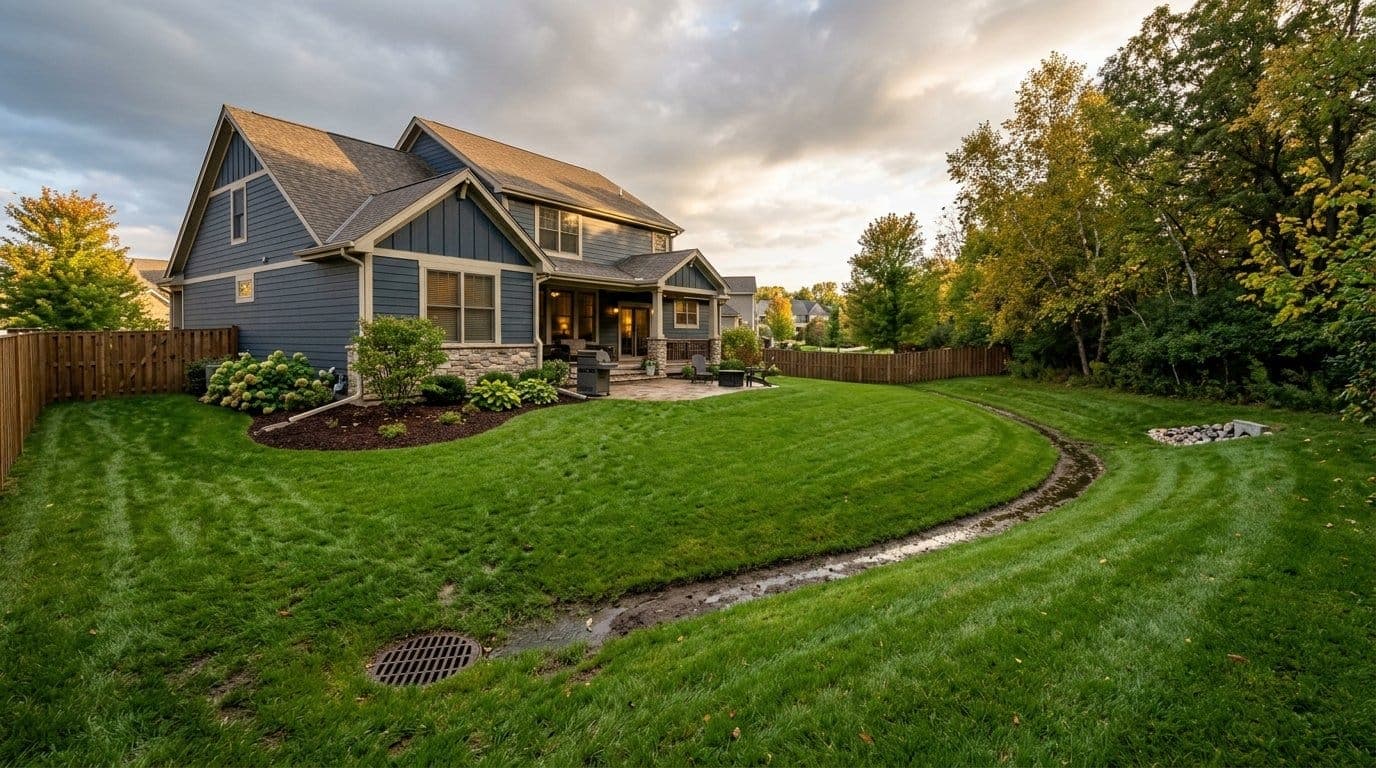
- Drainage complexity: Every retaining wall needs drainage behind it. A simple slope with good natural drainage might only need a gravel backfill and a perforated pipe. A site where water collects behind the wall needs a more extensive drainage system with weep holes, filter fabric, and discharge piping. Drainage problems are the number-one cause of retaining wall failure.
- Site access: If equipment can reach the wall location directly, the project goes faster and cheaper. If materials and equipment need to be carried through a gate, around a house, or down a slope, expect 15 to 25 percent more in labor costs.
- Wall length: Longer walls have a lower per-linear-foot cost because mobilization, equipment, and setup costs are spread over more footage. A 20-foot wall might cost $120 per linear foot while a 60-foot wall of the same height and material comes in at $80 per linear foot.
- Integrated features: Adding landscape lighting to the wall face, built-in steps, or a seat wall cap that doubles as seating around a patio adds $1,000 to $5,000 depending on scope. These features turn a purely functional wall into part of your outdoor living space.
Permits and Engineering
Retaining wall permit requirements vary across the Tri-State area, but the general rule is consistent: walls over 4 feet tall (measured from the bottom of the footing to the top of the wall) require a building permit and stamped engineering drawings. This threshold comes from the International Building Code, which most local jurisdictions adopt.
Here is what to expect:
- Building permit: $50 to $450 depending on your county and municipality
- Engineered drawings: $500 to $1,500 for a licensed structural engineer to design the wall, specify materials, and calculate reinforcement
- Inspection: Most jurisdictions require a footing inspection before the wall goes up and a final inspection after completion
Walls under 4 feet typically do not require permits or engineering, though they still need proper base preparation and drainage.
Skipping the permit is not worth the risk. An unpermitted wall over 4 feet can cause problems when you sell your home. Buyers' inspectors flag unpermitted structures, and lenders may require the wall to be permitted or removed before closing. Building it right the first time protects your investment and your home's resale value.
DIY vs. Professional Installation
A DIY retaining wall costs $8 to $18 per square foot for materials alone. That is roughly half the cost of professional installation. But retaining walls are one of the most unforgiving DIY projects because a failure is not just cosmetic. A wall that leans or collapses can damage your property, your neighbor's property, or injure someone.
When DIY makes sense:
- Short garden wall (under 2 feet) on relatively flat ground
- Straight wall with no curves or corners
- Well-drained soil (not clay)
- You have experience with compaction and grading
- You own or can rent a plate compactor and level
When you need a professional:
- Any wall over 3 feet tall
- Clay soil or poor drainage
- The wall holds back a slope near your home's foundation
- The site requires grading or earthwork
- You need curves, corners, or steps
- The project requires a permit
The most common DIY mistake is inadequate drainage. Homeowners stack the blocks and backfill with the same clay soil they dug out. Within two to three years, water pressure builds behind the wall, the blocks shift, and the wall leans or fails. Tearing out and rebuilding a failed wall costs more than hiring a professional the first time.
Do Retaining Walls Increase Home Value?
Yes. A retaining wall is both a functional improvement and a visual upgrade. It solves real problems (erosion, unusable slope, drainage) while making your landscape look more finished and intentional.
The value depends on what the wall enables. A retaining wall that creates a level yard where there was an unusable slope adds significant functional square footage to your outdoor space. A wall that prevents foundation damage protects the single most valuable part of your home. A terraced wall system with plantings transforms an eyesore into a landscape feature.
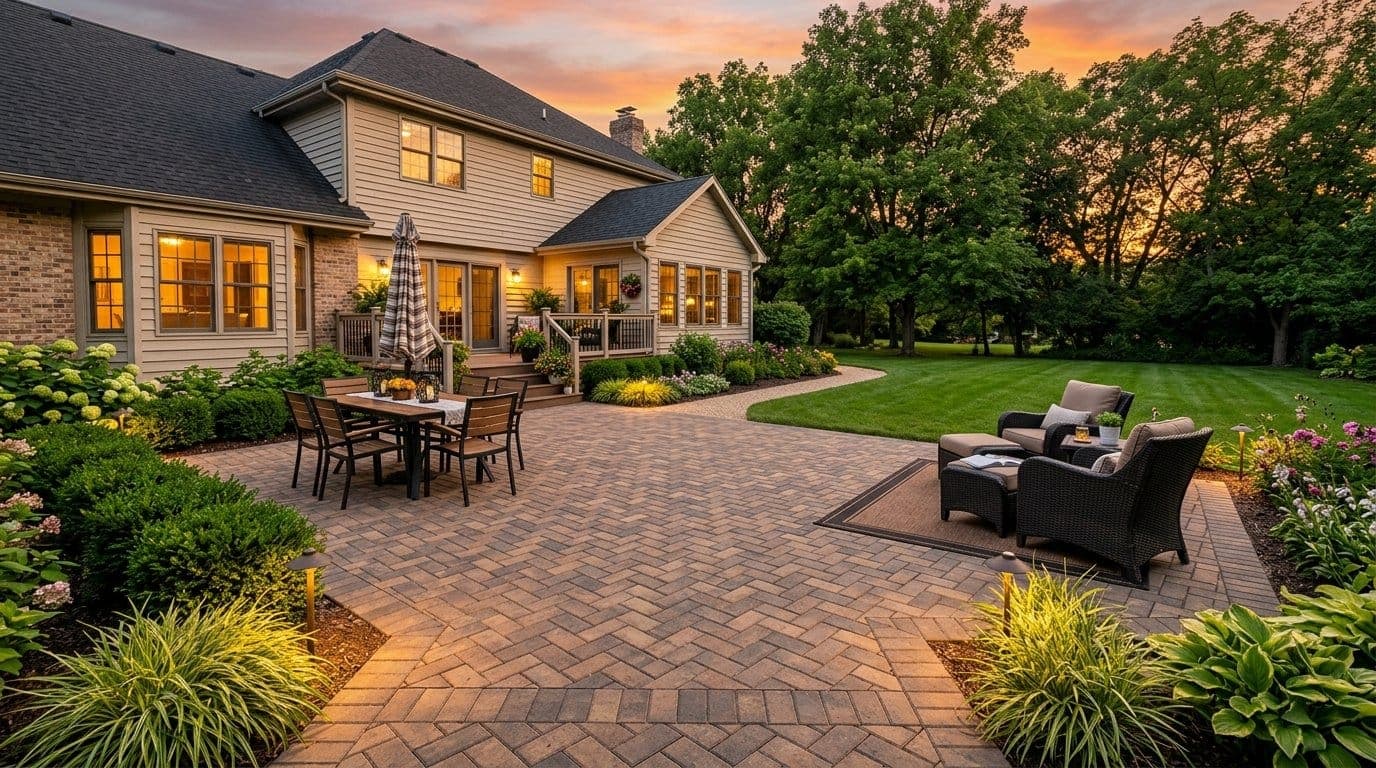
Real estate agents in the Evansville and Newburgh area consistently report that buyers notice properties with well-built hardscape features. A retaining wall paired with a paver patio, fire pit, or landscape lighting creates the kind of outdoor space that makes your property stand out in a competitive market.
How to Get Started
The best first step is understanding what your wall needs to do. Is the slope actively eroding? Is the wall creating a level area for a patio or outdoor space? Is drainage threatening your foundation? The answer determines the wall type, material, and scope.
Schedule a free consultation with our design team. We will walk your site, evaluate the slope and soil conditions, and give you a detailed scope and price. If your wall requires engineering, we coordinate with a licensed structural engineer to produce stamped drawings and handle the permit process.
If you are planning a retaining wall as part of a larger outdoor living project, our guides on paver patio costs, fire pit pricing, and landscape lighting budgets break down what each feature costs. Combining projects saves on site preparation, equipment mobilization, and grading compared to building each one separately. Starting the planning process early in the season gives your contractor time to design, engineer, and schedule before the busiest summer months.
Colonial Classics Landscape & Nursery has been building retaining walls across the Tri-State area for over 65 years. From simple garden borders to engineered structural walls, getting the foundation and drainage right is what we do.
A retaining wall costs $20 to $50 per square foot installed. Most homeowners in the Tri-State area spend $3,500 to $10,000. Segmental concrete block is the most popular material for its combination of strength and value. Wall height is the biggest cost driver. Walls over 4 feet require engineering and permits. Proper drainage behind the wall is the single most important factor in long-term performance. Terracing steep slopes with multiple shorter walls is often more cost-effective than one tall wall.