Choosing the best mulch for landscaping comes down to three things: where you are using it, what you are growing, and how much maintenance you want to deal with. Standing in front of a dozen options at the garden center, the decision gets complicated fast. Hardwood or cedar? Dyed or natural? Bulk or bagged? And how much do you actually need?
This guide breaks down every common mulch type by cost, lifespan, and best use so you can pick the right one for your yard. Whether you are in Newburgh, Evansville, or anywhere across the Tri-State area into Kentucky and Illinois, these recommendations apply to our shared USDA Zone 7a climate.
Every project is different. The pricing discussed here reflects general estimates based on typical bulk mulch costs in our area. Your actual costs will depend on material choice, quantity, delivery distance, and whether you need bed preparation or installation. Contact us for a personalized estimate.
Why Mulch Matters More Than You Think
A 2 to 3 inch layer of organic mulch retains moisture, suppresses weeds, regulates soil temperature, and feeds the soil as it breaks down. According to Purdue Extension research, a proper 2 to 3 inch layer of organic mulch:
- Retains soil moisture by reducing evaporation up to 25 percent
- Suppresses weeds by blocking sunlight from reaching weed seeds
- Regulates soil temperature by keeping roots cooler in summer and warmer in winter
- Feeds the soil as it decomposes, adding organic matter that improves structure and drainage
- Prevents erosion on slopes and in beds exposed to heavy rain
In USDA Zone 7a (the region covering Southern Indiana, Western Kentucky, and Southeastern Illinois), summer heat and clay-heavy soils make moisture retention especially important. For the 2026 growing season, mulch is one of the simplest ways to keep your plants healthy through July and August without running your irrigation system nonstop.
Mulch Types Compared
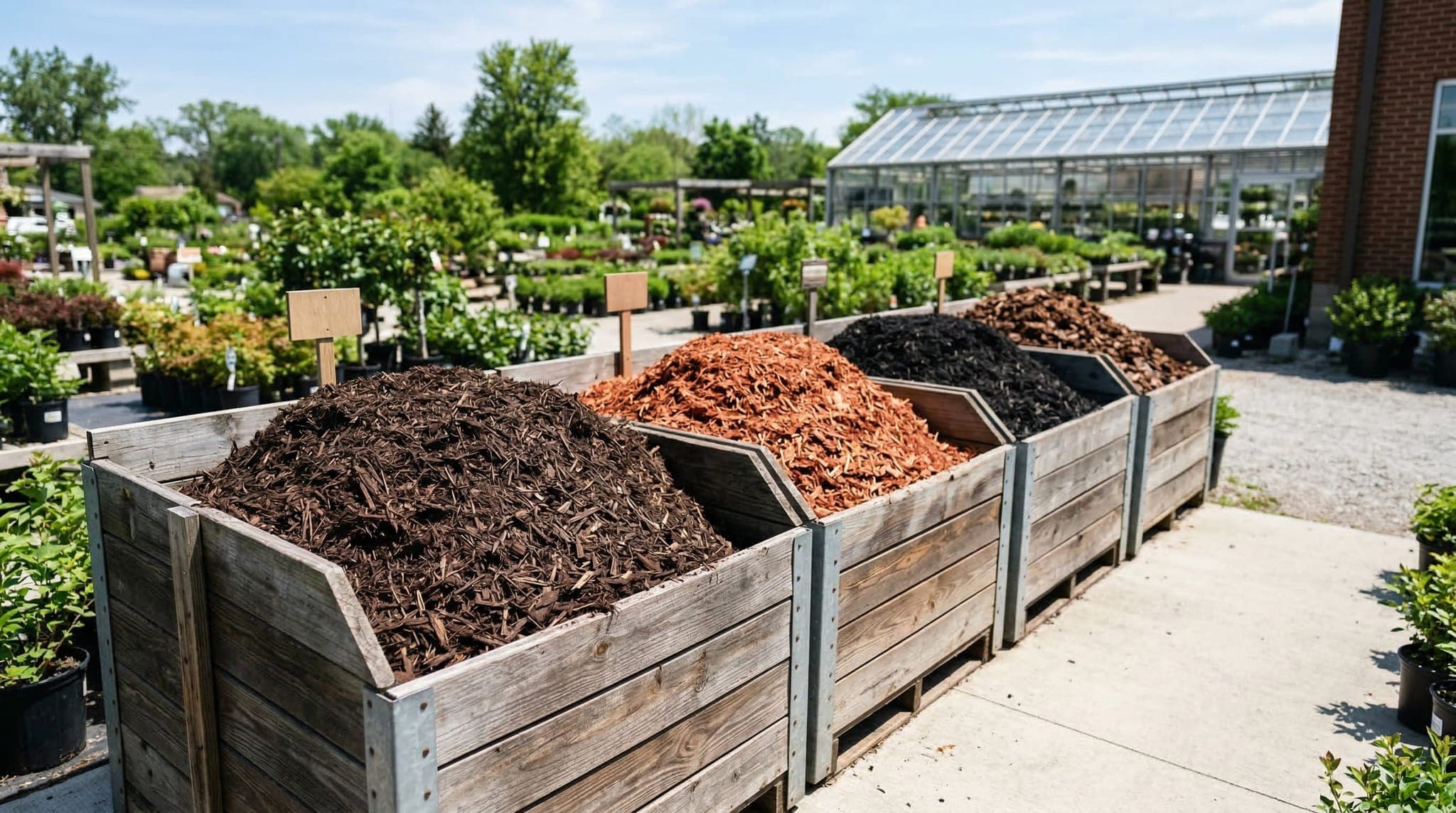
Double-shredded hardwood is the best mulch for most landscape beds, but cedar, dyed, pine bark, rubber, and stone each serve specific purposes. Here is how the most common options stack up.
Double-Shredded Hardwood
Double-shredded hardwood is the most popular mulch in the Tri-State area for good reason. Made from shredded bark and wood from hardwood trees like oak and maple, it knits together well so it stays in place even on slopes, breaks down at a moderate pace, and gives beds a clean natural look.
Best for: Flower beds, foundation plantings, shrub borders, tree rings Cost: $30 to $45 per cubic yard (bulk) Lifespan: 1 season (refresh annually)
Cedar Mulch
Cedar contains natural oils that resist insects and decay. It lasts significantly longer than standard hardwood and has a pleasant scent when freshly applied. The tradeoff is a higher price and a lighter color that some homeowners find less visually appealing as it weathers to gray.
Best for: Beds near the house where insect resistance matters, low-maintenance areas Cost: $45 to $65 per cubic yard (bulk) Lifespan: 2 to 3 seasons
Dyed Mulch in Black, Brown, or Red
Dyed mulch is shredded hardwood treated with colorfast dye. The color holds longer than natural mulch, giving your beds a vibrant look well into summer. Quality dyed mulch uses iron oxide or carbon-based dyes that are safe for plants and pets.
Best for: High-visibility beds where consistent color matters, commercial properties Cost: $35 to $50 per cubic yard (bulk) Lifespan: 1 to 2 seasons (color fades before structure breaks down)
Not all dyed mulch is created equal. Cheap dyed mulch is often made from recycled pallets, construction wood, or demolition debris that may contain chemicals. Buy from a garden center or supplier that uses clean hardwood as the base material.
Pine Bark Mulch
Pine bark mulch is available as shredded bark or nuggets. It is lightweight, naturally acidic, and breaks down slowly. The nuggets are decorative but tend to float and wash away in heavy rain, making them a poor choice for slopes or beds near downspouts.
Best for: Acid-loving plants (azaleas, blueberries, hydrangeas), flat beds with good drainage Cost: $35 to $55 per cubic yard (bulk) Lifespan: 1 to 2 seasons (nuggets last longer than shredded)
Rubber Mulch
Rubber mulch is made from recycled tires. It does not decompose, does not attract insects, and provides excellent impact cushioning. However, it does not feed the soil, can overheat in direct sun, and some studies raise concerns about chemical leaching over time.
Best for: Playgrounds and play areas only Cost: $80 to $150 per cubic yard Lifespan: 10+ years
Decorative Stone and River Rock
Decorative stone and river rock are not technically mulch but are often used in the same role. Stone does not break down, does not need annual replacement, and works well in xeriscaping and drainage applications. It does not improve soil health and can make beds significantly hotter in summer.
Best for: Drainage areas, pathways, beds without plants, modern/minimalist designs Cost: $50 to $150 per cubic yard depending on type Lifespan: Permanent (occasional top-up)
Mulch Types at a Glance
Here is a side-by-side comparison of every common mulch type by cost, lifespan, soil benefit, and best use.
- Cost/Yard
- $30 to $45
- Lasts
- 1 yr
- Feeds Soil
- Yes
- Insect Safe
- No
- Best For
- Beds and shrubs
- Cost/Yard
- $45 to $65
- Lasts
- 2 to 3 yr
- Feeds Soil
- Yes
- Insect Safe
- Yes
- Best For
- Near the house
- Cost/Yard
- $35 to $50
- Lasts
- 1 to 2 yr
- Feeds Soil
- Yes
- Insect Safe
- No
- Best For
- Curb appeal
- Cost/Yard
- $35 to $55
- Lasts
- 1 to 2 yr
- Feeds Soil
- Yes
- Insect Safe
- No
- Best For
- Acid-loving plants
- Cost/Yard
- $80 to $150
- Lasts
- 10+ yr
- Feeds Soil
- No
- Insect Safe
- Yes
- Best For
- Playgrounds
- Cost/Yard
- $50 to $150
- Lasts
- Permanent
- Feeds Soil
- No
- Insect Safe
- N/A
- Best For
- Drainage/paths
How Much Mulch Do You Need?
One cubic yard of mulch covers approximately 162 square feet at 2 inches deep or 108 square feet at 3 inches deep. The formula is straightforward:
Square footage x depth (in feet) / 27 = cubic yards needed
For a standard 2 to 3 inch application:
- A typical front yard with foundation beds and tree rings: 3 to 5 cubic yards
- A full property with front, side, and backyard beds: 5 to 10 cubic yards
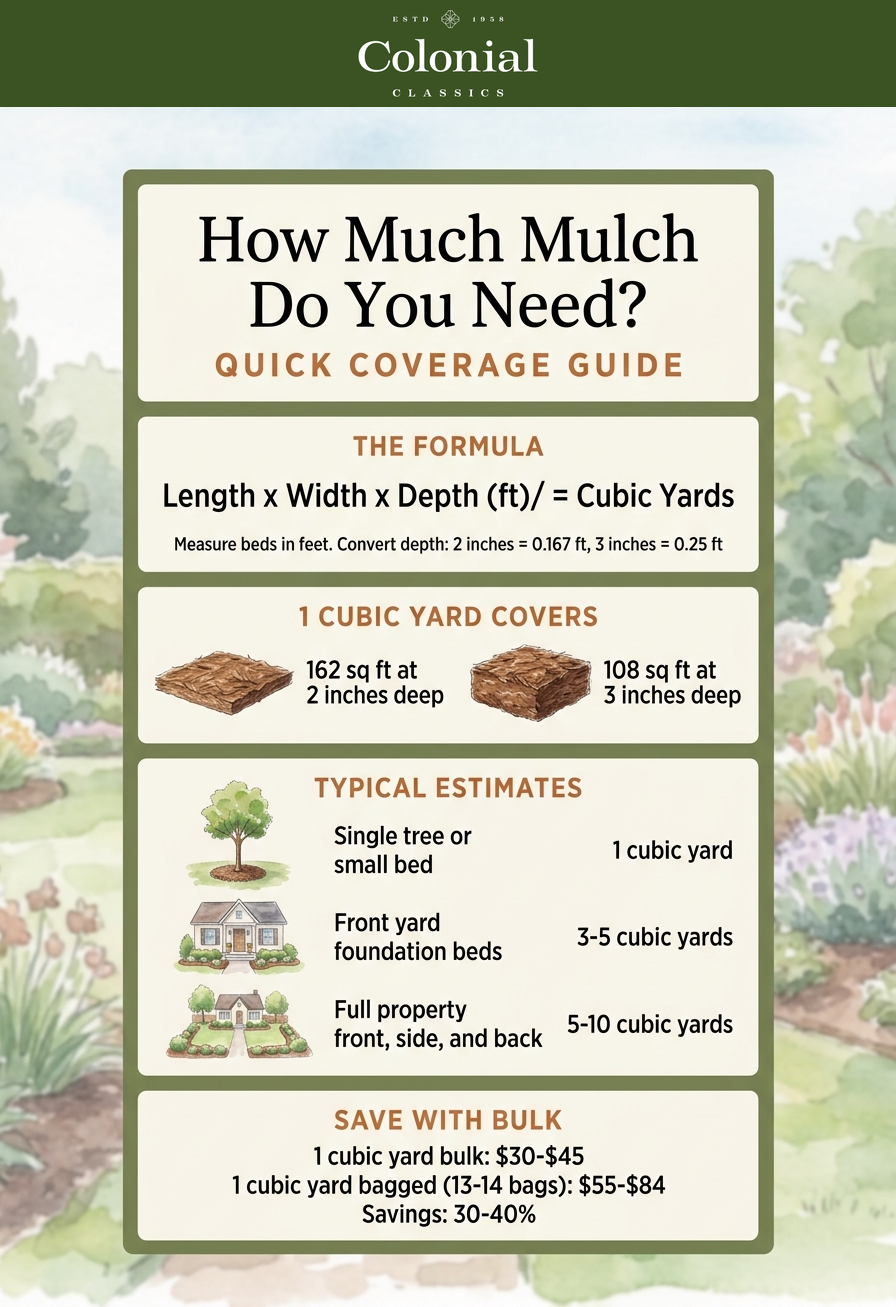
Buying in bulk saves significantly over bagged mulch. A 2 cubic foot bag covers about 8 square feet at 3 inches deep. You would need 13 to 14 bags to equal one cubic yard. At $4 to $6 per bag, that is $55 to $84 versus $30 to $45 for a cubic yard of bulk mulch. Our garden center offers bulk mulch, stone, and soil with delivery available throughout the Evansville and Newburgh area.
When to Mulch in Southern Indiana
The best time to mulch in Southern Indiana is mid-April through May. Mulch too early and you trap cold soil temperatures that delay spring plant growth. Mulch too late and you miss the window to lock in moisture before summer heat arrives.
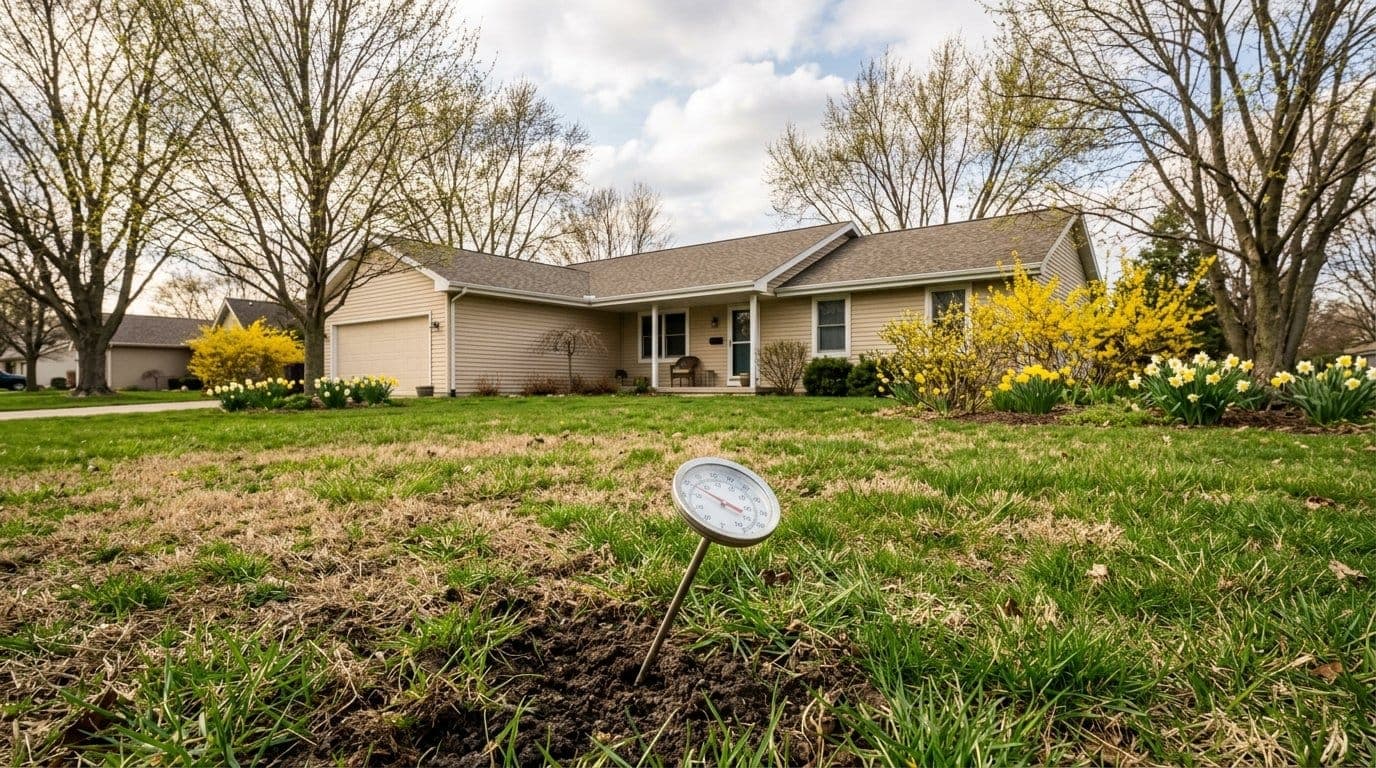
By mid-April, soil temperatures in USDA Zone 7a have typically warmed enough to support active root growth. Mulching at this point lets you suppress early weeds, lock in spring moisture, and protect roots heading into summer.
If you are planning a landscape project this spring, coordinate your mulching with any planting or bed renovation work. Mulch goes down after all plants are installed and beds are edged.
Fall mulching (late October through November) is also beneficial. A fresh layer before winter insulates root systems against freeze-thaw cycles, which are common in our region's variable winters. Fall applications work best around perennials, newly planted shrubs, and any beds that were disturbed during the growing season.
How Should You Mulch Your Landscape Beds?
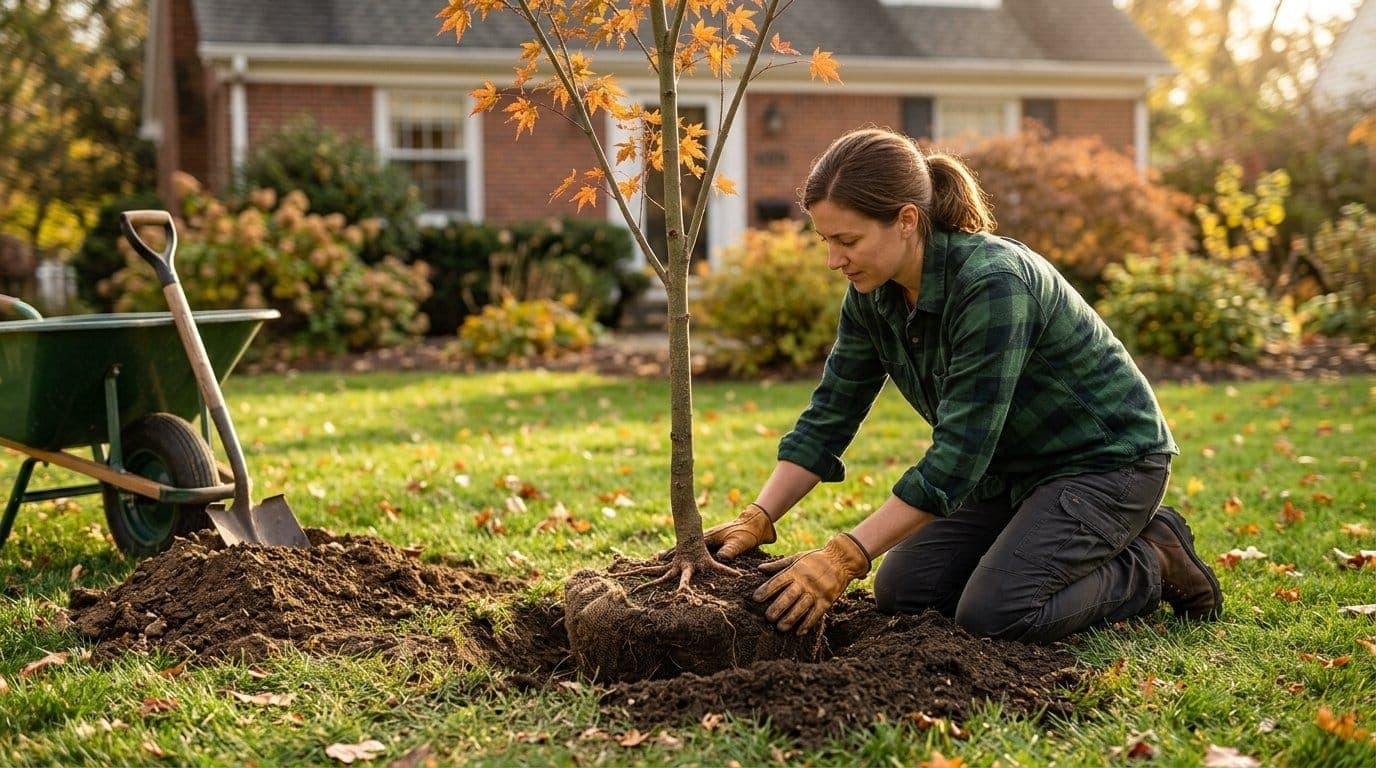
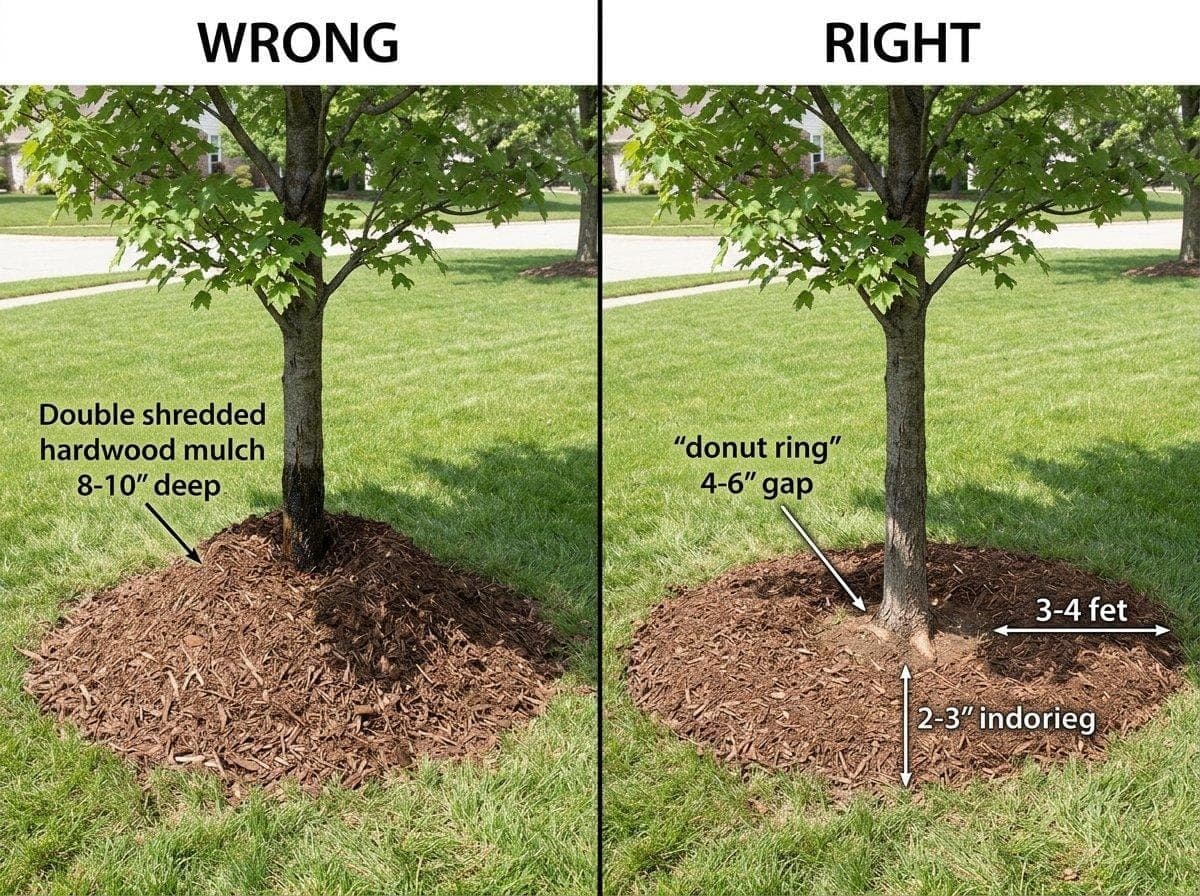
Apply 2 to 3 inches of mulch evenly across the bed, keeping it 3 to 6 inches away from tree trunks and plant stems. Getting the depth and placement right matters as much as choosing the right mulch type.
The 2 to 3 Inch Rule
Two to three inches is the sweet spot for almost every organic mulch. Thinner than 2 inches and you lose weed suppression and moisture retention. Thicker than 4 inches and you create problems:
- Excess moisture gets trapped against roots, promoting rot
- Air flow to the soil surface is blocked, suffocating beneficial organisms
- Pests like rodents find thick mulch beds an attractive nesting spot
Volcano Mulching Will Kill Your Trees
You have seen it everywhere: mulch piled 6 to 12 inches high against the trunk of a tree, shaped like a volcano. It looks intentional. It is one of the most damaging things you can do to a tree.
According to the International Society of Arboriculture, volcano mulching:
- Traps moisture against bark, promoting fungal disease and rot
- Encourages roots to grow into the mulch instead of the soil, creating girdling roots that strangle the trunk
- Creates habitat for bark-boring insects
- Can kill established trees over 3 to 5 years
The fix is simple: pull mulch back 3 to 6 inches from the trunk so you can see the root flare where the trunk meets the ground. Spread mulch in a flat, even layer out to the drip line if possible.
Is Bulk or Bagged Mulch a Better Value?
Bulk mulch costs $30 to $65 per cubic yard versus $55 to $100+ per cubic yard when buying bags. For any project over 3 cubic yards, bulk saves 30 to 40 percent.
| Factor | Bulk | Bagged |
|---|---|---|
| Cost per cubic yard | $30 to $65 | $55 to $100+ |
| Best for | 3+ cubic yards | Small touch-ups |
| Delivery | Available with minimum order | Carry home yourself |
| Consistency | Uniform texture | Varies by brand |
| Storage | Use immediately or tarp | Bags stack and store easily |
For any project larger than a single small bed, bulk mulch is the better value. Most garden centers sell bulk mulch by the cubic yard and offer delivery, which saves you a dozen trips with bags in your trunk.
What Are the Most Common Mulching Mistakes?
The five most common mulching mistakes are applying too deep, never removing old layers, mulching against the house, skipping bed edges, and using landscape fabric. Here is what to avoid.
Mulching too deep. More is not better. Anything over 4 inches causes moisture problems and root suffocation. Refresh to maintain 2 to 3 inches rather than adding on top of old layers year after year.
Never removing old mulch. Over several years, decomposed mulch compacts into a dense mat that repels water instead of retaining it. Every 2 to 3 years, rake out the old layer before adding fresh mulch.
Mulching right up to the house. Leave a 6 inch gap between mulch and your foundation, siding, or stucco. Mulch against the house holds moisture that can wick into materials and provides a bridge for termites and carpenter ants.
Ignoring bed edges. Mulch without a clean edge migrates into your lawn and looks messy within weeks. Edge your beds first. A proper bed edge also makes mowing easier because there is a clear boundary.
Using landscape fabric under mulch. It sounds logical but causes more problems than it solves. Fabric prevents mulch from breaking down into the soil, clogs with fine particles within a year, and creates a tangled mess when you try to plant through it. Skip the fabric. A proper depth of mulch suppresses weeds on its own.
Double-shredded hardwood mulch is the best all-around choice for most landscape beds in the Tri-State area. Apply 2 to 3 inches in mid-April through May. Keep mulch away from tree trunks and house foundations. Buy in bulk to save 30 to 40 percent over bagged. And whatever you do, avoid the mulch volcano.
Ready to Get Your Beds Mulched?
Colonial Classics Landscape & Nursery has been helping homeowners across the Evansville and Newburgh area with professional landscaping for over 65 years. Whether you want to pick up bulk mulch from our garden center or have our crew handle the full job with our mulching and bed care service, we have you covered.
Schedule a free consultation and we will walk your property together to figure out exactly what your beds need this spring.