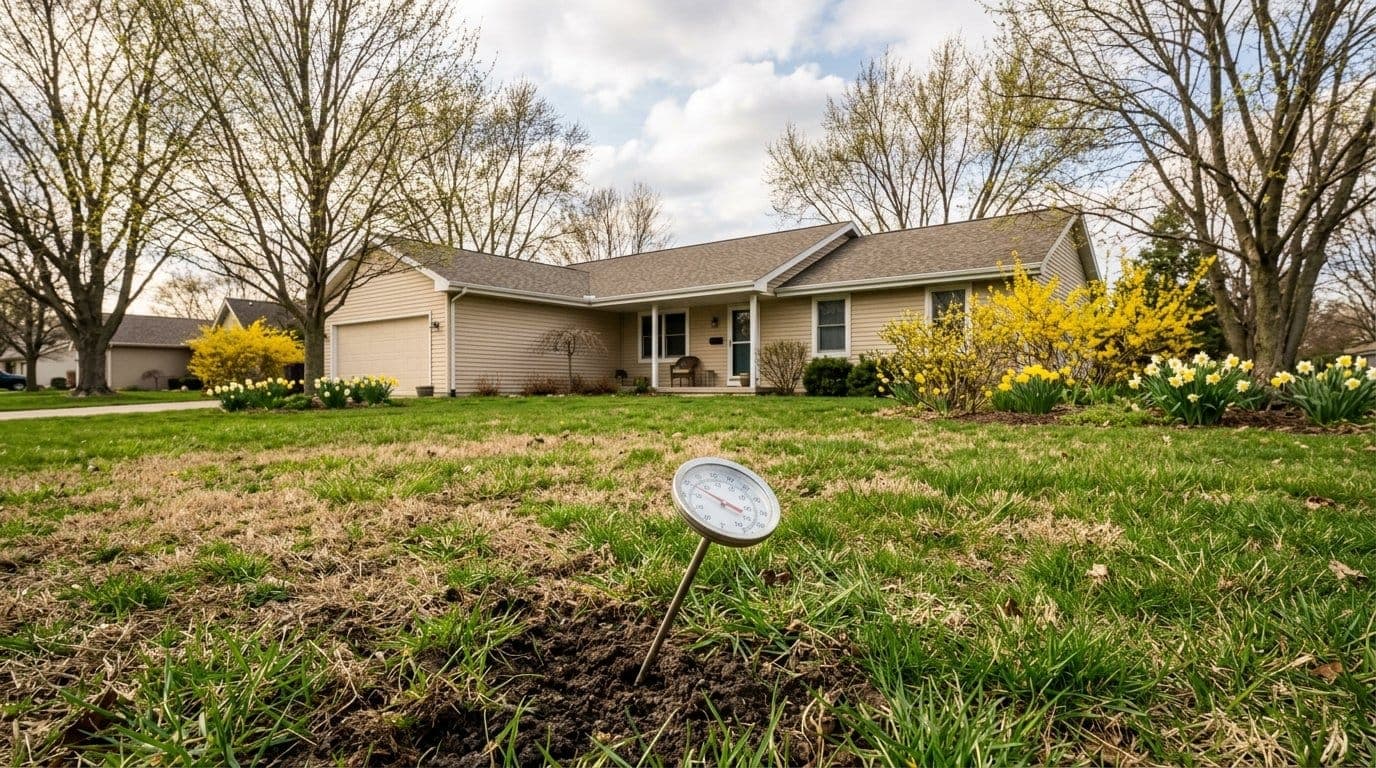
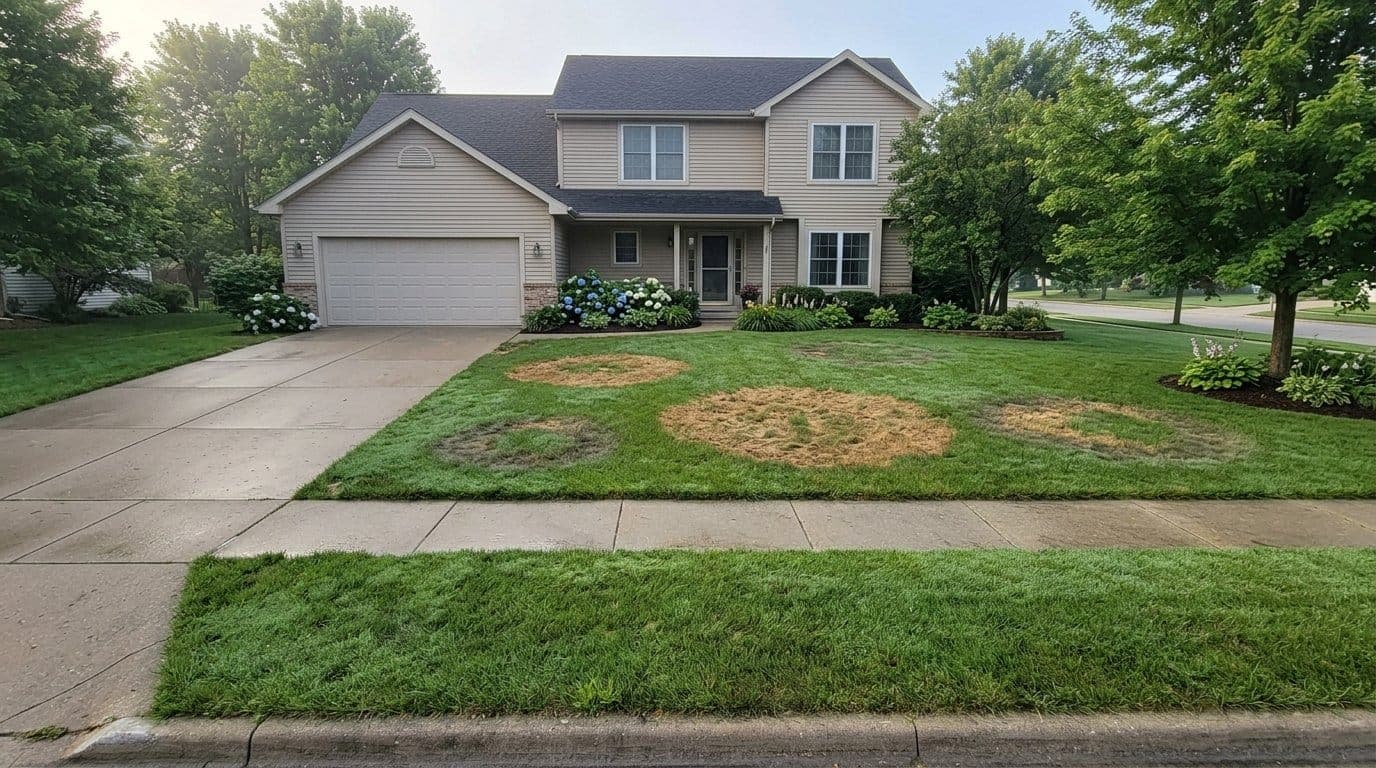
You walked outside on a humid June morning and saw brown circles in your lawn that were not there yesterday. Or thinning patches that look bleached. Or pink web like strands stuck to the grass. Something is wrong, and you do not know if it is bugs, drought, fungus, or all three.
Every lawn is different. The symptoms and timing discussed here are general patterns based on typical conditions in our area. Your specific diagnosis depends on your grass type, soil, irrigation, and recent weather. Contact us for a hands-on assessment.
Lawn disease is the most misdiagnosed problem in Southern Indiana yards. Homeowners spend money on grub control for what turns out to be brown patch fungus. They pour on fertilizer to fix what is actually red thread, and the extra nitrogen makes it worse. They water every day to revive a dry-looking lawn and feed a fungal infection instead.
This guide walks you through the most common lawn diseases in the Tri-State area, how to tell them apart, and what actually works. Most cases respond to simple cultural changes once you know what you are looking at.
Why Summer in Southern Indiana Is Fungus Season
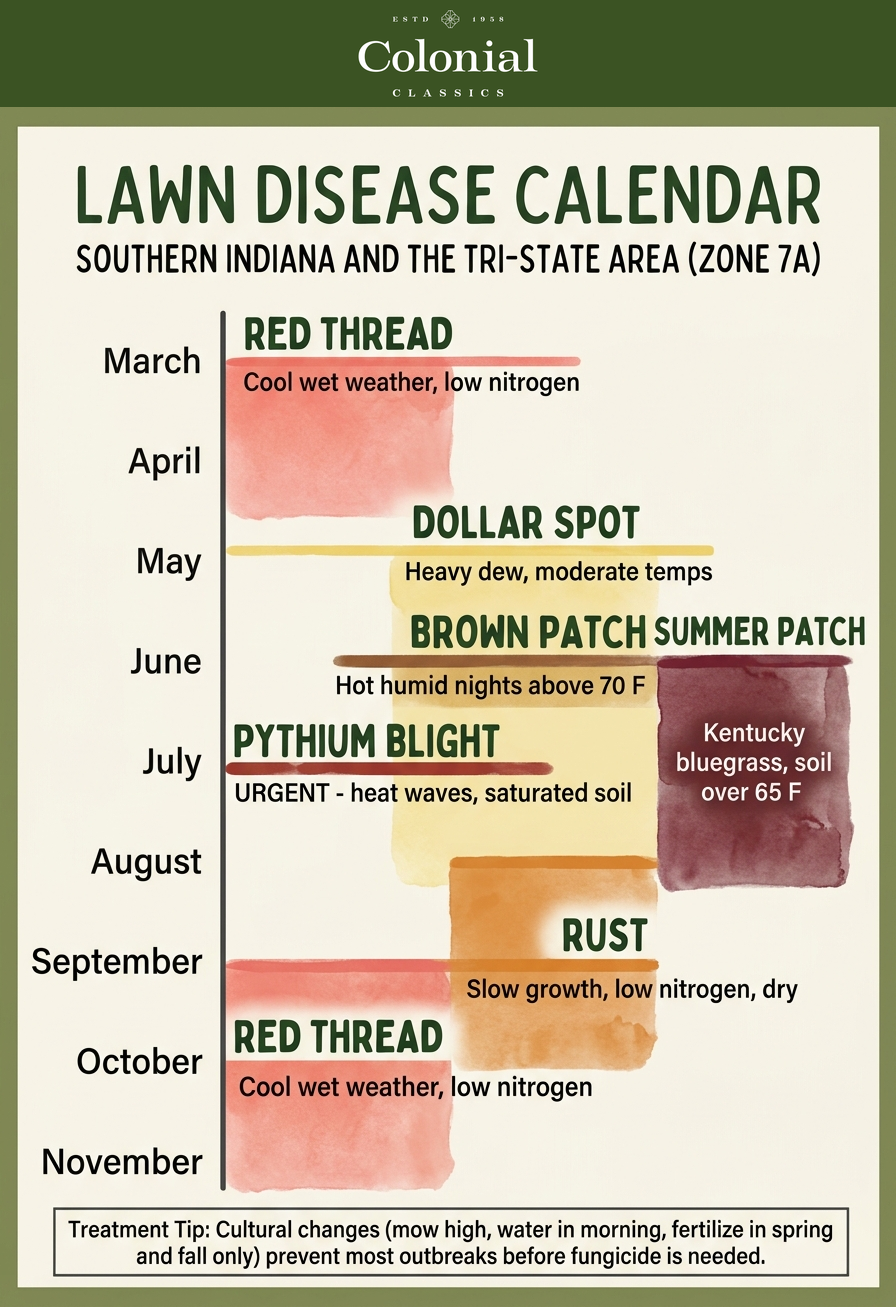
Southern Indiana and the surrounding Tri-State area sit in USDA Zone 7a, which means hot humid summers and a long fungal pressure window. Three weather patterns drive most lawn disease here:
- Warm nights above 70 degrees: when nighttime temperatures stay high and dew settles on the grass, leaf blades stay wet for 10 or more hours. That is the exact environment fungi need to germinate and spread.
- Heavy summer rainfall: Ohio Valley thunderstorms drop an inch or two in an afternoon, then humidity hangs in the air for days. Saturated thatch and prolonged leaf wetness fuel disease.
- Cool season grasses under heat stress: most lawns in the region are tall fescue, Kentucky bluegrass, or a blend with perennial ryegrass. These grasses prefer 60 to 75 degree weather. When July hits and they are stressed, their natural defenses drop and disease moves in.
Brown patch and dollar spot are widely recognized as the most common summer diseases in Indiana cool season lawns, with red thread, rust, and Pythium blight showing up regularly during the right weather windows. Lawns across the river in Western Kentucky and Southeastern Illinois face the same pressure. The University of Illinois Extension lawn care resource covers disease management for Illinois homeowners, and the Purdue Plant and Pest Diagnostic Lab diagnoses turf diseases for Indiana citizens and lawn care professionals.
The Six Most Common Lawn Diseases in the Tri-State Area
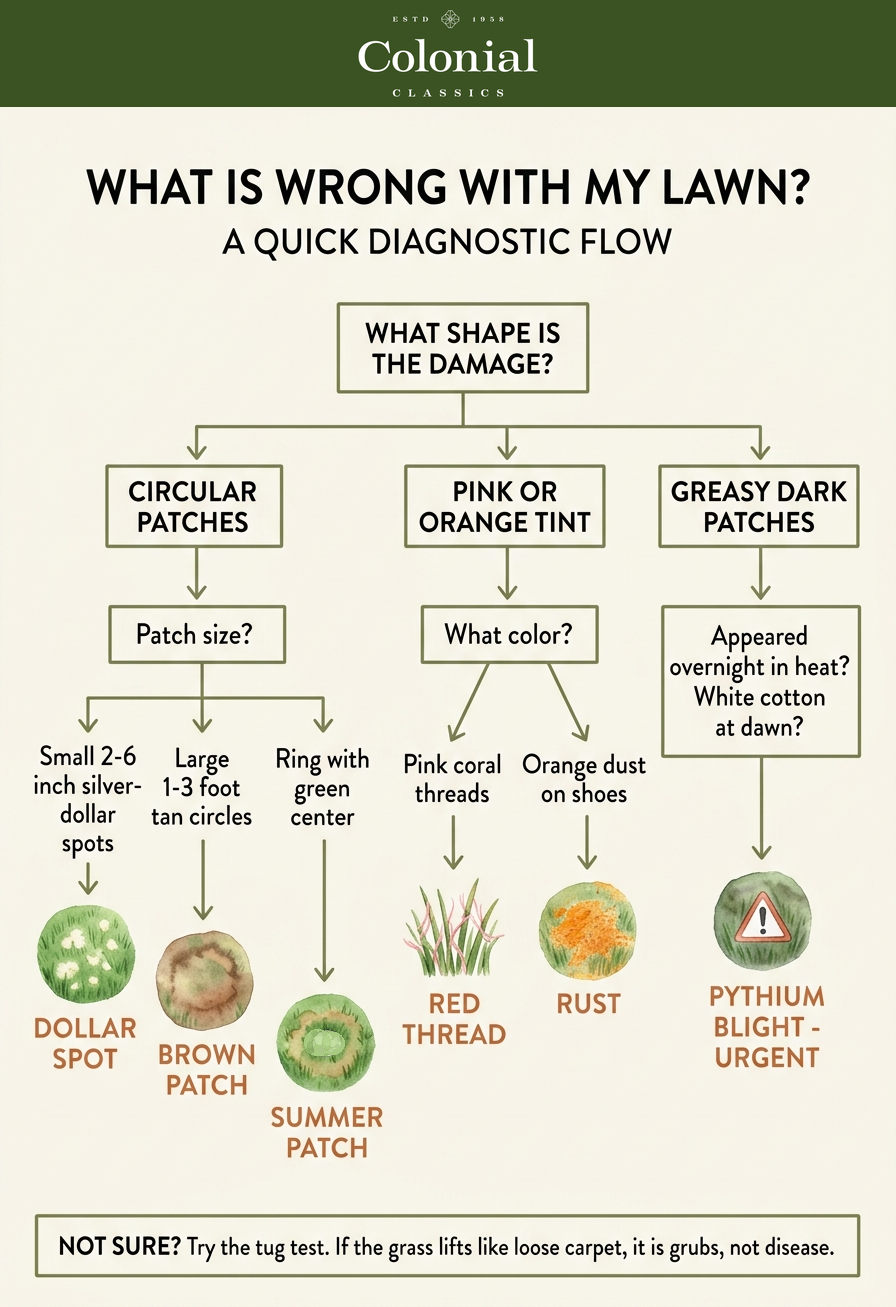
Brown Patch
Lead clue: Circular tan patches 6 inches to several feet wide. Often a darker smoke ring at the edge in early morning dew.
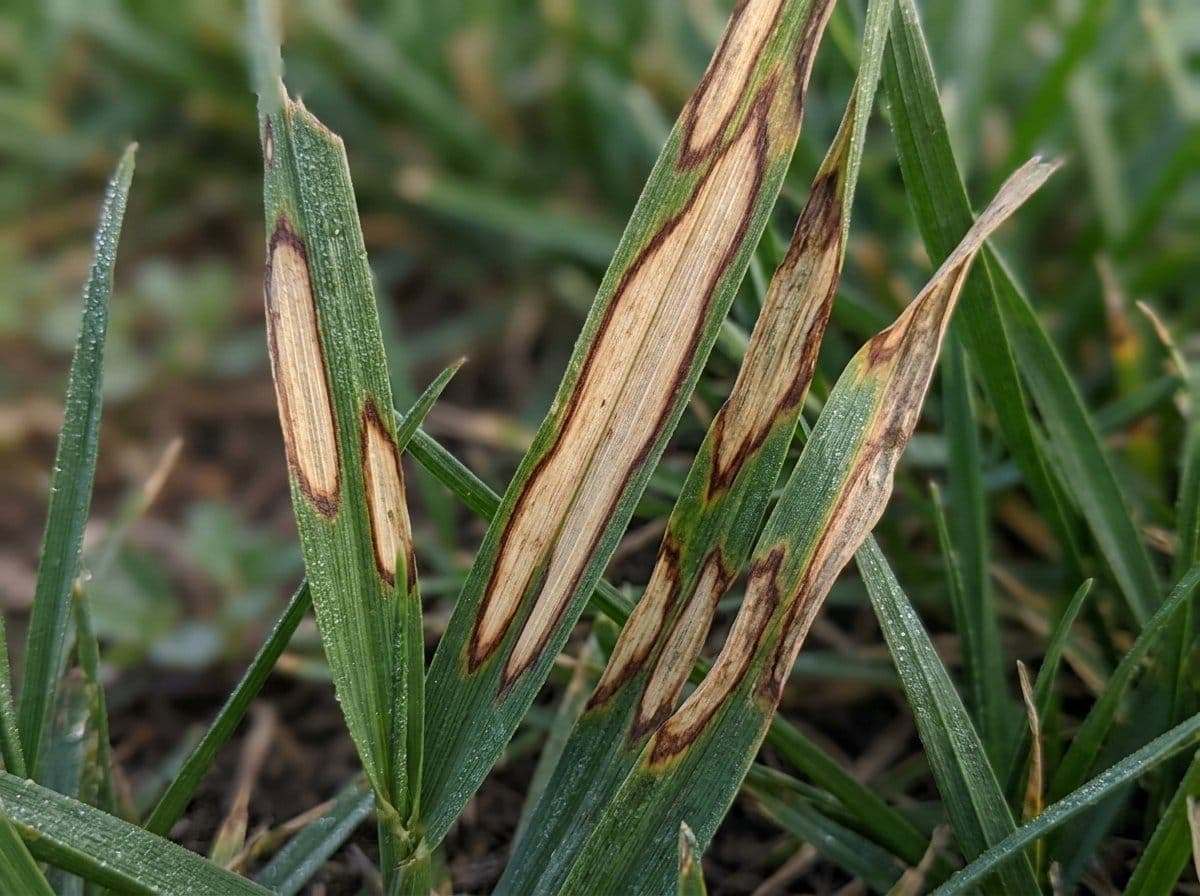
Brown patch is caused by Rhizoctonia solani, a soil fungus that activates when nighttime temperatures stay above 70 degrees and humidity is high. It hits tall fescue hardest, which is the dominant turfgrass in Southern Indiana yards. Individual blades show irregular tan lesions with brown borders. In a serious outbreak the patches merge into large dead zones.
Brown patch is a leaf disease in most cases, which means it damages blades but leaves crowns alive. Once the hot humid stretch ends, the grass usually grows back from existing crowns within a few weeks. Severe outbreaks in a heat-stressed lawn can kill crowns and leave permanent thin spots.
What helps:
- Water only in the morning, 1 inch per week in one or two deep sessions.
- Mow at 3.5 to 4 inches. Taller grass shades the soil and reduces stress.
- Skip nitrogen fertilizer during July and August. Pushing growth in heat makes brown patch worse.
- Improve airflow if the affected area sits behind dense shrubs or against a fence.
Dollar Spot
Lead clue: Small silver dollar sized spots 2 to 6 inches across. Bleached white blades with hourglass shaped lesions.
Dollar spot is caused by Clarireedia jacksonii (formerly Sclerotinia homoeocarpa) and runs from late spring through fall in this region. It is one of the most common turf diseases in Indiana, especially on lawns that are underfed or watered lightly every day. Look for small circular spots that look like silver dollars dropped on the lawn. Individual blades show distinctive lesions that pinch in the middle, giving them an hourglass shape with tan centers and reddish brown borders.
Dollar spot loves heavy morning dew, low nitrogen, and dry soil with wet leaves. Lawns that are underfed or watered lightly every day are dollar spot magnets.
What helps:
- Apply a light spring nitrogen feeding. Underfed lawns get more dollar spot, not less.
- Water deeply once or twice a week to soak the root zone, never light daily watering.
- Mow in the morning after dew dries, never wet.
- Bag clippings during an active outbreak to remove infected tissue.
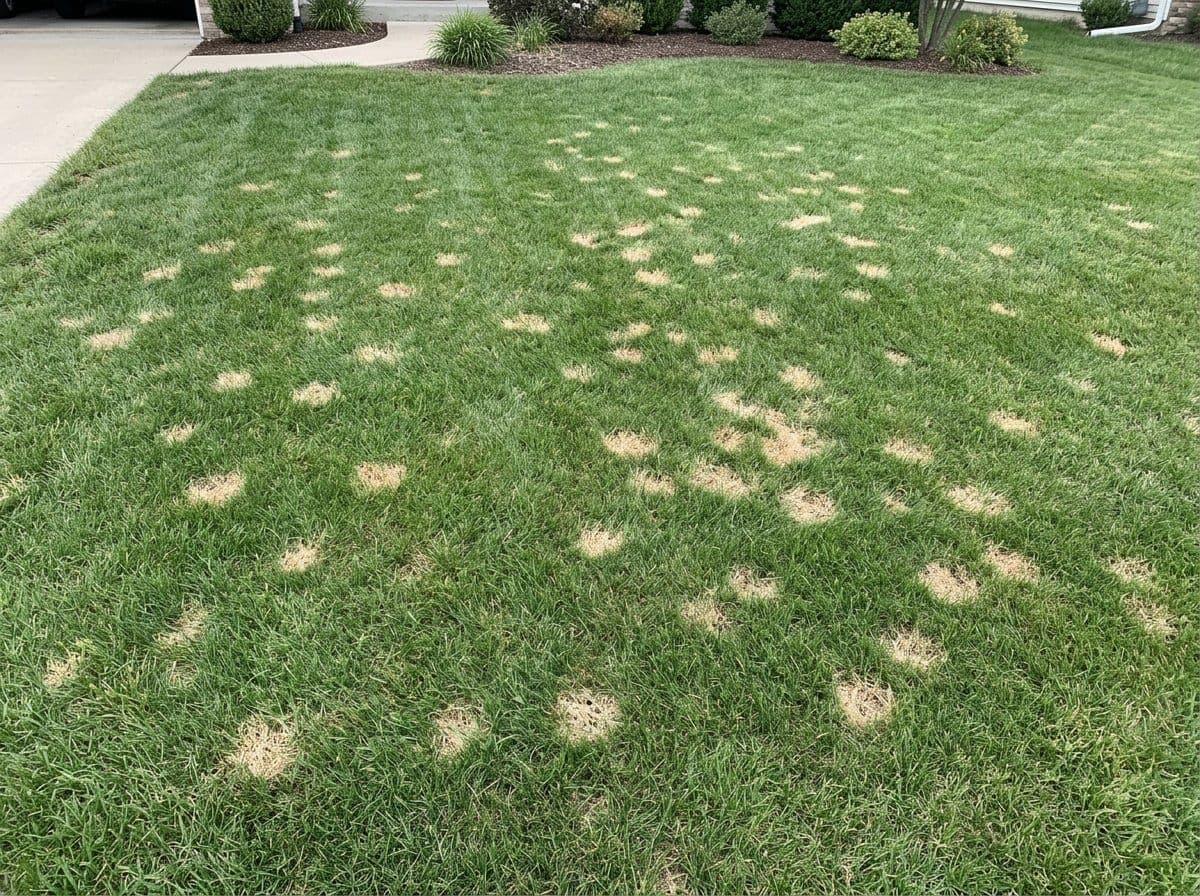
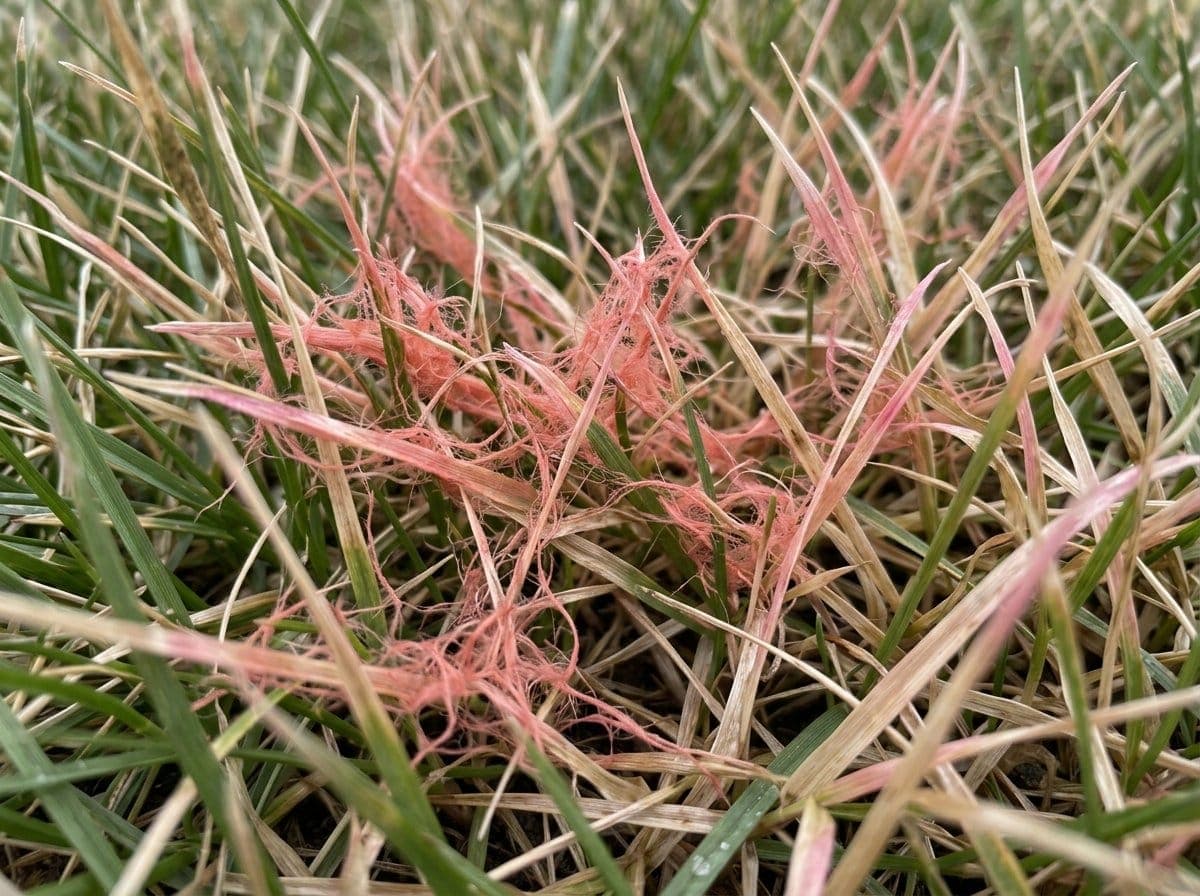
Red Thread
Lead clue: Pink or coral colored thread like strands extending from grass blades. Patches look pink from a distance.
Red thread is caused by Laetisaria fuciformis and shows up most often during cool wet weather in spring and fall, but it can appear during damp humid stretches anytime from May through November. It hits perennial ryegrass and fine fescue hardest, with Kentucky bluegrass and tall fescue moderately affected.
The diagnostic giveaway is the bright pink or coral fungal threads that grow from the tip of infected blades. From a distance, an infected lawn area takes on a pink cast. Red thread is almost always linked to low nitrogen. Lawns that have not been fertilized in a year or two get red thread far more often than well-fed lawns.
What helps:
- Apply nitrogen at the labeled spring rate. Most red thread fades within 2 to 3 weeks of a proper feeding.
- Keep up a steady fertilization schedule going forward. A professional fertilization program handles the timing automatically.
- Rake out dead infected tissue if a patch is severe to speed recovery.
Rust
Lead clue: Orange dust on your shoes after walking across the lawn. Individual blades show orange or yellow pustules.
Rust is caused by several Puccinia species and typically shows up in late summer and early fall, especially in lawns that are slow growing because of drought, low nitrogen, or compacted soil. The signature symptom is the orange spore dust that comes off the grass when you walk through it.
Rust rarely kills grass. It is mostly cosmetic. But it signals that the lawn is not growing fast enough to outpace the disease, which usually points to drought stress, low fertility, or compaction.
What helps:
- Resume regular mowing if you have been skipping cuts. Removing infected blade tips removes spores.
- Apply a light fall nitrogen feeding to push fresh growth.
- Aerate compacted areas in fall to improve root depth and water uptake.
Pythium Blight
Lead clue: Greasy looking dark patches that appear overnight during hot humid weather. White cottony growth visible at dawn.
Pythium blight is the most aggressive lawn disease in the Tri-State area. It is caused by Pythium aphanidermatum and other Pythium species, and it can kill grass in 24 to 48 hours during the right conditions. Pythium hits during heat waves with overnight lows above 70 degrees, high humidity, and water-saturated soil.
The diagnostic clues are unusual. Affected blades look dark and slick, almost greasy. Early morning dew may show a white cottony growth on the patches. Damage often follows water flow patterns, low spots, and areas with poor drainage.
If you suspect Pythium blight, do not delay. This is the one lawn disease where prompt fungicide treatment can save the lawn. Cultural changes alone are usually not enough.
Summer Patch
Lead clue: Doughnut shaped rings 6 inches to 3 feet wide with green grass in the center. Most common in Kentucky bluegrass.
Summer patch is caused by Magnaporthe poae and primarily affects Kentucky bluegrass and fine fescues. It activates when soil temperatures climb above 65 degrees in June and July, but symptoms often do not appear until heat and drought stress the lawn weeks later. The pathogen attacks roots, so by the time you see damage above ground, the roots are already compromised.
Summer patch produces distinctive ring or frog-eye patterns: a dead outer ring with a green center where the grass survives. The patches expand outward over time.
What helps:
- Water deeply once or twice a week during heat stress to keep crowns alive.
- Avoid summer fertilizer. Spring and fall feeding only.
- Consider overseeding affected areas with tall fescue in fall, which is less susceptible.
Is It Disease or Drought or Grubs?
The three most commonly confused lawn problems in Southern Indiana are fungal disease, drought stress, and grub damage. Each one requires a different fix. Treating the wrong problem wastes money and can make the real issue worse.
- Disease
- Circular or ring
- Drought
- Irregular, matches sun and slope
- Grubs
- Irregular, often near edges
- Disease
- Roots intact, blades break
- Drought
- Roots intact, blades dry
- Grubs
- Lifts like loose carpet
- Disease
- Lesions, spots, threads
- Drought
- Uniform tan or straw
- Grubs
- Normal blade color
- Disease
- Often wet
- Drought
- Dry past 2 inches
- Grubs
- Variable
- Disease
- Hot humid or cool wet
- Drought
- Hot dry
- Grubs
- Late summer to fall
- Disease
- Cultural change, sometimes fungicide
- Drought
- Deep watering
- Grubs
- Insecticide timed to grub stage
The tug test alone solves most diagnostic confusion. Grub damage lifts up because grubs eat roots from below. Disease damage stays rooted because the problem is on the blade. Drought damage stays rooted because the crown is alive but blades are stressed.
The Cultural Fixes That Stop Most Lawn Disease
Before you spray anything, fix the conditions that let disease take hold. These four cultural changes resolve most cases on their own.
Mow at 3.5 to 4 Inches and Never Scalp
Tall fescue and Kentucky bluegrass should be cut at 3.5 to 4 inches during summer. Taller grass shades the soil, holds moisture, and develops deeper roots. Scalping a lawn down to 2 inches during heat is one of the fastest ways to trigger disease. Sharpen your mower blade every 20 to 25 hours of cutting time. A dull blade tears the leaf tip, leaving ragged wounds that disease enters through. Our mowing service handles cut height and blade sharpness automatically.
Water Deep and Early Not Often and Late
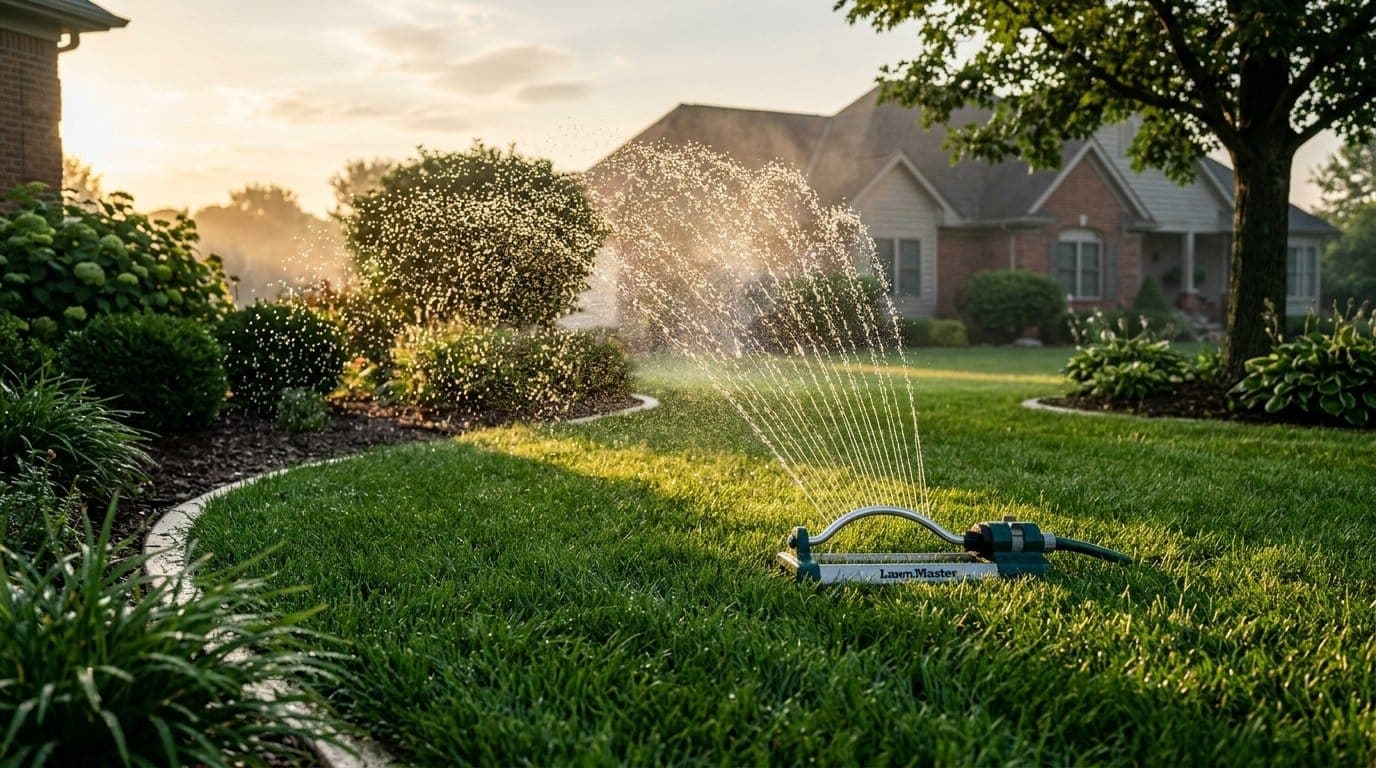
Most lawn disease needs 8 to 12 hours of continuous leaf wetness to spread. Watering at 7 p.m. keeps the lawn wet from dew through dawn. Watering at 5 a.m. lets the blades dry by 9 a.m.
Aim for 1 inch of water per week including rainfall. Apply it in one deep session, or two if your soil drains quickly. Set sprinklers to run between 4 a.m. and 9 a.m. Skip irrigation when rain is forecast within 24 hours.
Fertilize at the Right Times Skip Summer
Cool season grasses in the Tri-State area should be fertilized in spring (April to early May) and fall (September and October). Heavy nitrogen during June, July, or August pushes growth that the lawn cannot sustain in heat and feeds brown patch fungus directly. The exception is red thread, which signals the lawn needs nitrogen and should be treated with a light spring feeding even mid-summer.
Aerate Compacted Areas in Fall
Compacted soil holds water at the surface, blocks roots from going deep, and stresses grass that then becomes vulnerable to disease. Core aeration in September pulls plugs that open the soil, improves water movement, and pairs perfectly with overseeding to thicken thin areas.
If the same area of your lawn develops disease year after year, the underlying problem is rarely the disease itself. It is usually drainage, soil compaction, shade, or air flow. Fix the conditions and the disease goes away on its own.
When to Call a Professional
Most lawn disease cases in Southern Indiana respond to cultural changes within 2 to 4 weeks. Call in a lawn care professional when:
- Disease damage recurs in the same area for 2 or more seasons.
- More than 25 percent of your lawn is affected.
- You see fast spreading dark greasy patches that suggest Pythium blight.
- The damage is severe enough that overseeding or sod will be needed in fall.
- You want a preventative fungicide program to protect a high-value lawn.
A diagnostic visit usually confirms the disease, rules out grubs or drought, and maps the right cultural changes. If fungicide is justified, the product, timing, and rate are matched to the disease and the turf type. A do-it-yourself fungicide application without a confirmed diagnosis often misses the target entirely.
Building a Lawn That Resists Disease
The best disease defense is a thick, healthy, well-fed lawn. A few habits compound over years:
- Fall overseeding thickens the stand and crowds out disease prone weak spots.
- A balanced fertilization schedule keeps growth steady without summer flushes.
- Smart watering delivers what the lawn needs without keeping blades wet overnight.
- Annual aeration prevents compaction from setting in.
- Cut at the right height every time, with a sharp blade.
If you do not want to track all of this yourself, a fertilization and weed control program handles fertilization timing, soil tests, and disease pressure monitoring across the full season. When you also need pre-emergent timing and a seasonal mowing schedule, the same program covers them.
Most lawn diseases in Southern Indiana are leaf diseases that look worse than they are. Identify the patch shape and the individual blade lesions, then fix the cultural conditions: mow at 3.5 to 4 inches, water deeply in the morning only, fertilize in spring and fall but not summer, and aerate compacted areas in fall. Fungicide is rarely needed for a well-managed home lawn.
Get Eyes on Your Lawn Before the Damage Spreads
If you are looking at your lawn right now and not sure what you are seeing, do not guess. A quick diagnostic visit confirms the problem, separates disease from drought or grubs, and maps the right next step before the damage spreads. Colonial Classics' fertilization and weed control program includes ongoing turf health monitoring as part of every visit. Schedule a free consultation and we will tell you exactly what is going on in your yard.