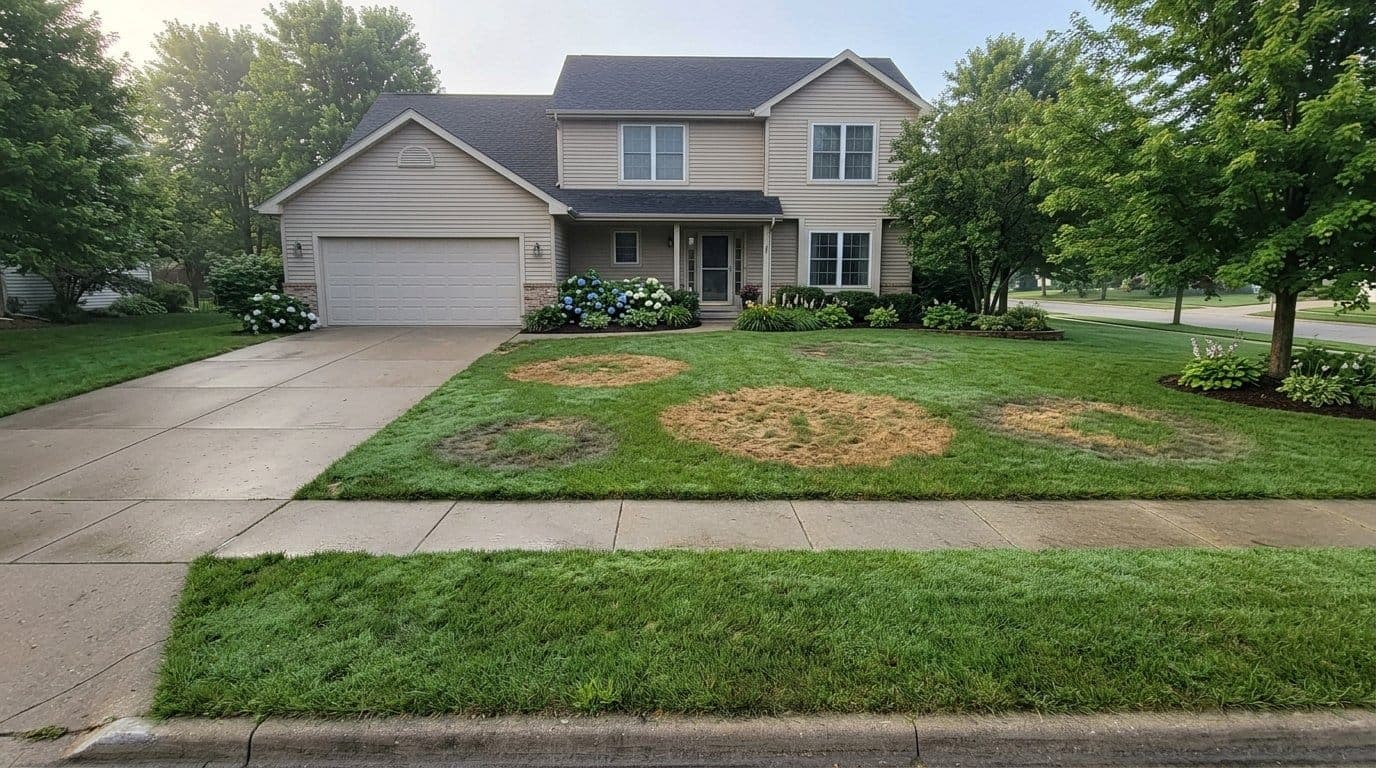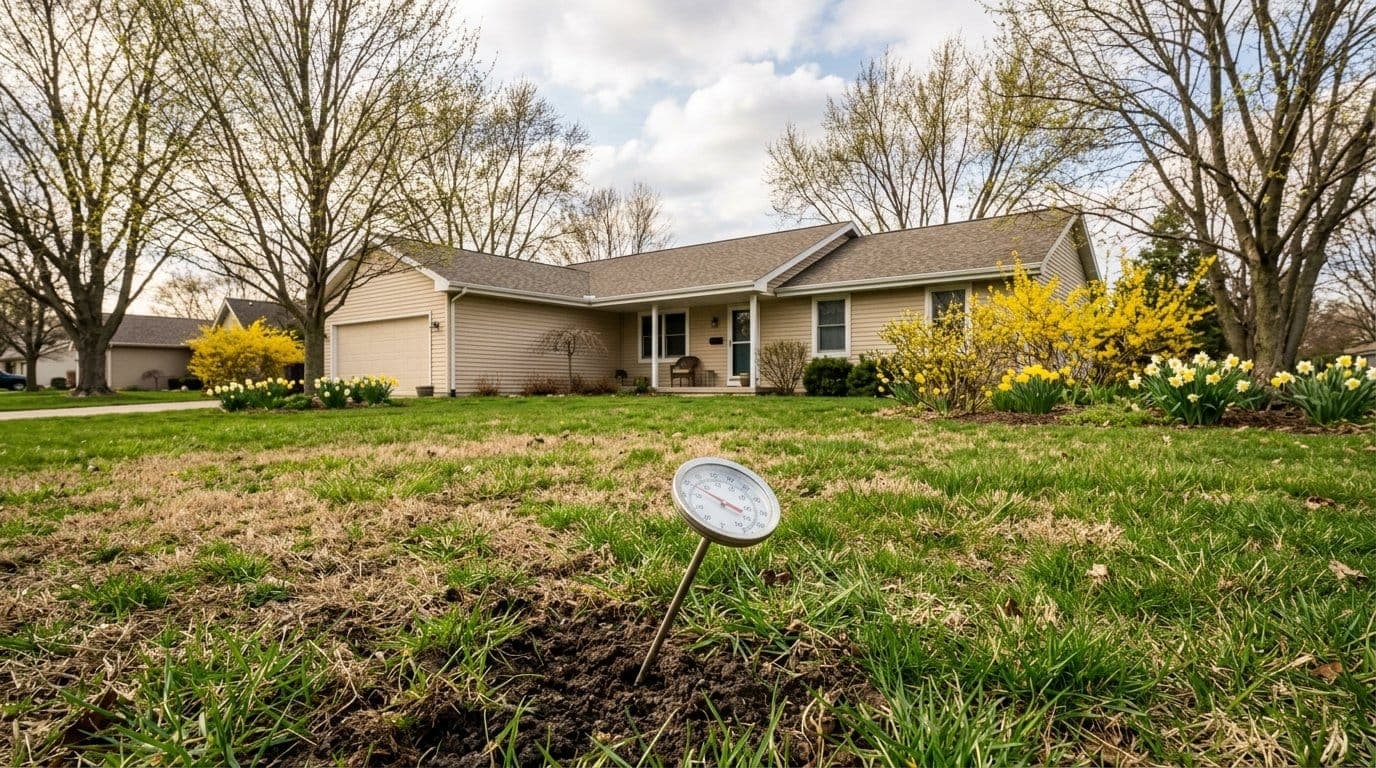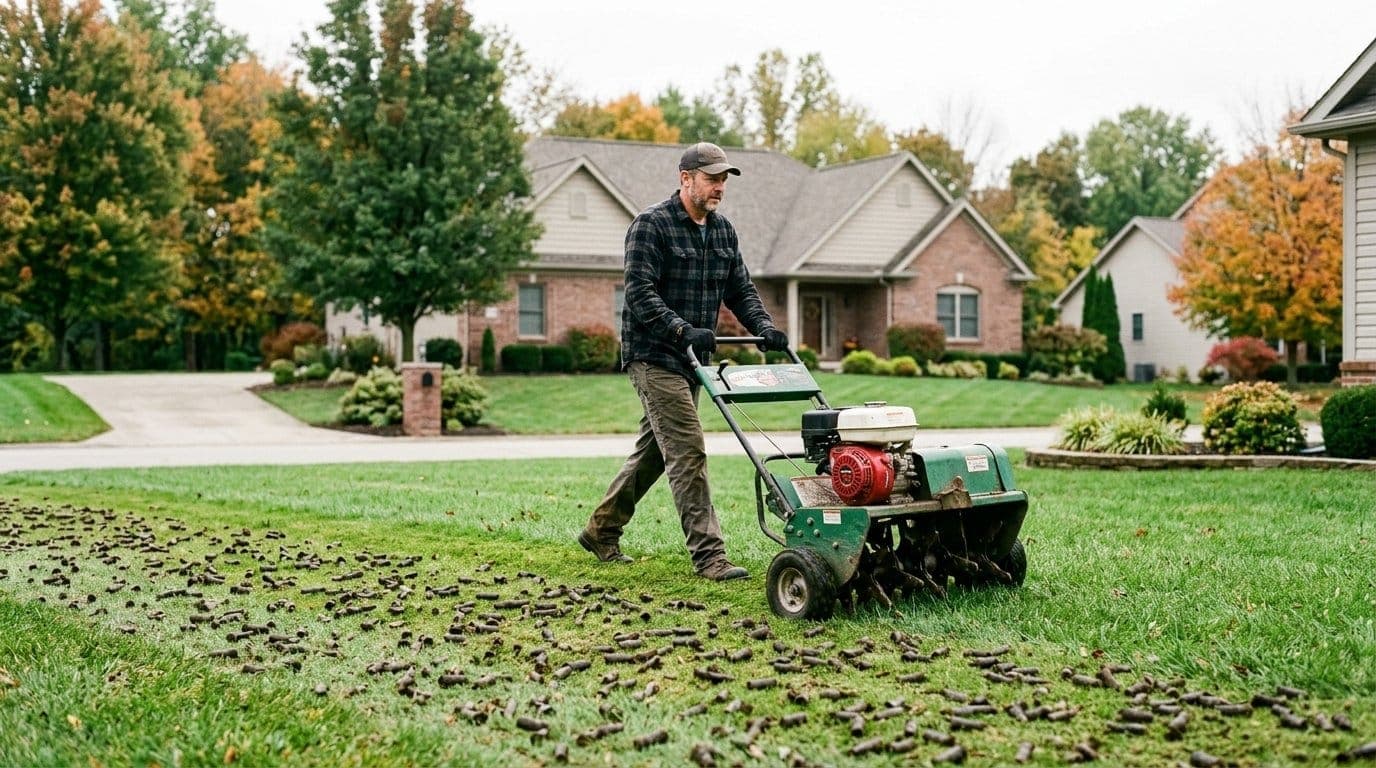
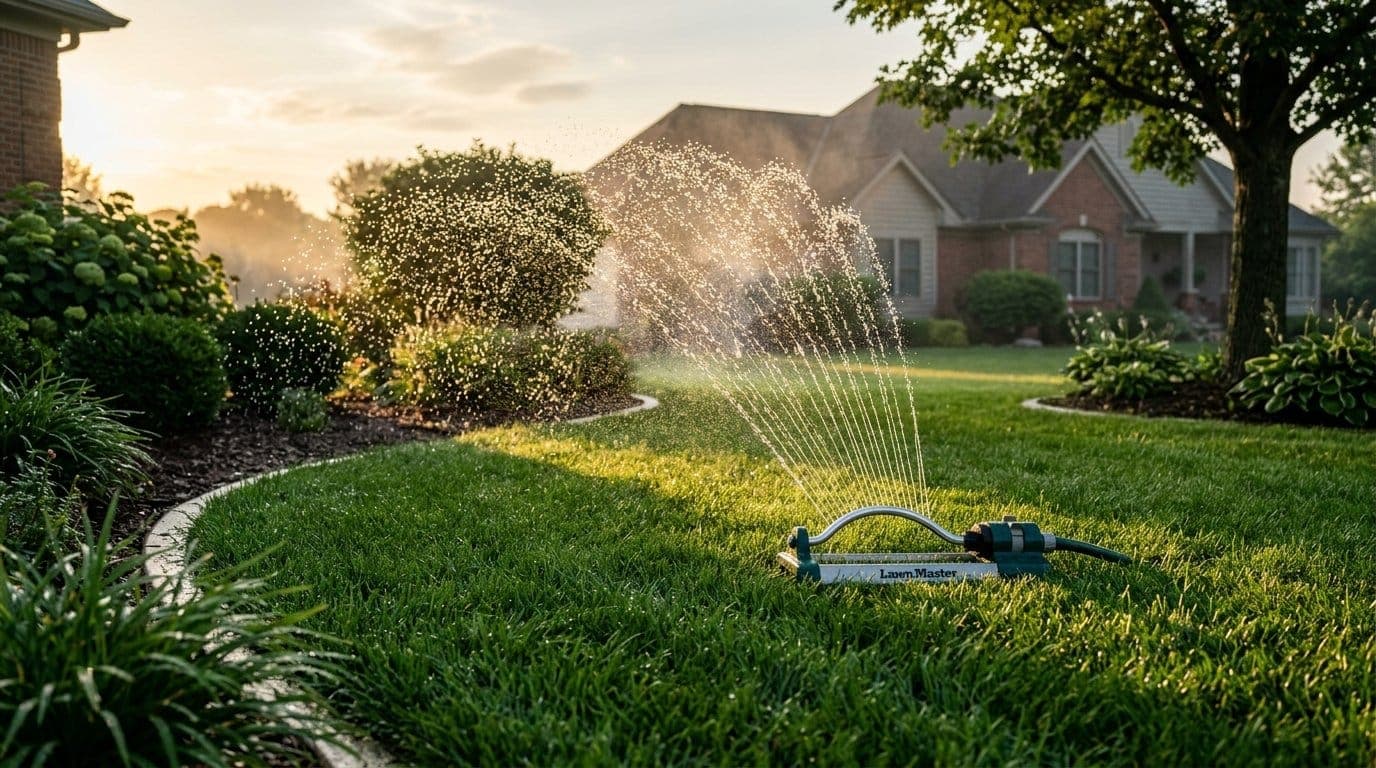
Your grass looked perfect in May. Now it is late June, the rain has stopped, and patches are starting to fade to a dull blue-gray. You drag the sprinkler out, but you are guessing: How long do you leave it on? Every day or just sometimes? Morning or evening? Get it wrong and you either waste hundreds of gallons or watch the lawn go brown anyway.
Knowing how to water your lawn in summer is the single biggest thing you control once the Southern Indiana heat arrives, and most homeowners do it backward. This guide gives you the numbers that actually matter, how much water, how often, and when, plus a five minute test that tells you exactly how long to run your own sprinklers.
How Much Water Does Your Lawn Need in Summer?
An established lawn needs about 1 to 1.5 inches of water per week in summer, including rainfall. That is the number to anchor everything else to. In the cooler stretches of late spring an inch is plenty. During a hot dry July week with no rain, a lawn that you want to keep green leans toward the inch and a half end.
The grasses growing in most Tri-State yards are cool season types: tall fescue, Kentucky bluegrass, and perennial ryegrass blends. The whole region sits in USDA Zone 7a, and these grasses thrive in 60 to 75 degree weather, so they get stressed when summer heat settles in. The whole point of summer watering is to carry them through that stress without overdoing it.
Rainfall counts toward your weekly total. If an Ohio Valley thunderstorm drops three quarters of an inch on Tuesday, you only owe the lawn a quarter to three quarters of an inch the rest of that week. A cheap rain gauge, or even a can left out on the lawn, tells you how much fell so you are not watering on top of what the sky already delivered.
Water Deep and Infrequent Not Light and Daily
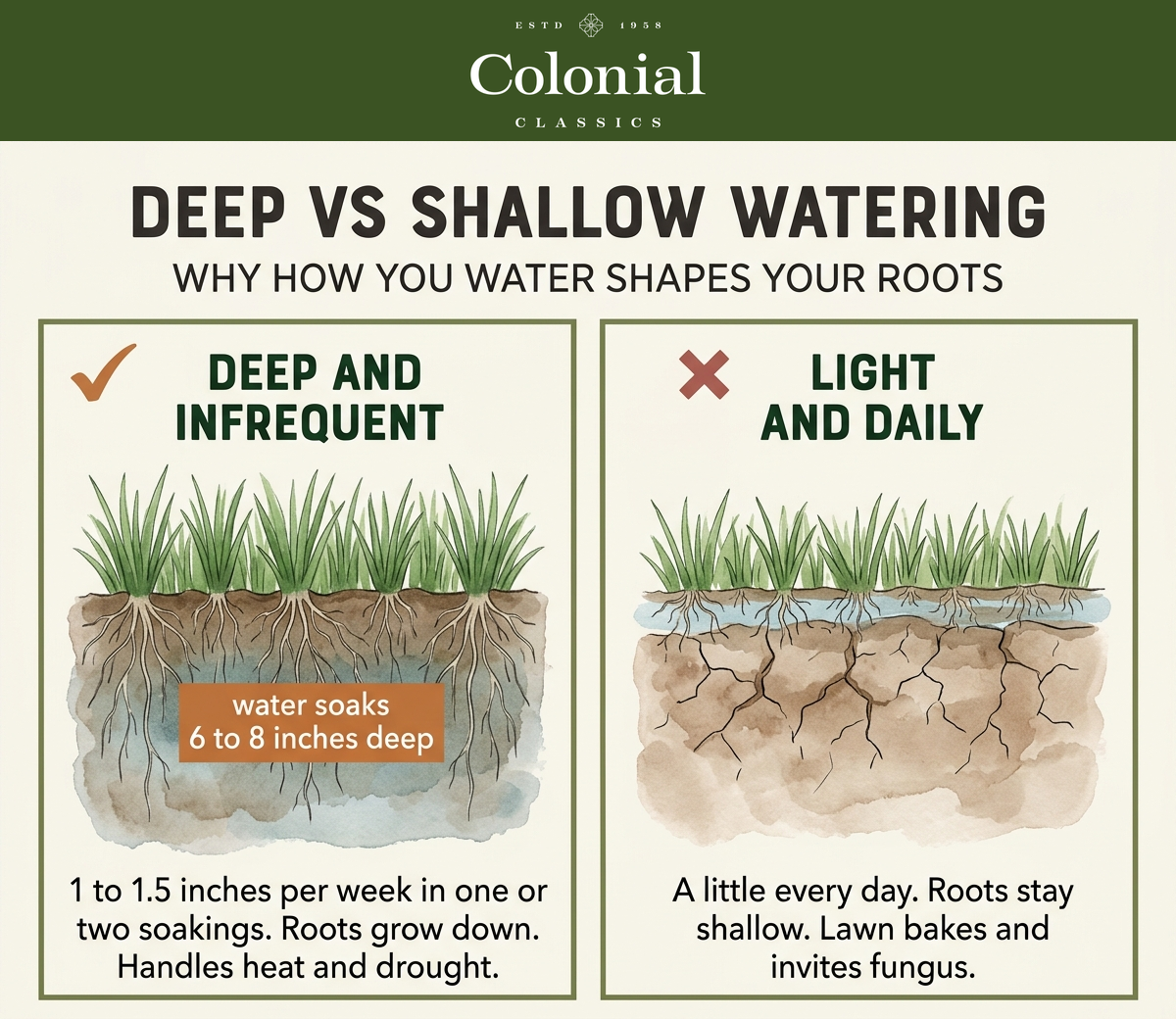
Water deeply once or twice a week, not a little bit every day. This is the rule that separates a resilient lawn from a fragile one, and it is the one most people get wrong.
When you soak the soil 6 to 8 inches deep, you pull roots down to follow the moisture. Deep roots reach water and nutrients that shallow roots cannot, so the lawn handles heat and dry spells far better. When you water lightly every day, only the top inch ever gets wet. Roots have no reason to grow down, so they stay near the surface where the soil dries out and overheats fastest. A daily-watered lawn is a lawn on life support: it looks fine until the day you skip, then it crashes.
Light daily watering causes a second problem. It keeps the grass blades and the soil surface wet for hours, and that is exactly the condition fungal diseases need. Many of the summer lawn diseases common in Southern Indiana, like brown patch and dollar spot, get their start on lawns that are watered a little every evening. Deep, infrequent, morning watering starves those diseases of the constant moisture they depend on.
Purdue Extension and university turf specialists across the region all land on the same guidance, to water deeply and infrequently so the soil wets several inches down, which builds a deeper, healthier root system than frequent shallow watering. The University of Illinois Extension watering guide gives the same advice for cool season lawns and recommends about 1 to 1.5 inches of water per week.
When Is the Best Time to Water Your Lawn?
The best time to water your lawn is early morning, between 4 a.m. and 9 a.m. Watering in this window gives you three wins at once.
- Less evaporation: The air is cool and still at dawn, so almost all the water soaks in instead of evaporating. Midday watering can lose 30 percent or more to evaporation before it ever reaches the roots.
- Blades dry by midday: Morning sun dries the grass within a few hours, so the leaves are not sitting wet long enough for fungus to take hold.
- No overnight wetness: Evening watering leaves the lawn damp from dusk through the next morning's dew. That long stretch of leaf wetness is the number one driver of summer lawn fungus.
If you have an in-ground system, set the controller to finish before the sun is fully up. If you water by hand or with a hose-end sprinkler, the hour before work is the ideal slot. Evening is the worst time to water in a humid Indiana summer. Midday is wasteful but not harmful.
The single easiest upgrade most homeowners can make is moving their sprinkler timer from evening to early morning. It costs nothing, cuts your fungus risk dramatically, and wastes less water. If your lawn struggles every July despite plenty of watering, the timing is often the real culprit.
How to Measure How Much Water Your Lawn Gets
The tuna can test is the simplest way to find out how much water your sprinklers actually put down, and it takes about fifteen minutes. Almost no one knows their own system's output, yet it is the most useful number you can learn all summer, because you cannot manage what you do not measure.
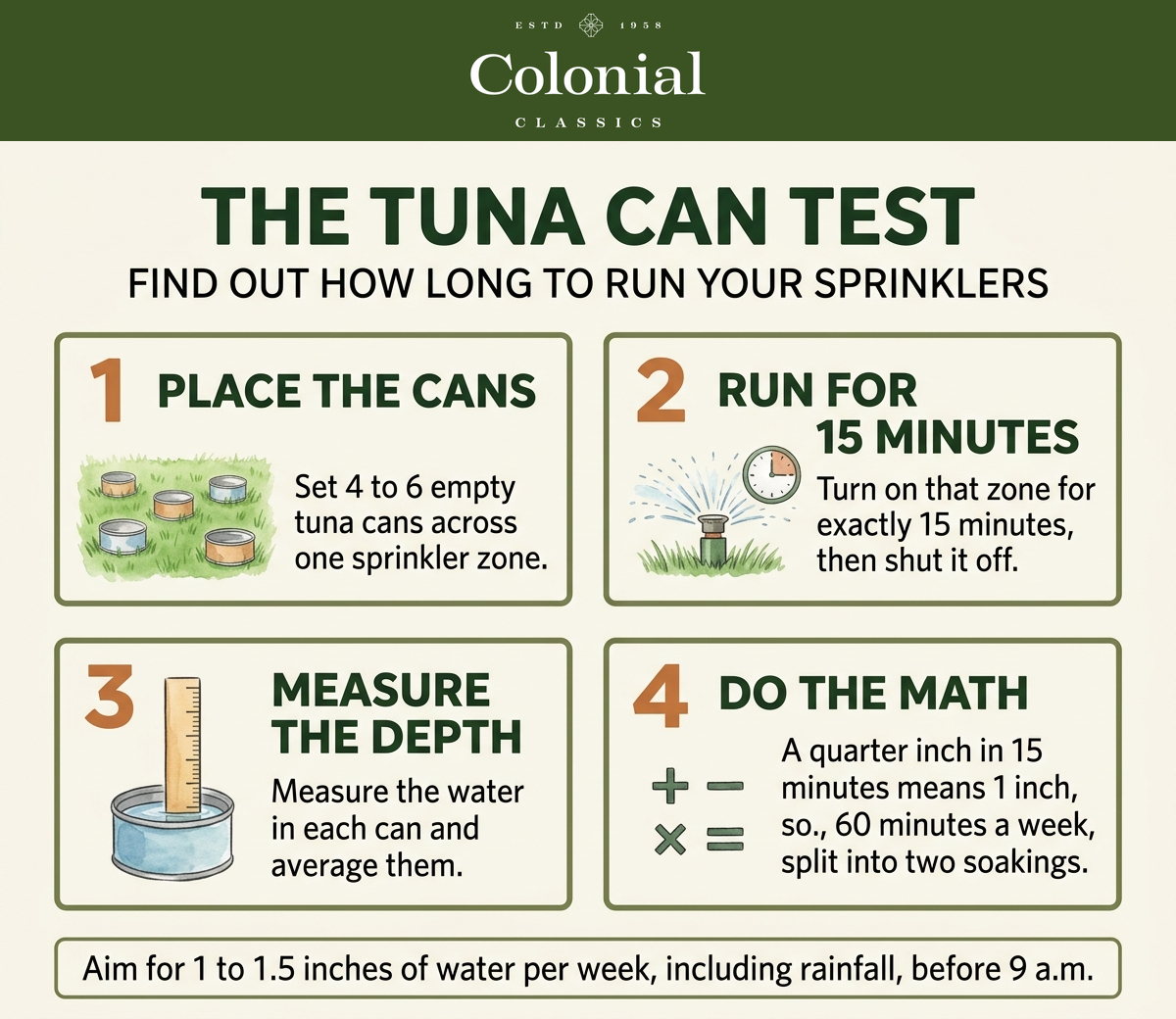
Set 4 to 6 empty tuna cans or any shallow straight-sided cans across one sprinkler zone. Run that zone for exactly 15 minutes, then measure the water depth in each can with a ruler and average them. If you caught a quarter inch in 15 minutes, your system delivers one inch per hour, so an inch of water per week is about 60 total minutes, ideally split into two 30 minute sessions a few days apart.
Spreading the cans from near a head to the far edge of the spray also shows you whether the zone waters evenly. If one can has twice as much as another, you have a coverage problem, clogged heads, bad spacing, or low pressure, that no amount of runtime will fix. That is the point where a professional irrigation tune-up pays for itself, because you are watering dry spots brown and wet spots into disease at the same time.
The Screwdriver Test
For a quick gut check between measurements, push a long screwdriver into the lawn. If it slides in easily to 6 inches, the soil is moist deep down and you can wait. If it stops at an inch or two, the root zone is dry and it is time to water. This is the fastest way to settle the "does it actually need water" question without overthinking it.
Adjust for Your Soil: Clay vs Sandy
Your soil type changes how you split up that weekly inch and a half. Much of the Tri-State sits on heavy clay, which behaves very differently from sandy or amended soil.
- How it holds water
- Holds water a long time but absorbs slowly and runs off
- How to water
- Water less often and deeper. If you see runoff, use the cycle-and-soak method: run 10 minutes, pause, repeat
- How it holds water
- Balanced absorption and retention
- How to water
- One or two deep sessions per week works as-is
- How it holds water
- Drains fast, dries out quickly
- How to water
- Water more often in lighter amounts so it does not drain past the roots
On the heavy clay common around Newburgh and Evansville, water tends to pool and run toward the street before it can soak in. The fix is cycle and soak: instead of one long run, water for about 10 minutes, let it absorb for 20 to 30 minutes, then water again. This gets the same deep soak without the waste of watering the driveway.
Watering New Sod and Newly Seeded Lawns
New sod and fresh seed follow completely different rules. They have no root system yet, so the deep-and-infrequent advice does not apply until they establish.
- New sod: Keep it consistently moist for the first two weeks. Water once or twice a day so the soil under the sod never dries out and the roots can knit into it. After about two weeks, as the sod roots down, taper toward deeper and less frequent watering. Our sod installation projects come with a watering schedule matched to the time of year you install.
- New seed: Keep the top half inch of soil constantly moist with light watering two to four times a day. The seedbed should never dry out and never puddle. Once the grass is up and you have mowed two or three times, transition to the normal deep, infrequent schedule.
Midsummer is the hardest time to start a cool season lawn from seed in Southern Indiana. Heat dries the seedbed out by midday and germinating seedlings burn easily. If you can wait, early fall is the ideal window for seeding tall fescue and bluegrass in the Tri-State. Sod can go down all summer as long as you can keep up with the daily watering.
Signs You Are Watering Too Much or Too Little
Reading the lawn beats following a rigid schedule, because rainfall and heat change week to week. Here is what to watch for.
Signs the lawn needs more water:
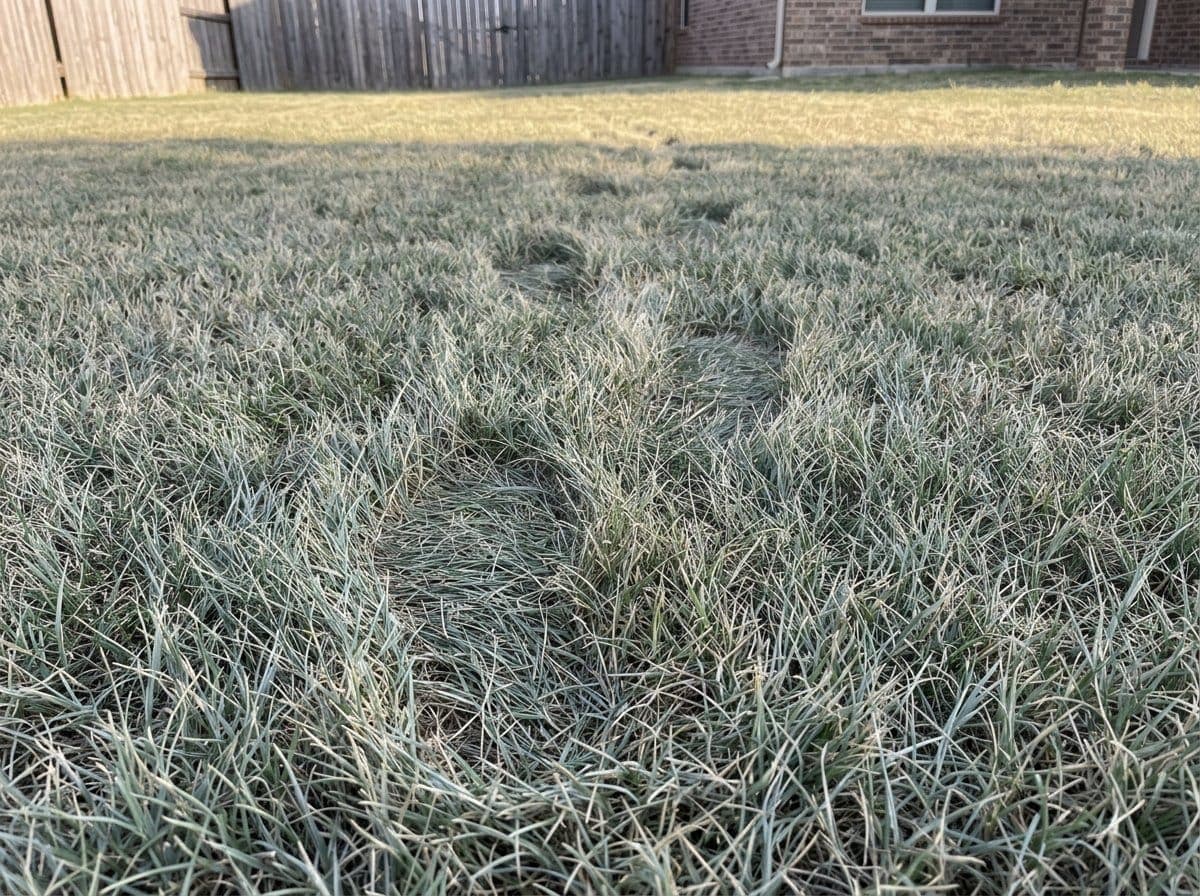
- Footprinting: Walk across the lawn and your footprints stay visible instead of springing back.
- A dull blue-gray or smoky cast instead of bright green.
- Blades that fold, roll, or curl lengthwise in the afternoon heat.
- Soil that a screwdriver will not penetrate past an inch or two.
Signs you are overwatering:
- Water pooling or running off during or after a session.
- Soft, squishy or spongy ground underfoot.
- Mushrooms, algae, or a constantly damp surface.
- An uptick in fungal patches and disease despite a healthy-looking lawn.
Catching the early stress signs matters, because a lawn that is merely thirsty greens back up within days of a good soak. A lawn pushed into full drought or rotted by overwatering takes far longer to recover.
Should You Let Your Lawn Go Dormant in Summer?
Letting an established cool season lawn go dormant during a hot dry summer is a legitimate choice, not a failure. Dormancy is how these grasses evolved to survive heat. The crown at the base of each plant goes quiet and the blades brown, but the plant is alive and will green back up when cooler, wetter weather returns in fall.
If you choose to let it go dormant, the one thing you must do is keep the crowns alive. Apply about half an inch of water every 2 to 4 weeks during the dry spell. That is not enough to green the lawn up, but it keeps the crowns from drying out and dying for good.
The mistake to avoid is bouncing in and out of dormancy. Watering enough to green the lawn up, then letting it brown, then greening it again, burns through the plant's energy reserves and can kill it. Pick a lane: either keep it green with the full 1 to 1.5 inches a week, or let it go dormant and give it the survival sip every couple of weeks. Do not flip back and forth.
Give an established lawn 1 to 1.5 inches of water per week including rainfall, delivered in one or two deep soakings before 9 a.m. Skip the daily light sprinkling, it builds shallow roots and feeds fungus. Use the tuna can test to learn your own sprinkler's output, read the footprint and screwdriver tests instead of blindly following a timer, and either commit to keeping the lawn green or let it go cleanly dormant. Do not flip between the two.
When a Smart Irrigation Setup Earns Its Keep
If keeping up with all of this by hand sounds like a part-time job in July, that is because it can be. A properly designed in-ground system with a weather-based controller handles the timing, the zone-by-zone runtimes, and the rain skips automatically, so your lawn gets the deep morning soak it needs whether or not you are home to drag a hose around.
The bigger value is uniformity. A hose-end sprinkler almost always overwaters one strip and misses another. A zoned system tuned to your soil and your sun and shade patterns puts the right amount everywhere, which is what actually prevents both the brown dry spots and the soggy disease-prone ones.
If your current system has dry corners, runoff, or mystery wet spots, or if you are tired of guessing, our team can audit your setup or design one matched to your yard. Learn more about irrigation service, pair it with a fertilization and weed control program for season-long lawn health, and schedule a free consultation to get your watering dialed in before the worst of the summer heat arrives.