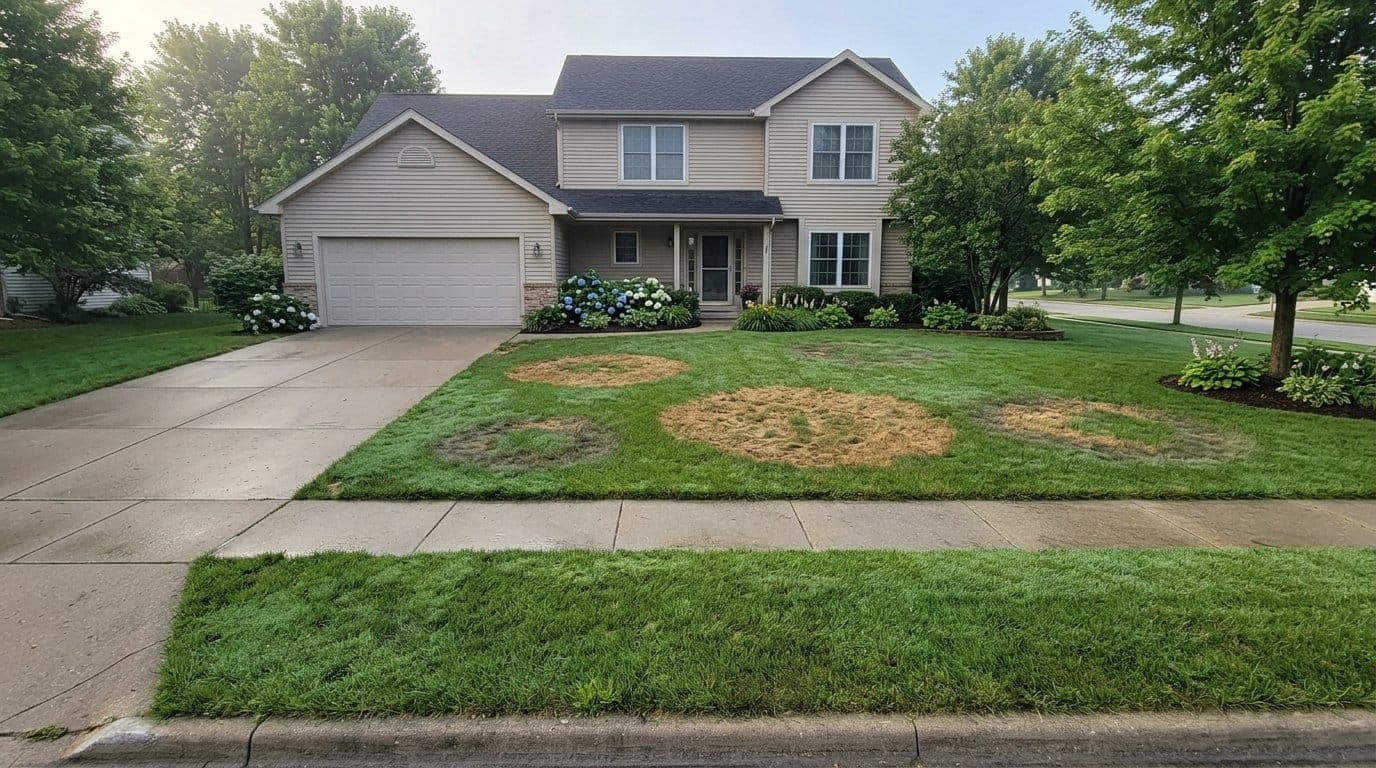
By late summer your lawn has been through a lot. Months of heat, foot traffic, mowing, and drought have left it thin, compacted, and tired, with bare patches where the grass just gave up. It is tempting to write it off until spring. That would be a mistake, because the six weeks after Labor Day are the single best chance you get all year to bring a cool-season lawn back to life.
Fall lawn aeration and overseeding is how you do it. Aeration relieves the compaction that has been choking your roots all summer, and overseeding fills in the thin spots with fresh grass while conditions are perfect for it to root. This guide walks you through why fall is the right time, how to do the job step by step, which seed to choose for the Tri-State, and how to care for the new grass so all that effort actually takes.
Would you rather have it done for you? Colonial handles core aeration and overseeding across Newburgh, Evansville, and the Tri-State. See our aeration and overseeding service.
Why Fall Is the Best Time to Aerate and Overseed
Early fall is the best time to aerate and overseed a cool-season lawn because the soil is still warm while the air is cooling, which is exactly what new grass needs to germinate fast and root deeply. In the Tri-State area, that window runs from late August through early October.
The grasses in most Indiana, Illinois, and Kentucky yards are cool-season types: tall fescue, Kentucky bluegrass, and perennial ryegrass. The whole region sits in USDA Zone 7a, and these grasses do their best growing in the mild weather of spring and fall, not the heat of July. Fall hits the sweet spot for three reasons:
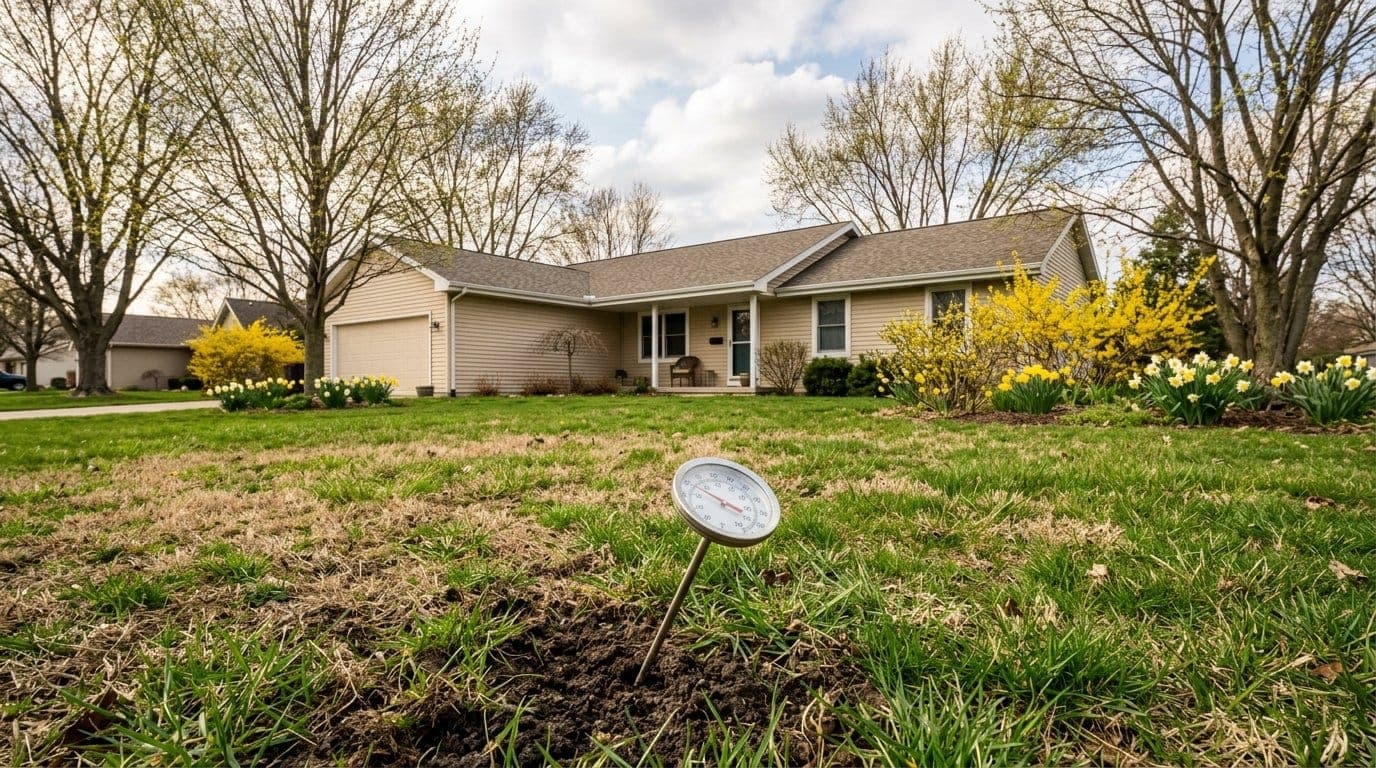
- Warm soil, cool air: Seed germinates based on soil temperature, and the ground holds summer's warmth well into September. Meanwhile the cooling air means less heat stress on tender seedlings.
- Less weed competition: Crabgrass and other summer weeds are finishing their life cycle in fall, so your new grass is not fighting them for space, light, and water the way spring seedlings do.
- A full season to establish: Grass seeded in September roots through October and November, goes dormant strong, and comes back thick the following spring, ready for summer instead of racing to beat it.
University turf specialists agree on the timing. Illinois Extension calls fall the best time of year to aerate and notes that the holes an aerator leaves give overseeded grass far better soil contact, which is exactly what germination depends on.
Spring seeding sounds logical, but it runs into trouble fast. New grass barely establishes before summer heat arrives, and you cannot use a spring pre-emergent crabgrass preventer because the same chemistry that stops crabgrass seed also stops your grass seed from sprouting. Fall sidesteps both problems.
What Core Aeration Actually Does
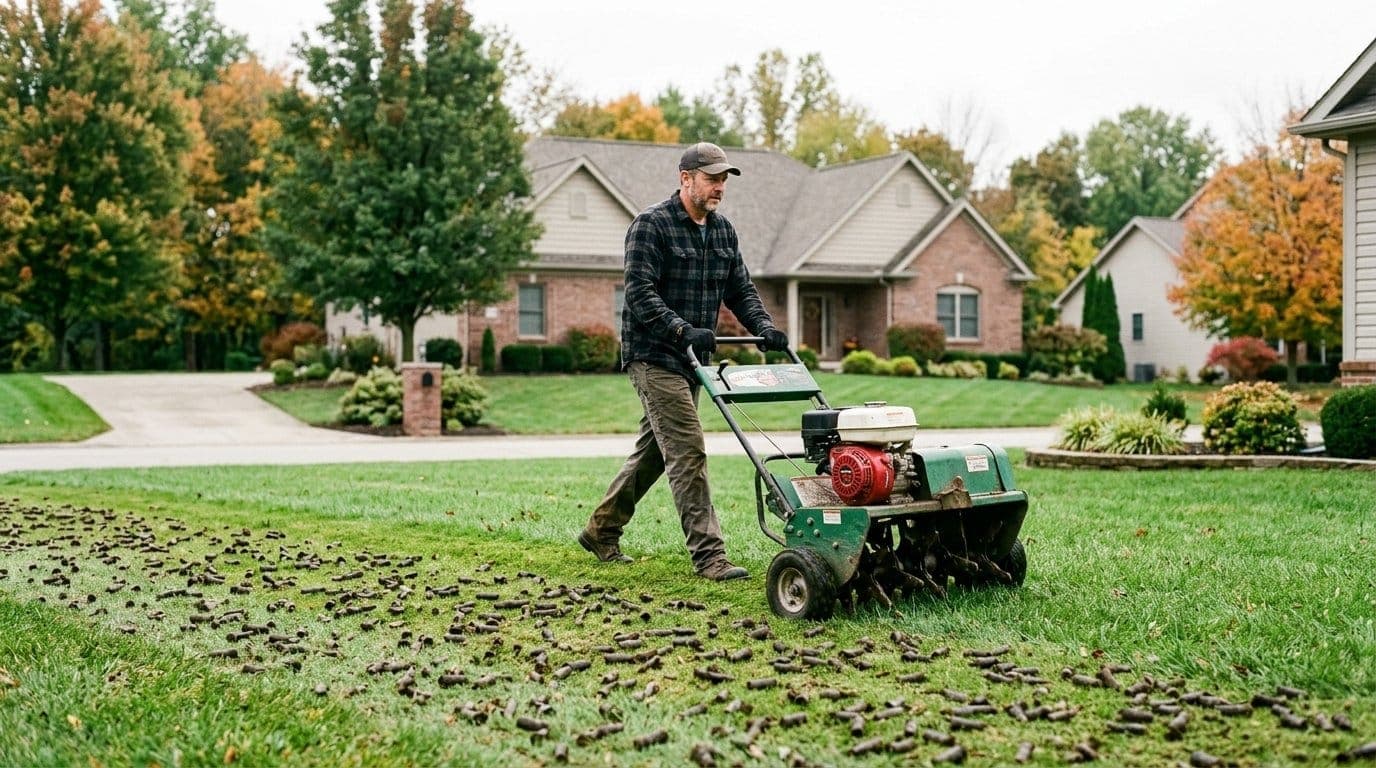
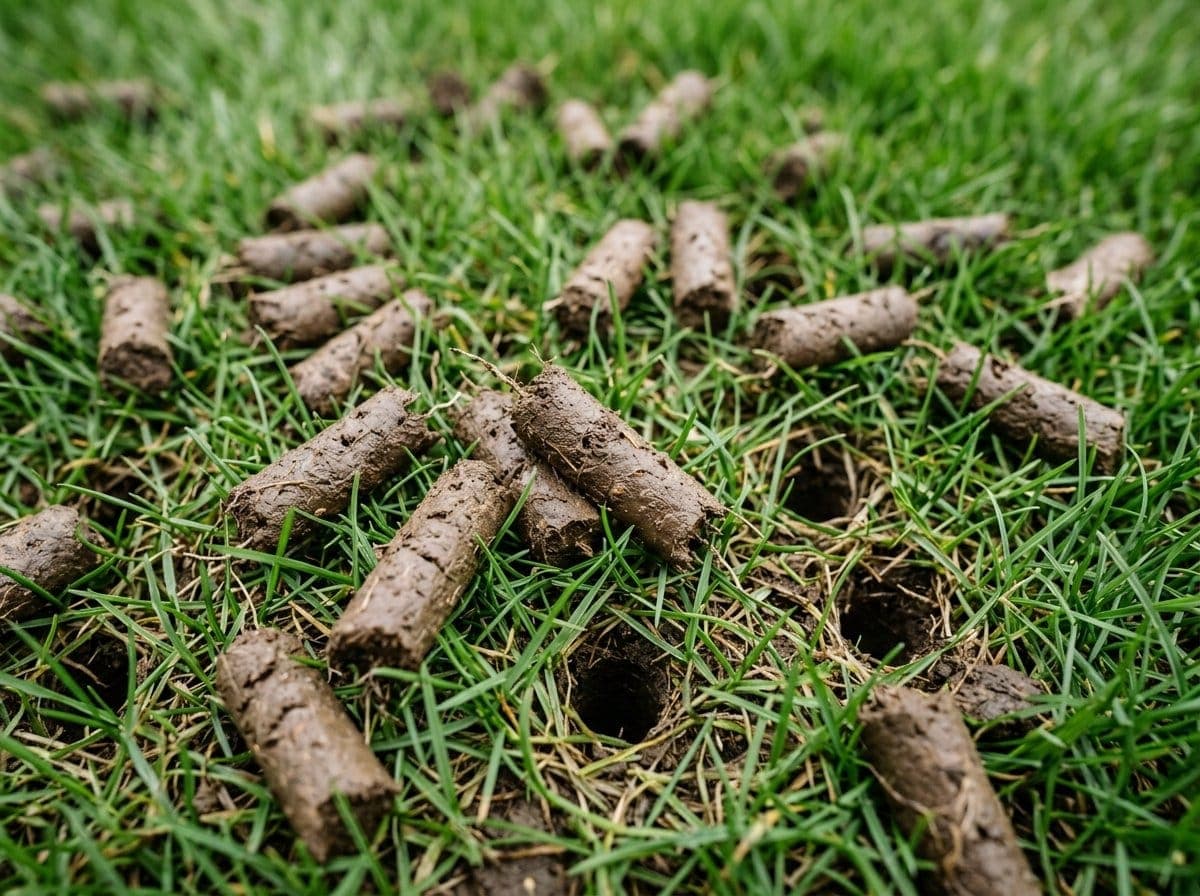
Core aeration is the process of pulling thousands of small plugs of soil out of your lawn to relieve compaction and open the ground up to air, water, and nutrients. The machine that does it, a core aerator, has hollow tines that punch into the soil and remove finger-sized cores, leaving them scattered on the surface to break down.
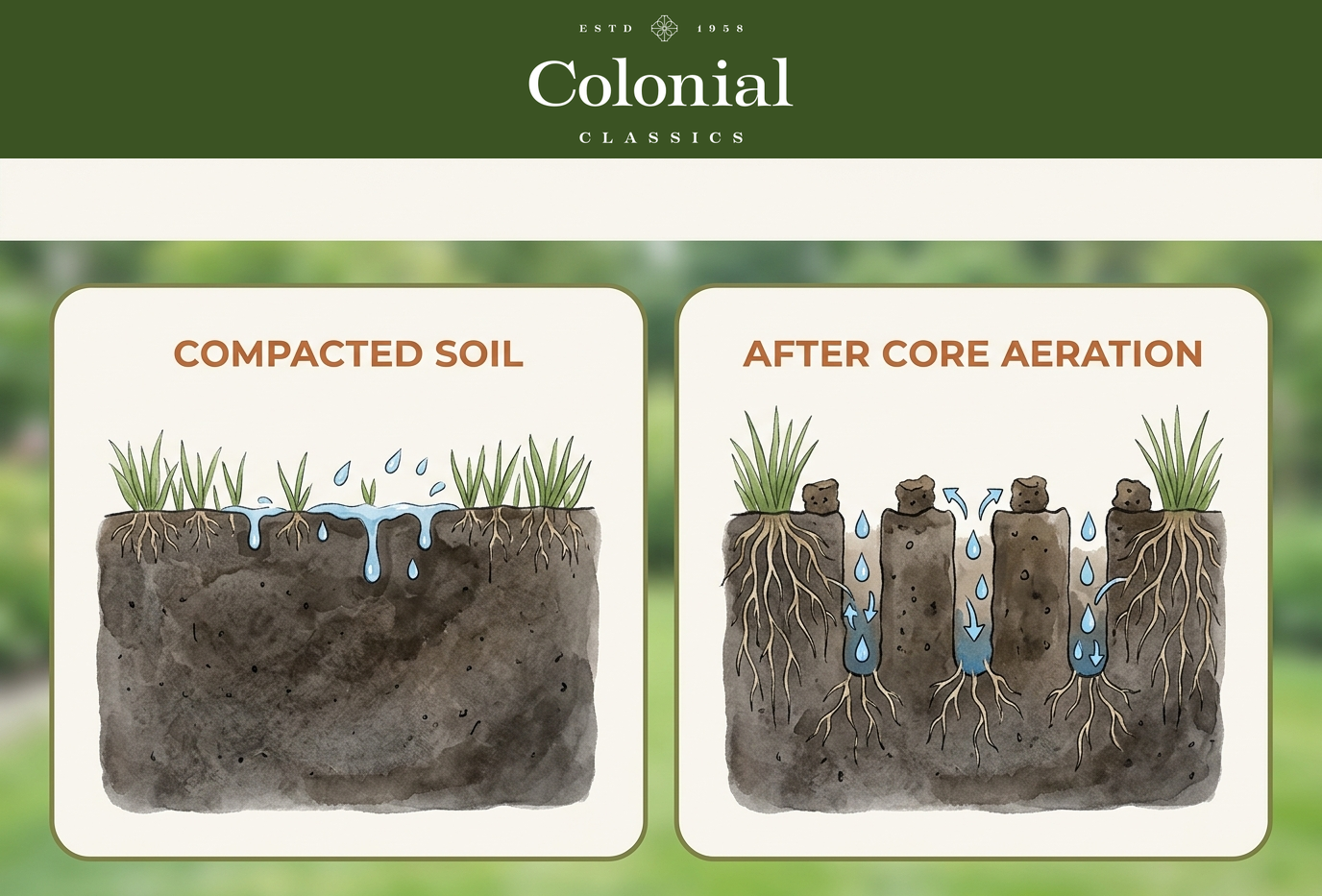
This matters because compacted soil is the hidden reason so many lawns struggle. When soil gets packed down from foot traffic, mowers, kids, and pets, the tiny pore spaces that hold air and water get squeezed shut. Roots cannot push through, water runs off instead of soaking in, and fertilizer sits on top doing nothing. On the heavy clay soil common around Newburgh and Evansville, this happens faster and hurts more, because clay compacts easily and drains slowly to begin with.
Aeration also breaks up thatch, the spongy layer of dead stems and roots that builds up between the grass and the soil. A thin layer of thatch is fine, but when it gets thicker than half an inch it blocks water and invites lawn disease and fungus. The cores pulled up during aeration bring soil microbes to the surface that help decompose thatch naturally. Purdue Extension recommends core aerifying to relieve compaction and manage thatch on Indiana lawns.
Signs Your Lawn Needs Aeration
Most Tri-State lawns benefit from aeration every fall, but a few signs tell you it is overdue:
- Water pools or runs off instead of soaking in after rain or watering.
- The soil is hard, and a screwdriver is tough to push in more than an inch or two.
- The lawn feels spongy underfoot, a sign of thick thatch.
- Grass is thin or bare in high-traffic paths, near driveways, or under play areas.
- The lawn dries out fast and browns in summer even with regular watering.
If you can push a screwdriver into the soil easily and the grass is thick and springy, your lawn may only need aeration every two or three years. If it fails the screwdriver test, it is time.
When to Aerate and Overseed in the Tri-State
Aim for the stretch from late August to early October, when soil temperatures are in the 60s and 70s and there are at least six to eight weeks of decent growing weather before the first hard frost. This gives cool-season seed the warmth it needs to sprout and the time it needs to root before winter.
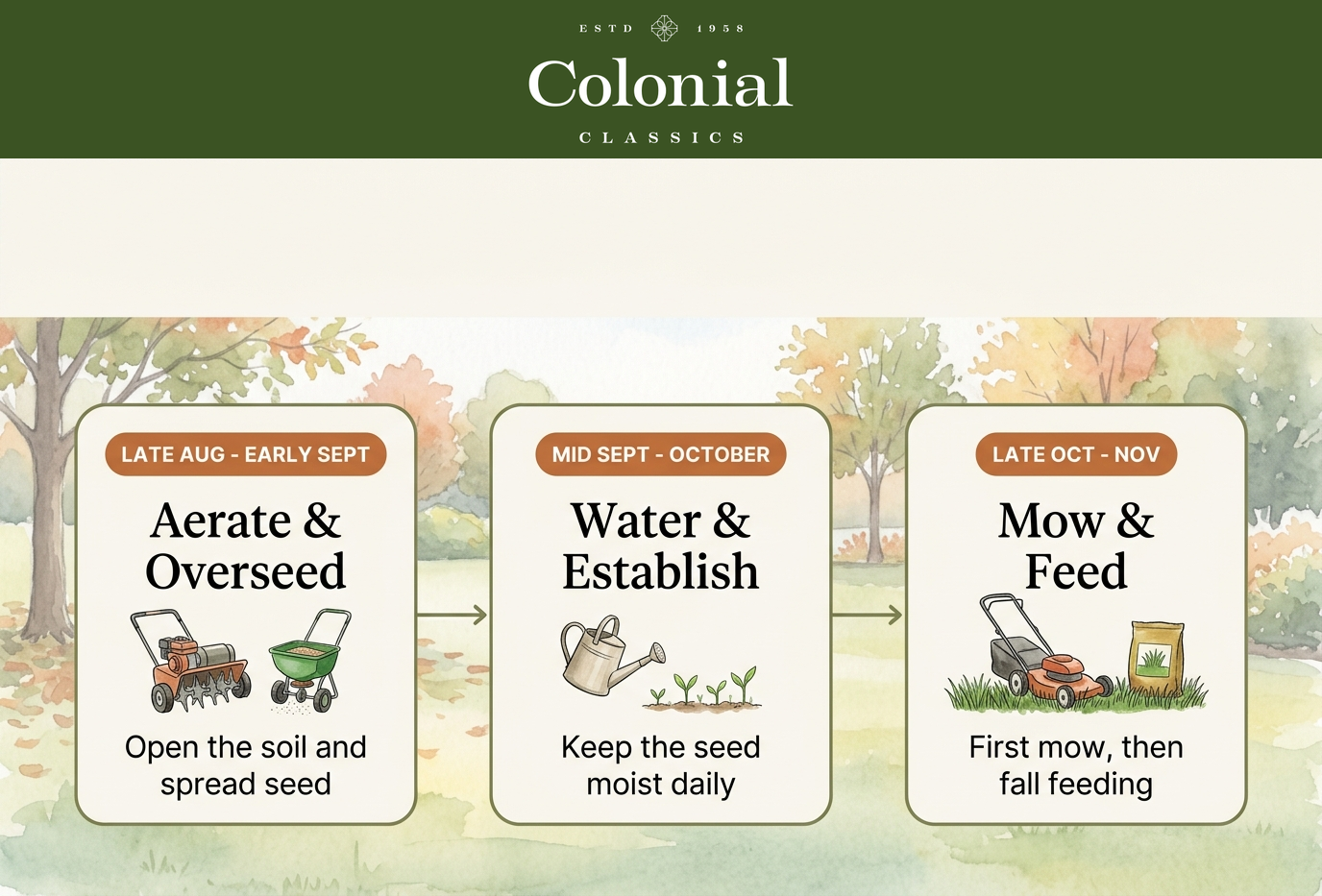
Earlier in that window is better than later. Seed put down in early September has warmer soil and more time than seed put down in mid-October, when a cold snap can stall germination. If you miss the fall window entirely, it is usually better to wait for next fall than to force a spring seeding, though you can still aerate on its own in spring to relieve compaction.
Watch the weather too. The ideal time to aerate is a day or two after a good rain or a deep watering, when the soil is moist but not muddy. Bone-dry clay is nearly impossible to pull clean cores from.
How to Aerate and Overseed Your Lawn Step by Step
Aerating and overseeding is a weekend project for most yards. Do the steps in order, and do not skip the aftercare, because that is where most DIY overseeding fails.
- Mow low and clear the surface. Cut the grass shorter than usual, around 1.5 to 2 inches, and bag the clippings. Rake off any leaves so seed can reach the soil.
- Moisten the soil. Aerate a day or two after rain or watering. Moist soil lets the tines pull deep, clean cores instead of bouncing off hard ground.
- Core aerate. Run the aerator over the whole lawn, then make a second pass at a right angle to the first for good coverage. Leave the plugs on the surface.
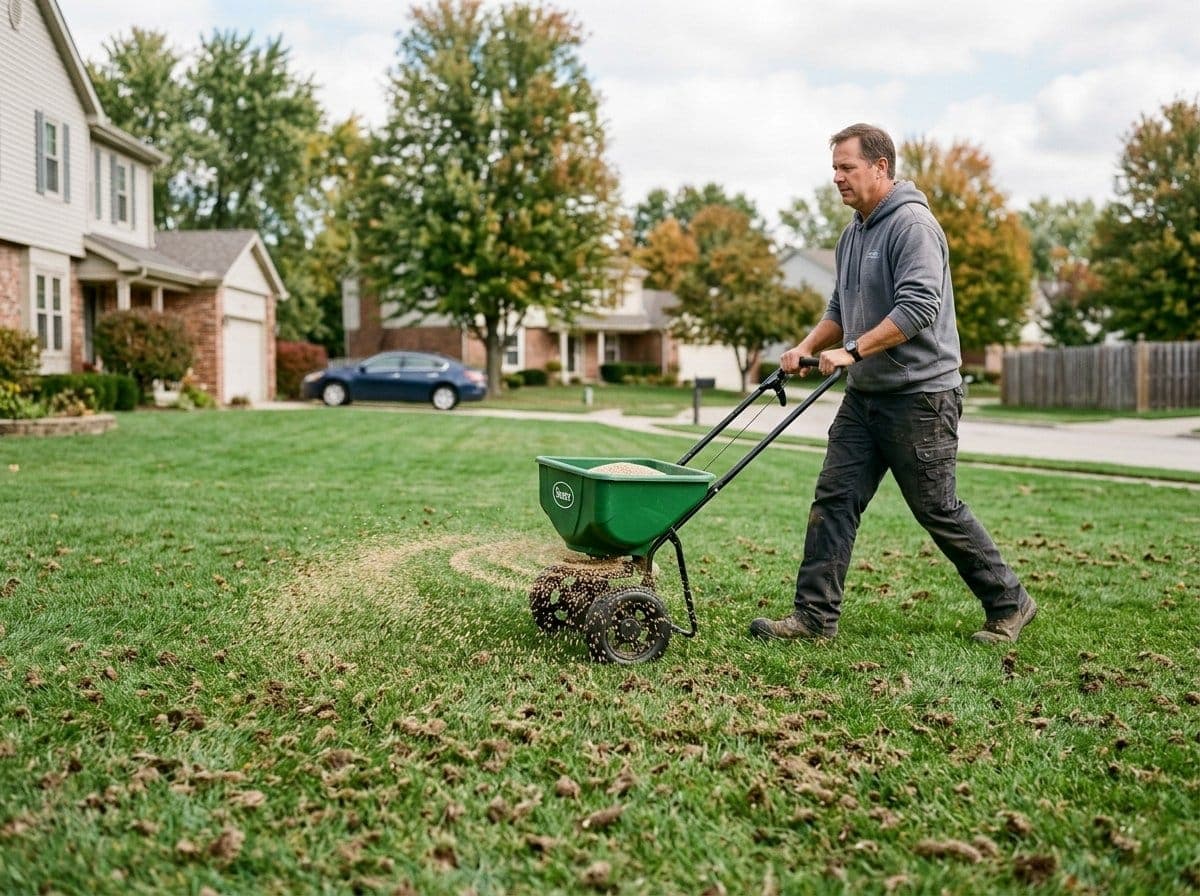
- Overseed. Fill a broadcast or drop spreader with a quality cool-season blend and apply at the overseeding rate on the bag. The aeration holes catch and cradle the seed.
- Apply starter fertilizer. Spread a phosphorus-rich starter fertilizer to fuel root growth. Do not use weed-and-feed or pre-emergent, which will stop your new seed from sprouting.
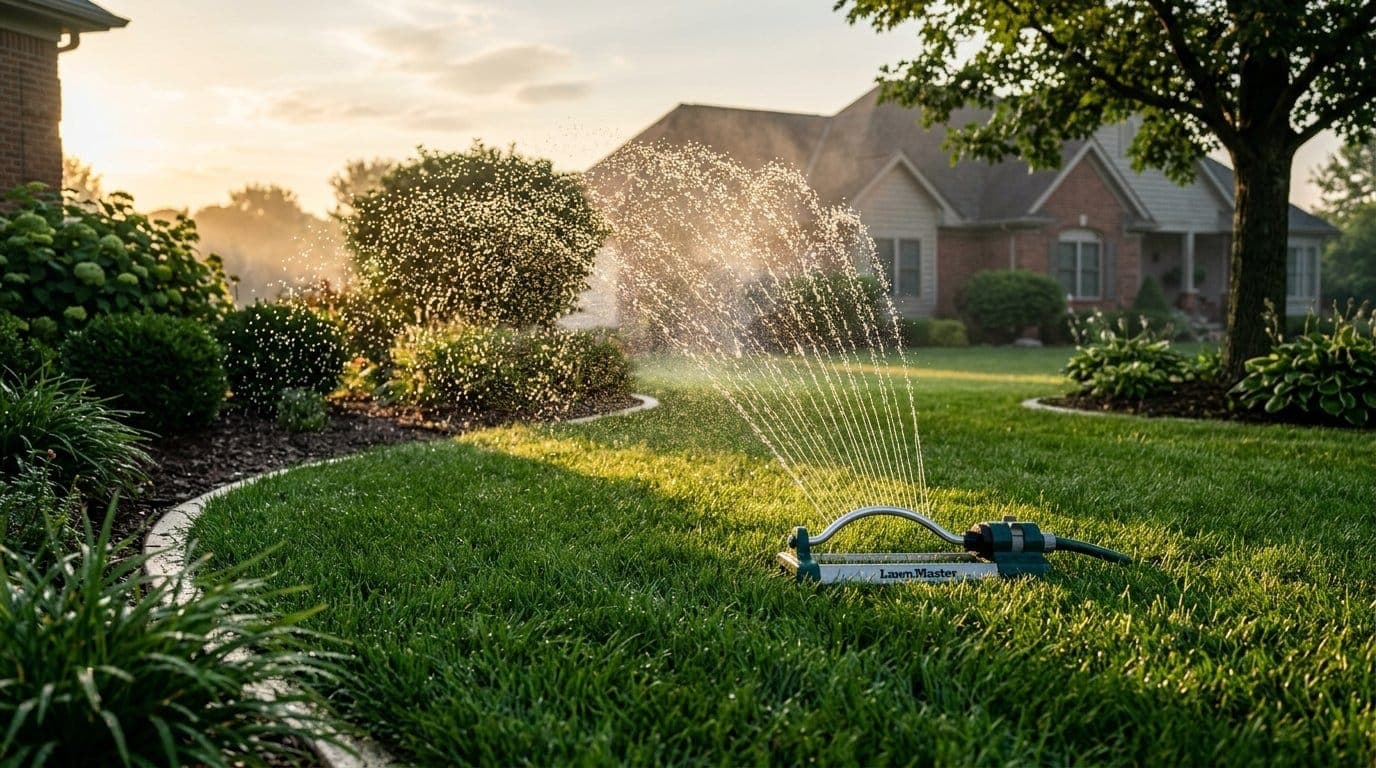
- Water lightly and often. Keep the top half inch of soil moist with light watering once or twice a day until the seed germinates, then transition to deeper, less frequent watering.
The most common way homeowners waste an overseeding is by letting the seedbed dry out. New seed needs consistent moisture from the day you spread it until the grass is up and mowed a few times. Miss watering for a hot afternoon and a whole batch of seedlings can die. If you cannot commit to daily watering for three weeks, wait for a stretch when you can.
Choosing the Right Grass Seed for the Tri-State
For a Zone 7a lawn, a tall fescue blend, often mixed with a little Kentucky bluegrass and perennial ryegrass, is the most reliable choice. Each grass brings something different, and quality blends combine them so the lawn's strengths cover its weaknesses.
- Strengths
- Heat and drought tough, deep roots, handles clay
- Trade-offs
- Bunching, slower to fill bare spots
- Best role
- The backbone of most Tri-State lawns
- Strengths
- Spreads to fill gaps, fine texture, cold hardy
- Trade-offs
- Needs more water, slower to germinate
- Best role
- Self-repairing thickness
- Strengths
- Germinates fast, quick color, wear tolerant
- Trade-offs
- Less heat tolerant, does not spread
- Best role
- Fast cover while others establish
Match the seed to your conditions. For a sunny, high-traffic yard on clay, lean on turf-type tall fescue. For a lawn you want to spread and self-repair over time, choose a blend with more Kentucky bluegrass. For shady areas, look for a shade-tolerant fescue mix, and remember that no grass thrives in deep shade, so heavily shaded spots may be better suited to mulched beds or ground cover. Buy fresh, high-quality seed with a low weed-seed percentage on the label. Bargain seed is often where a whole overseeding project quietly goes wrong.
Aftercare: The First Six Weeks Decide Everything
New grass lives or dies on how you water and mow it in the first month and a half. Get this stretch right and a thin lawn transforms; get it wrong and you have paid for seed that never came up.
Watering: Keep the top half inch of soil constantly moist, but never soggy, with light watering once or twice a day. The seedbed should never fully dry out during germination. Once the new grass is up and you have mowed it two or three times, taper off to the deep, infrequent watering that trains established grass to root deeply. If keeping up with daily watering by hand sounds like a lot, an in-ground irrigation system makes germination far more reliable.
Mowing: Wait until the new grass reaches about 3 to 3.5 inches before the first mow, and make sure the mower blade is sharp so it cuts rather than tears the tender seedlings. Never remove more than a third of the blade height at once.
Fertilizing: After the starter fertilizer at seeding, a fall feeding several weeks later helps the new grass build roots and store energy for winter. A season-long fertilization and weed control program keeps the lawn dense enough to crowd out weeds on its own. Hold off on any broadleaf weed killer until the new grass has been mowed three or four times.
Aerate and overseed in early fall, from late August to early October, while the soil is warm and the air is cool. Core aerate first, then overseed immediately so the seed drops into the open holes, and follow with a starter fertilizer, never a pre-emergent. Then keep the seedbed consistently moist for the first three weeks. That combination is the surest way to turn a thin, compacted lawn into a thick one by next spring.
DIY or Hire a Pro?
You can rent a core aerator and do this yourself, and for a small, flat, open lawn that is a reasonable weekend project. The honest trade-offs are worth knowing before you commit.
A rented aerator is heavy, awkward to load and haul, and slow going on a large or sloped yard. Renting for a day also means doing the whole job, aeration, seeding, and starter fertilizer, in one push before the machine goes back. The bigger risk is the three weeks of aftercare: even a perfect aeration is wasted if the seed dries out because life got busy.
Hiring a pro makes the most sense when the lawn is large, the soil is badly compacted clay, or you want the timing, seed selection, and follow-up handled correctly the first time. A professional service also folds aeration and overseeding into a broader plan, pairing it with fall cleanup and feeding so the whole lawn goes into winter strong. And when a lawn is too far gone for overseeding to fix, sod installation gives you an instant established lawn instead.
Want it done for you? Our crew aerates, overseeds, and handles the timing across Newburgh, Evansville, Boonville, Chandler, and the greater Tri-State. See our aeration and overseeding service.
For the seasonal timing behind all of this, and how aeration fits alongside your other fall tasks, see our guide on when to schedule your landscape project. Whether you do it yourself or hand it off, the important thing is not to let fall slip by, because it is the one window that pays you back all next year.
If you would rather have it done right, our team handles aeration, overseeding, and fall lawn care across Indiana, Illinois, and Kentucky. Schedule a free consultation and we will get your lawn set up to come back thicker next spring.