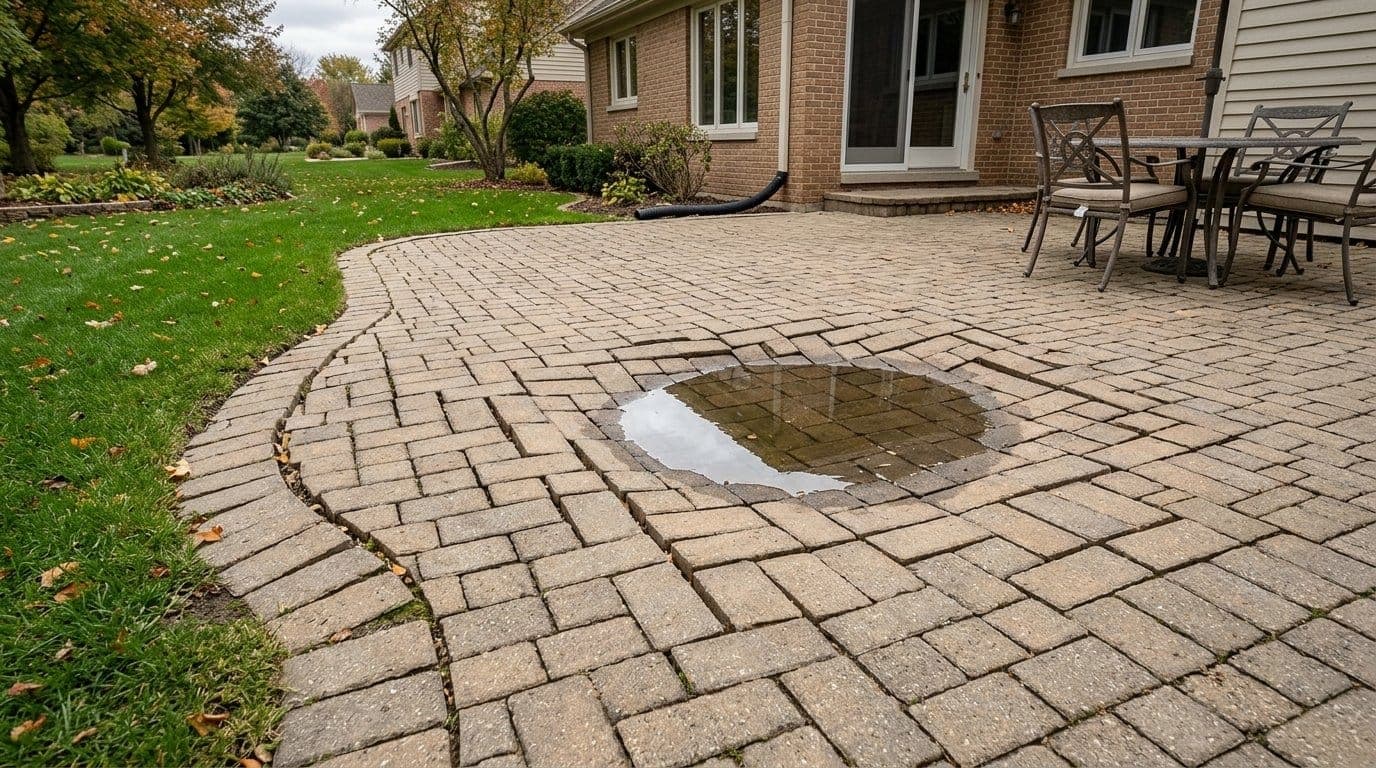
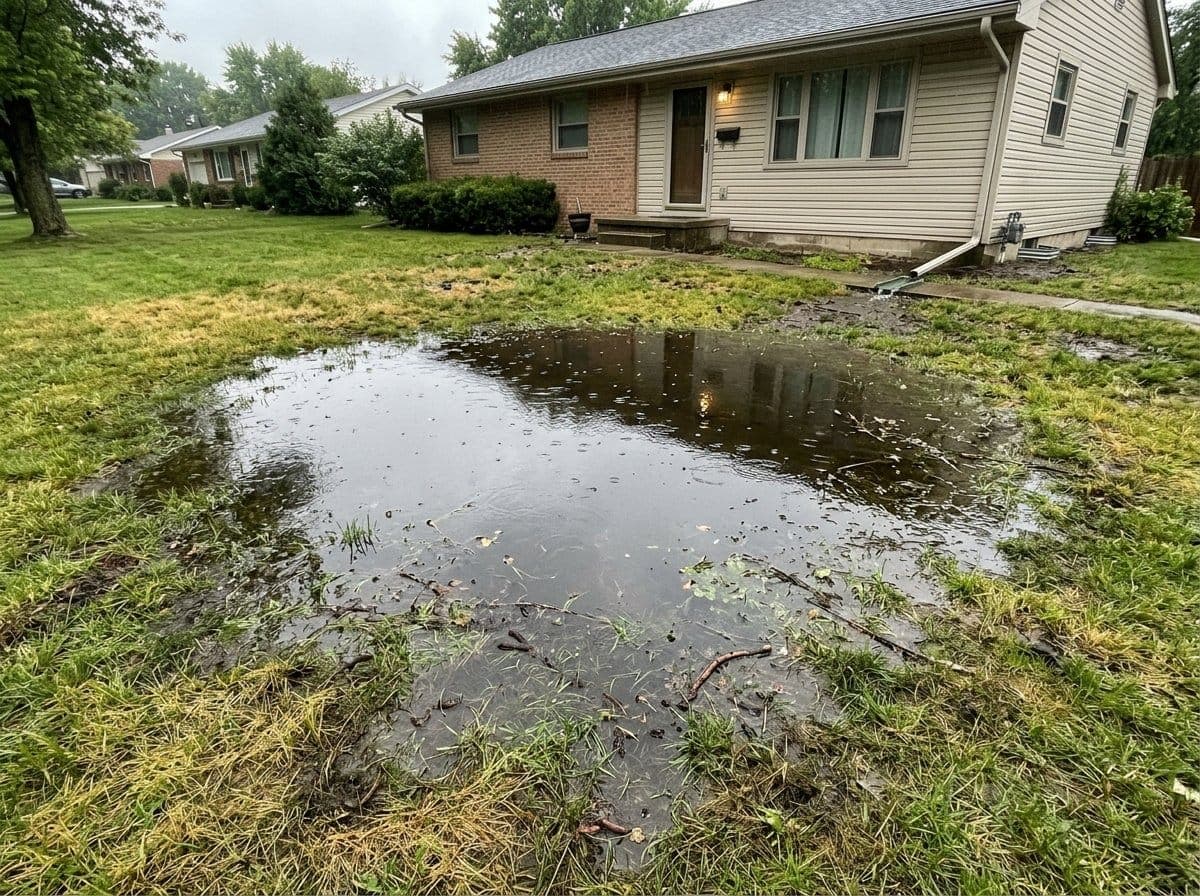
You walk outside the morning after a storm and your yard looks like a swamp. Water is standing in the lawn, the low spot near the patio is mud, and there is a damp ring along the foundation. This is more than annoying. Standing water kills grass, breeds mosquitoes, and pushes water toward your home.
Most yard drainage problems can be fixed with one or a combination of six solutions: regrading, french drains, swales, dry wells, catch basins, and downspout extensions. Picking the right one depends on where the water is coming from, where it can go, and what kind of soil you are working with. This guide walks through how to diagnose the problem and which fix is right for your yard.
Every project is different. The pricing and timelines discussed here are general estimates based on typical projects in our area. Your actual costs and schedule will depend on your property, materials, scope of work, and other factors. Contact us for a personalized estimate.
Signs Your Yard Has a Drainage Problem
A drainage problem rarely fixes itself. The longer water sits where it should not, the more damage it does to your lawn, plants, and foundation. Here is how to tell if you have one.
- Standing water 24 hours after rain: Healthy soil drains visible surface water within a day. Anything longer means the water has nowhere to go.
- Soggy or spongy turf: If your foot sinks when you walk the lawn, the soil is saturated below the surface.
- Mud or erosion patterns: Bare strips where mulch washed out, gullies down a slope, or fan-shaped silt deposits in low spots all show water is moving across your yard.
- Damp basement, crawl space, or foundation walls: Water that should be flowing away from the house is finding its way in.
- Mosquitoes breeding in puddles: Standing water 7 days or longer is a mosquito nursery.
- Dying grass or plants in low spots: Most lawn grasses and ornamental shrubs cannot tolerate prolonged saturated soil. Roots rot and the plant declines.
- Algae or moss on the lawn: A green slime on grass is a sign of constantly wet soil.
6 Yard Drainage Solutions Compared
Most properties need one or two of the solutions below. The right pick depends on the source of the water, the soil type, and where the water can safely go.
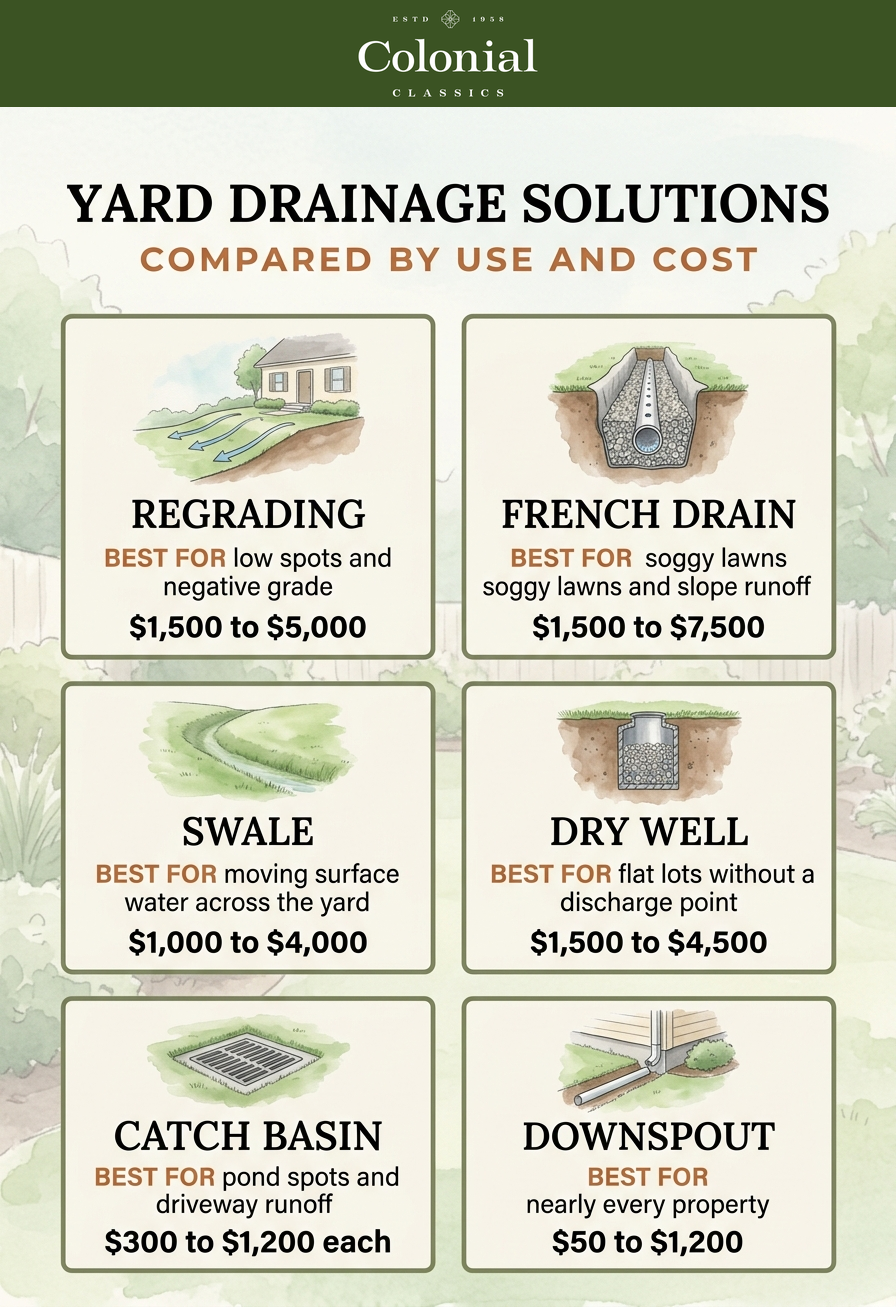
1. Regrading the Yard
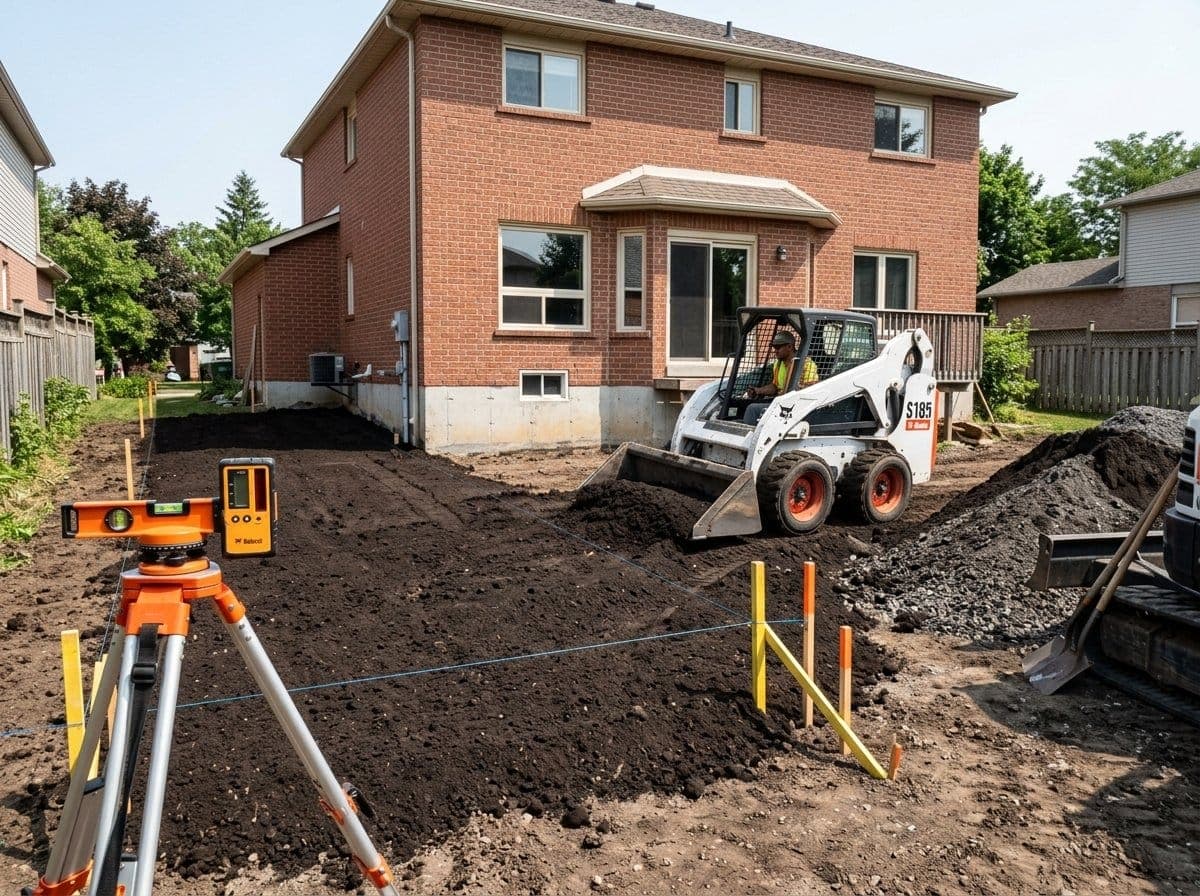
Regrading reshapes the surface so water flows away from your home and toward a discharge point. It is the most fundamental drainage fix and often the most effective. The ground around a foundation should slope down at least 6 inches over the first 10 feet. If your yard is flat, dished toward the house, or has low spots, regrading solves the problem at its source.
A contractor brings in topsoil or moves existing soil to create the right slope, then reseeds or resods the affected area. Regrading is the first thing a drainage professional looks at because no other system works well if the surface is sending water in the wrong direction.
Best for: Negative grade against a foundation, low spots in the lawn, broad flat areas that pond water.
Cost: $1,500 to $5,000 for residential regrading on most lots, plus the cost of new sod or seed.
2. French Drains
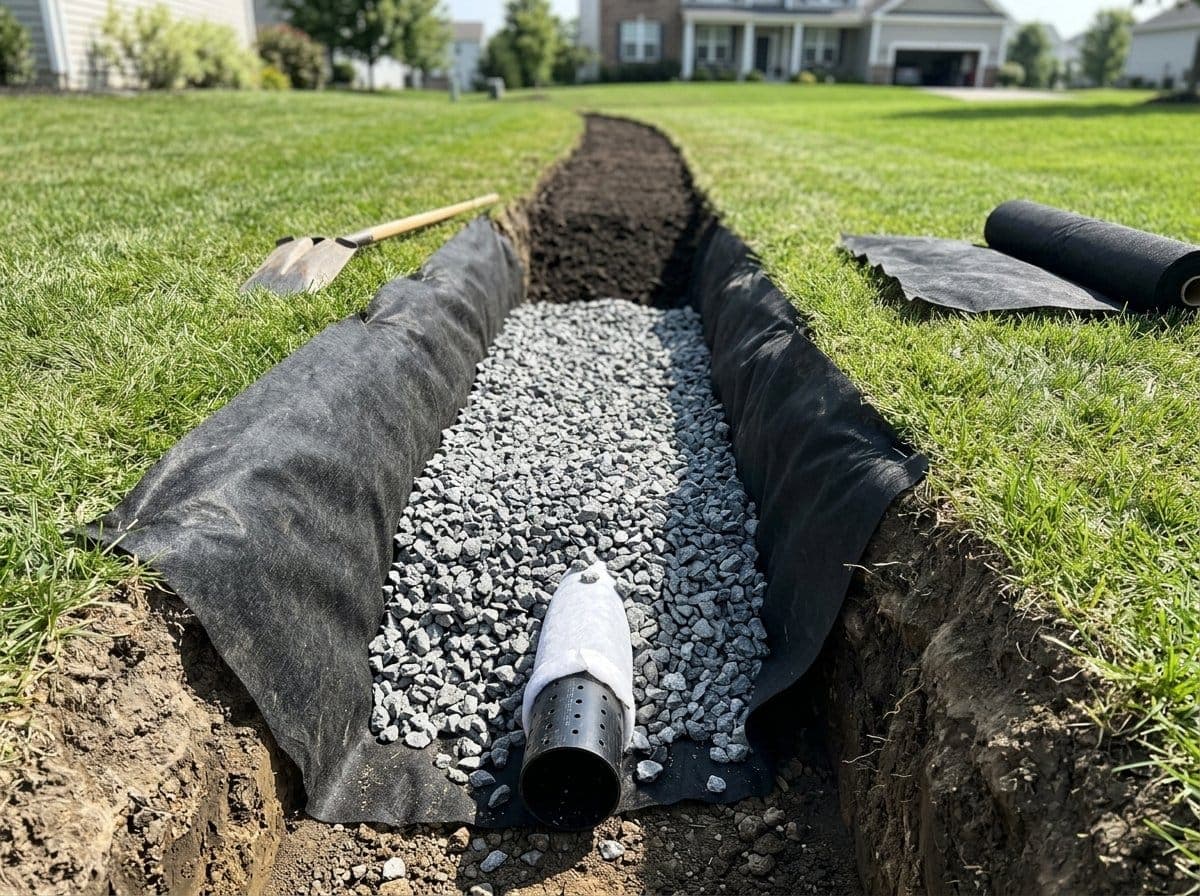
A french drain is a perforated pipe buried in a gravel-filled trench that intercepts water and carries it away. A fabric sleeve wraps the gravel and pipe to keep soil and clay from clogging the system. Water enters the gravel from above and from the sides, drops into the perforated pipe, and flows by gravity to a discharge point.
French drains are the workhorse of yard drainage in clay soil because they handle both surface water and shallow groundwater. They work best when there is a clear path for the water to exit, such as a daylight point at the edge of a slope or a connection to a storm sewer where allowed.
Best for: Soggy lawns, saturated soil along a slope, water collecting near a downspout, ground that stays wet after rain.
Cost: $25 to $75 per linear foot installed. A typical residential french drain is 40 to 100 feet long, putting most projects in the $1,500 to $7,500 range.
3. Swales
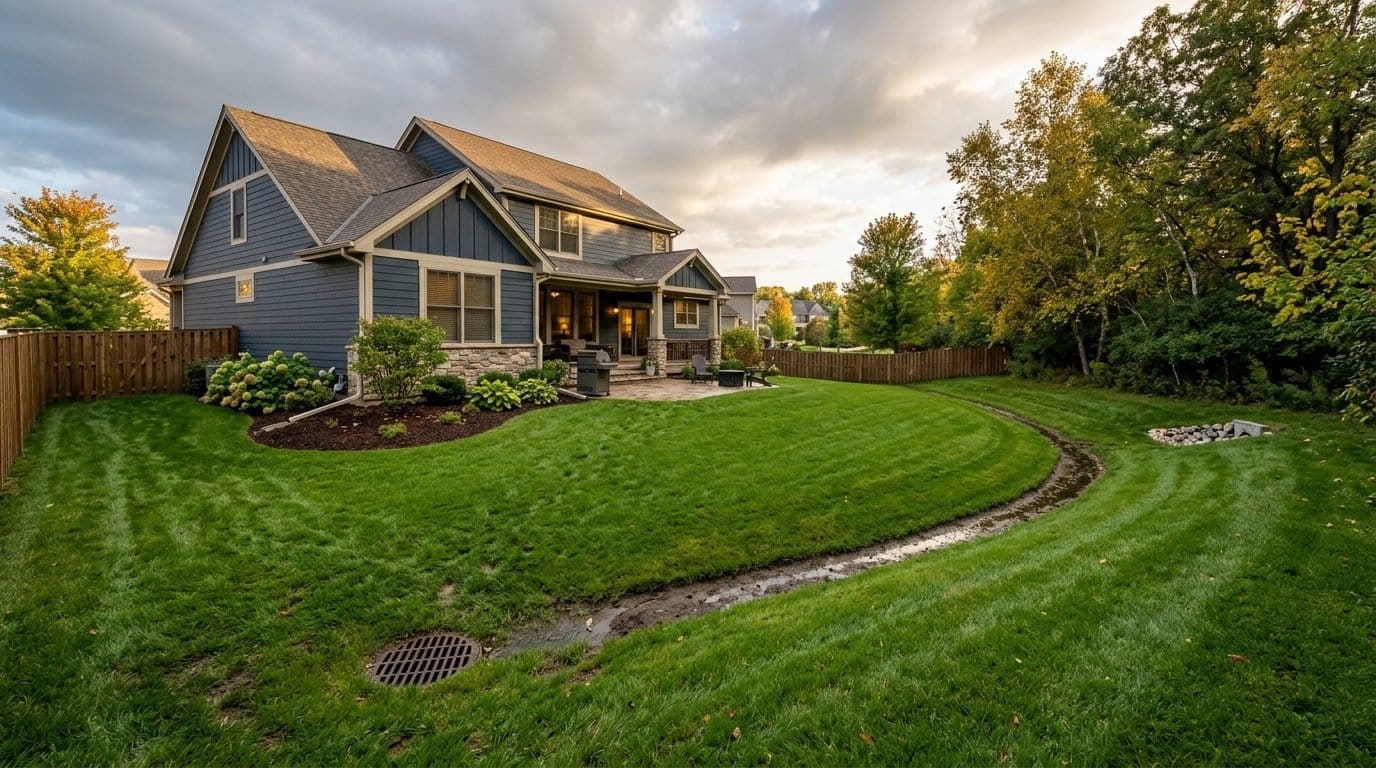
A swale is a shallow grassed channel shaped to carry surface water across your yard to a safe discharge point. Done right, a swale looks like a natural gentle dip in the lawn. It is one of the most cost-effective drainage solutions because it uses surface flow rather than pipes and excavation.
Swales work well on properties with enough room to slope water across the yard, especially where the water flows in a predictable direction. They are commonly paired with regrading and french drains on larger projects.
Best for: Moving water across a yard, handling runoff from neighboring properties, redirecting roof and driveway water to a low point.
Cost: $1,000 to $4,000 for a residential swale depending on length, depth, and reseeding.
4. Dry Wells
A dry well is a buried perforated container or pit filled with gravel that holds water and lets it slowly soak into the surrounding soil. It acts as a holding tank for surface runoff that has nowhere to go. Modern dry wells use plastic chamber units that are stronger and easier to install than the old gravel-pit style.
Dry wells solve the hardest drainage situation: a flat lot with no discharge point. Water enters the well from a pipe, sits in the chamber, and percolates into the surrounding soil over time. The catch is that dry wells need permeable soil to work. In tight clay, a dry well fills up faster than it drains and overflows.
Best for: Flat lots without a discharge point, downspout water on properties where you cannot run a buried pipe to daylight, modest drainage volumes.
Cost: $1,500 to $4,500 for a residential dry well system installed.
5. Catch Basins and Surface Drains
A catch basin is a small grated box set into a low spot to collect surface water and pipe it away. Channel drains (also called trench drains) are the same idea in a long narrow form, often used at the base of a driveway or across a patio. Both connect to a buried pipe that carries the water to a discharge point.
These work where water is already collecting at a known spot and you have a place to send it. They are often used together with regrading and french drains as the surface inlets that catch the visible runoff.
Best for: Low spots that always pond, driveway runoff, the edge of a patio that floods, water coming off a roof onto a hardscape.
Cost: $300 to $1,200 per catch basin installed including the buried discharge pipe.
6. Downspout Extensions and Buried Drainage Lines
Downspout extensions move roof water away from the foundation before it can saturate the soil or back up into the basement. This is the simplest, cheapest, and most-overlooked drainage fix. Every downspout should discharge at least 6 feet from the foundation onto a sloped surface, or pipe directly into a buried drainage line that exits at a daylight point or storm sewer connection.
A typical home has 4 to 8 downspouts, each handling 200 to 600 gallons of water during a 1-inch rain. Sending that water out at the foundation is the single most common cause of basement seepage and yard drainage problems.
Best for: Almost every property. This is usually the first fix any drainage professional makes.
Cost: $50 to $150 per downspout for a flexible extension. $400 to $1,200 per downspout for a buried PVC line to daylight.
Why Tri-State Soil Makes Drainage Harder
Most yards across Southern Indiana, Western Kentucky, and Southeastern Illinois sit on heavy clay subsoils. Clay particles are extremely fine and pack together tightly. Water cannot easily pass through, so it runs off the surface or sits in the top few inches.
That changes which drainage solutions work in our area:
- Soak-it-in solutions struggle. Dry wells, soakaway pits, and rain gardens that rely on percolation often underperform in clay. They can still work but need to be sized larger and located where the soil has been amended or a bed of permeable material has been installed below.
- Surface and intercept solutions excel. Regrading, swales, and french drains all move water rather than waiting for it to soak in. These are the workhorses of clay-soil drainage in the region.
- Filter fabric is non-negotiable. Any drainage stone in clay soil has to be wrapped in filter fabric. Without it, clay particles wash into the gravel and clog the drain within a few seasons.
You can check your specific property's soil type on the USDA Web Soil Survey to see what your contractor is working with. The Purdue Rainscaping Education Program has additional regional context on managing runoff and wet soils in Indiana.
How Much Does Yard Drainage Work Cost?
Drainage projects vary more in price than almost any other landscape work because the right fix depends entirely on your site. Here is what to expect by project size.
| Project Size | Typical Cost | What It Includes |
|---|---|---|
| Minor fix | $200 to $1,500 | Downspout extensions, single low-spot regrading |
| Moderate project | $2,000 to $7,500 | French drain, partial regrading, 1 to 2 catch basins |
| Major drainage system | $8,000 to $20,000+ | Full property regrading plus french drains plus catch basins plus discharge piping |
Three factors drive the cost on most projects:
- Length and depth of buried pipe: More linear footage and deeper trenches mean more excavation, more material, and more labor.
- Soil conditions: Heavy clay, rocks, or tree roots all slow excavation. Wet soil has to dry before crews can work in it without compacting and damaging the lawn.
- Discharge point distance: If water has to travel 100 feet to a usable outlet versus 20 feet, the project costs more.
If your drainage problem ties into a hardscape project, combining work usually saves money. Building a paver patio or retaining wall already involves excavation and grading, and adding drainage at the same time is much cheaper than tearing things up later. Our paver patio cost guide and retaining wall cost guide cover what each project involves.
DIY vs. Hiring a Pro
A handful of drainage fixes are reasonable DIY projects. Most are not.
When DIY makes sense:
- Extending downspouts with flexible above-ground extensions
- Regrading a small low spot in the lawn (under 100 square feet)
- Cleaning out clogged gutters that are causing overflow at the foundation
When you need a professional:
- French drain installation (depth, slope, and fabric matter)
- Anything within 10 feet of the foundation where mistakes can damage the home
- Buried discharge piping that needs to maintain a continuous slope to daylight
- Regrading larger areas (over 100 square feet) where settling and tie-in elevations matter
- Any project where you cannot identify a clear discharge point
The most expensive drainage problems are the ones built incorrectly. A french drain installed without filter fabric clogs in two seasons. A buried pipe that loses its slope holds water and freezes in winter. A regraded yard that creates a new low spot just moves the problem somewhere else. Drainage rewards careful design more than almost any other landscape work.
Negative grade against a foundation is urgent. If your ground slopes toward the house instead of away, water is being directed at your basement or crawl space every time it rains. This is one drainage issue that should not wait. Foundation repair from prolonged water exposure costs $5,000 to $25,000 or more, while corrective grading typically runs $1,500 to $5,000.
When to Call Right Away
A few drainage situations are not worth waiting on. If you see any of the following, get a professional out for an assessment as soon as you can:
- Water seeping into a basement or crawl space after rain
- Visible cracks in the foundation accompanied by efflorescence (white mineral residue)
- Soil pulling away from the foundation, leaving a visible gap
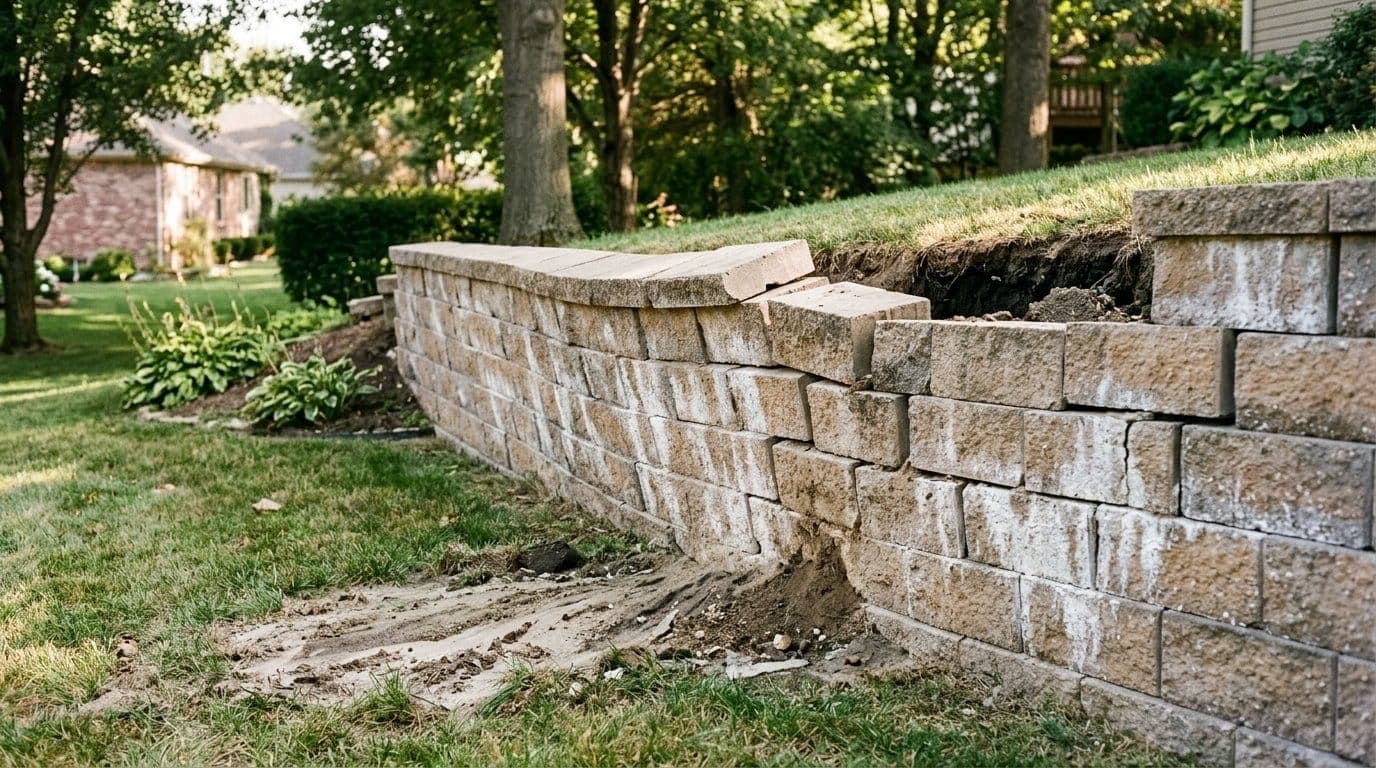
- A retaining wall leaning, bulging, or losing alignment (almost always a drainage failure behind the wall)
- A sinkhole or depression that grows after each rain
- Mature trees showing decline in saturated soil
Each of these signals that water is causing structural damage, not just inconvenience. The cost of correction climbs sharply once water starts moving foundation material or destabilizing structures.
How We Approach Drainage Projects
Drainage work starts with diagnosis. A good contractor walks the property after a rain when possible, checks the grade against the foundation, traces every downspout, and identifies the source of the water and a viable discharge point before recommending a single fix.
We design drainage systems for properties across the Tri-State area, often combining grading, french drains, and surface inlets to handle complex sites with multiple water sources. Most homes do not need every solution in this guide. They need the right two or three, sized correctly and tied to a sensible discharge.
Schedule a free consultation and we will walk your site, evaluate the soil and slope, and put together a scope and price. If your drainage issue is part of a larger plan such as a new patio, retaining wall, or full landscape renovation, planning the work together usually saves money and produces a better result.
Colonial Classics Landscape & Nursery has been solving drainage and landscape challenges across Southern Indiana for over 65 years. Getting water to do what you want it to do is the foundation of every successful outdoor project.
Most yard drainage problems are solved with regrading, french drains, swales, dry wells, catch basins, or downspout extensions, often in combination. Surface and intercept solutions work best in the clay soils across the Tri-State area. Negative grade against a foundation is the most urgent issue you can have. Simple fixes start at a few hundred dollars while full property drainage systems run $8,000 or more. The right fix depends on the source of the water, the soil type, and where the water can safely discharge.