If you have ever watched a freshly planted tree struggle through its first summer, the problem may not have been the tree. It may have been the timing. When you put a tree in the ground matters almost as much as which tree you choose.
The short answer: fall is the best time to plant most trees in USDA Zone 7a, which covers Southern Indiana, the Evansville and Newburgh area, and the broader Tri-State region across Indiana, Illinois, and Kentucky. Cooler weather and warm soil give roots the perfect conditions to settle in before winter. But there are real exceptions, and a few popular trees are far better off waiting for spring.
This guide walks through the ideal planting window, which trees to hold for spring, how to plant one correctly, and the first-year care that keeps your investment alive.
Fall (early September through late October) is the best time to plant most trees in the Tri-State area. Plant so the root flare sits slightly above grade, skip the soil amendments, keep mulch off the trunk, and water deeply through the first full growing season.
When Is the Best Time to Plant Trees in the Tri-State?
Fall is the best time to plant most trees in Southern Indiana, with a planting window that runs from about early September through late October. The goal is to get the tree in the ground at least four to six weeks before the ground freezes, which gives the roots time to grow into the surrounding soil.
Fall works because it plays to a tree's natural rhythm. As the days shorten, the top of the tree slows down and drops its leaves, but the soil stays warm well into November. Roots keep growing whenever soil temperatures are above roughly 40 degrees, so a fall-planted tree spends the cool months building the root system it will need when summer heat returns.
Spring (March through May) is the second-best window. It is the right choice for bare-root trees, marginally hardy species, and the handful of trees that simply do not establish well in fall. Spring-planted trees have a full season of growth ahead of them, but they also face the region's summer heat before their roots are ready, which means more watering on your part.
Why Fall Planting Works So Well in Zone 7a
Fall planting reduces transplant stress because the tree is not trying to grow leaves and roots at the same time. Here is what makes autumn the sweet spot in our region:
- Warm soil, cool air: The soil holds summer's heat for weeks after the air turns cool. Warm soil keeps roots active while cool air keeps the canopy from losing water it cannot yet replace.
- More reliable rainfall: Fall in the Tri-State area typically brings steadier rain than the flash droughts of July and August, so new trees dry out less often.
- A head start on spring: By the time growth resumes in spring, a fall-planted tree already has a working root system. It leafs out on schedule instead of spending its first spring just catching up.
- Less heat stress: Planting in fall lets a tree skip the brutal first summer that spring plantings have to survive with an undersized root system.
The one thing fall planting demands is that you do not stop watering just because the weather cooled off. Roots keep growing until the ground freezes, and they need moisture to do it.
Which Trees Should You Plant in Spring Instead?
Some trees are notoriously slow to establish or have fleshy, sensitive roots that are prone to winter injury. For these species, spring planting gives them a full growing season to settle in before facing a Tri-State winter. Hold these for spring:
| Tree | Why it prefers spring |
|---|---|
| Oaks | Slow to grow new roots, higher risk of winter loss |
| Magnolias | Fleshy roots that are easily damaged by cold |
| Dogwoods | Shallow, sensitive root systems |
| Tulip poplar | Fleshy roots that resent fall disturbance |
| Birch | Thin bark and slow root establishment |
| Bald cypress | Slow to establish before the ground freezes |
| Willows | Fleshy roots with better survival in spring |
| Fruit trees (cherry, plum, apple, peach) | Consistently higher survival planted in spring |
Bare-root trees of any species also belong in spring. They should go in the ground in early spring while still dormant, before they leaf out. Broadleaf evergreens such as holly and some magnolias are another spring pick, because their leaves lose water all winter and a fall-planted specimen can dry out before its roots can keep up.
Almost everything else, including maples, lindens, elms, hackberry, ginkgo, honeylocust, and most needled evergreens like spruce and pine, plants beautifully in fall.
Can You Plant Trees in Summer or Winter?
You can plant a container-grown tree in summer, but it is the toughest season to pull off. A tree that has not grown new roots yet has to support a full canopy of leaves through the hottest, driest stretch of the year. If summer is your only option, choose a container tree over balled-and-burlapped, plant in the cool of the evening, mulch well, and commit to watering deeply several times a week.
Winter planting is generally off the table once the ground freezes, because roots cannot grow and you cannot dig a proper hole. During a mild spell in early winter before a hard freeze, a container tree can still go in, but fall or spring is a far safer bet.
How to Plant a Tree Correctly
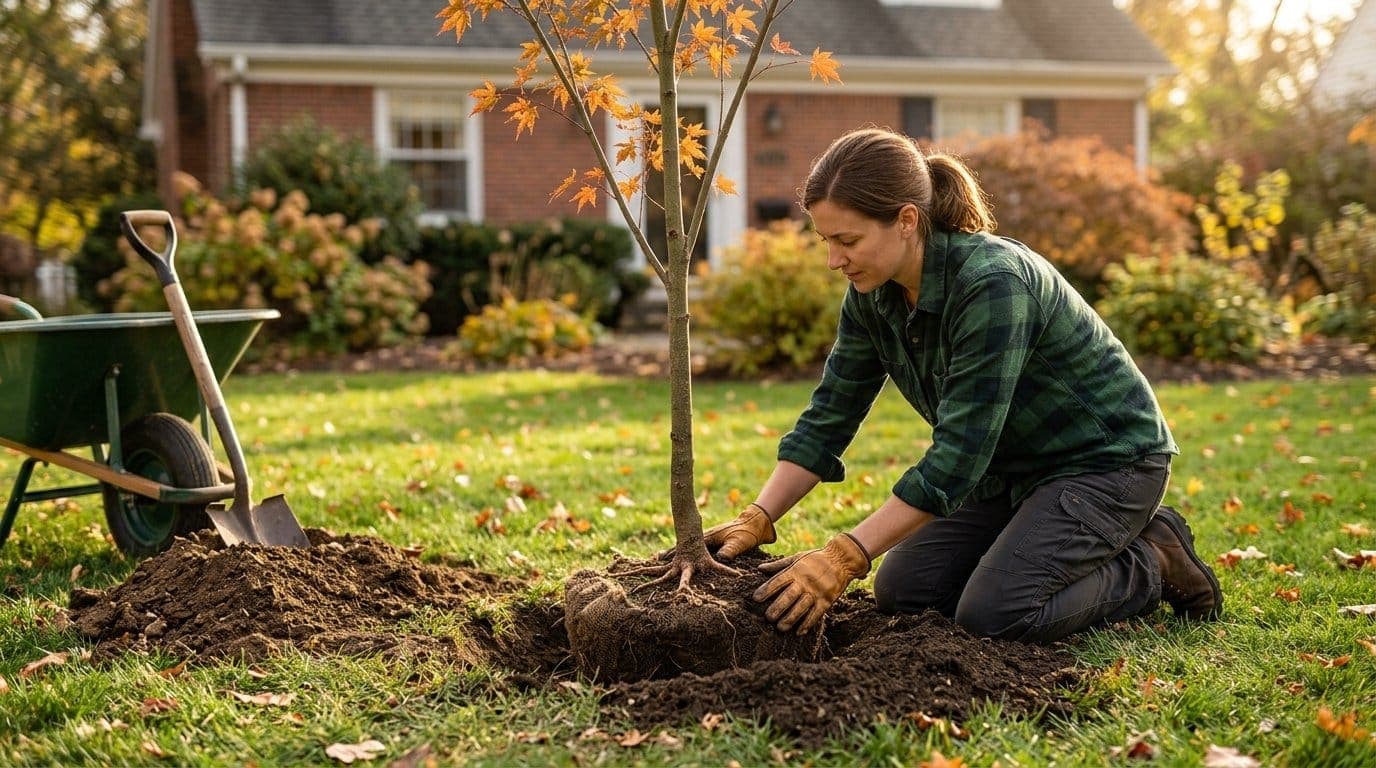
The single most important rule is to plant at the right depth. According to Purdue Extension, the most common cause of tree decline is planting too deep, and it is completely avoidable. Here is the process from start to finish.
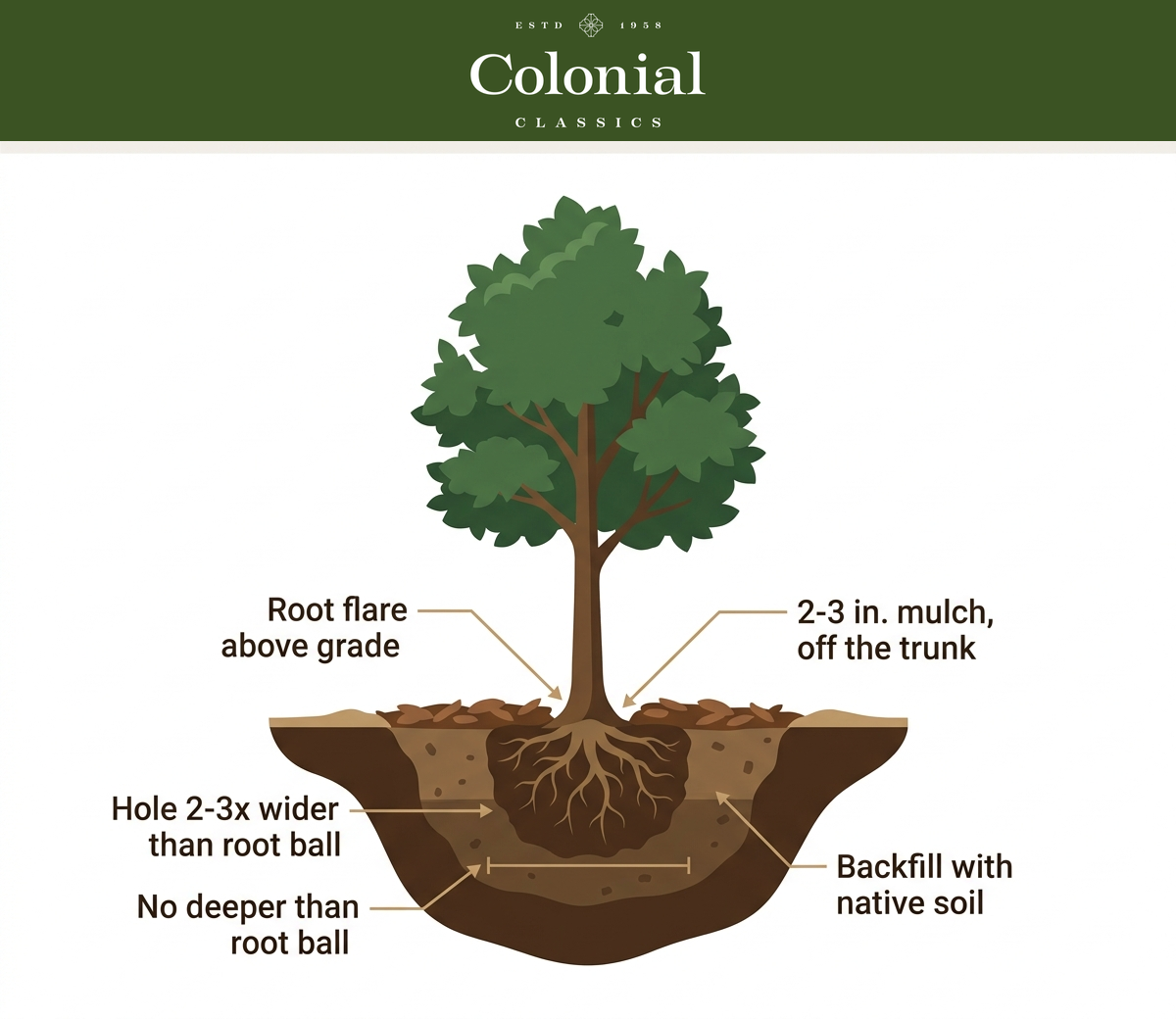
- Find the root flare and measure the root ball. The root flare is where the trunk widens and the first main roots spread out. It is often buried under an inch or two of soil in the pot or burlap, so brush the soil away until you can see it. Measure from the flare to the bottom of the ball so you know exactly how deep to dig.
- Dig a wide, shallow hole. Make the hole two to three times as wide as the root ball but no deeper than the ball itself. A wide hole loosens the surrounding soil so roots can spread; a shallow hole keeps the flare from sinking. Roughen the sides so roots do not circle inside a slick-walled pit.
- Set the tree and remove the wrapping. Lift by the root ball, never the trunk. Once it is centered, cut away twine, peel back burlap, and remove the top third of any wire basket. Slide containers off completely and tease apart roots that are circling the outside of the pot.
- Backfill with native soil. Use the same soil you dug out. Do not amend the hole with compost, peat, or fertilizer, which creates a "bathtub" of rich soil that roots refuse to leave and that traps water around the ball. Firm the soil gently to remove air pockets and recheck that the flare is still visible.
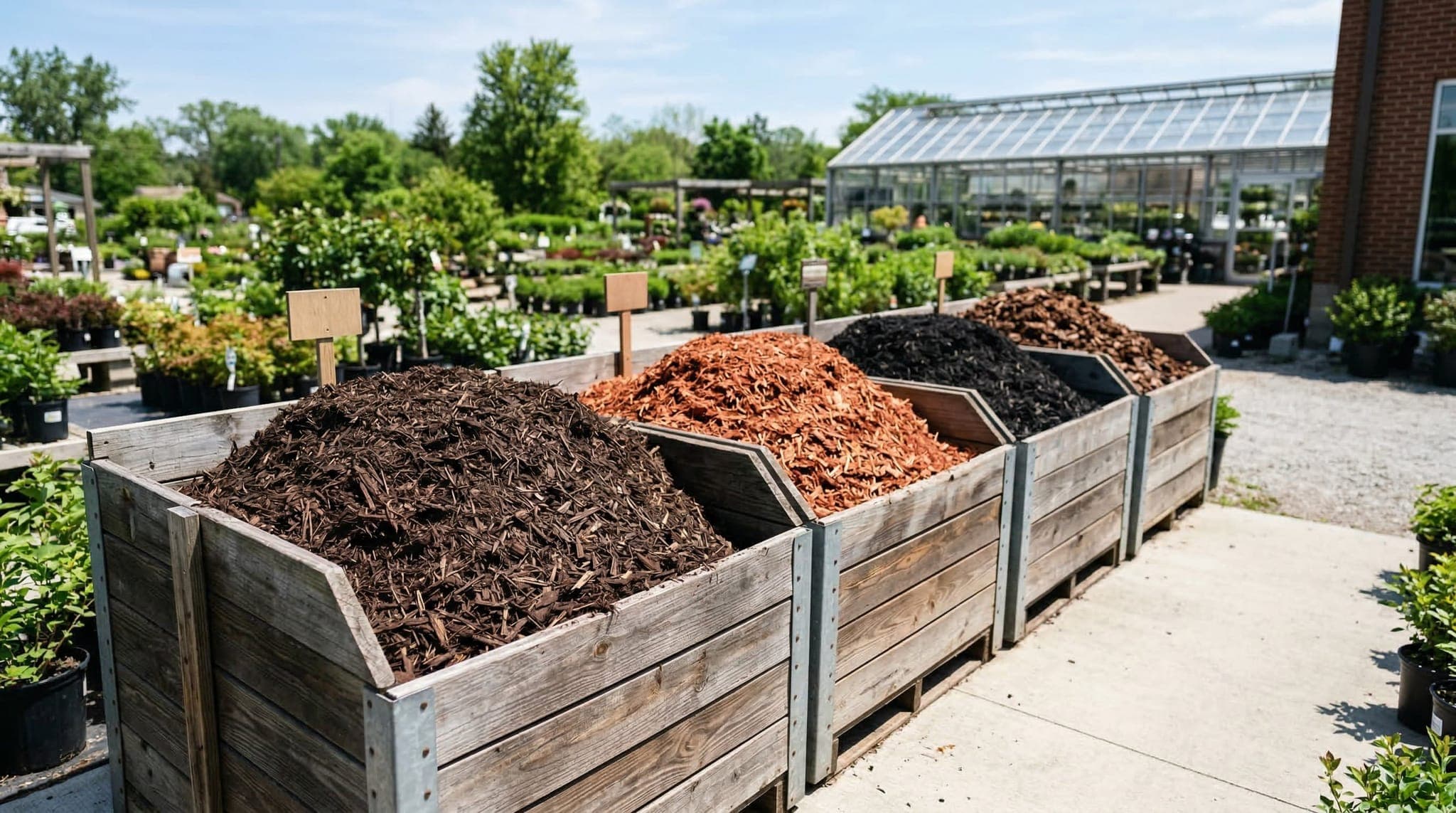
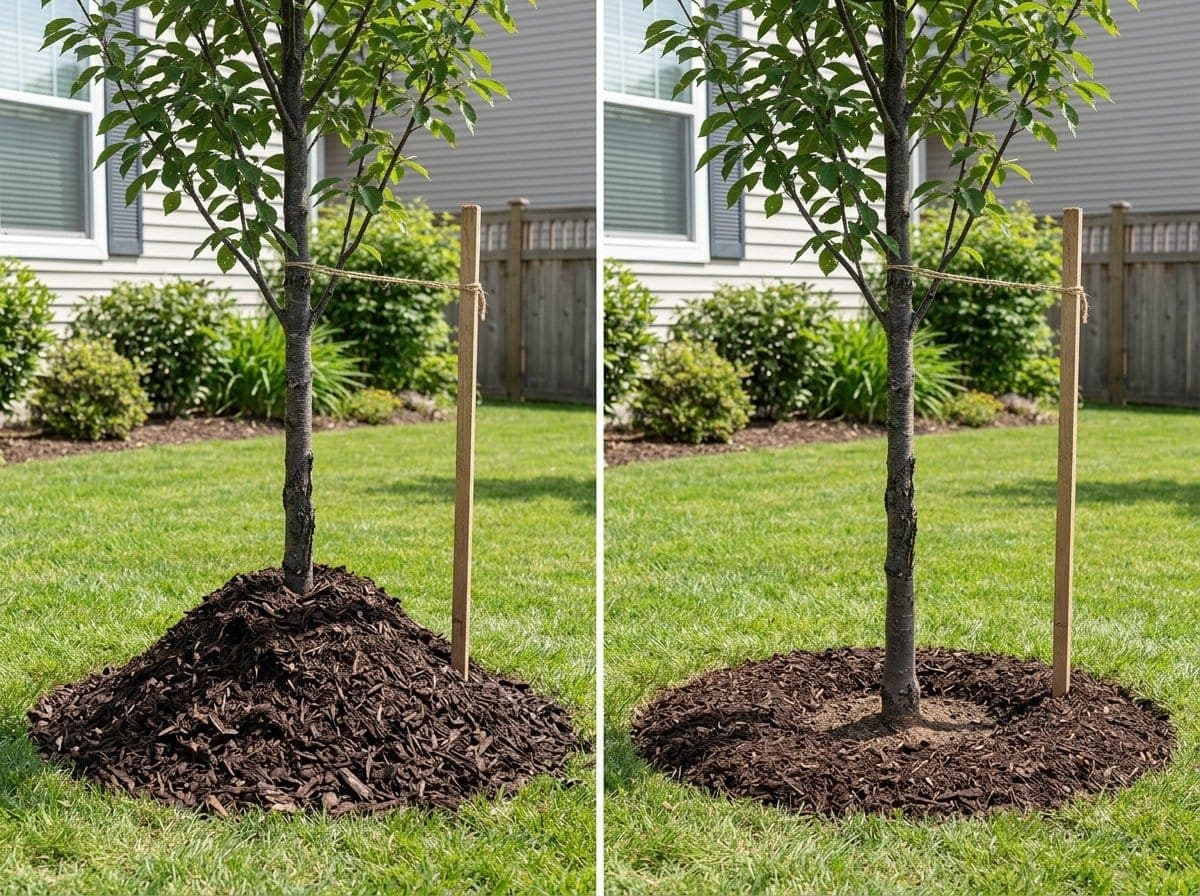
- Mulch and water. Spread 2 to 3 inches of coarse bark mulch in a ring, keeping it a few inches off the trunk. Then water slowly and deeply until the root ball and backfill are fully soaked.
When in doubt, plant a little high rather than a little deep. A root flare sitting an inch above grade will settle in fine. A flare buried two inches too deep can slowly girdle and kill the tree years later.
The Most Common Tree-Planting Mistakes
Most young trees that die were set up to fail on planting day. Watch for these:
- Planting too deep: When the root flare is buried, the trunk stays wet, bark rots, and roots suffocate. Keep the flare visible.
- Mulch volcanoes: Mulch piled against the trunk traps moisture, invites disease and rodents, and encourages girdling roots. Mulch in a flat ring, never a cone.
- Over-amending the hole: Filling the hole with rich potting mix feels helpful but discourages roots from spreading into the native soil and holds water against the ball. Backfill with what you dug out.
- Leaving wire and twine on: Wire baskets and nylon twine do not rot away and can strangle a trunk or roots as the tree grows. Cut them away at planting.
- Wrong tree, wrong spot: A tree that matures at 60 feet does not belong under a power line or three feet from the foundation. Check the mature size and keep large trees well away from septic fields and utilities.
Before you dig, call 811 to have underground utilities marked. It is free, it takes a couple of days to schedule, and it keeps you from hitting a gas, water, or electric line. This is especially important for the deeper, wider holes that shade trees require.
How to Water a Newly Planted Tree
Consistent water through the first growing season is what separates trees that thrive from trees that limp along. A new tree cannot reach the moisture deeper in the soil yet, so its small root ball dries out fast.
Follow this schedule for the first year:
- Weeks 1 to 2: Water every one to two days, checking that the soil stays moist but not soggy.
- Rest of the first season: Taper to a deep soak once or twice a week, more often during hot, dry spells.
- How much: Apply about 1 to 1.5 gallons per inch of trunk diameter each time, enough to wet the soil to a depth of about 12 inches.
- After rain: Skip a session after a soaking rain. Stick a finger or a screwdriver a few inches into the soil; if it is still moist, wait.
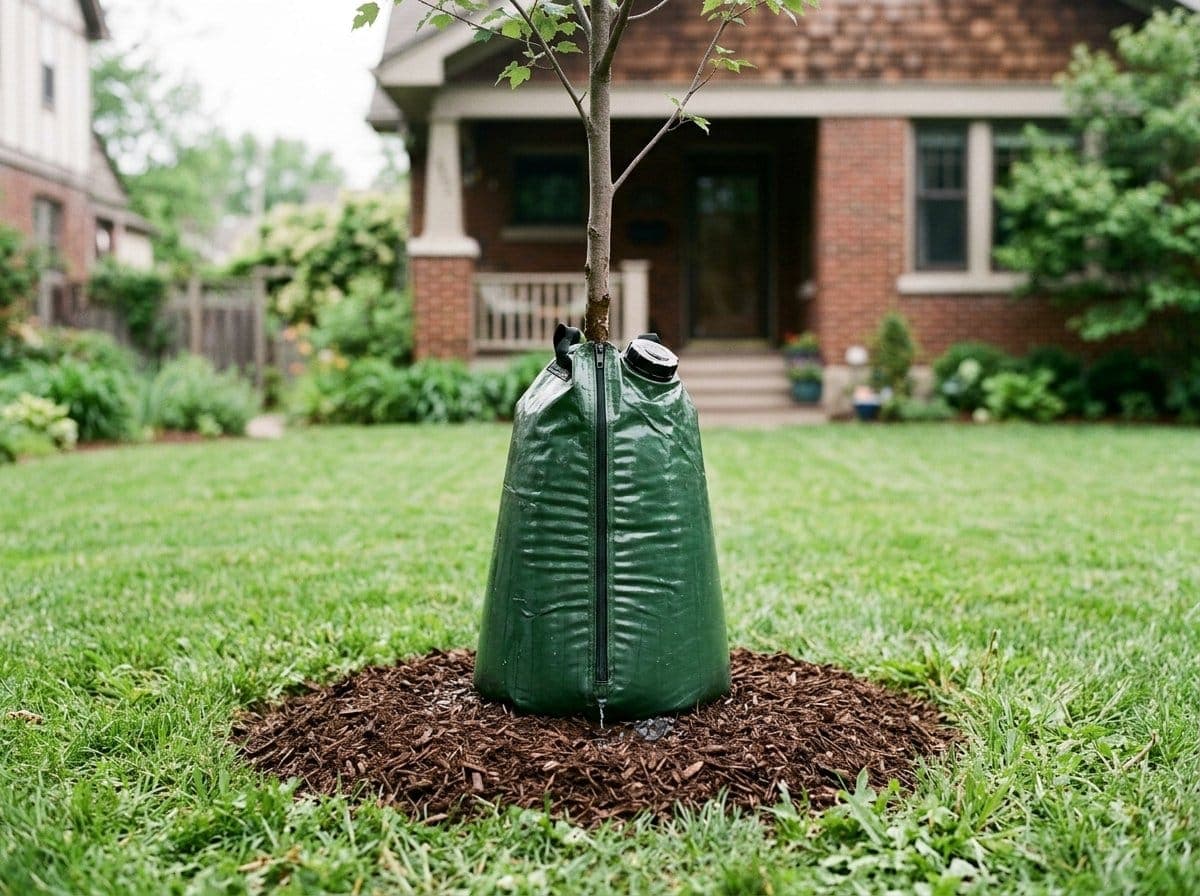
Plan on this level of attention for the whole first year, and for larger trees, well into a second season. As a rule of thumb, a tree needs about one growing season per inch of trunk diameter to fully establish.
Let Us Help You Plant It Right
Choosing the right tree and planting it correctly is the difference between a tree that shades your grandchildren and one that never makes it out of its first year. Our garden center stocks Zone-tested trees in every size, and the staff can point you to species that fit your soil, your light, and the space you have.
If you would rather not wrestle a 300-pound root ball into the ground yourself, our professional planting service handles delivery, planting, and setup, and it comes with a planting warranty for peace of mind. For a larger project or a full yard redesign, our landscape design team can plan the right trees in the right places from the start.
However you get there, plant this fall and you will be giving your new tree the best possible start.