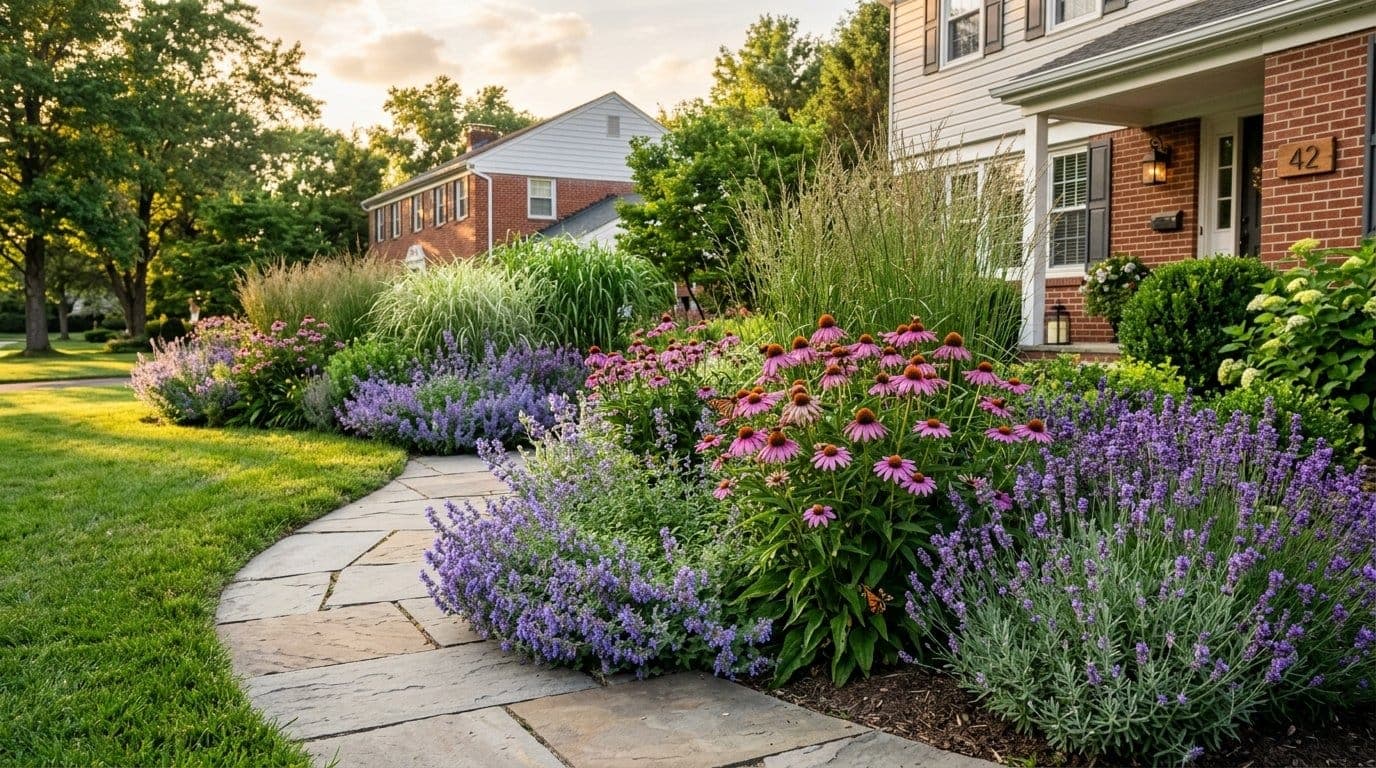
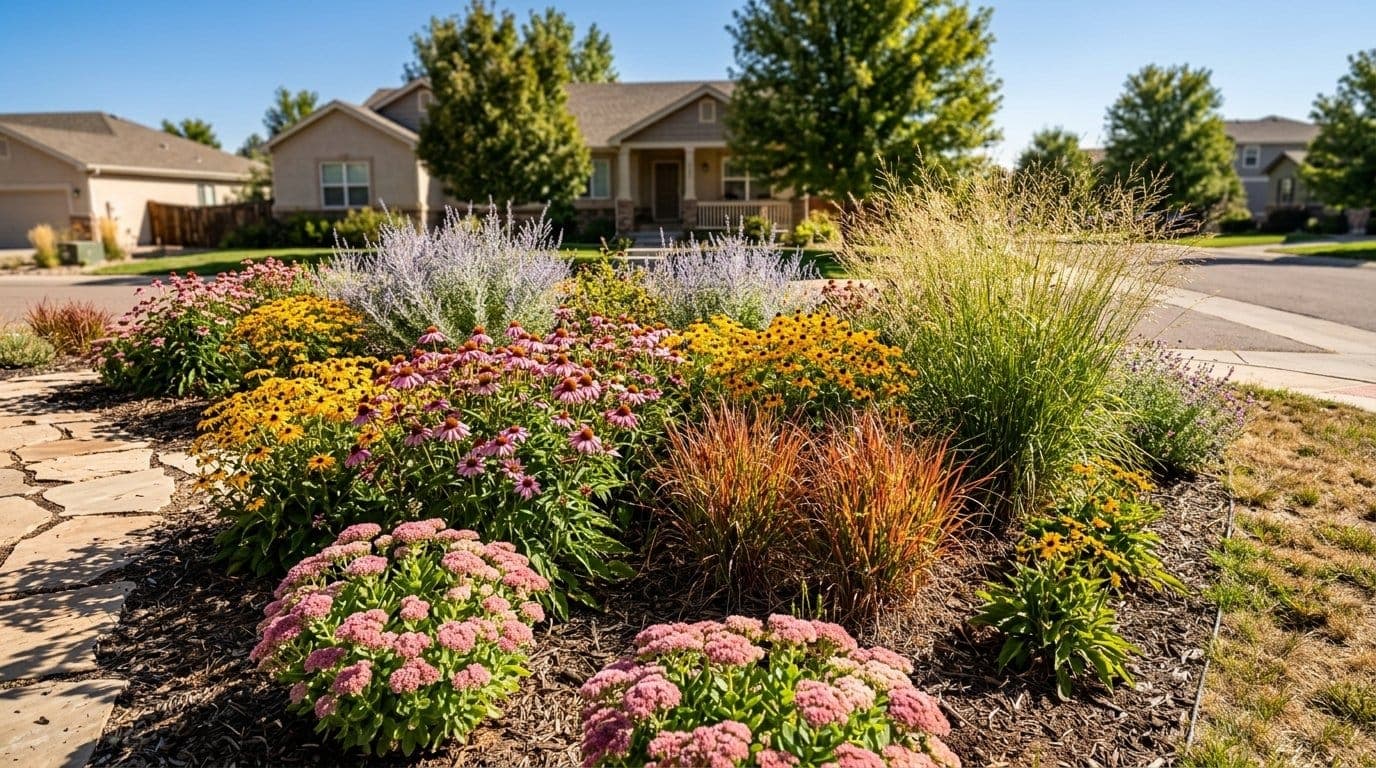
If your yard turns crispy by August and your water bill climbs every time you try to keep it green, the problem may be your plant list, not your effort. The best fix for a hot dry summer is not more watering. It is choosing drought tolerant plants that expect the heat and shrug it off. This guide covers the toughest drought resistant perennials, shrubs, ornamental grasses, groundcovers, and trees for the Tri-State area, plus exactly how to get them established so they survive that critical first summer.
Every yard is different. Sun exposure, slope, and how much your soil has been compacted all change how a plant performs. The picks below come from decades of installing landscapes across the Tri-State area and from university research, but your specific conditions still matter. Contact us if you want a planting plan built for your property.
What Makes a Plant Drought Tolerant?
A drought tolerant plant is one that survives extended dry periods once its roots are established, usually through deep roots, water-storing tissue, or foliage built to limit water loss. These plants pull moisture from deep in the soil, store water in fleshy leaves and stems, or wear silver, fuzzy, or waxy foliage that reflects sun and slows evaporation. None of this means they need zero water. It means that after a year or two in the ground, they get by on rainfall in all but the worst droughts.
Understanding the trait helps you plant smarter. The same coneflower that wilts in its first July will sail through the next one untouched, because by then its roots reach 2 feet down instead of 2 inches. The plant did not change. Its root system did.
Drought tolerance is earned, not instant. Every plant on this list needs regular water for its first one to two growing seasons. After that, deep roots do the work and you can step back. Plant in spring or fall, water deeply but infrequently, and mulch well.
Why Drought Tolerant Plants Make Sense Here
Drought tolerant plants are a smart choice across the Tri-State area because our summers are hot, our rainfall is unpredictable, and our soil is mostly heavy clay. Southern Indiana, Southern Illinois, and Western Kentucky all sit in USDA Zone 7a, where summer highs routinely push into the 90s and stretches of two or three rainless weeks are normal from July into September. A landscape built on thirsty plants becomes a daily chore and an expensive one.
Clay soil adds a twist. It holds water well in spring, sometimes too well, then bakes hard and cracks in a dry summer. The plants below handle both extremes: soggy clay in April and bone-dry clay in August. Choosing them means less watering, lower water bills, and a yard that still looks alive after a heat wave. Many of them are also native or near-native, which means local pollinators recognize them and deer often pass them by. For more on that overlap, see our guide to deer resistant plants.
The Best Drought Tolerant Perennials
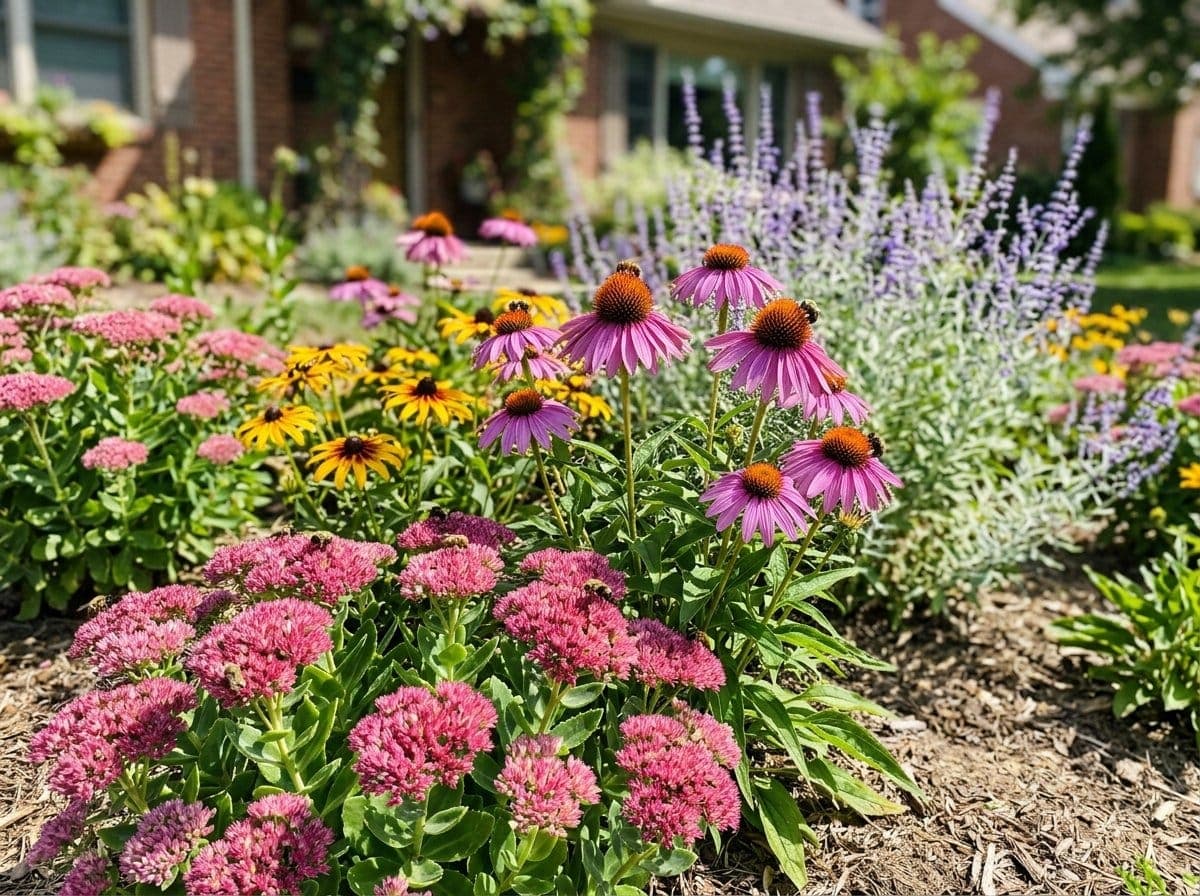
Drought tolerant perennials are the foundation of a low-water garden because they return every year and most of the best picks also thrive in our clay soil. These come back bigger and tougher each season.
- Purple Coneflower (Echinacea purpurea): Deep taproot and coarse leaves make this a heat champion. Full sun, 3 to 4 feet tall, blooms June through September, beloved by pollinators.
- Black-Eyed Susan (Rudbeckia): One of the toughest natives for clay and heat. Full sun, 2 to 3 feet, gold blooms July through October, spreads into cheerful drifts.
- Sedum (Hylotelephium 'Autumn Joy'): Succulent leaves store water, so it never wilts. Full sun, 18 to 24 inches, pink fall blooms that age to rust and feed late bees.
- Russian Sage (Salvia yangii): Silver aromatic foliage and woody stems built for dry heat. Full sun and good drainage, 3 to 4 feet, hazy blue bloom late summer.
- Catmint (Nepeta x faassenii): A low gray-green mound that blooms for months on almost no water. Full sun, 18 to 24 inches, shear midsummer for a second flush.
- Yarrow (Achillea): Fern-like foliage that tolerates dry, poor soil with ease. Full sun, 18 to 36 inches, flat flower heads June through September.
- Baptisia (Baptisia australis): A deep taproot makes this false indigo nearly indestructible once settled in. Full sun, 3 to 4 feet, blue spring spikes and shrub-like form.
- Coreopsis (Coreopsis): Airy and free-flowering in the worst heat. Full sun, 12 to 24 inches, yellow or pink blooms all summer.
- Daylily (Hemerocallis): Thick roots store water, so daylilies shrug off drought once established. Full sun to part shade, 1 to 3 feet, though deer do browse them.
Browse our perennials and grasses inventory for current stock by season.
The Best Drought Tolerant Shrubs
Drought tolerant shrubs give a low-water landscape its year-round structure and screening. The picks below hold up to dry summers and the region's clay once their roots reach down.
- Juniper (Juniperus): One of the most drought-proof shrubs you can plant. Evergreen, full sun, forms from low groundcover spreaders to 15-foot uprights.
- Sumac (Rhus aromatica 'Gro-Low'): A tough native with brilliant red fall color that thrives in dry, poor soil. Full sun to part shade, 2 to 3 feet, excellent for slopes and erosion control.
- Ninebark (Physocarpus opulifolius): A native built for clay and drought with burgundy or gold foliage. Full sun, 3 to 8 feet, peeling bark for winter interest.
- Potentilla (Potentilla fruticosa): Blooms all summer on tough little stems with no fuss. Full sun, 2 to 3 feet, yellow or white flowers June through frost.
- Bluebeard (Caryopteris x clandonensis): Aromatic gray foliage and late blue flowers that bees swarm. Full sun, 2 to 3 feet, cut back hard each spring.
- Spirea (Spiraea): Adaptable and forgiving once established. Full sun, 2 to 5 feet, spring or summer bloom depending on variety.
For a deeper look at choosing shrubs for our region, see our guide to the best shrubs for landscaping, and browse current stock in our trees and shrubs section.
The Best Drought Tolerant Ornamental Grasses
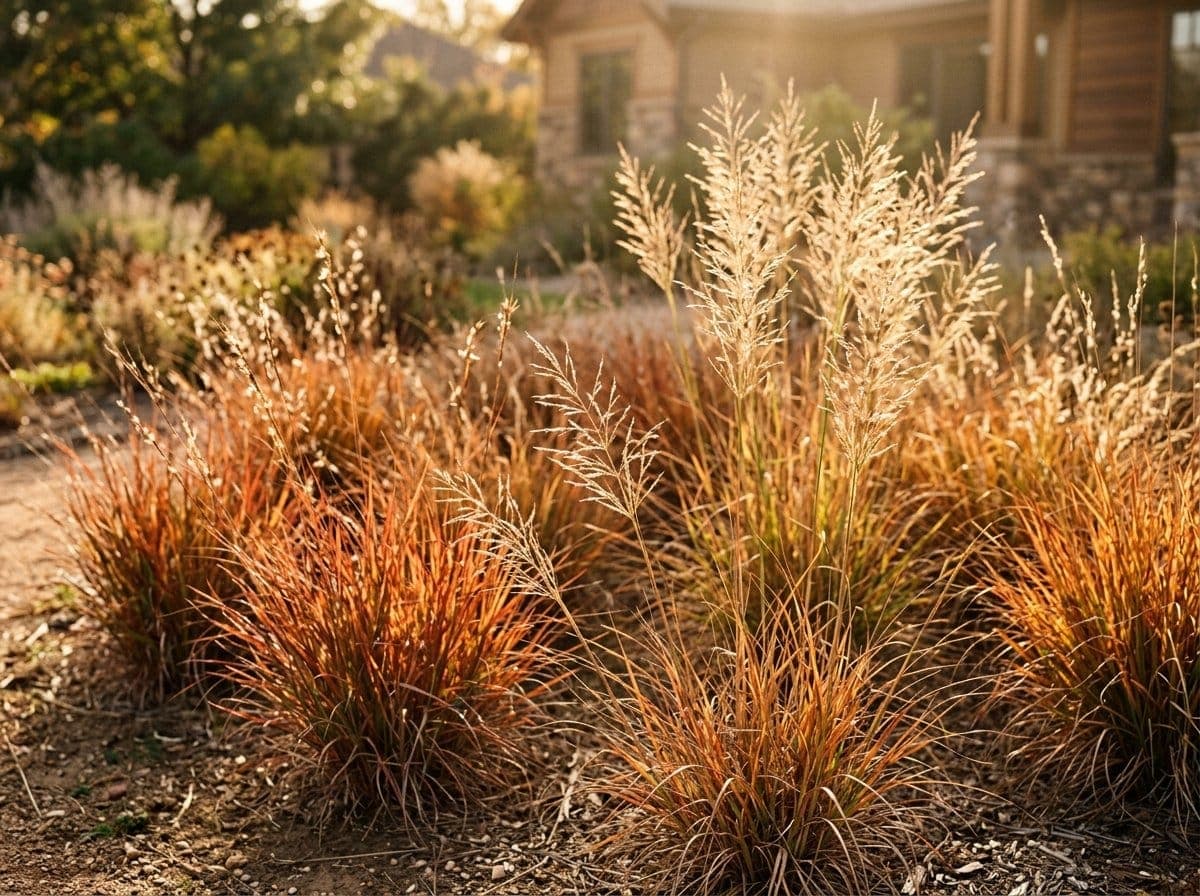
Ornamental grasses are among the most drought tolerant plants you can grow, and most of the best ones are native prairie species adapted to exactly our heat and clay. They add movement, texture, and winter structure on almost no water.
- Little Bluestem (Schizachyrium scoparium): A clumping native that turns coppery red in fall. Full sun, 2 to 4 feet, thrives in dry, lean soil.
- Switchgrass (Panicum virgatum): A prairie native that handles both wet clay and drought. Full sun, 3 to 6 feet, airy seed heads and upright form.
- Feather Reed Grass (Calamagrostis 'Karl Foerster'): A tidy vertical accent that tolerates clay and dry spells. Full sun, 4 to 5 feet, early feathery plumes.
- Prairie Dropseed (Sporobolus heterolepis): A fine-textured native that smells faintly of coriander in bloom. Full sun, 2 to 3 feet, fountain-like mound.
- Fountain Grass (Pennisetum): Soft foxtail plumes and a graceful arching habit. Full sun, 2 to 4 feet, very drought tolerant once established.
The Best Drought Tolerant Groundcovers
Drought tolerant groundcovers fill bare ground, suppress weeds, and act as living mulch that holds soil moisture. The picks below handle full sun, slopes, and the dry strips where turf grass always struggles.
- Creeping Sedum (Sedum spp.): Mat-forming succulents that store their own water. Full sun, 2 to 6 inches, ideal for hot slopes and between pavers.
- Creeping Thyme (Thymus serpyllum): Aromatic, walkable, and covered in bloom in early summer. Full sun, 2 to 4 inches, fragrant when stepped on.
- Creeping Juniper (Juniperus horizontalis): An evergreen carpet that holds slopes and laughs at drought. Full sun, 6 to 12 inches, spreads several feet wide.
- Hardy Ice Plant (Delosperma): Succulent foliage topped with neon daisy-like flowers all summer. Full sun and sharp drainage, 2 to 4 inches.
- Lamb's Ear (Stachys byzantina): Fuzzy silver leaves that reflect sun and resist both drought and deer. Full sun, 6 to 12 inches.
Use groundcovers on dry slopes where grass fails. A hot, west-facing slope that scorches every summer is the perfect spot for creeping juniper or sedum. They hold the soil, need no mowing, and stay green when the lawn goes brown.
Drought Tolerant Trees for the Tri-State
Several shade trees become highly drought tolerant once established, which makes them smart long-term investments for a low-water yard. Young trees still need careful watering for the first two to three years, but mature specimens handle dry summers with ease.
- Eastern Red Cedar (Juniperus virginiana): A native evergreen that thrives in poor, dry soil. Full sun, 30 to 40 feet, excellent screening and windbreak.
- Bur Oak (Quercus macrocarpa): A deep-rooted native oak built for tough sites and clay. Full sun, 60 to 80 feet, exceptionally long lived.
- Honeylocust (Gleditsia triacanthos): An open canopy that casts light shade and tolerates drought, heat, and poor soil. Full sun, 40 to 70 feet, choose thornless cultivars.
- Hackberry (Celtis occidentalis): One of the toughest natives for hot, dry, urban sites. Full sun, 40 to 60 feet, supports many native butterflies.
- Kentucky Coffeetree (Gymnocladus dioicus): A drought-hardy native with bold form and few pest problems. Full sun, 50 to 70 feet.
Wrap young trunks and keep new trees on a deep weekly watering schedule for their first few summers, then let their roots take over.
How to Establish Drought Tolerant Plants
The single biggest reason drought tolerant plantings fail is skipping the first-year watering. Follow these five steps to get roots deep enough that your plants can fend for themselves.
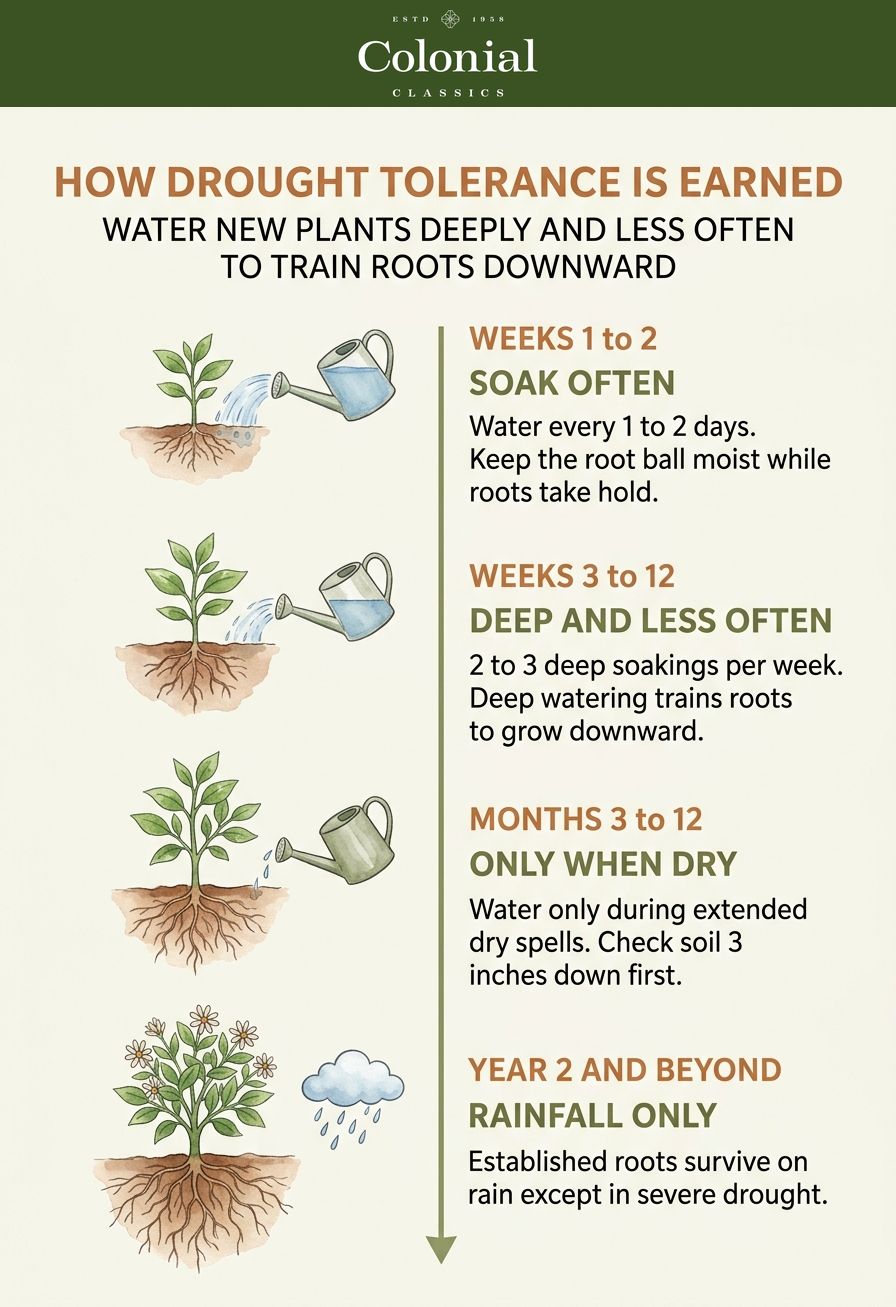
- Plant in spring or fall: Set plants in the ground during the cooler shoulder seasons so roots grow before summer heat arrives. Avoid July and August planting when you can.
- Water deeply at planting: Soak the root ball and surrounding soil thoroughly, then water every day or two for the first two weeks while roots take hold.
- Taper to deep weekly watering: From weeks three through twelve, cut back to two or three deep soakings a week. Deep infrequent watering trains roots to grow downward toward moisture.
- Mulch two to three inches: Spread shredded hardwood or leaf mulch around plants and keep it off the stems. Mulch holds soil moisture and moderates root temperature.
- Wean off supplemental water: Through the first full year, water only in extended dry spells. By the second year, most of these plants survive on rainfall alone.
A good rule of thumb is one inch of water per week from rain or hose during the establishment period, applied in one or two deep soakings rather than frequent light sprinkles. Purdue Extension notes that frequent shallow watering only moistens the top layer of soil and keeps roots shallow, while a thorough deep soaking encourages roots to grow down where moisture lasts longer.
Do not overwater plants in clay soil. Clay drains slowly and holds water for days. Watering a drought tolerant plant every day past the establishment window can drown the roots and rot the crown. When in doubt, dig down 3 inches and feel the soil before reaching for the hose.
Thirsty Plants and Their Tough Substitutes
If part of your yard always struggles in summer, the plants below are usually the culprits. Swap them for the drought tolerant substitute and the same spot becomes low-maintenance.
| Thirsty Plant | Why It Struggles | Tough Substitute |
|---|---|---|
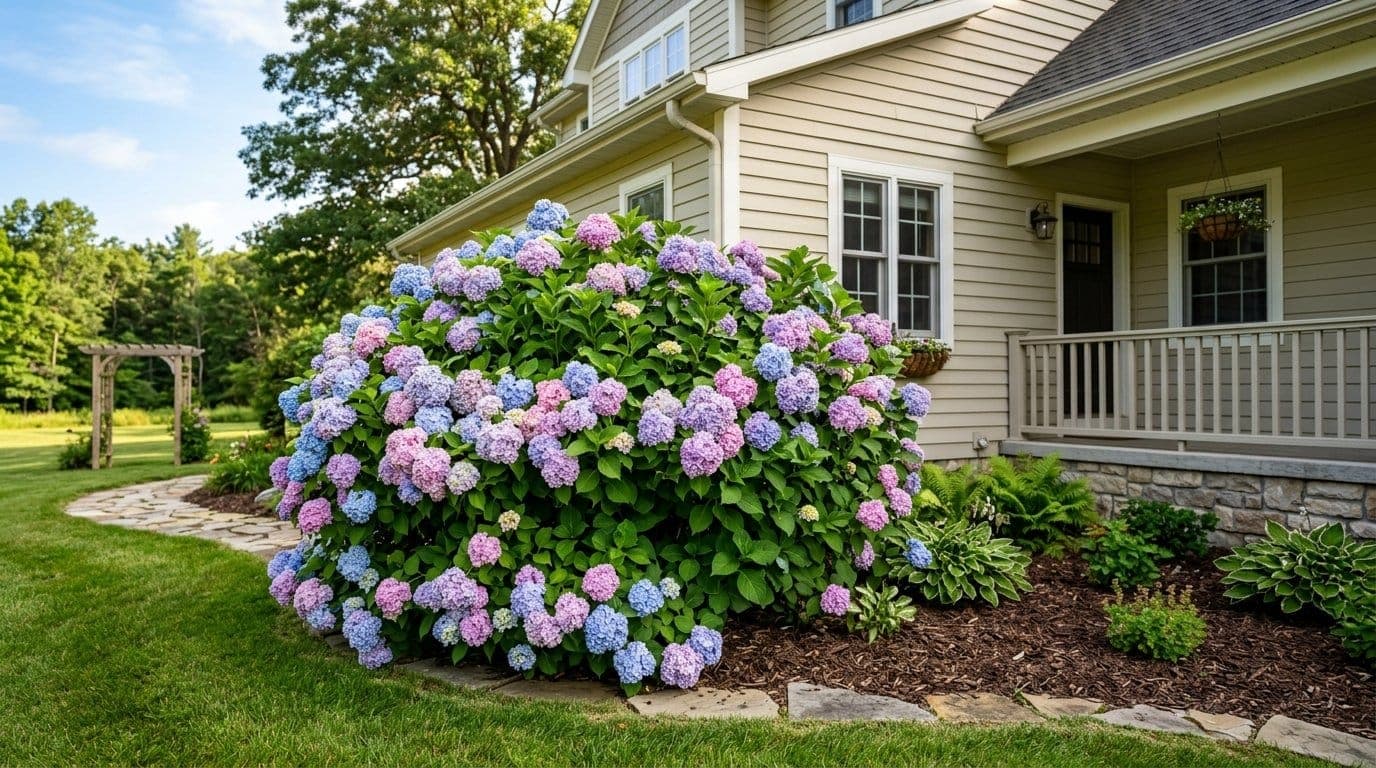
| Hydrangea (bigleaf) | Wilts daily in heat and full sun | Ninebark or panicle hydrangea |
| Astilbe | Burns and crisps without constant moisture | Yarrow or coreopsis |
| Impatiens | Collapses in dry heat | Sedum or lantana |
| Annual ryegrass strips | Browns out in dry summers | Creeping thyme or sedum |
| Birch (in dry sites) | Stresses and drops leaves in drought | Bur oak or hackberry |
| Hybrid tea roses | High water and spray needs | Russian sage or shrub roses |
Match the plant to the site instead of fighting the site. A hot, dry, sunny strip will never be a happy home for moisture lovers like astilbe. Put a sedum or a clump of little bluestem there and the problem solves itself.
Build a Yard That Handles the Heat
Colonial Classics Landscape & Nursery has been planting Tri-State yards for over 65 years, and low-water landscaping is one of the most popular requests we hear from homeowners across Newburgh, Evansville, and the wider Southern Indiana, Southern Illinois, and Western Kentucky region. We know which drought tolerant plants actually hold up in our clay and heat and which ones fade by August despite the label.
Whether you want to pick up a few tough perennials at our garden center or have our landscape design team plan a full low-water landscape for your property, we can help you build a yard that stays beautiful through the hottest, driest stretch of summer. Schedule a free consultation and we will walk your property, look at your soil and sun, and put together a planting plan that thrives on less water.