You planted a hydrangea for the flowers. Big, showy, can't-miss-them flowers. So when it leafs out green and full but never blooms, it feels personal. The good news: a hydrangea that grows but won't flower is almost never dying, and the fix is usually simple once you know what is going on.
This guide covers why hydrangeas fail to bloom in Southern Indiana, the Evansville and Newburgh area, and the broader Tri-State region, plus exactly what to do about it. Every recommendation is tuned to USDA Zone 7a, where our warm-then-cold springs are one of the biggest reasons a healthy plant skips a season.
Nine times out of ten, a non-blooming hydrangea comes down to one of five things: the wrong pruning time, a late frost, too much shade, too much nitrogen, or a plant that is simply too young. Let's walk through each.
The Number One Reason Hydrangeas Don't Bloom: Pruning at the Wrong Time
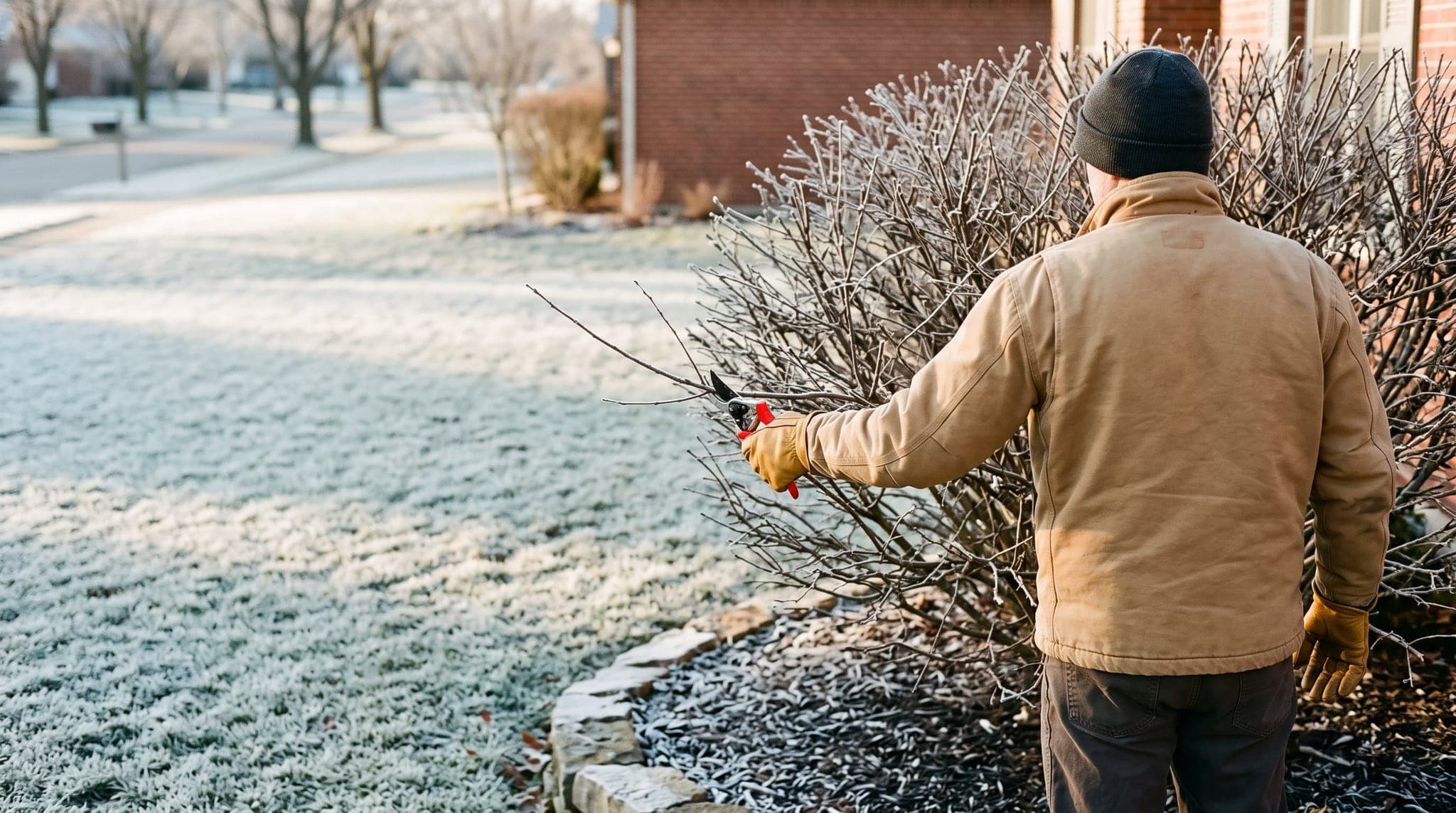
The most common cause of a bloomless hydrangea is pruning it at the wrong time of year. Many hydrangeas form next year's flower buds the previous summer, on the stems that are already standing. Cut those stems back in fall, winter, or early spring and you are slicing off every bloom before it ever opens. The plant responds by growing healthy new leaves, which is exactly why it looks fine but flowers poorly.
So before you touch the pruners, you need to know one thing about your plant: does it bloom on old wood or new wood?
Old Wood vs. New Wood: Know Your Hydrangea Type
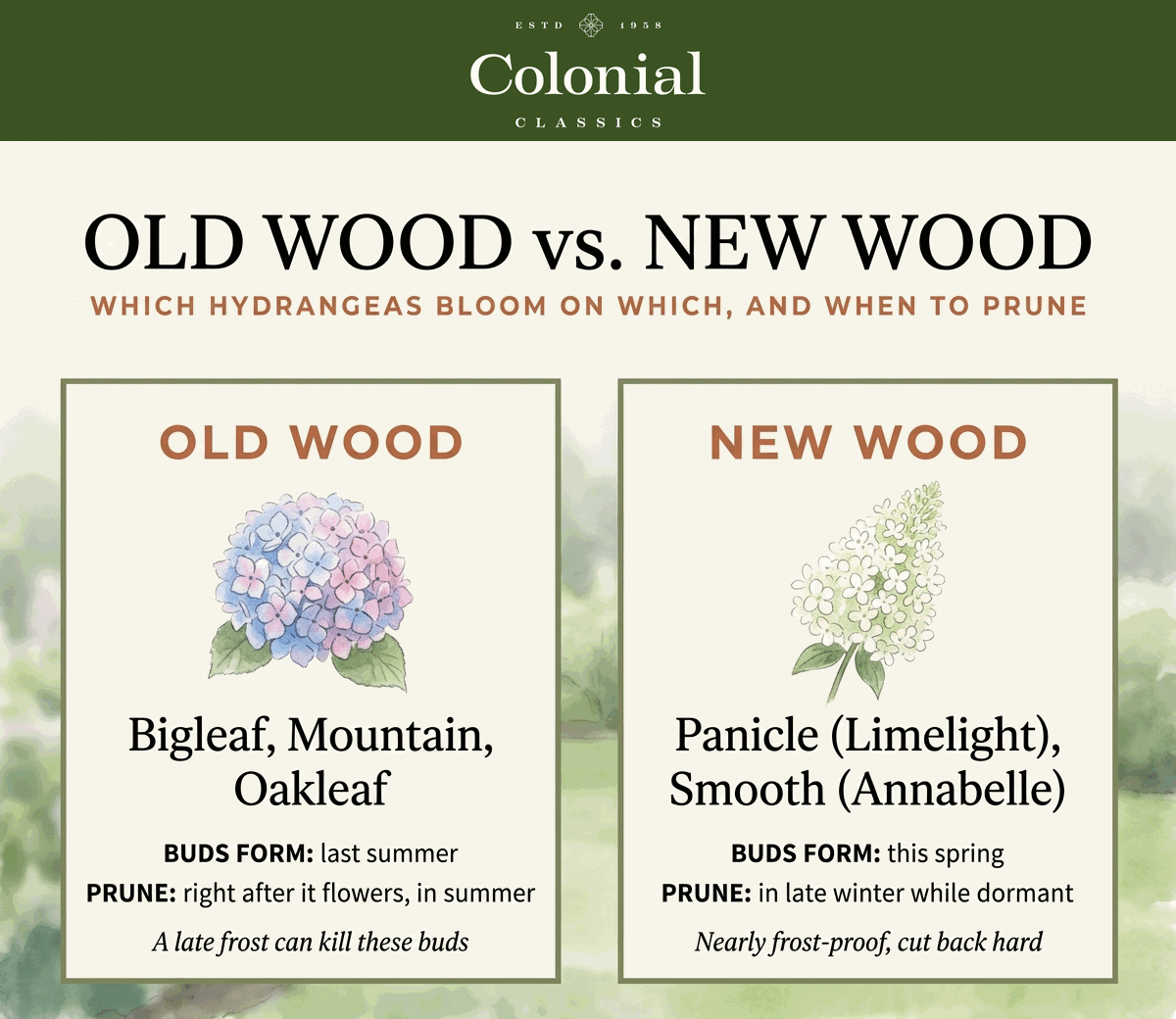
"Old wood" means the flower buds form on last year's stems. "New wood" means the buds form on the current season's growth. This one distinction decides when you prune, how frost affects you, and whether your plant can recover from a bad winter.
Here is how the common types grown in the Ohio Valley break down:
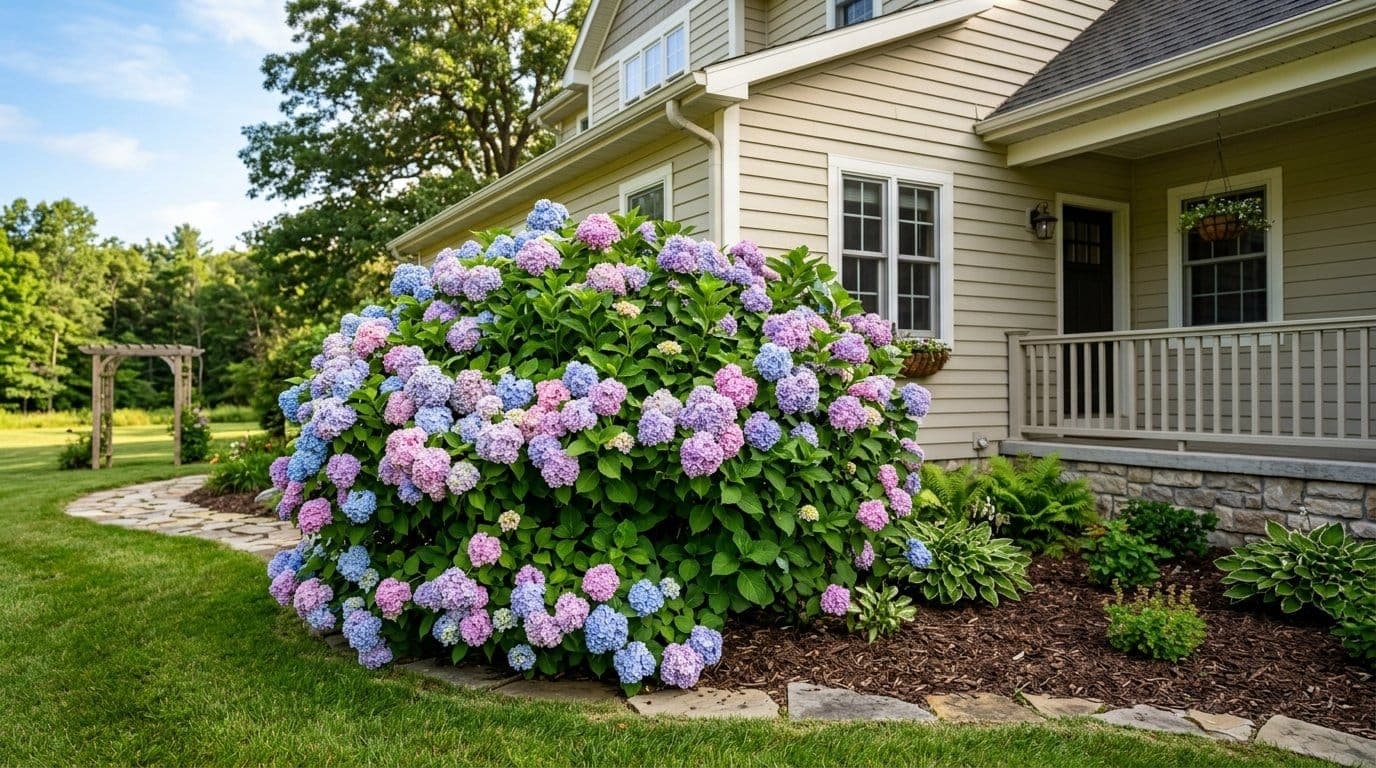
- Bigleaf hydrangea (H. macrophylla): blooms on old wood. These are the classic blue and pink mopheads and lacecaps. The most frost-sensitive and the most commonly pruned at the wrong time.
- Mountain hydrangea (H. serrata): blooms on old wood. Similar to bigleaf but a little hardier, with delicate lacecap flowers.
- Oakleaf hydrangea (H. quercifolia): blooms on old wood. Cone-shaped white blooms, oak-shaped leaves, great fall color. A Southern favorite that needs little pruning.
- Panicle hydrangea (H. paniculata): blooms on new wood. Includes Limelight and Little Lime. Tough, sun-tolerant, and nearly foolproof because frost can't reach buds that haven't formed yet.
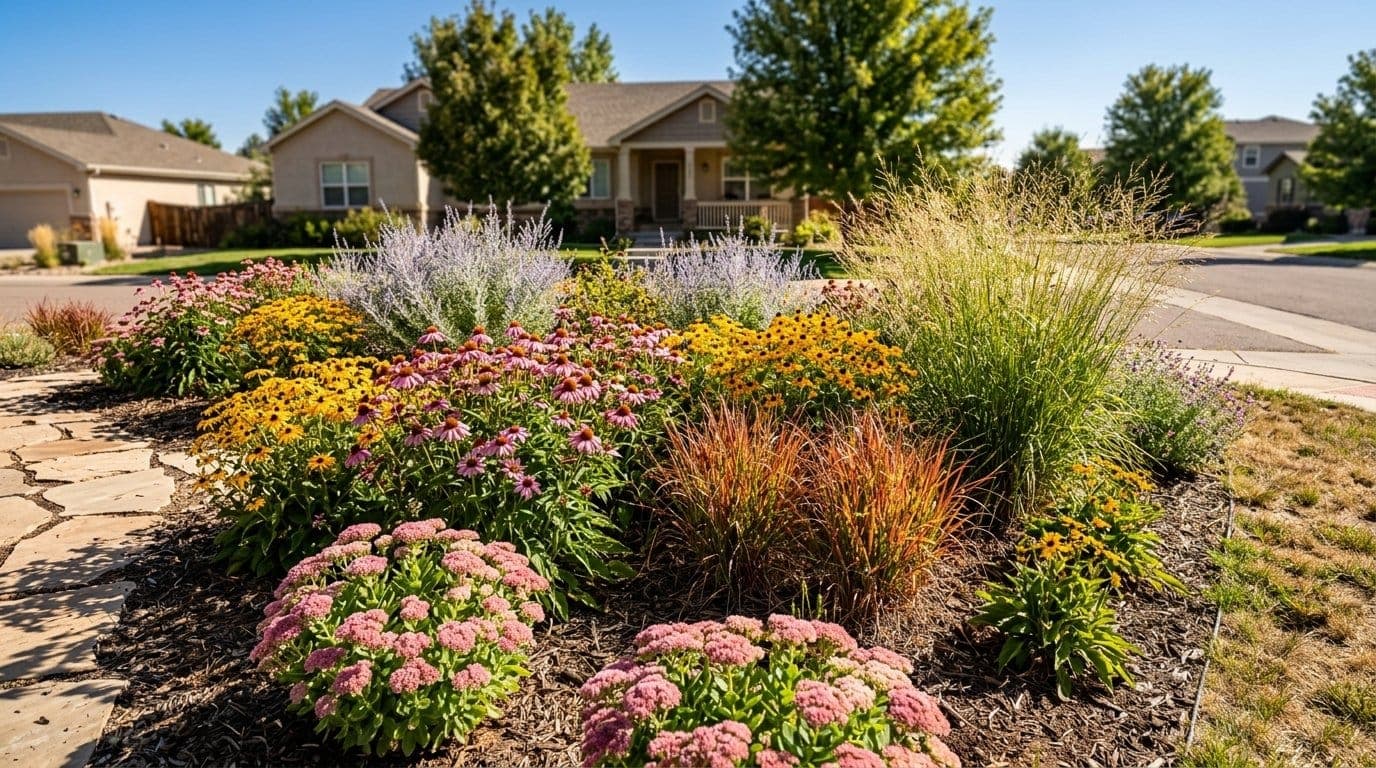
- Smooth hydrangea (H. arborescens): blooms on new wood. Annabelle is the famous one, with big white snowball blooms. You can cut it to the ground and it still flowers.
- Reblooming types (such as Endless Summer): bloom on both old and new wood. Marketed as frost insurance, and they do rebloom, but the biggest show still comes from the old-wood buds.
If you only remember one thing from this article, make it this: panicle and smooth hydrangeas are the easy ones, and bigleaf is the one that breaks hearts. When someone tells us their hydrangea never blooms, it is a bigleaf the vast majority of the time.
Not sure which type you have? Wait and watch. If it leafs out from the tips of last year's bare stems, it is likely old wood. If new shoots push up from the base or low on the plant and the old canes stay bare, it leans new wood. When in doubt, do not prune at all this year and see where the flowers appear.
When to Prune Each Type of Hydrangea
Prune at the right time and you protect every bloom. The rule follows directly from old wood versus new wood.
Old-wood types (bigleaf, mountain, oakleaf): prune right after they finish flowering, usually mid to late summer. This gives the plant the rest of the season to set buds for next year. Never prune these in fall, winter, or spring. In truth, they need very little pruning at all. Remove dead stems and spent flowers and otherwise leave them alone.
New-wood types (panicle, smooth): prune in late winter or very early spring while the plant is fully dormant, before new growth starts. Because they flower on the current year's growth, a hard cutback actually produces stronger stems and bigger blooms. This is the only group you can safely cut back hard.
Rebloomers: treat them like old-wood plants. Prune lightly right after the first flush of flowers, and leave the standing stems alone over winter so the old-wood buds survive.
The classic mistake is a fall cleanup. Tidying the yard in October and cutting every shrub back to neat stubs will erase next summer's blooms on any old-wood hydrangea. If you want a clean look for winter, snip only the dried flower heads and leave the stems.
The Other Big Culprit in Zone 7a: A Late Spring Frost
Even with perfect pruning, a late frost can wipe out a season of bigleaf hydrangea blooms. This is one of the most underappreciated problems in our region, and it is entirely about timing.
In Southern Indiana, the average last spring frost lands in early to mid April. The catch is a "false spring," a warm stretch in March that coaxes bigleaf and mountain hydrangeas out of dormancy too early. Once those old-wood flower buds swell and the leaves emerge, a hard April freeze can kill the buds outright. The plant pushes out a fresh round of leaves a few weeks later and looks completely healthy, but the flowers for that year are already gone.
This is why a neighbor's Annabelle (smooth, new wood) can bloom beautifully the same summer your bigleaf sits there green and bare. The Annabelle's buds had not formed yet when the frost hit, so it had nothing to lose.
What you can do about it:
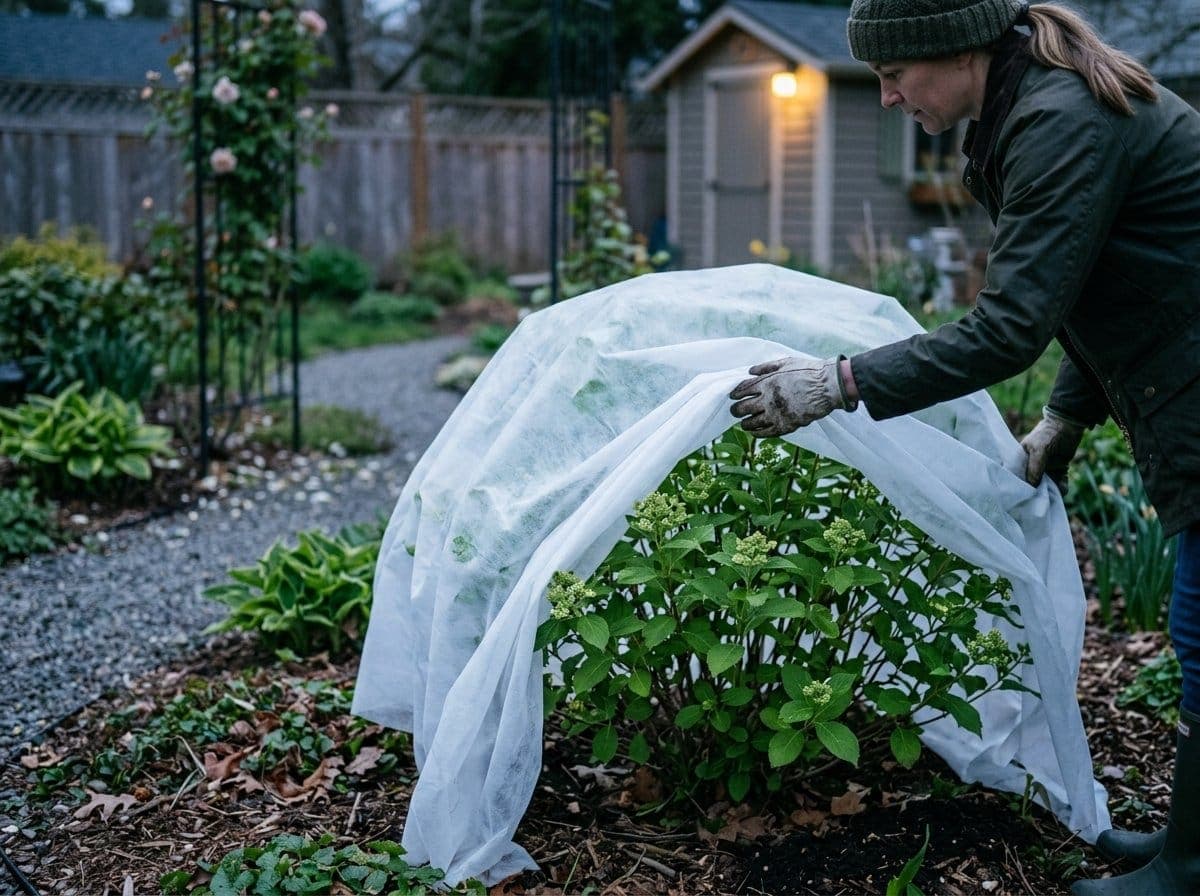
- Watch the forecast in April. When a hard freeze (below about 28 degrees) is coming after your hydrangea has leafed out, drape it with a bedsheet, burlap, or frost cloth in the evening and remove the cover in the morning.
- Plant in a protected spot. A location with morning sun and some overhead or eastern protection warms up more slowly in spring, which delays that risky early wake-up.
- Choose reblooming or new-wood types if late frost keeps ruining your blooms. A panicle or smooth hydrangea sidesteps the problem entirely.
The Other Bloom Killers: Shade Nitrogen and Water
If pruning and frost are not the issue, look at the growing conditions. These three problems usually show up as a plant that is lush and green but stingy with flowers.
- Too much shade: Hydrangeas have a reputation as shade plants, but most still need a few hours of sun to bloom. The sweet spot in our climate is morning sun with afternoon shade. In deep, all-day shade, the plant pours its energy into leaves and produces few or no flowers. Limbing up a nearby tree or moving the plant to a brighter bed often fixes it.
- Too much nitrogen: High-nitrogen fertilizer, including lawn fertilizer that drifts or runs into the bed, drives leafy green growth at the expense of blooms. If your hydrangea sits near a heavily fed lawn, that is a likely culprit. Switch to a balanced or bloom-focused fertilizer and keep lawn feed out of the bed.
- Too little water: Hydrangeas are thirsty, and the name literally comes from the Greek for water. Drought stress in mid to late summer, exactly when old-wood types are setting next year's buds, can cause the plant to abort those buds. Consistent moisture and a 2 to 3 inch layer of mulch to hold it in make a real difference.
A young plant just needs time. Hydrangeas bought in late summer or fall, or planted within the last year, often skip blooming while they establish roots. Give a new plant a full season or two before you worry. Steady water and patience usually solve it on their own.
A Quick Checklist to Get More Blooms Next Year
Walk through these in order and you will catch almost every cause of a non-blooming hydrangea:
- Identify the type. Old wood (bigleaf, mountain, oakleaf) or new wood (panicle, smooth). Everything follows from this.
- Fix the pruning calendar. Old wood gets pruned right after flowering. New wood gets pruned in late winter. When unsure, do not prune.
- Protect against late frost. Cover old-wood types on hard-freeze nights in April.
- Check the light. Aim for morning sun and afternoon shade. Open up dense shade if you can.
- Ease off the nitrogen. Keep lawn fertilizer out of the bed and feed lightly in spring.
- Water through the summer. Especially while buds are forming for next year.
Bonus: How to Change Your Hydrangea's Color
Once your hydrangea is blooming, you may want to steer the color. This only works on bigleaf and mountain hydrangeas, and only because their flower color responds to soil chemistry. Panicle, smooth, and oakleaf hydrangeas are genetically white or green and will not change no matter what you add.
The mechanism is aluminum availability in the soil, which is controlled by pH:
| Soil pH | Aluminum | Bloom Color | What to Add |
|---|---|---|---|
| Below 5.5 (acidic) | Available | Blue | Aluminum sulfate or elemental sulfur |
| 5.5 to 6.0 | Partial | Purple or mixed | Adjust toward your target |
| Above 6.0 (alkaline) | Locked out | Pink to red | Garden lime |
A few realities worth knowing before you start. The change takes a full growing season, not a weekend, so do not expect overnight results. Our regional soils vary widely, so test your soil first rather than guessing. And white-blooming hydrangeas stay white. If blue blooms are the goal, the surest path is to start with a bigleaf variety bred for blue and keep the soil acidic.
When to Call in Help
Most bloom problems are a do-it-yourself fix once you know the cause. But if you have corrected the pruning, ruled out frost, and dialed in the light and water and your hydrangea still sulks, something else may be going on, from soil issues to the wrong plant in the wrong spot.
That is where a little local expertise pays off. Our team at the garden center can help you identify exactly which hydrangea you have, recommend frost-resistant or reblooming varieties suited to the Tri-State area, and put together a planting and pruning plan that finally gets you the blooms you wanted in the first place. If you are still choosing plants, our guide to the best shrubs for your landscape covers hydrangea varieties alongside other proven Zone 7a performers.
Hydrangeas are forgiving plants that want to bloom. Give yours the right cut at the right time, shield it from that sneaky April frost, and keep it watered through summer. Do that, and next year the only problem you will have is deciding which blooms to bring inside. If you would like hands-on help, reach out to our team for a recommendation.