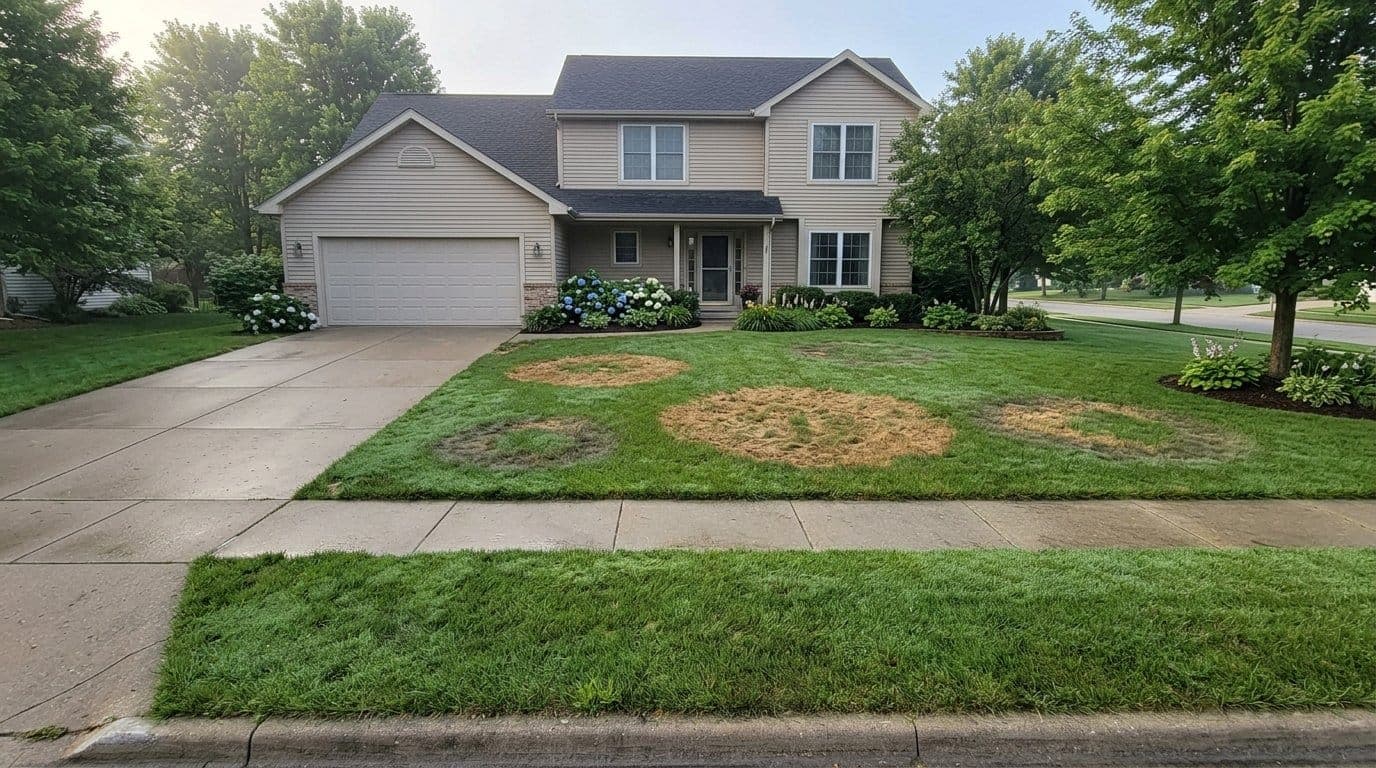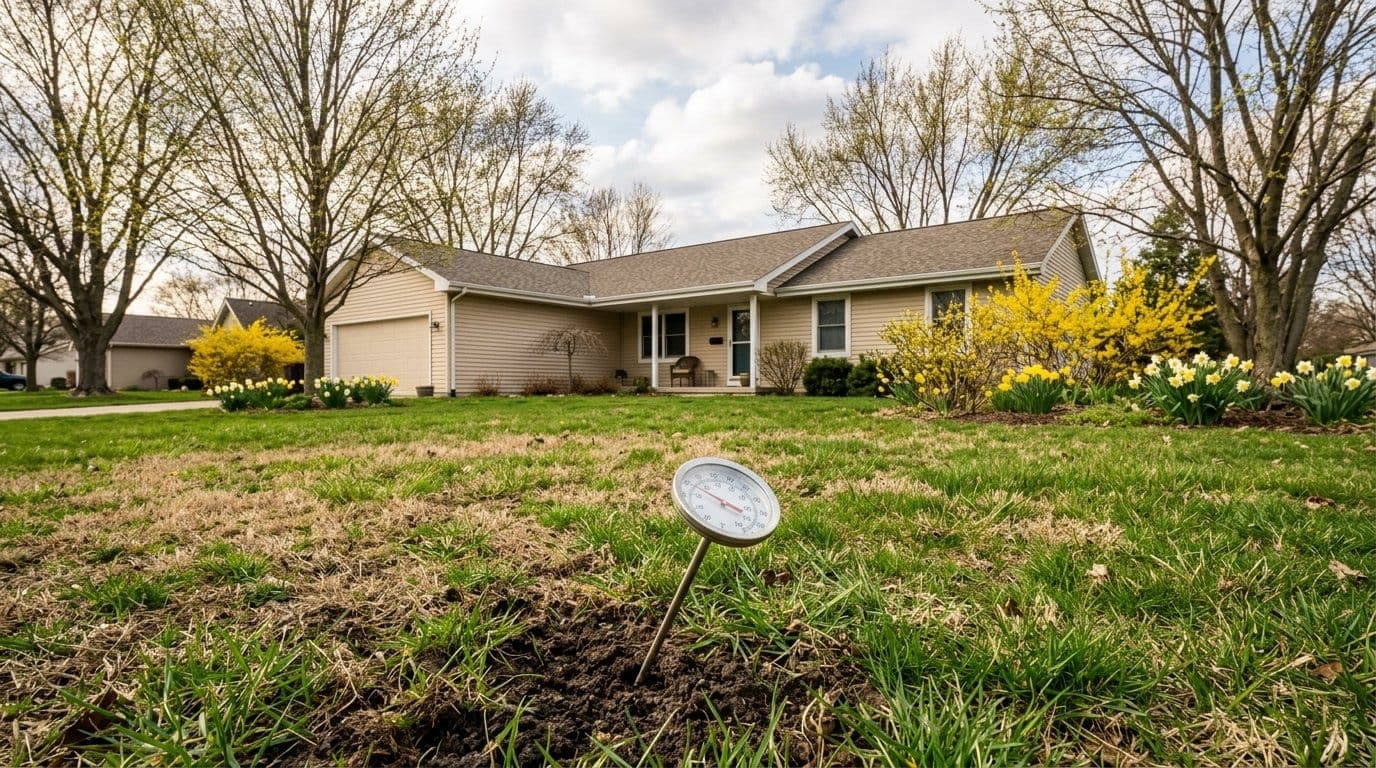
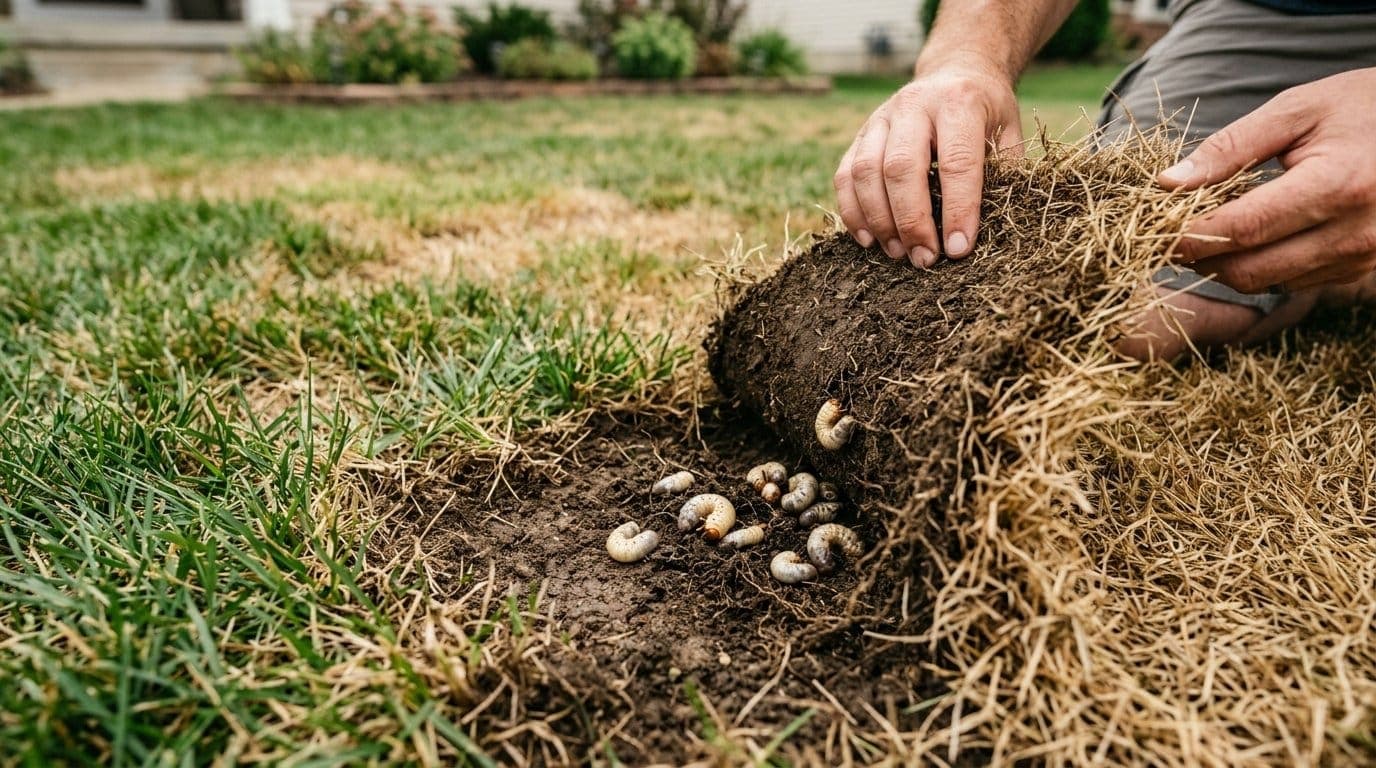
White grubs are the fat, C-shaped larvae of beetles that live in your soil and feed on grass roots, and the way to get rid of them is to scout for them first, then treat only if you find about 10 or more per square foot using a product matched to the season. Most lawns in Southern Indiana never need treatment at all. The ones that do usually show it the same way every time: spongy turf, irregular brown patches in late summer, and animals tearing up the yard overnight. This guide walks through how to identify a real grub problem, the exact timing that matters in the Tri-State area, and what actually works.
What Are Lawn Grubs?
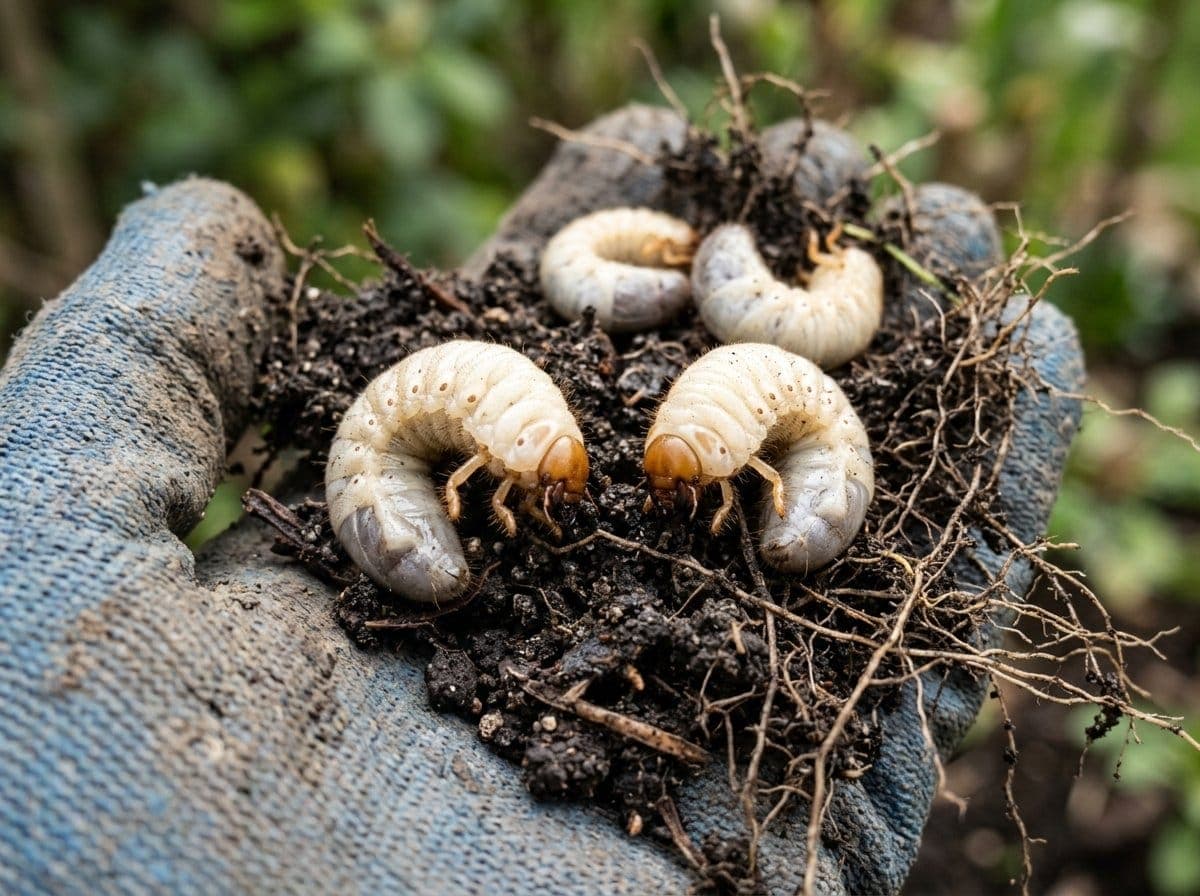
Lawn grubs are the larvae of beetles, most commonly Japanese beetles and masked chafers in our region. They are creamy white, soft bodied, and curl into a distinct C shape when you dig them up. Look for a tan to chestnut colored head and three pairs of legs near the front of the body. A full-grown grub is roughly the size of the end of your thumb.
These two beetles produce what entomologists call "annual white grubs" because they complete one generation per year. The adults you see in July, the metallic green Japanese beetles chewing holes in your roses and the tan chafers swarming the porch light, are laying the eggs that become next month's root-eating grubs. That connection matters: a heavy beetle season often means a heavier grub season in the same yard a few weeks later.
The grubs do their damage underground. They chew through the fibrous roots that anchor your grass and pull up water, which is why grub-damaged turf lifts away so easily and dries out so fast even when you are watering.
How to Tell If You Have a Grub Problem
The clearest sign of grubs is turf that peels back like loose carpet. Grab a handful of thinning grass and pull. Healthy grass resists because the roots hold it down. Grub-damaged grass lifts up in a sheet with little or no root attached, because the roots underneath have been eaten.
Watch for these signs together, not in isolation:
- Spongy turf: The lawn feels soft and springy underfoot, almost like walking on a thin mattress, because the root layer has been hollowed out.
- Irregular brown patches: Grub damage shows up as random, spreading brown areas in late summer, not the neat circles or rings that fungal disease tends to make.
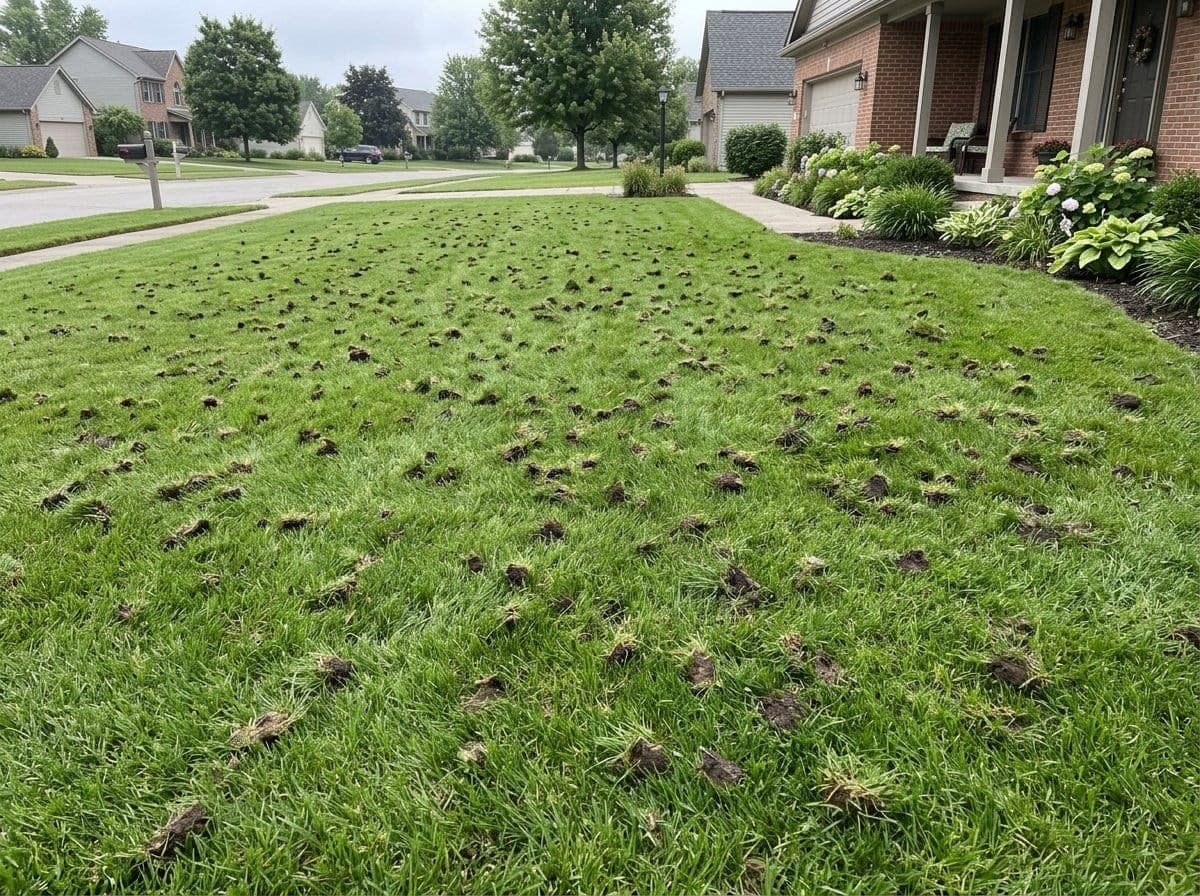
- Animals digging: Skunks, raccoons, and birds tear up turf at night to eat the grubs. Chunks of lawn flipped over in the morning is one of the most reliable tells.
- Damage that worsens with watering: If a brown area keeps getting worse no matter how much you water, the roots are gone and water cannot reach the plant.
Grub damage is easy to confuse with drought stress or lawn disease. Disease usually leaves the roots intact and marks individual blades with lesions or rings. If you are not sure whether you are looking at grubs, fungus, or simple dry stress, our guide to common lawn diseases in Southern Indiana breaks down how to tell them apart by pattern and root condition.
Scout Before You Treat
Signs point you in the right direction, but a count confirms it. Scouting takes ten minutes and saves you from spreading product you do not need.
Cut a one square foot piece of sod 2 to 3 inches deep at the edge of a damaged area, fold it back, and count the grubs underneath. Fewer than 5 is fine. Ten or more per square foot warrants treatment. Check two or three spots because grubs cluster.
How Many Grubs Is Too Many?
A healthy lawn can tolerate more grubs than most homeowners expect. Dense, deep-rooted turf shrugs off a low population because it can outgrow the root loss. The threshold is about damage potential, not zero tolerance.
| Grubs per square foot | What it means | Action |
|---|---|---|
| 0 to 4 | Normal background level | No treatment needed |
| 5 to 9 | Borderline | Treat only if the lawn is already stressed by heat or drought |
| 10 or more | Damaging population | Treatment is worthwhile |
A lawn that is irrigated, mowed at the right height, and not fighting drought can often handle the high end of that range. A thin, stressed, or newly established lawn will show damage at lower counts. When in doubt, factor in the overall health of the turf, not just the number.
Grub Control Timing for Southern Indiana
Timing is the single most important factor in grub control, and it is where most homeowners go wrong. The same product can work beautifully or do nothing at all depending on the month you put it down. The reason is biology: preventive products need to be in the soil when eggs hatch, and curative products only work while grubs are small and feeding near the surface.
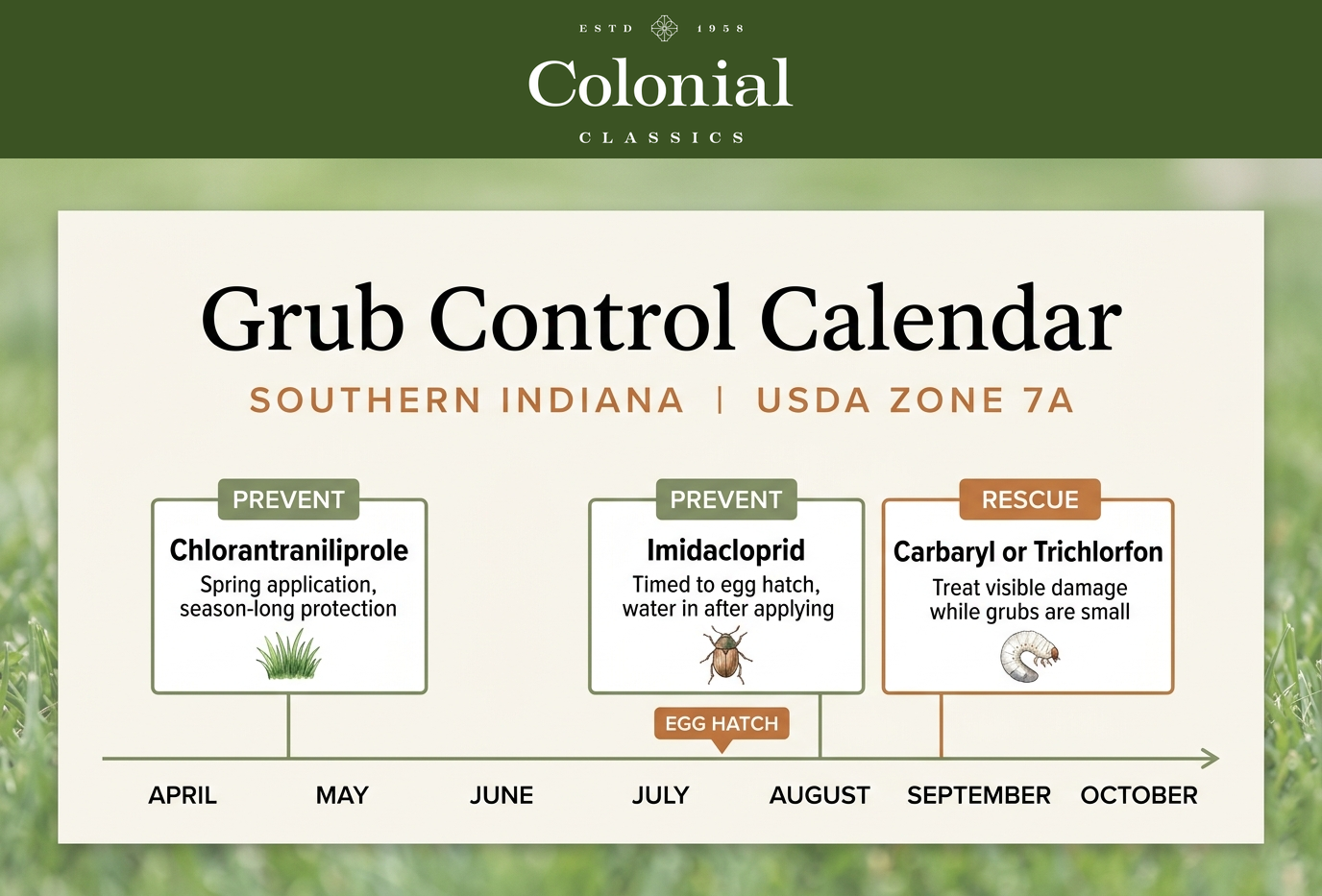
In Southern Indiana, eggs typically hatch from mid to late July, slightly earlier than the northern part of the state, which is why Purdue turf specialists call August the month grubs do their damage. That single fact anchors the whole calendar.
Preventive Treatment
Preventive products stop grubs before they can damage the lawn, and they are the most reliable approach for a yard with a history of problems. There are two timing windows depending on the active ingredient:
- Chlorantraniliprole (April through June): This newer active ingredient has a long lag time, so it goes down in spring or early summer and sits in the soil ready for the summer hatch. It offers the longest season-long protection and has a strong safety profile around pollinators and pets.
- Imidacloprid (June through mid-July): This is the classic preventive. It has to be in the ground before the eggs hatch, which Purdue Extension pegs at the end of July, so early-to-mid July is the optimum window. Water it in after application so it reaches the root zone where the young grubs will feed.
Preventive treatment is not necessary for every lawn. Purdue Extension is clear that you should only apply a preventive if the lawn has a known history of grub damage. Treating a yard that has never had a problem is money spent on a risk that may not exist.
Curative or Rescue Treatment
Curative products kill grubs that are already active, and they are what you reach for when damage shows up in late summer. Apply a product with carbaryl or trichlorfon in August or September, while the grubs are still small and feeding near the surface. Two rules make or break a rescue treatment:
- Move fast. Mature grubs deep in the soil are much harder to kill. The earlier in the damage cycle you treat, the better it works.
- Water it in. Curative products have to reach the grubs in the root zone. Irrigate right after applying, and avoid treating when the soil is bone dry. If your yard struggles to hold moisture, a properly tuned irrigation system makes both treatment and recovery far more reliable.
Natural and Cultural Grub Control
The best long-term defense against grubs is a healthy, deeply rooted lawn that can outgrow minor root loss. Cultural practices do not eliminate grubs, but they raise the population your lawn can tolerate before damage shows.
- Water deeply and less often: Deep, infrequent watering drives roots down and builds a turf that can survive some root feeding. It also discourages adult beetles, which prefer to lay eggs in moist, irrigated soil during dry spells.
- Mow at the right height: Keep cool-season grass at 3 to 4 inches. Taller grass shades the soil, supports deeper roots, and recovers faster from stress.
- Keep the lawn balanced, not lush: Over-fertilizing pushes soft top growth that grubs and disease both favor. A steady fertilization program builds resilience without forcing weak growth.
A quick word on biological controls. Milky spore and beneficial nematodes get a lot of attention, but results in home lawns are inconsistent. Milky spore targets only Japanese beetle grubs, not the masked chafers that are just as common here, and it can take years to establish. Nematodes can help but are finicky about timing, soil moisture, and how they were stored. Treat both as long-term supplements, not as a rescue for an active infestation.
When to Call a Professional
Call a pro when damage is widespread, when you have treated and the grubs keep coming back, or when you are not confident about identifying the problem or timing the product correctly. The cost of guessing wrong is a full season lost: a preventive applied in the wrong month does nothing, and a curative applied too late barely helps.
A lawn care professional scouts the lawn, confirms whether grubs are actually the cause, and matches the product and timing to your specific turf and history. That is the heart of integrated pest management, treating based on what the lawn actually needs rather than spraying on a calendar. If grubs have already thinned out sections of your yard, fall is also the right time to repair the turf, so treatment and reseeding can be planned together.
Not sure whether those brown patches are grubs, disease, or drought? Reach out to our team and we will help you figure out what is going on and what your lawn actually needs.