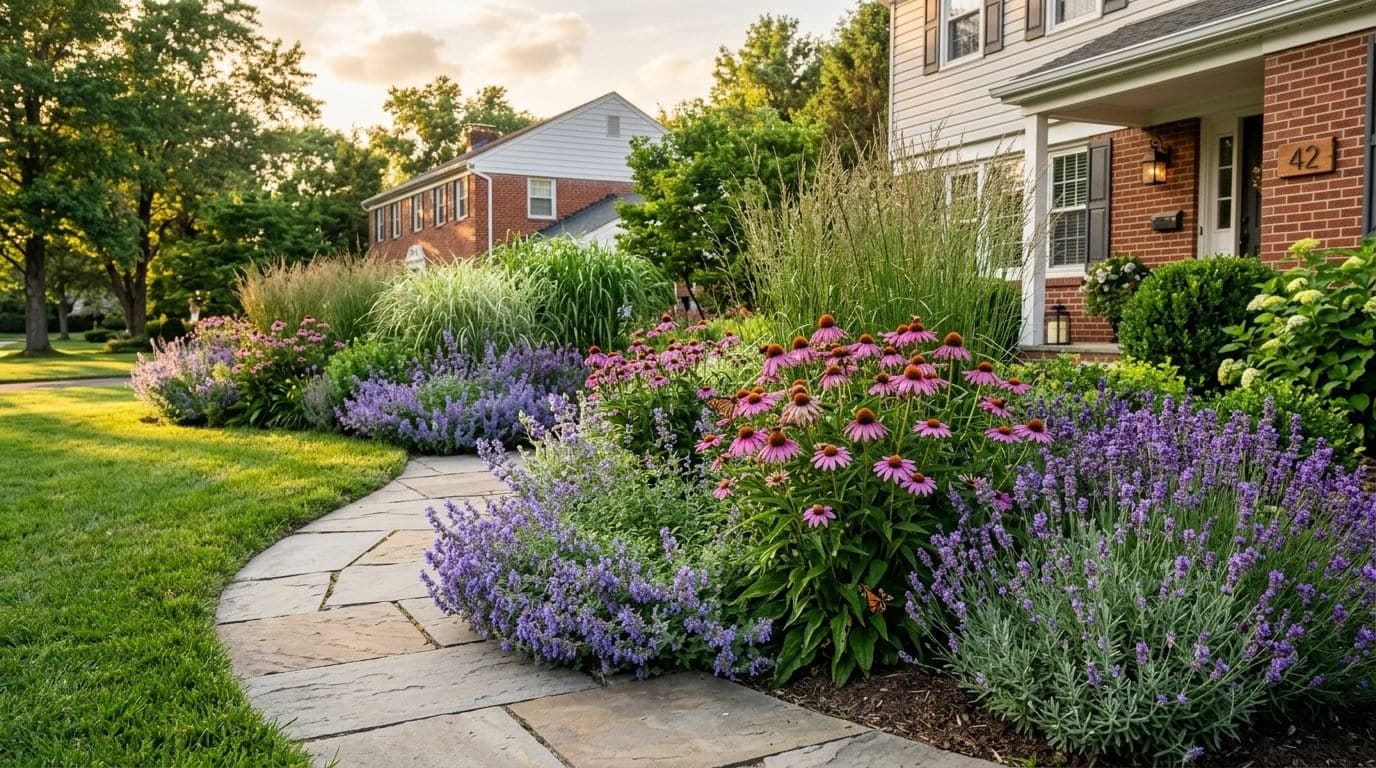
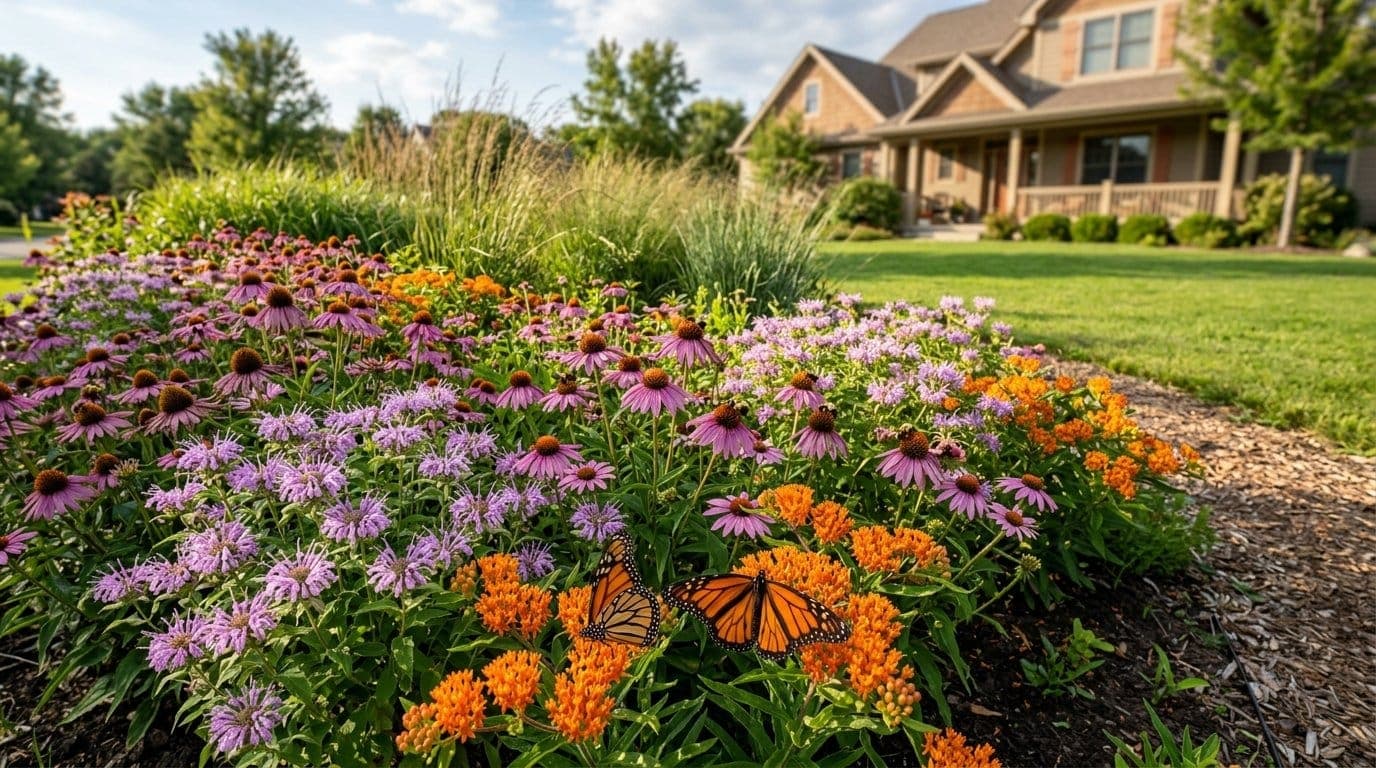
Pollinators are in trouble, and the fastest way to help is also one of the easiest: plant the native flowers, shrubs, and trees they evolved to use. Native plants for pollinators give bees, butterflies, and other beneficial insects the food and habitat they cannot get from turf grass or most store-bought ornamentals. This guide covers the best native pollinator plants for the Tri-State area, organized by when they bloom, plus the host plants that feed caterpillars and a simple plan for starting your own pollinator garden.
Every yard is different. Sun, soil, and moisture all change which pollinator plants will thrive for you. The picks below come from decades of planting native landscapes across the Tri-State area and from university research, but your specific conditions still matter. Contact us if you want a planting plan built for your property.
Why Native Plants Are the Best Choice for Pollinators
Native plants are the best choice for pollinators because they co-evolved with local bees and butterflies over thousands of years and provide exactly the food those insects need. A native flower offers nectar and pollen in the right form, at the right time, for the pollinators that live here. Many of our native bees are specialists, meaning they can only collect and digest pollen from specific native plants. Replace those plants with non-native ornamentals and the specialists simply disappear.
The stakes are real. More than 150 food crops in the United States depend on pollinators, including almost all of our fruit crops, and worldwide nearly 80 percent of crop plants require animal pollination, according to the U.S. Forest Service. At the same time, native bee populations are declining. The good news is that your yard can be part of the solution. Indiana is home to hundreds of species of native bees, and most of them are gentle, solitary, and easy to support with the right plants.
Native plants are also practical. Because they are adapted to our heavy clay soil and our USDA Zone 7a climate, established natives need less water, less fertilizer, and almost no fuss. Many are also deer resistant, which overlaps nicely with the picks in our guide to deer resistant plants.
Host Plants and Nectar Plants Are Both Essential
A great pollinator garden needs two kinds of plants: nectar plants that feed adult pollinators and host plants that feed their young. Nectar plants supply the sugary fuel that adult bees, butterflies, and moths drink. Host plants are the specific species a caterpillar can eat. Without host plants, you can attract adult butterflies to visit, but they have nowhere to lay eggs and no way to complete their life cycle.
The most famous example is the monarch and milkweed. A monarch butterfly will sip nectar from many flowers, but its caterpillars can eat only milkweed. No milkweed means no monarchs, no matter how many other flowers you plant. The same pattern holds across dozens of butterflies, each tied to its own host plants.
Plant for the whole life cycle, not just the adults. A yard full of nectar flowers is a gas station for butterflies. Add host plants and it becomes a nursery too. The best pollinator gardens include both.
The Best Native Plants for Pollinators by Season
The single most important rule of a pollinator garden is continuous bloom. Pollinators are active from the first warm days of spring through the first hard frost, and they need food the entire time. Choose plants from all three bloom windows below so something is always flowering. A garden that peaks for two weeks in July and goes quiet the rest of the year does far less good than one with steady, season-long bloom.
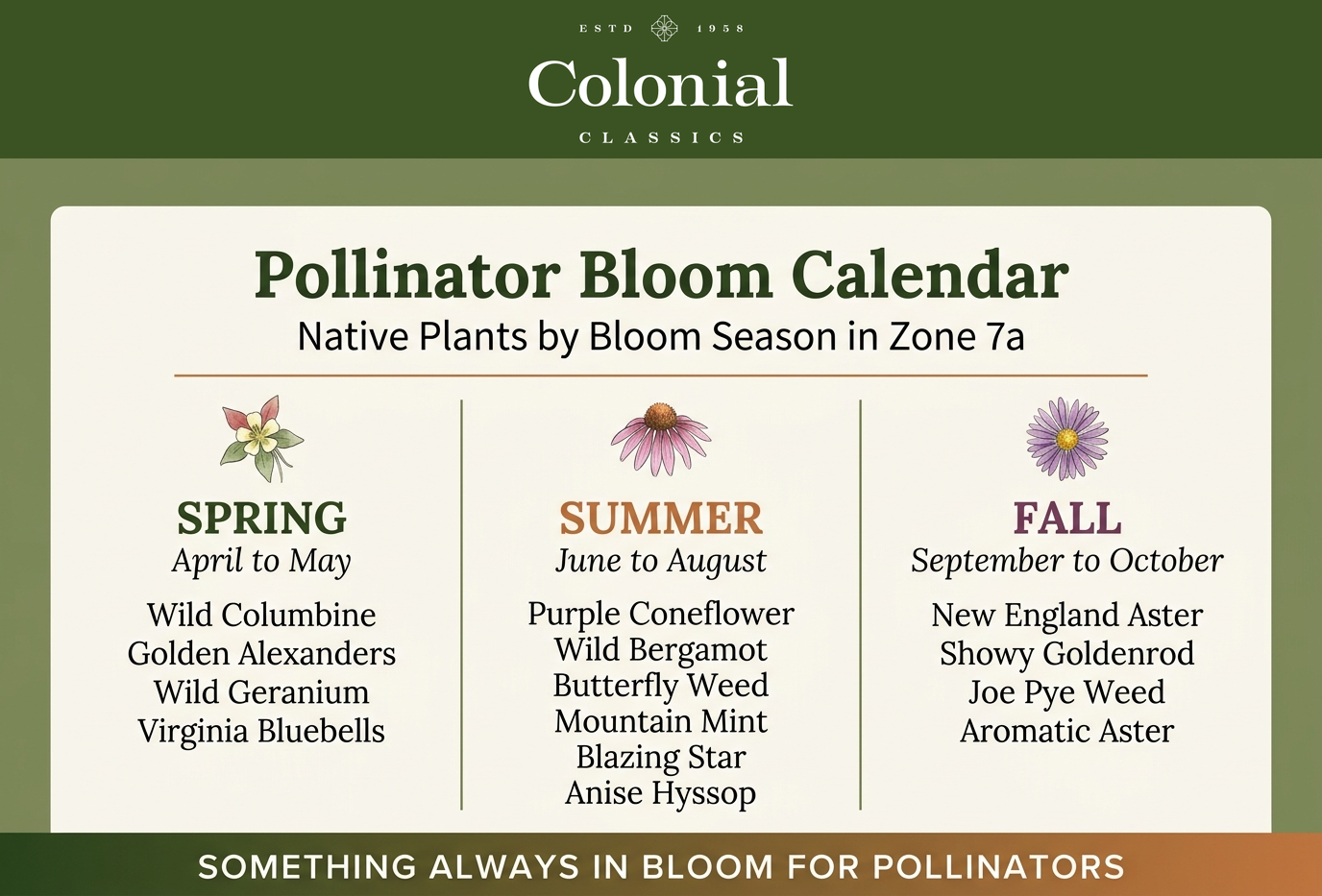
Spring Bloomers From April to May
Spring bloomers are critical because they feed queen bumblebees and other pollinators emerging hungry from winter. Early flowers are scarce in most yards, so these plants do outsized work.
- Wild Columbine (Aquilegia canadensis): Nodding red and yellow flowers that hummingbirds and long-tongued bees love. Part shade, 1 to 2 feet, blooms April into May.
- Golden Alexanders (Zizia aurea): Flat yellow flower clusters that feed small native bees and serve as a host plant for black swallowtails. Sun to part shade, 1 to 3 feet.
- Wild Geranium (Geranium maculatum): Soft lavender-pink flowers for early bees in woodland and shade gardens. Part shade, 1 to 2 feet.
- Virginia Bluebells (Mertensia virginica): Clusters of sky-blue bells that draw early bumblebees, then go dormant by summer. Shade, 1 to 2 feet.
Summer Bloomers From June to August
Summer is the peak season for pollinators, and these natives carry the heaviest traffic. Most are full-sun perennials that thrive in our clay and heat.
- Purple Coneflower (Echinacea purpurea): A pollinator magnet with daisy-like purple-pink blooms and a seed head that feeds finches in fall. Full sun, 3 to 4 feet, blooms June through September.
- Wild Bergamot (Monarda fistulosa): Lavender tufted flowers that bees and butterflies swarm, with aromatic foliage deer avoid. Full sun, 2 to 4 feet.
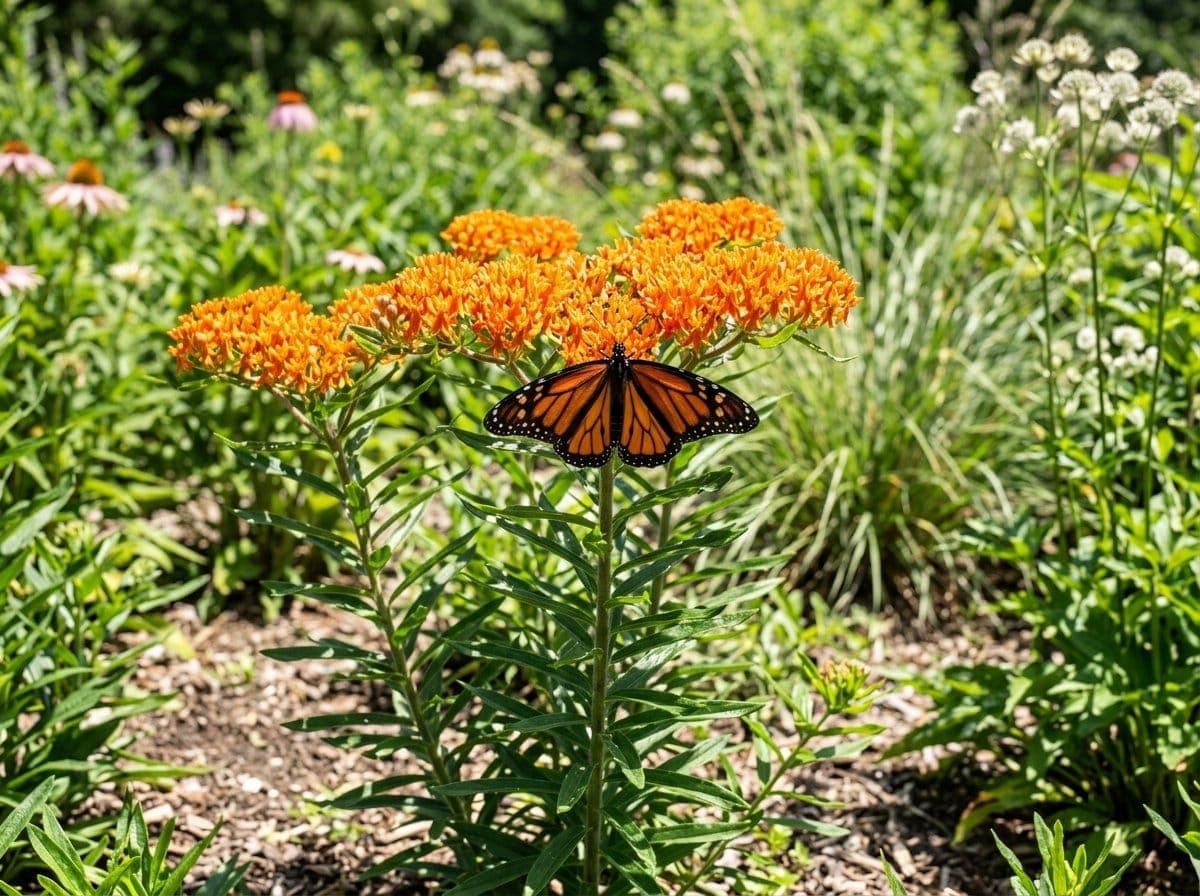
- Butterfly Weed (Asclepias tuberosa): A milkweed with brilliant orange flower clusters that feed adults and host monarch caterpillars. Full sun, 1 to 2 feet.
- Mountain Mint (Pycnanthemum spp.): One of the single best nectar plants for the widest range of pollinators, with silvery bracts and tiny white flowers. Full sun to part shade, 2 to 3 feet.
- Blazing Star (Liatris spicata): Vertical purple spikes that butterflies and bees cannot resist. Full sun, 2 to 4 feet.
- Anise Hyssop (Agastache foeniculum): Long-blooming lavender spikes with licorice-scented leaves that bees work all day. Full sun, 2 to 4 feet.
Fall Bloomers From September to October
Fall bloomers are the most overlooked and among the most important pollinator plants. They fuel native bees building winter reserves and migrating monarchs heading south. Asters and goldenrods are keystone plants, meaning they support more pollinator species than almost any other group.
- New England Aster (Symphyotrichum novae-angliae): Clouds of purple daisies that are a lifeline for late bees and migrating monarchs. Full sun, 3 to 5 feet, blooms September into October.
- Showy Goldenrod (Solidago speciosa): A well-behaved clumping goldenrod with bright yellow plumes. It does not cause hay fever, despite the myth. Full sun, 2 to 3 feet.
- Joe Pye Weed (Eutrochium spp.): Tall mauve flower heads that butterflies cover in late summer and early fall. Full sun to part shade, 4 to 7 feet, good for damp spots.
- Aromatic Aster (Symphyotrichum oblongifolium): A compact, late-blooming aster covered in blue-purple flowers when little else is open. Full sun, 1 to 2 feet.
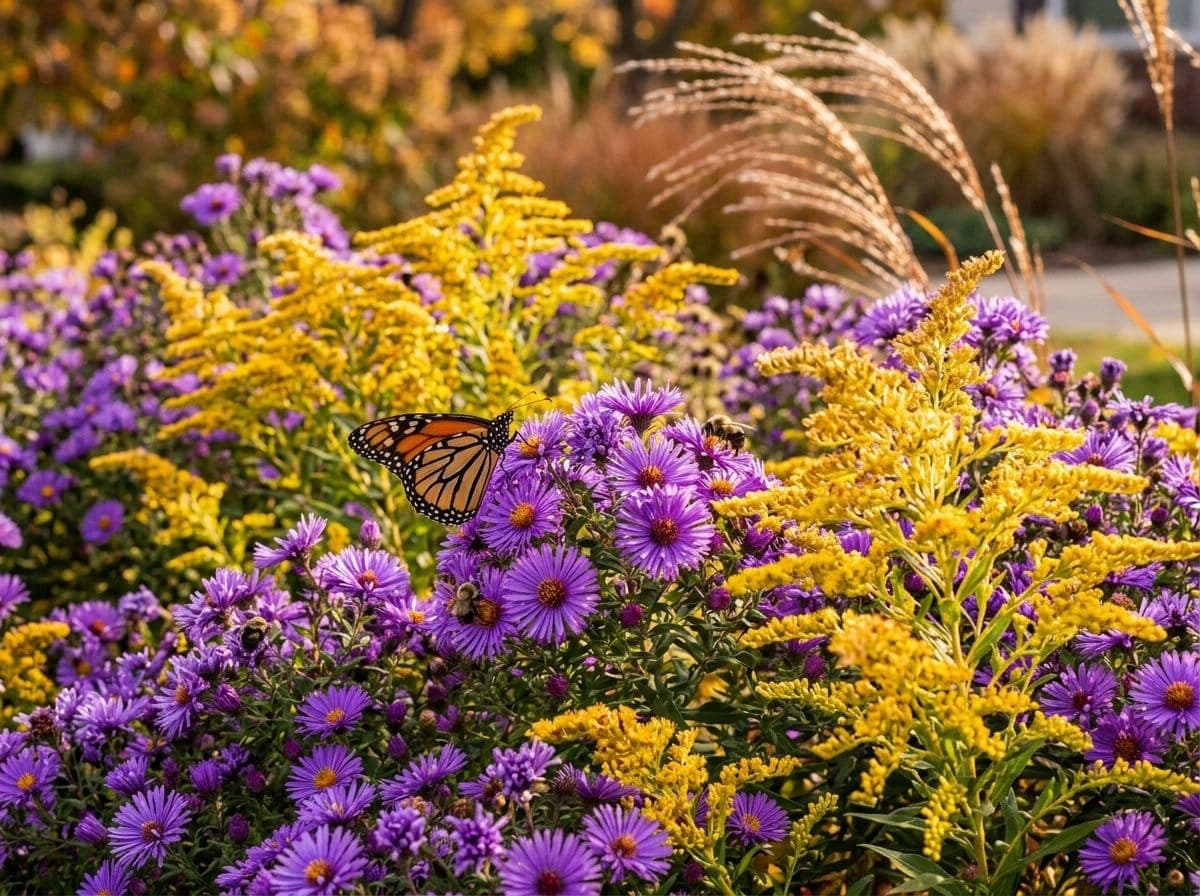
Browse our perennials and grasses inventory for current stock by season.
Native Shrubs and Trees That Feed Pollinators
Native shrubs and trees feed pollinators in large numbers and provide nesting and shelter that flowers cannot. A single flowering tree can offer more blooms than an entire perennial bed, and woody plants give native bees the bare ground, hollow stems, and leaf litter they need to nest.
- Serviceberry (Amelanchier spp.): Early white spring flowers for emerging bees, then berries for birds. Sun to part shade, 15 to 25 feet.
- Eastern Redbud (Cercis canadensis): Pink spring blooms that line the branches and feed early bees, on a small native tree. Sun to part shade, 20 to 30 feet.
- Buttonbush (Cephalanthus occidentalis): Unusual white pincushion flowers that butterflies and bees love, ideal for wet spots. Full sun to part shade, 6 to 12 feet.
- Ninebark (Physocarpus opulifolius): Clusters of white-pink flowers for pollinators plus tough, clay-friendly foliage. Full sun, 5 to 8 feet.
- New Jersey Tea (Ceanothus americanus): A compact shrub smothered in white flower clusters that draw a huge range of small pollinators. Full sun to part shade, 2 to 3 feet.
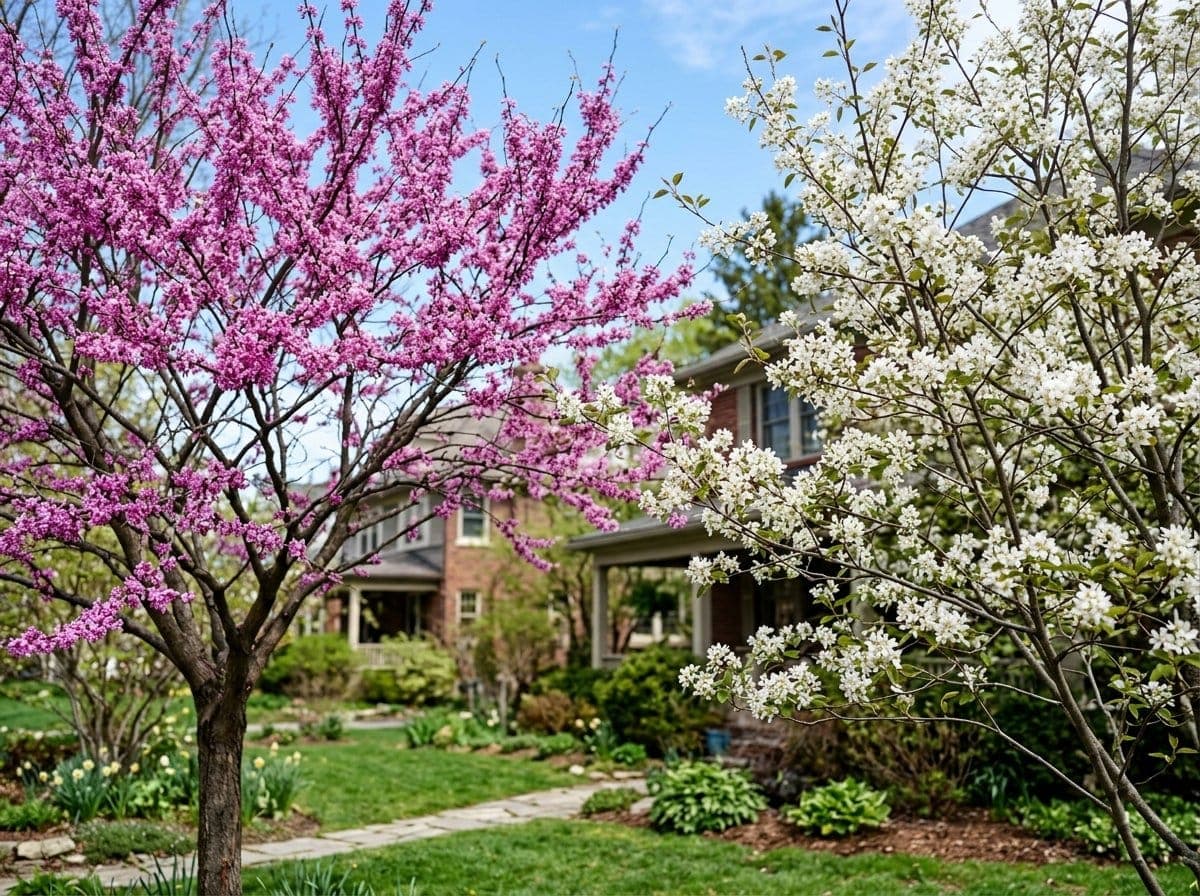
For more woody options suited to our region, see our guide to the best shrubs for landscaping, and browse the trees and shrubs section for current stock.
The Best Plants for Monarch Butterflies
The best plants for monarch butterflies are milkweeds, because milkweed is the only food a monarch caterpillar can eat. If you want to support the monarch migration that passes through the Tri-State area each year, plant native milkweed and you will have done the single most valuable thing for the species.
- Butterfly Weed (Asclepias tuberosa): The most garden-friendly milkweed, with tidy form and brilliant orange flowers. Full sun, well-drained soil.
- Swamp Milkweed (Asclepias incarnata): Pink flowers and a taste for moist soil, perfect for rain gardens and damp spots. Full sun.
- Common Milkweed (Asclepias syriaca): The vigorous spreader of roadsides and meadows, best in a wild corner where it can roam. Full sun.
Pair your milkweed with nectar-rich fall bloomers like New England aster and goldenrod. Adult monarchs need to load up on nectar for the long flight to Mexico, and a yard with both host plants and fall nectar supports the full journey.
Which Plants Host Which Butterflies
Most butterflies are picky about where they lay eggs, and matching the host plant to the butterfly is how you turn a flower bed into a butterfly nursery. The table below pairs common Tri-State butterflies with the native host plants their caterpillars need.
| Butterfly | Native Host Plant |
|---|---|
| Monarch | Milkweeds (butterfly weed, swamp milkweed, common milkweed) |
| Black Swallowtail | Golden alexanders, dill, parsley, fennel |
| Spicebush Swallowtail | Spicebush, sassafras |
| Eastern Tiger Swallowtail | Wild cherry, tulip tree, ash |
| Great Spangled Fritillary | Native violets |
| Painted Lady | Thistles, hollyhock, legumes |
Tuck host plants where a little chewing will not bother you. Caterpillars eat leaves, that is the point. Plant parsley, dill, and violets toward the back or in a dedicated corner so the holes in the foliage become a feature, not a flaw.
How to Start a Pollinator Garden
Starting a pollinator garden is simple, and you do not need a big yard to make a real difference. Follow these five steps and you will be feeding bees and butterflies in the first season.
- Pick a sunny spot: Choose a site with at least six hours of direct sun a day. Most native pollinator plants are sun lovers, and sunny beds draw far more visitors than shady ones.
- Plant for three seasons of bloom: Pick plants that flower in spring, summer, and fall so pollinators always have food. Aim for at least three species blooming at any given time.
- Plant in clumps instead of singles: Group three to five of each plant together. Pollinators find and work larger blocks of color far more efficiently than scattered lone flowers.
- Skip the pesticides: Avoid insecticides near your pollinator plants, especially neonicotinoids, which kill bees and butterflies even at low doses. For more native plant ideas, the Xerces Society publishes region-specific pollinator plant lists for the Midwest and Great Lakes.
- Leave the leaves and stems: Wait until spring to cut back perennials. Hollow stems and leaf litter shelter native bees and butterfly chrysalises through winter.
Watch out for plants treated with neonicotinoids. Some nursery plants are pretreated with systemic insecticides that make the entire plant, including its pollen and nectar, toxic to pollinators. Ask before you buy. Everything we recommend for pollinator gardens at our garden center is safe for the bees and butterflies you are trying to help.
Pollinator Garden Mistakes to Avoid
The most common pollinator garden mistakes all come down to good intentions applied the wrong way. Avoid these and your garden will do far more good.
- Planting only nectar flowers: A garden with no host plants feeds adults but raises no new pollinators. Always include milkweed and other host plants.
- Buying showy double-flowered cultivars: Many fancy double blooms have been bred until their nectar and pollen are inaccessible or absent. Stick close to the straight native species.
- Cleaning up too thoroughly in fall: Cutting everything down and raking out every leaf destroys the overwintering habitat pollinators rely on. Leave the seedheads and stems standing.
- Spraying for mosquitoes or grubs: Broad insecticide sprays kill pollinators along with the pests. Spot-treat problems instead of blanketing the yard.
- Planting one of everything: Single scattered plants are hard for pollinators to find. Plant in generous clumps and drifts.
The best pollinator gardens are a little wild on purpose. Season-long bloom, native host plants, no pesticides, and a relaxed fall cleanup beat a tidy, sprayed, exotic-filled yard every time for the bees and butterflies that need our help.
Bring Pollinators Back to Your Yard
Colonial Classics Landscape & Nursery has been planting Tri-State yards for over 65 years, and pollinator gardens are one of the most rewarding projects we help homeowners create across Newburgh, Evansville, and the wider Southern Indiana, Southern Illinois, and Western Kentucky region. We carry the native perennials, shrubs, and trees that actually support local bees and butterflies, and we know which ones thrive in our clay and heat.
Whether you want to pick up a few native perennials at our garden center or have our landscape design team plan a full pollinator landscape for your property, we can help you build a yard that hums with life from spring through fall. Schedule a free consultation and we will walk your property, look at your sun and soil, and put together a planting plan that brings the pollinators back.