A water feature is the one thing you add to a landscape that you hear before you see. Moving water covers road noise, pulls birds and dragonflies into the yard, and gives you a reason to sit outside in the evening. The catch is that "water feature" covers everything from a $400 patio fountain to a $25,000 koi pond, and the choice you make determines whether you spend your Saturdays enjoying it or maintaining it.
This guide walks through the water feature ideas that actually hold up in Southern Indiana, the Evansville and Newburgh area, and across the Tri-State. You will get straight answers on what each option costs, how much upkeep it really takes, what happens to it in winter, and which one fits your yard and your family.
Every project is different. The pricing and timelines discussed here are general estimates based on typical projects in our area. Your actual costs and schedule will depend on your property, materials, scope of work, and other factors. Contact us for a personalized estimate.
The Five Water Features Worth Considering
Nearly every residential water feature is a variation on one of five ideas. Each one trades cost against upkeep, and standing water against the sound you get back.
Pondless Waterfall
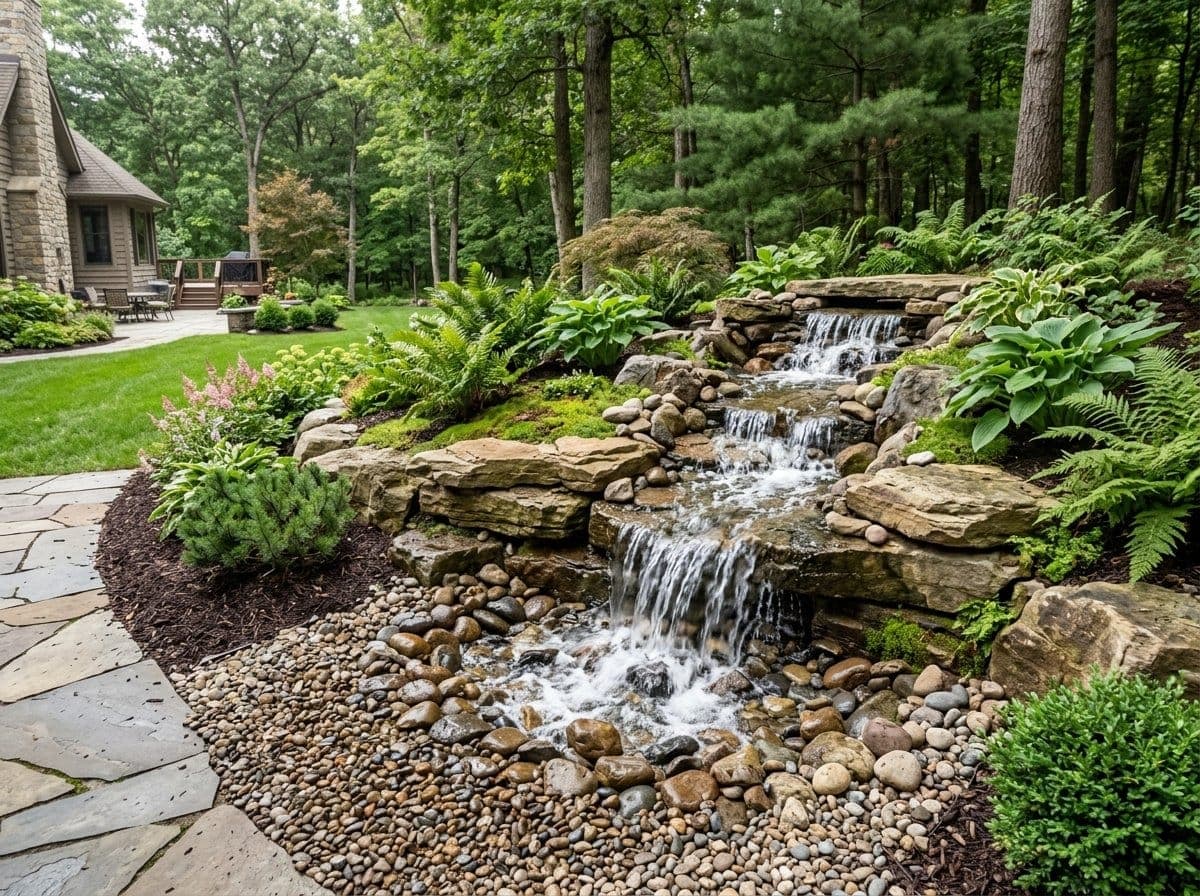
A pondless waterfall is a waterfall and stream with no pond at the bottom. Water tumbles down the stone, disappears into a gravel bed, collects in a hidden reservoir underneath, and gets pumped back to the top. You get the full sound and motion of a waterfall with no open water anywhere on the surface.
This is the feature we recommend most often, and it is the right answer for a lot of families. There are no fish to feed, no water chemistry to balance, and nothing for a toddler to fall into. Upkeep is a few hours a year. It also handles a sloped yard beautifully, which is common on properties around Newburgh and along the river bluffs.
Bubbling Rock or Urn Fountain
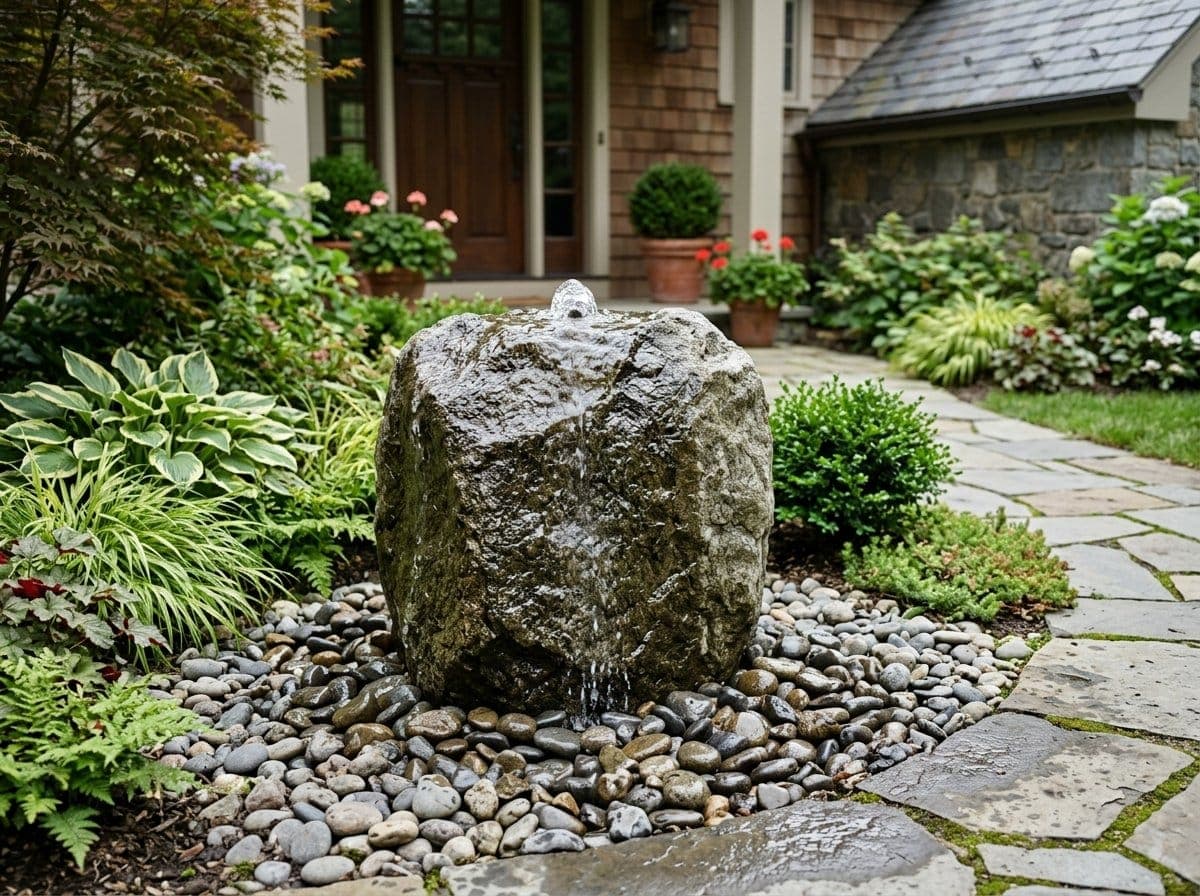
A bubbling rock is a drilled boulder set over a buried basin, with water welling up over the top and running back down the face of the stone. An urn fountain is the same idea using a glazed ceramic vessel instead of a rock. Both are the smallest true water features you can build, and both are compact enough for a courtyard, an entry garden, or a narrow side yard.
If you want the sound of water and you have limited space or a limited budget, start here. A single boulder occupies roughly the footprint of a patio chair.
Ecosystem Pond
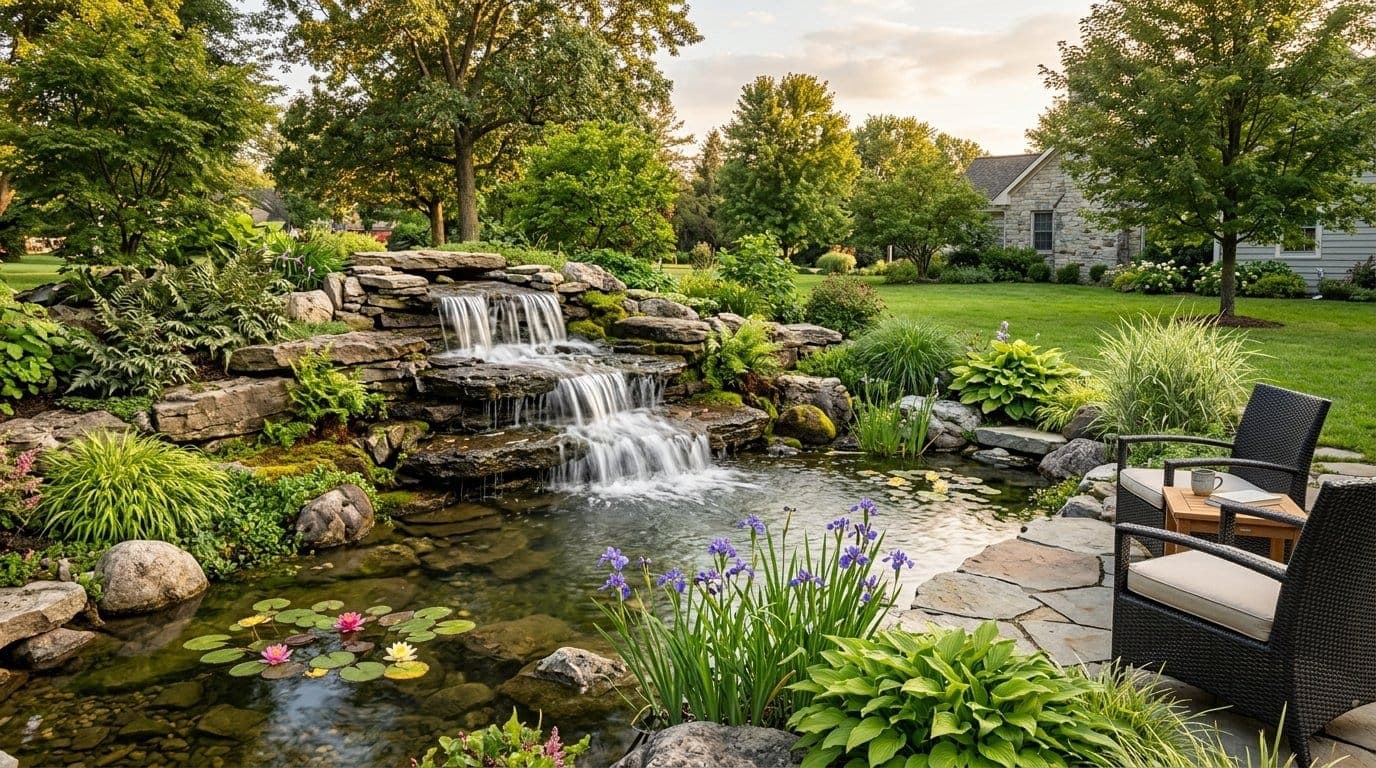
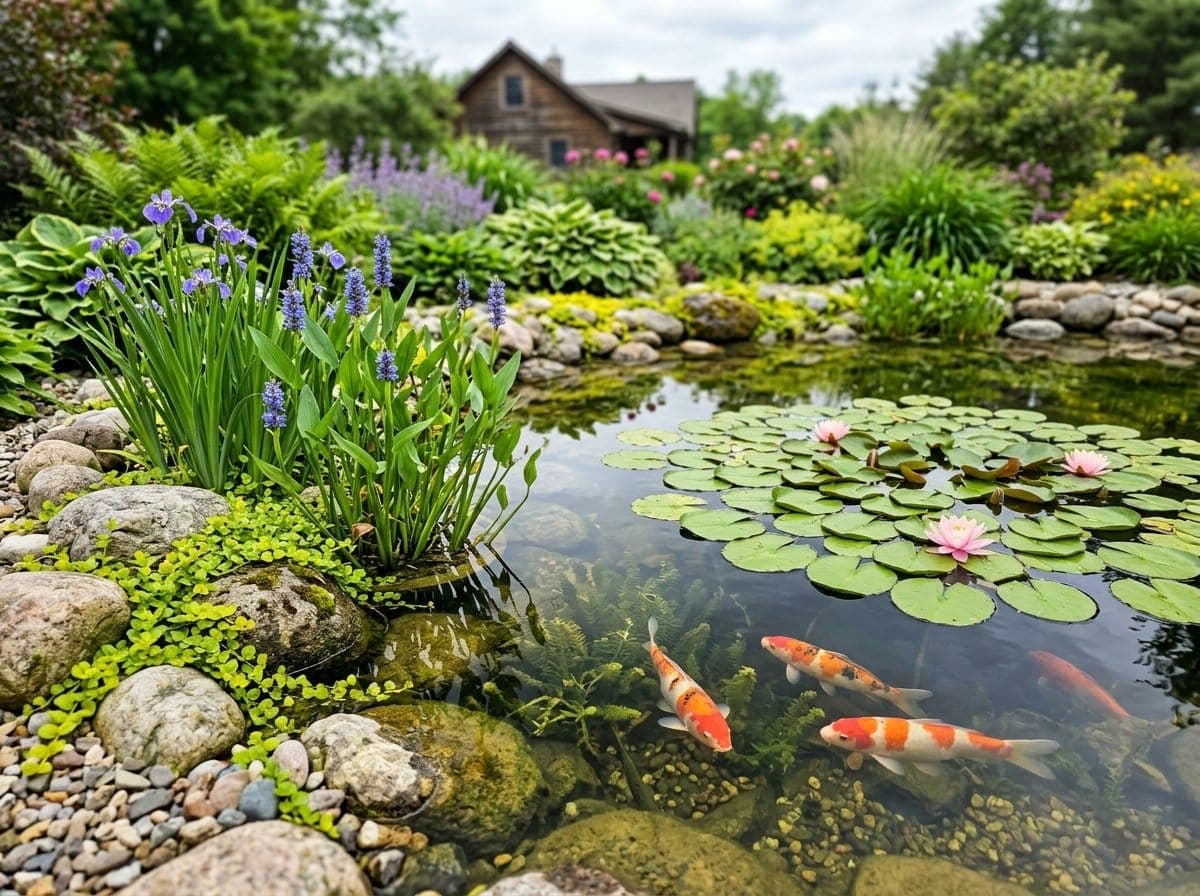
An ecosystem pond is a planted pond where biological filtration, circulation, rock and gravel, aquatic plants, and fish all work together to keep the water clear. The gravel gives beneficial bacteria a place to colonize, the plants compete with algae for nutrients, and the fish graze on what is left.
A well-built ecosystem pond is genuinely low maintenance for what it is, but "low maintenance" here means about 10 to 15 minutes a week during the season, plus a spring cleanout. That is not zero, and anybody who tells you a pond takes care of itself is selling something. What you get in return is a living feature that changes through the year and brings wildlife into the yard the way no fountain can.
Koi Pond
A koi pond is an ecosystem pond built to a higher standard, because koi are livestock. They need more depth, stronger filtration, more oxygen, and protection from herons. Depth is the part homeowners underestimate: plan on about 4 feet so the fish can overwinter safely outdoors.
Koi are also a long-term commitment. They can live for decades and they grow, so the pond you build has to fit the fish you will eventually have, not the ones you buy this spring.
Self-Contained Fountain
A self-contained fountain is a freestanding basin that recirculates its own water. It plugs into an outlet, needs no excavation, and can be moved. It is the only water feature on this list that is not really a landscape project, and it is a perfectly good way to test whether you like the sound of water before committing to something permanent.
Comparing the Options Side by Side
- Typical Installed Cost
- $300 to $1,000
- Upkeep
- Minutes per month
- Standing Water
- No
- Best For
- Patios, renters, trying it out
- Typical Installed Cost
- $1,500 to $4,000
- Upkeep
- A few hours a year
- Standing Water
- No
- Best For
- Small yards, entryways, tight budgets
- Typical Installed Cost
- $8,000 to $15,000
- Upkeep
- A few hours a year
- Standing Water
- No
- Best For
- Families with kids, sloped yards, sound
- Typical Installed Cost
- $10,000 to $20,000+
- Upkeep
- 10 to 15 min per week
- Standing Water
- Yes
- Best For
- Wildlife, plants, a living focal point
- Typical Installed Cost
- $15,000 to $30,000+
- Upkeep
- 15+ min per week
- Standing Water
- Yes
- Best For
- Fish keepers, long-term hobbyists
Costs above assume professional installation with natural stone, proper filtration, and the electrical work to support it. The biggest swing factors are how big the boulders are, how hard it is to get equipment into the yard, and how far the nearest power source sits from the feature.
How to Choose the Right One for Your Yard
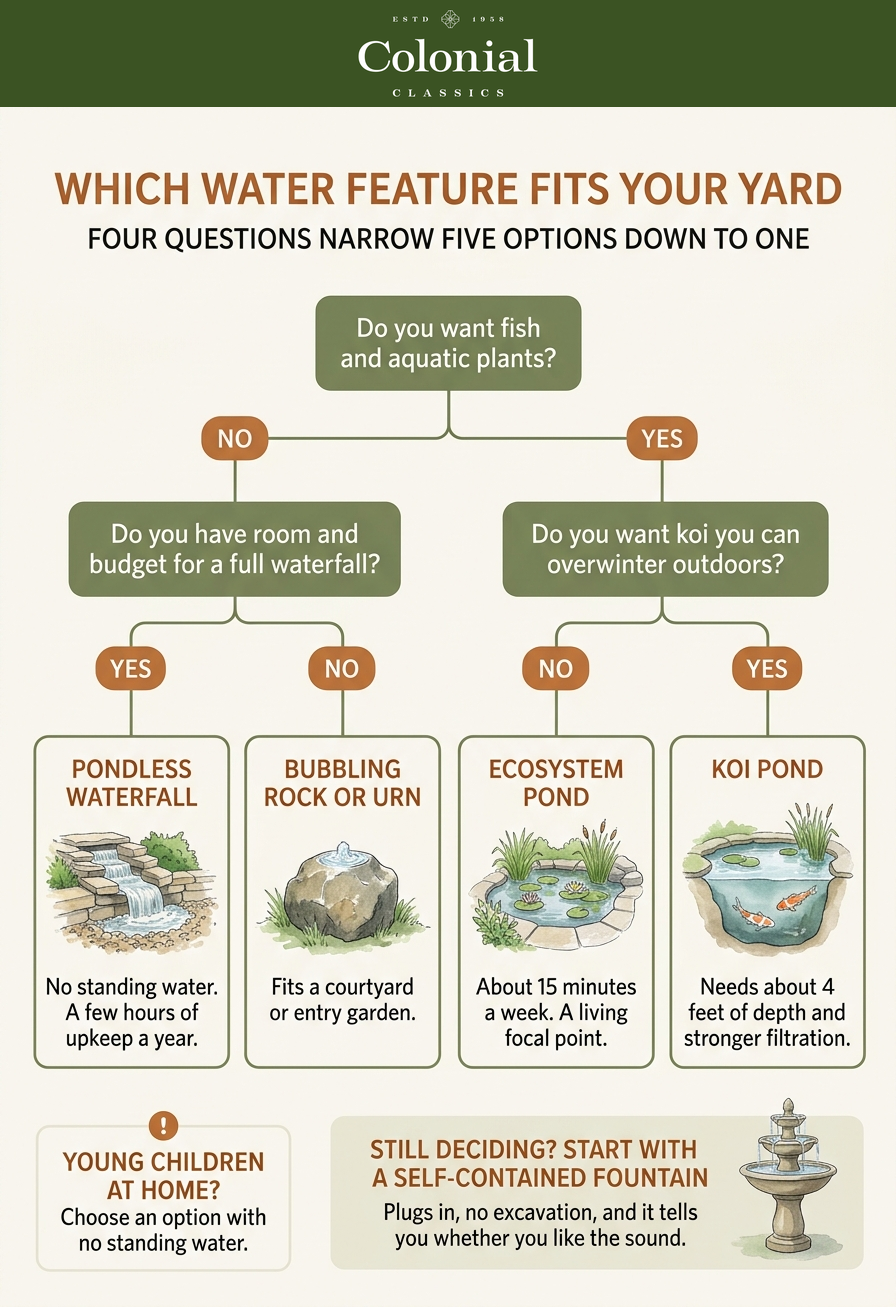
Answer four questions and the choice usually makes itself.
- Who uses the yard: If you have young children or grandchildren in and out of the house, a pondless waterfall or bubbling rock removes the open-water question entirely.
- How much upkeep you actually want: Be honest. A pond is a hobby. A pondless waterfall is an amenity. Both are beautiful, but only one asks for your Saturday mornings.
- What you want from it: If you want sound, any of these delivers. If you want wildlife, plants, and something that changes through the seasons, you want a pond.
- What the site gives you: A slope is a gift to a waterfall. A flat yard can still take a pond or a bubbler. A low spot that already collects runoff is the one place you should not put any of them.
What a Water Feature Costs to Run
The two ongoing costs are electricity and water, and both are smaller than people expect.
Electricity. A pump moving 2,000 to 3,000 gallons per hour typically draws 150 to 250 watts. Running around the clock, that is roughly 108 to 180 kilowatt-hours a month. Indiana's average residential electricity price was 17.90 cents per kilowatt-hour in April 2026 according to the U.S. Energy Information Administration, which puts a typical feature at about $19 to $32 a month. A small fountain pump costs a few dollars a month. Choosing an efficient pump at design time is the single biggest lever on that number.
Water. Evaporation runs roughly an inch or two a week in summer heat, so you top off with a hose now and then. If you are adding water every day, that is not evaporation, that is a leak, and it is worth chasing down.
Service. Most pond owners have us handle a spring cleanout and a fall closing. A pondless waterfall or bubbler needs far less, usually just a pump check and a debris clear.
Do Water Features Attract Mosquitoes?
No. Mosquitoes breed in still, stagnant water, and a properly circulated water feature never stops moving. Purdue Extension's guidance on mosquitoes in and around the home is focused on eliminating stagnant water: clogged gutters, old tires, buckets, birdbaths that never get changed, and low spots that hold water after a rain. A running waterfall is the opposite of that.
The nuance worth knowing: if your design includes a quiet backwater, a bog filter, or a planted shelf where circulation is slow, that corner can hold larvae. A Bti mosquito dunk handles it. Bti is a naturally occurring bacteria, and according to the EPA, its toxins affect only the larvae of mosquitoes, black flies, and fungus gnats, with no toxicity to people. Purdue Extension recommends it specifically for treating standing water in ornamental ponds. In practice, a water feature usually reduces mosquito pressure in a yard, because the dragonflies and frogs it attracts eat them.
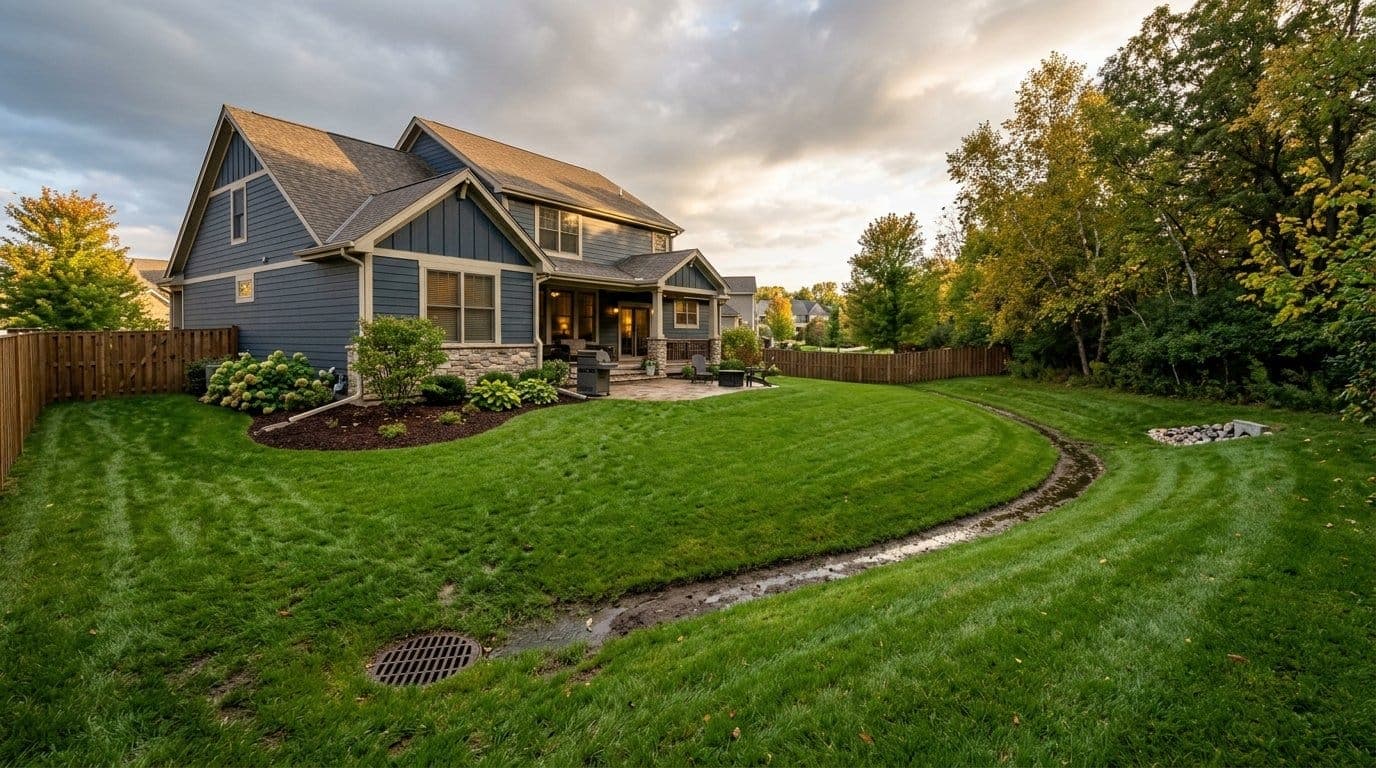
If mosquitoes are already a problem in your yard, the water feature is rarely the cause. Look at your gutters, your low spots, and anything holding water for more than a week. Standing water in a poorly draining yard is the real breeding ground, and that is a drainage problem worth solving on its own.
Plants for a Tri-State Water Feature, and Two to Avoid
Aquatic plants are not decoration. They shade the water, compete with algae for nutrients, and give fish cover from herons. In USDA Zone 7a, these are the reliable performers:
- Hardy water lily: floating leaves that shade the surface and cut algae growth. The workhorse of any pond.
- Pickerel rush: an upright marginal with blue flower spikes that pollinators work all summer.
- Blue flag iris: a native iris for the shallow shelf, and a much better choice than the yellow one.
- Arrowhead: a marginal with distinctive leaves that thrives on a planting ledge.
- Creeping Jenny: spills over stone edges and softens the transition from water to rock.
- Hardy hibiscus: dinner-plate blooms in late summer along a wet edge.
Two plants to keep out of the water entirely. Indiana's Aquatic Plant Rule (312 IAC 18-3-23) designates 30 invasive aquatic species that are illegal to sell, gift, barter, or transport in the state:
- Yellow flag iris: sold for decades as a pond plant, now prohibited in Indiana. Plant blue flag iris instead.
- Parrot feather: a common aquarium and pond filler, also prohibited.
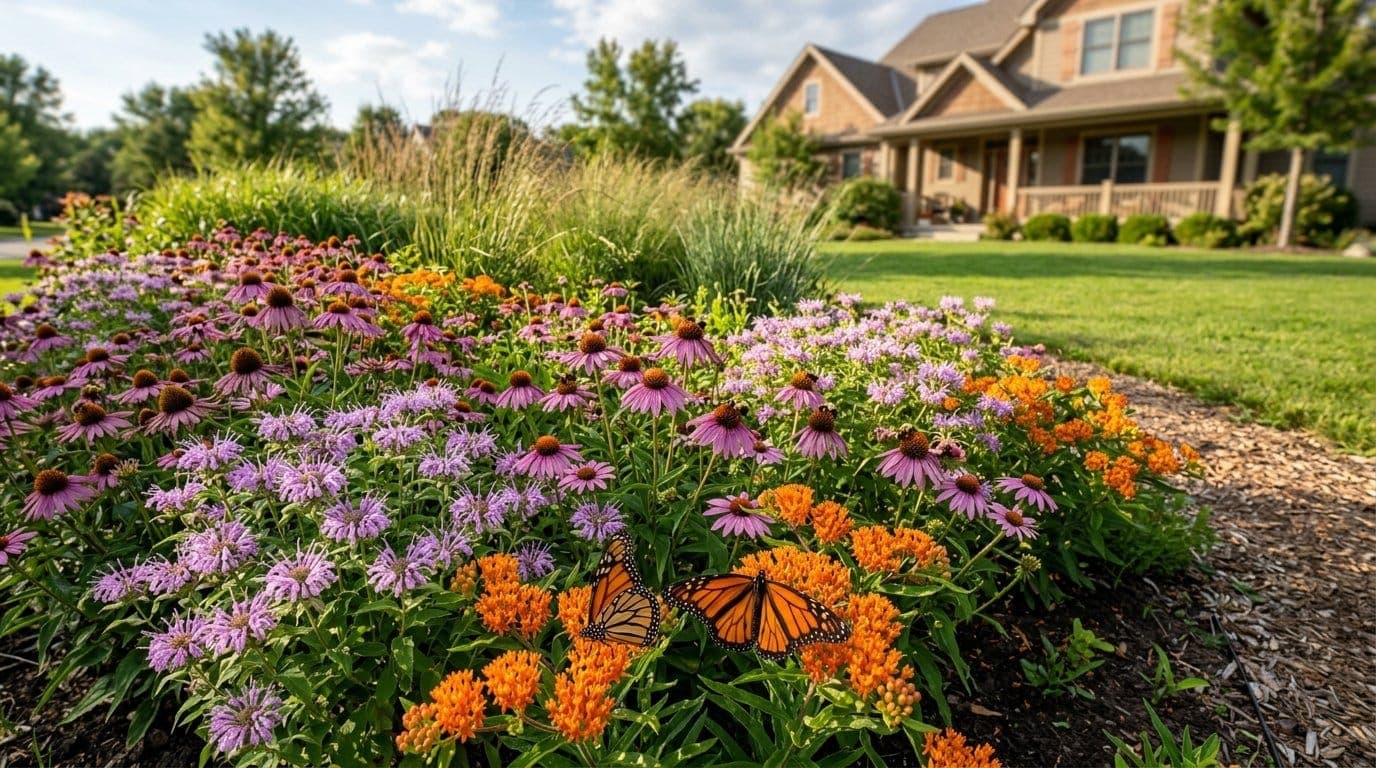
If you are shopping for pond plants, buy them locally from people who know the rule. Our planting services team works from the current DNR list. While you are choosing marginals, the same instincts that make a good pond edge make a good pollinator bed, and many of the native plants that feed bees and butterflies are happy in a moist planting shelf.
Winter Care in Zone 7a
The Tri-State sits in USDA Zone 7a, which means real ice but not a deep freeze. What you do in winter depends on what you built.
Pondless waterfalls can run all winter, and the ice sculpture a waterfall builds in January is one of the best reasons to own one. If you would rather not, shut it down, pull the pump, and walk away until spring.
Ponds with fish need two things. First, depth. Penn State Extension's water garden guidance notes that a pond about four feet deep will keep koi alive year after year, while two feet is only enough for a pond without fish. Second, an opening in the ice. When a pond seals over completely, decomposing debris releases gases with nowhere to go, and that is what kills fish over winter, not the cold itself. A floating de-icer or an aerator run near the surface keeps a hole open.
Never break the ice with a hammer. The shock wave is hard on fish. Set a de-icer and let it do the work.
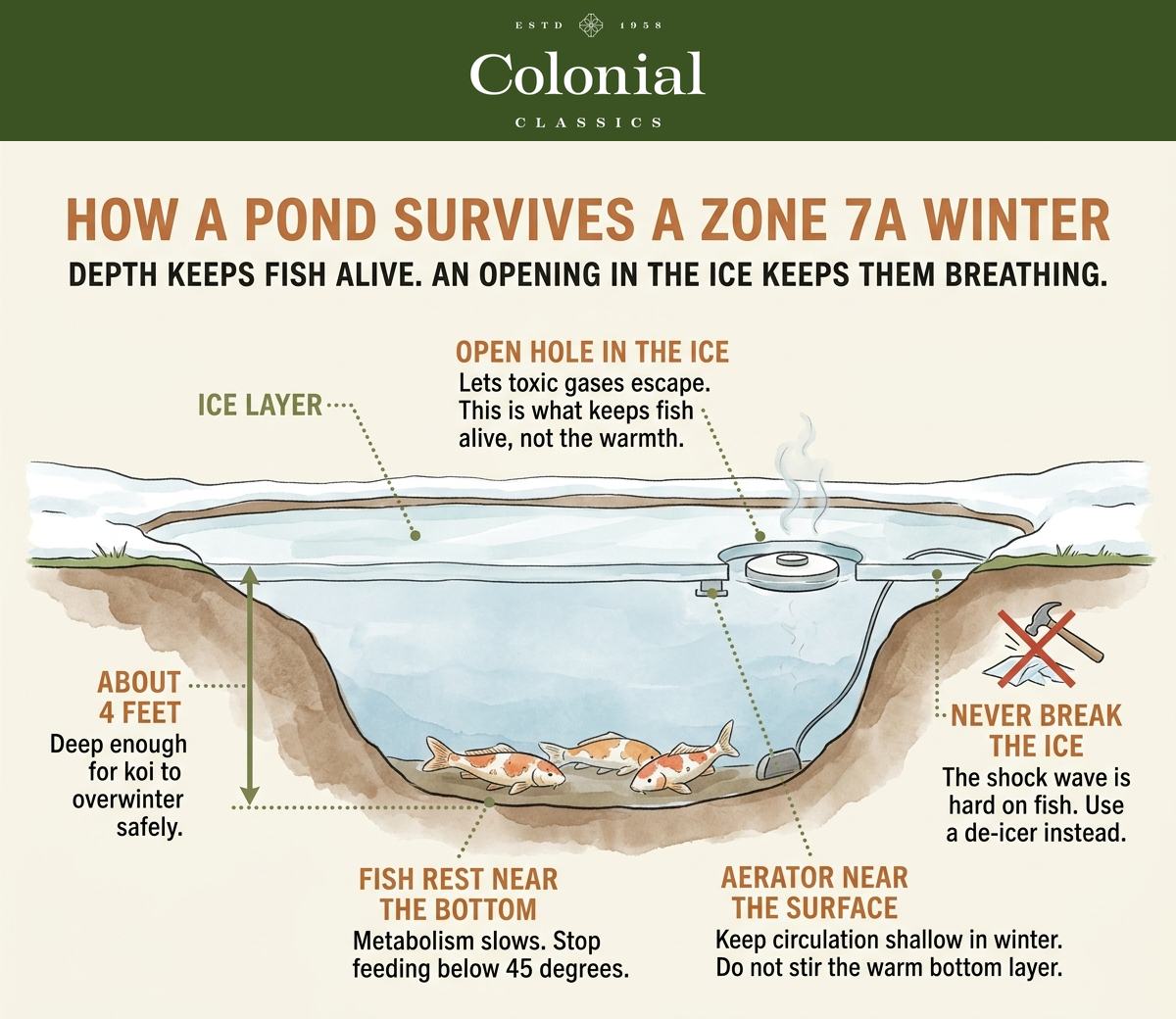
Once water temperature drops below about 45 degrees, stop feeding your fish. Their metabolism slows down and food they cannot digest will foul the water over winter.
Where to Put It
Placement decides how much you use the feature and how much you fight it.
- Put it where you will hear it: near the patio, under a bedroom window, along the path from the driveway to the door. A waterfall in the far corner of the yard is a waterfall you will visit twice a year.
- Give it some shade in the afternoon: full sun all day drives algae growth and heats a small pond. Dappled afternoon shade is ideal.
- Do not put it under a big deciduous tree: you will spend every October pulling leaves out of it.
- Stay out of the low spot: a feature built where runoff collects will take on silt, fertilizer, and lawn chemicals every time it rains. If your yard has a low spot, fix the drainage first, then build.
- Plan the power: every feature needs a GFCI outlet. Running that circuit is easier before the stone goes in than after.
Water features also pair naturally with landscape lighting. A single well light under a waterfall doubles the hours you actually get to enjoy it, and lighting is far cheaper to install while the stone is still going in.
Should You Build It Yourself?
A self-contained fountain is a DIY project. So is a small bubbling rock, if you can move the boulder.
Anything with a liner, a pump vault, and stone is harder than it looks. The two things that go wrong are hydraulics and edges. Undersize the pump and the waterfall trickles instead of falling. Set the liner edge wrong and the water wicks out over the top, drops the level a few inches a week, and you spend a summer hunting for a leak that is really just a badly set rock. Neither mistake is cheap to fix after the stone is set.
If you are building anything permanent, it is worth having it designed as part of the whole landscape rather than dropped into it. Our water features team handles the excavation, liner, plumbing, and stonework, and ties the feature into the surrounding beds and hardscaping so it looks like it belongs there rather than like it was installed last Tuesday.
If you want the sound of water with almost no upkeep, build a pondless waterfall or a bubbling rock. If you want a living, changing feature and you are willing to give it 15 minutes a week, build an ecosystem pond. The mistake is buying a pond when what you actually wanted was the sound.
Ready to Add Water to Your Landscape?
The best water feature is the one that matches how you actually live in your yard. We design and build ponds, pondless waterfalls, fountains, and bubblers for homeowners in Newburgh, Evansville, Boonville, Chandler, and across the Tri-State, including western Kentucky and southern Illinois.
Contact us to talk through what fits your space, or schedule a design consultation and we will walk the property with you.