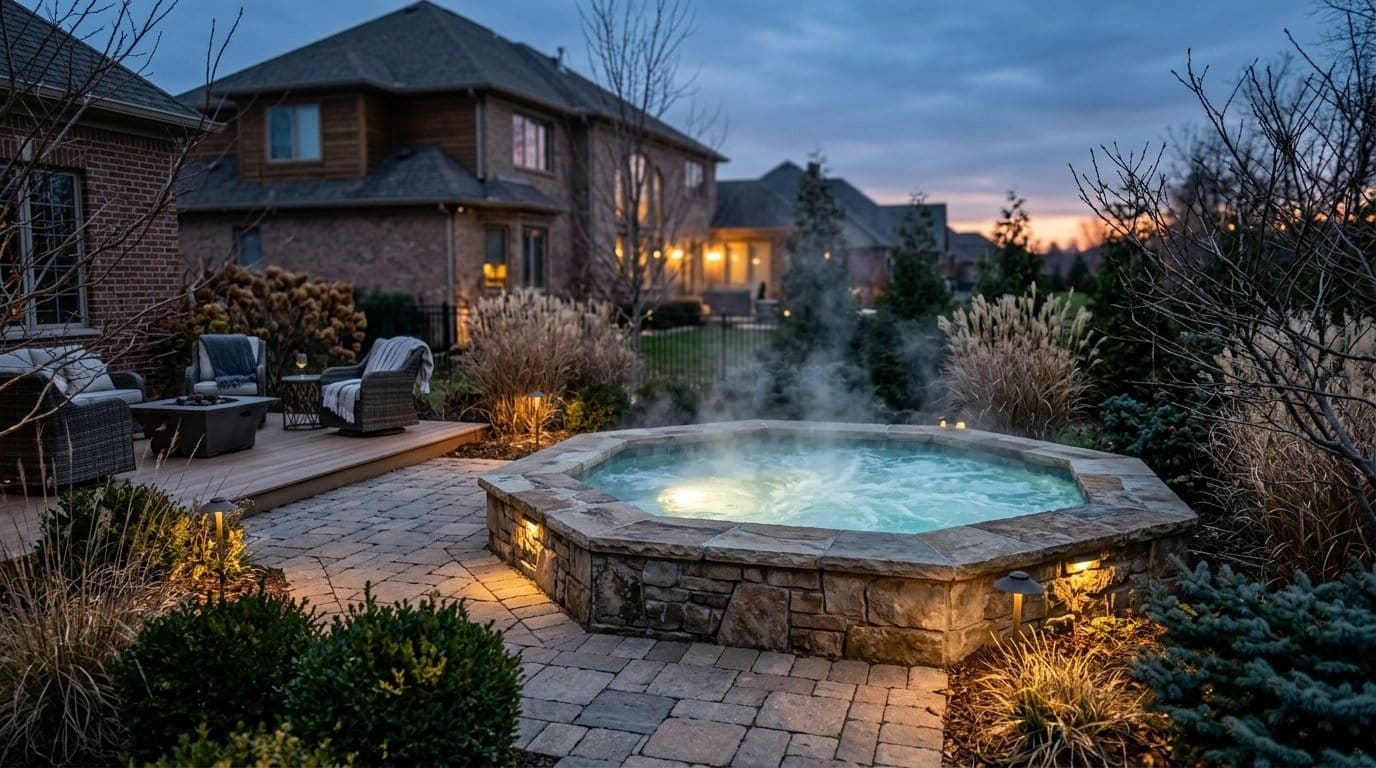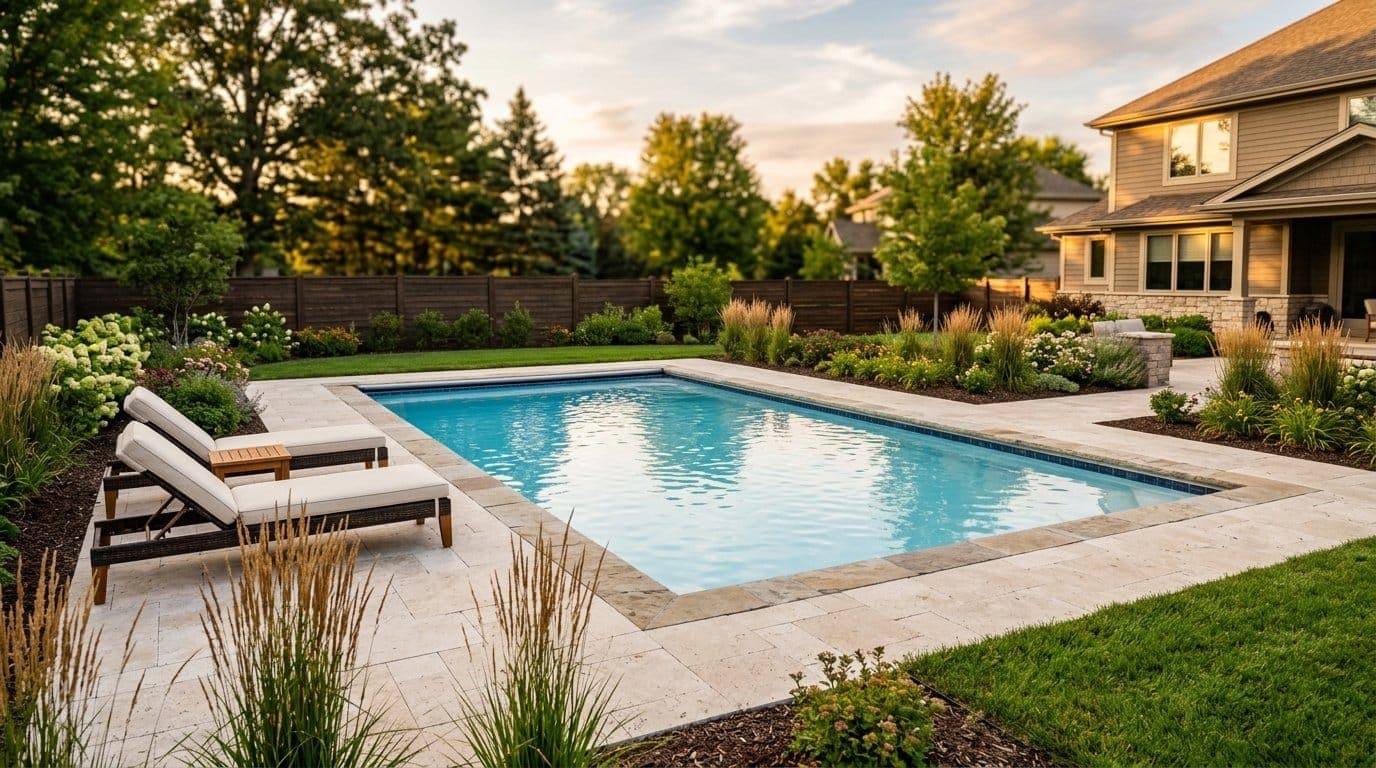
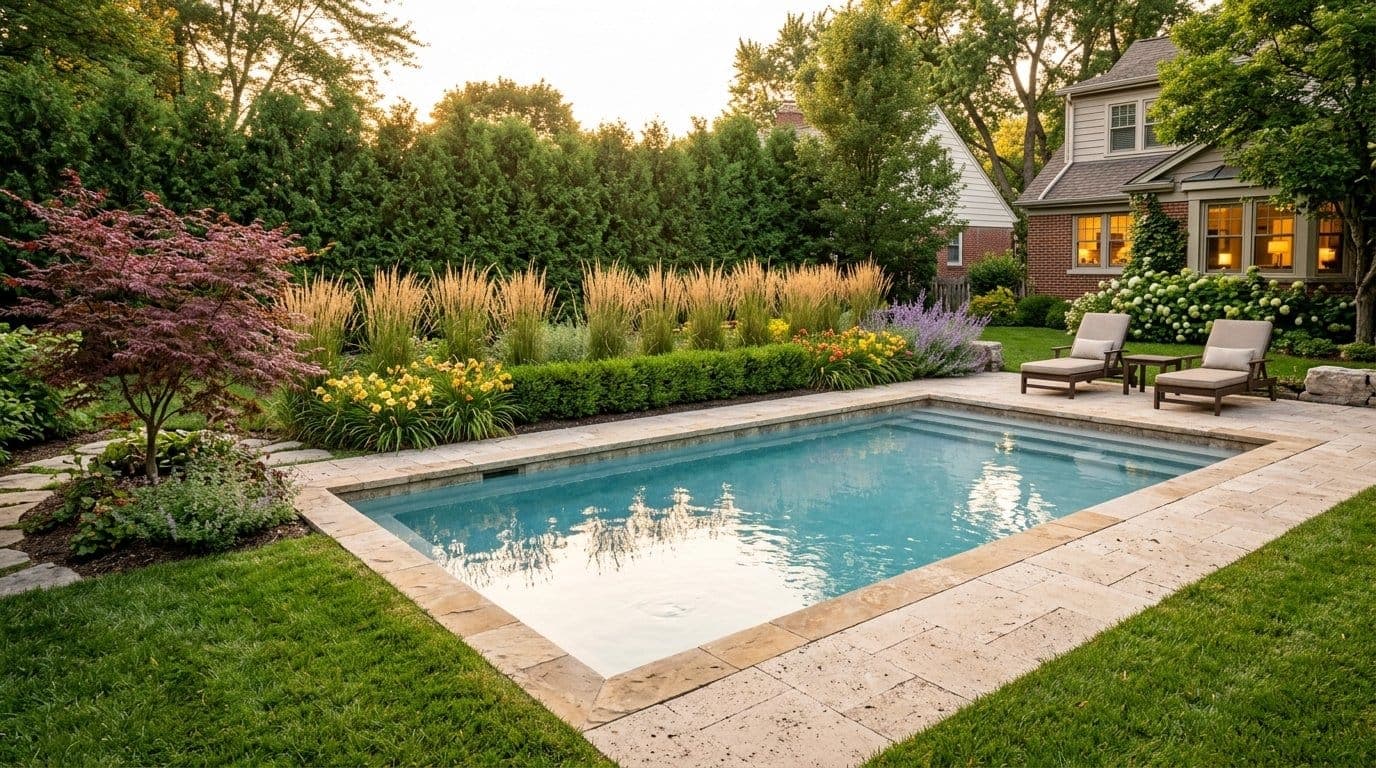
The right pool landscaping turns a square of blue water into a destination. The wrong choices fill your skimmer with leaves every weekend and crack your deck with the wrong roots. The difference is not luck. It is a handful of decisions about which plants you put where, how you screen the views you do not want, and how the surfaces around the pool transition from water to yard.
This guide walks through pool landscaping ideas that work for yards in Southern Indiana, the Evansville and Newburgh area, and the broader Tri-State region. Every plant pick here is proven in USDA Zone 7a and chosen specifically for poolside conditions: heat, reflected light, occasional chemical splash, and the need to keep maintenance low so you spend more time swimming and less time fishing leaves out of the water.
Start With How You Want to Use the Space
Before plant lists or paver samples, picture how the pool will actually live for your family. Quiet morning coffee? Big weekend cookouts? A safe play area for kids? Each answer drives different choices.
A pool meant for entertaining wants generous deck space, an outdoor kitchen within easy reach, and shade for the hottest part of the afternoon. A pool meant for quiet retreat wants privacy planting, soft lighting, and fewer hard edges. A pool meant for kids wants clear sight lines from the house, no thorny plants near the entry, and durable surfaces that handle wet feet running every direction.
Decide the priority first. The rest of the design follows.
The Four Zones Around a Pool
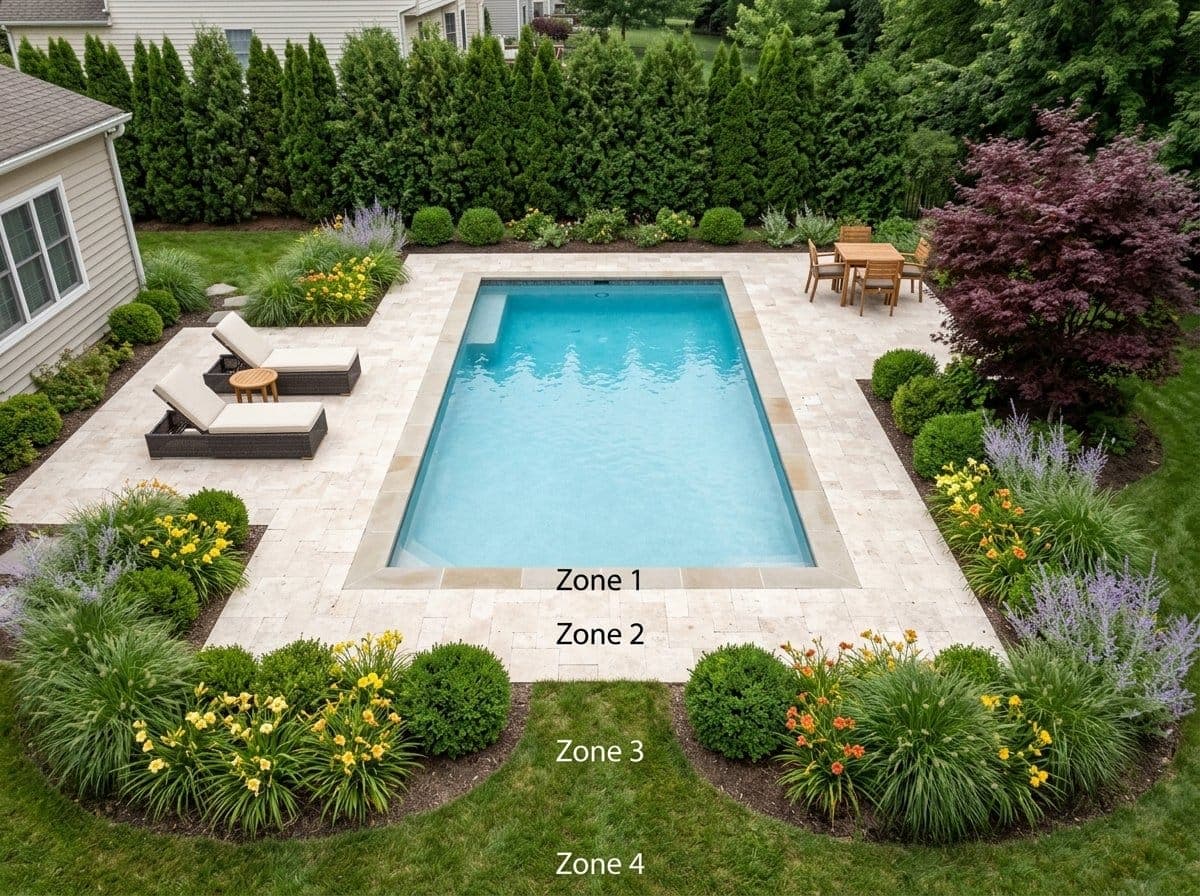
Every successful pool landscape works in four zones moving out from the water.
The coping is the cap on the pool edge itself, usually 12 to 18 inches of stone or concrete. Nothing plants here, but the material sets the tone for everything else. Natural stone reads warm and traditional. Poured concrete reads clean and modern. Travertine pavers thread the needle between the two.
The deck and patio zone is the hardscape immediately around the pool, usually 4 to 8 feet wide on at least one side for chairs and traffic. Pavers, stamped concrete, or natural stone all work. Avoid smooth polished surfaces that get slick when wet. This is also where you place the outdoor kitchen, a fire feature, or a pergola.
The planting transition zone starts where the deck ends and runs 4 to 10 feet outward. This is the soft layer that pulls the eye away from concrete and into the rest of the yard. Most of your perennials, ornamental grasses, and small specimen plants live here. Set beds back at least 3 to 4 feet from the coping so plant litter does not blow directly into the pool.
The outer perimeter is the privacy and backdrop layer. Evergreen screens, larger shrubs, ornamental trees, and any fence sections all live here. This is what your neighbors see when they look toward your yard, and what you see when you look out from the deck.
Best Plants to Use Around a Pool
These plant picks all share three traits: low litter, no thorns at the height of foot traffic, and proven performance in our hot Zone 7a summers.
- Zone
- 4-9
- Sun
- Full sun
- Best For
- Vertical accent, no flopping
- Zone
- 5-10
- Sun
- Sun to shade
- Best For
- Clean bed edging
- Zone
- 5-8
- Sun
- Sun to part shade
- Best For
- Year-round structure
- Zone
- 3-9
- Sun
- Full sun
- Best For
- Summer color, no thorns
- Zone
- 5-11
- Sun
- Full sun
- Best For
- Continuous blooms set back from deck
- Zone
- 4-9
- Sun
- Full sun
- Best For
- Airy purple in hot, dry beds
- Zone
- 3-8
- Sun
- Sun to part sun
- Best For
- Late-summer blooms, softer screen
- Zone
- 5-8
- Sun
- Part sun
- Best For
- Specimen tree, controlled growth
- Zone
- 5-8
- Sun
- Full sun
- Best For
- Fast outer-perimeter privacy
Karl Foerster feather reed grass is the workhorse of poolside landscaping. It grows in a tight upright clump 4 to 5 feet tall, never flops, never seeds into the pool, and adds movement when the wind picks up. Plant it in groups of three or five behind the deck for a clean modern look.
Liriope is one of the best edgers for pool beds. It forms tidy grass-like clumps about 12 inches tall, blooms purple in late summer, drops no leaves to speak of, and shrugs off heat. Use it where the planting bed meets the deck or path.
Boxwood gives the bones. A line of boxwood between the pool deck and a perennial bed reads intentional in every season, including winter when most other plants are dormant. Pick a heat-tolerant cultivar like Wintergreen or Green Mountain. Our companion post on the best shrubs for landscaping covers boxwood and other foundation choices in more depth.
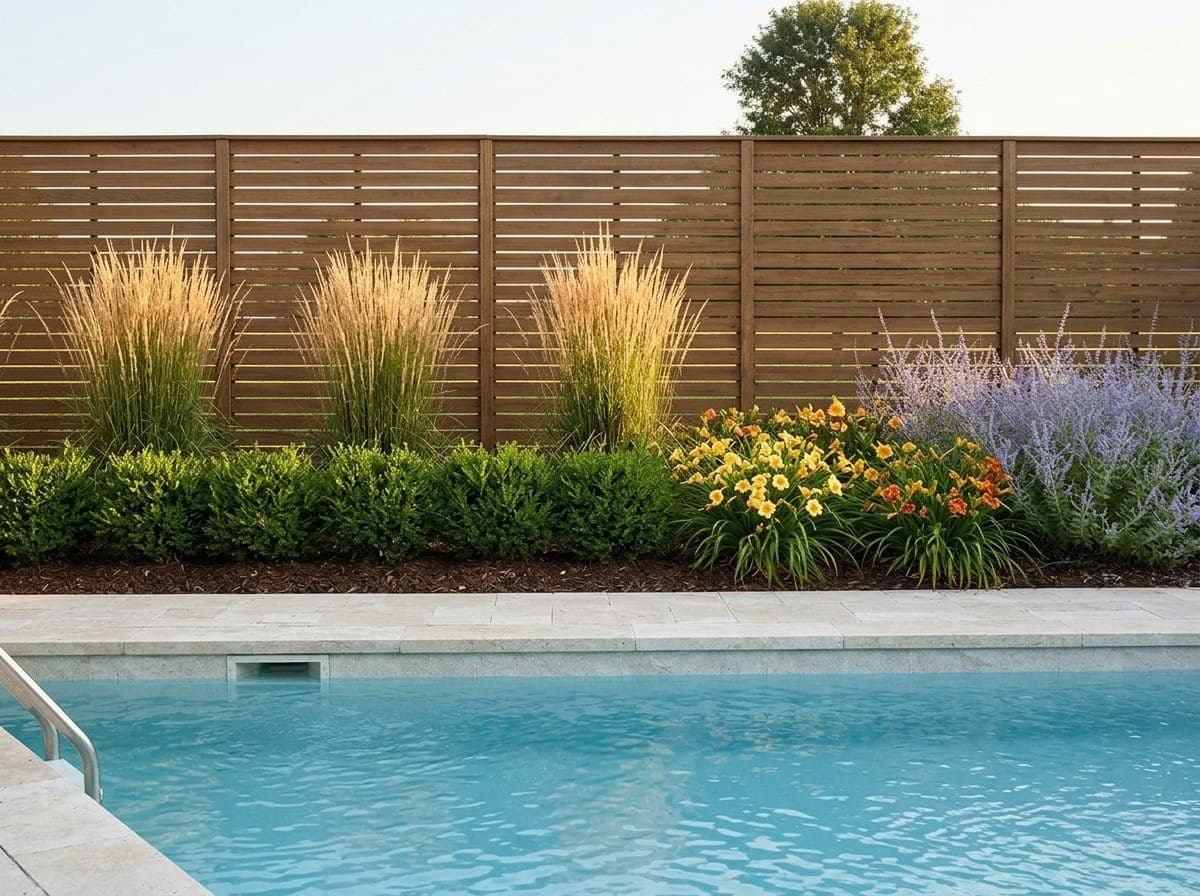
Daylilies, knockout roses, and Russian sage carry summer color through the hottest weeks of July and August. Set knockout roses at least 4 to 5 feet back from foot traffic so thorns are not a hazard. Daylilies and Russian sage have no thorns and can sit closer to the deck.
Panicle hydrangeas like Limelight or Little Lime tolerate full sun better than the popular mophead types and bloom from midsummer into fall. They make a softer alternative to a hard evergreen screen if your privacy needs are moderate.
Japanese maples and crape myrtles are the specimen trees that fit best near a pool. Both stay small, have controlled root systems, and create dappled shade for a seating area without dumping the kind of leaf litter that comes off a big oak or maple. Plant most ornamental trees at least 10 to 15 feet from the pool edge, and large shade trees 20 to 25 feet away so the mature canopy and roots stay clear of the deck and the underground plumbing.
Plants and Trees to Keep Away From the Pool
Some plants will fight your pool no matter how well you place them. Skip these near the deck:
- Bradford pear, silver maple, and willow: brittle wood, aggressive water-seeking roots, and a lot of mess.
- Sweetgum, sycamore, and oak: heavy seed pods and constant leaf drop that overwhelms skimmers.
- Mulberry: staining fruit that tracks onto wet feet and decking.
- Black walnut: juglone in the roots and leaves poisons many companion plants and makes the surrounding beds hard to maintain.
- Magnolia: beautiful, but the large waxy leaves drop year-round and clog filters.
- Cottonwood and river birch: fast growers that shed bark, twigs, and seeds heavily.
- Bamboo: aggressive rhizomes that can lift pavers and crack pool walls. Even clumping varieties need a buried root barrier.
- Pine, spruce, and other heavy-pollen evergreens: needles, cones, and yellow spring pollen all end up in the water.
- Barberry and other thorny shrubs: keep well away from any path the family walks barefoot.
If you already have one of these near a planned pool location, talk with your installer before pouring concrete. Sometimes the right move is to remove the tree before construction; sometimes it can stay if the pool site shifts a few feet.
Privacy and Screening
Privacy planning starts with the views you want to block. Stand at the deepest seat at your pool deck and look outward. Where do neighboring windows, roof lines, or street traffic show up? Those are the angles you want to screen.
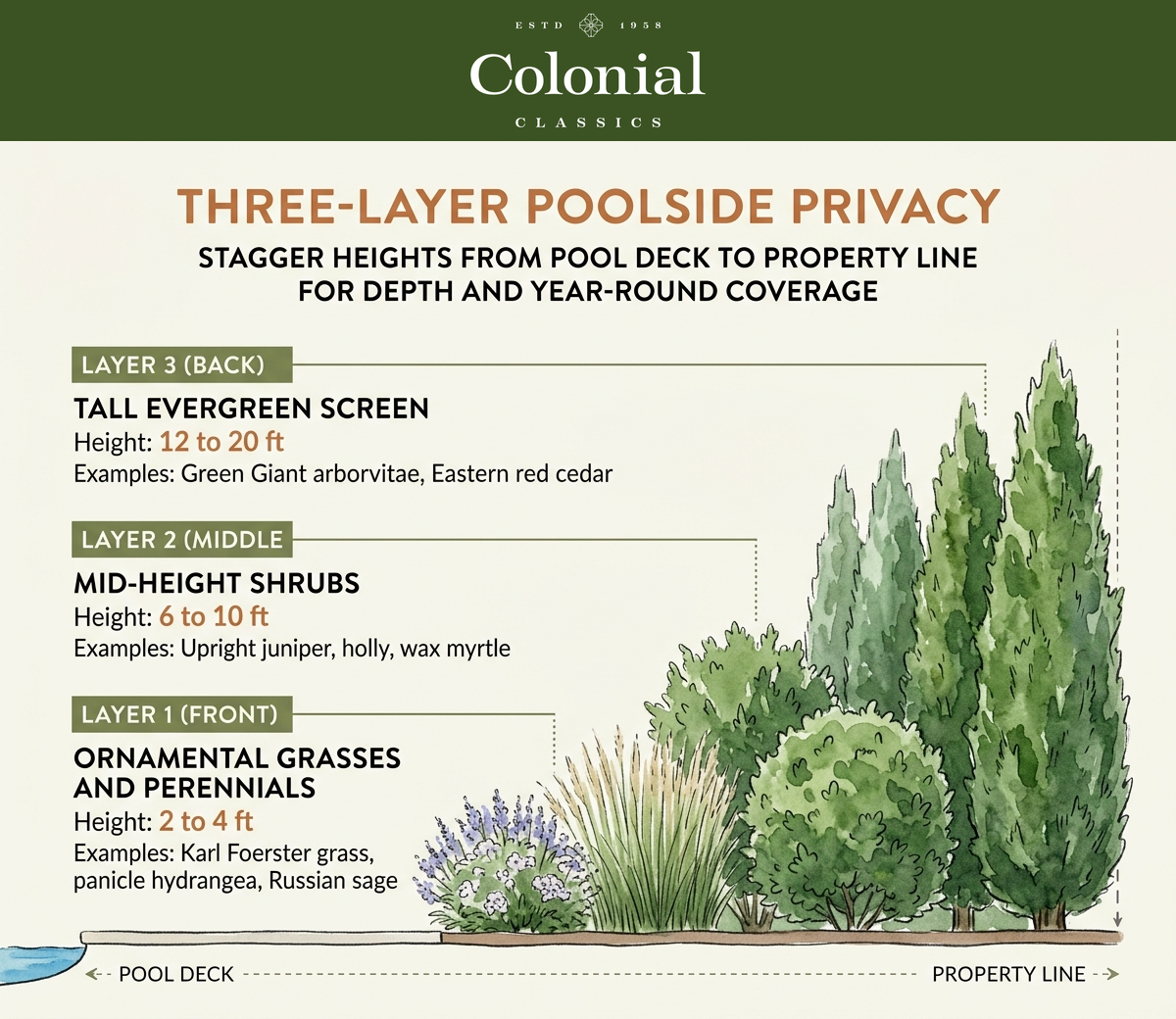
Layered evergreens read the best year-round. A back row of Green Giant arborvitae or wax myrtle at 12 to 20 feet, a middle row of holly or upright juniper at 6 to 10 feet, and a front layer of ornamental grasses or panicle hydrangea creates depth instead of a flat green wall.
A pergola or freestanding wall section behind seating areas blocks the sharpest sight lines without waiting years for plants to mature. Pair it with vining plants like clematis or evergreen climbing hydrangea to soften the structure.
Fencing is the fastest, most reliable privacy tool, and Indiana code already requires a 48-inch barrier around inground pools. Choose materials that match the rest of your hardscape: black aluminum reads modern, cedar or composite reads warm and traditional.
Hardscape Around the Pool
The hardscape choices around the pool carry as much visual weight as the planting.
Pool deck materials range from poured concrete (most affordable) to travertine and natural stone (most expensive). Concrete pavers split the difference, give you texture and color flexibility, and can be lifted and repaired individually if a piece settles. Whatever you pick, choose a finish with traction. Smooth polished surfaces are a fall risk when wet.
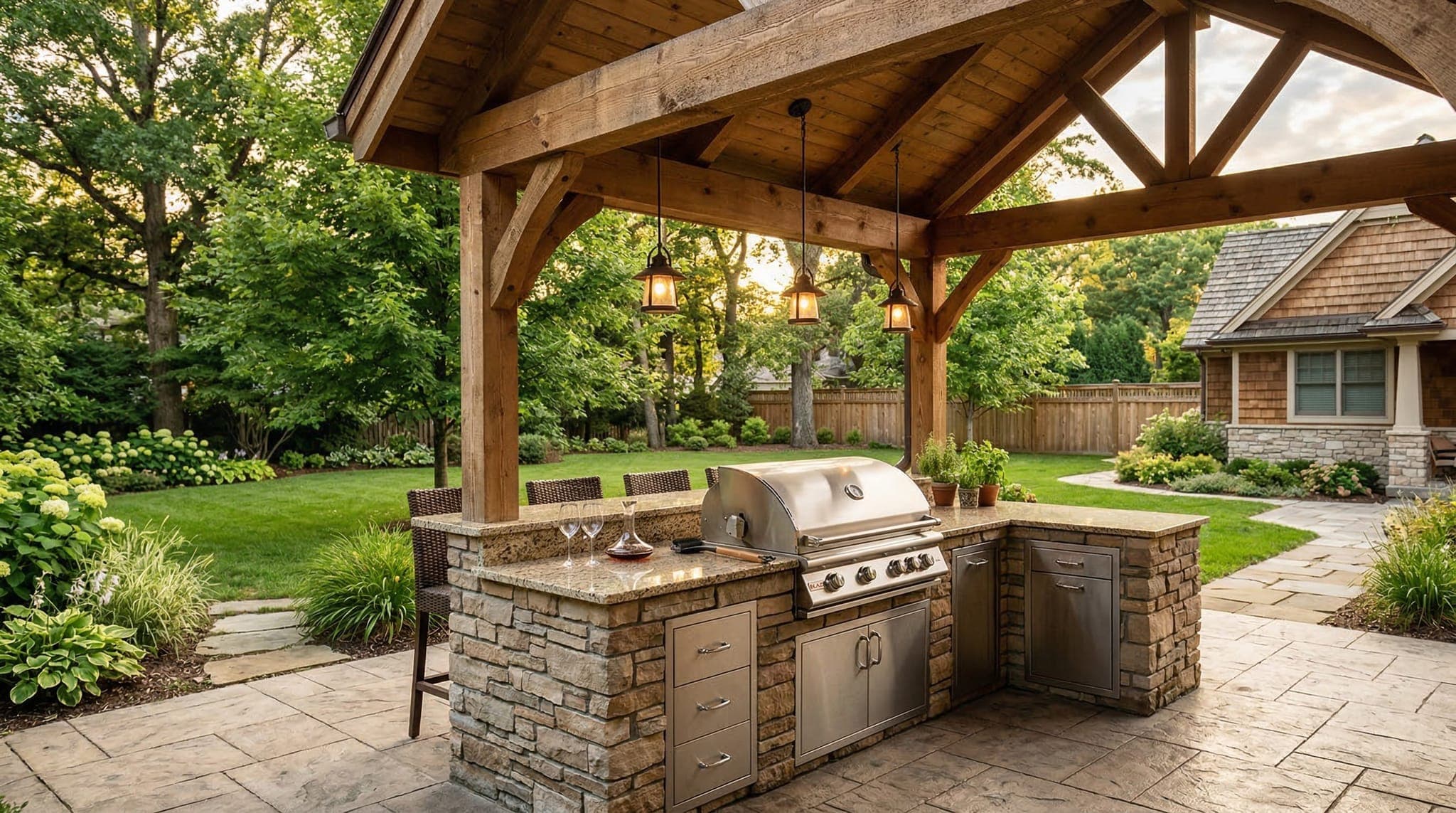
An outdoor kitchen or grilling station within 10 to 15 feet of the pool keeps the cook in the same conversation as the swimmers. Plan it from the start instead of adding it later when the surrounding plantings are already in. See our breakdown of outdoor kitchen cost and design ideas for layouts that work alongside a pool.
A fire feature anchors the seating side of the pool deck. A gas fire pit avoids the smoke and ember concerns of wood near a pool. Our fire pit cost guide covers the tradeoffs.
A pergola or sail shade over part of the deck makes the difference between a pool you can use at 2 p.m. in July and one you cannot. Place it where the sun hits the seating area in the hottest hours.
Lighting the Pool Landscape
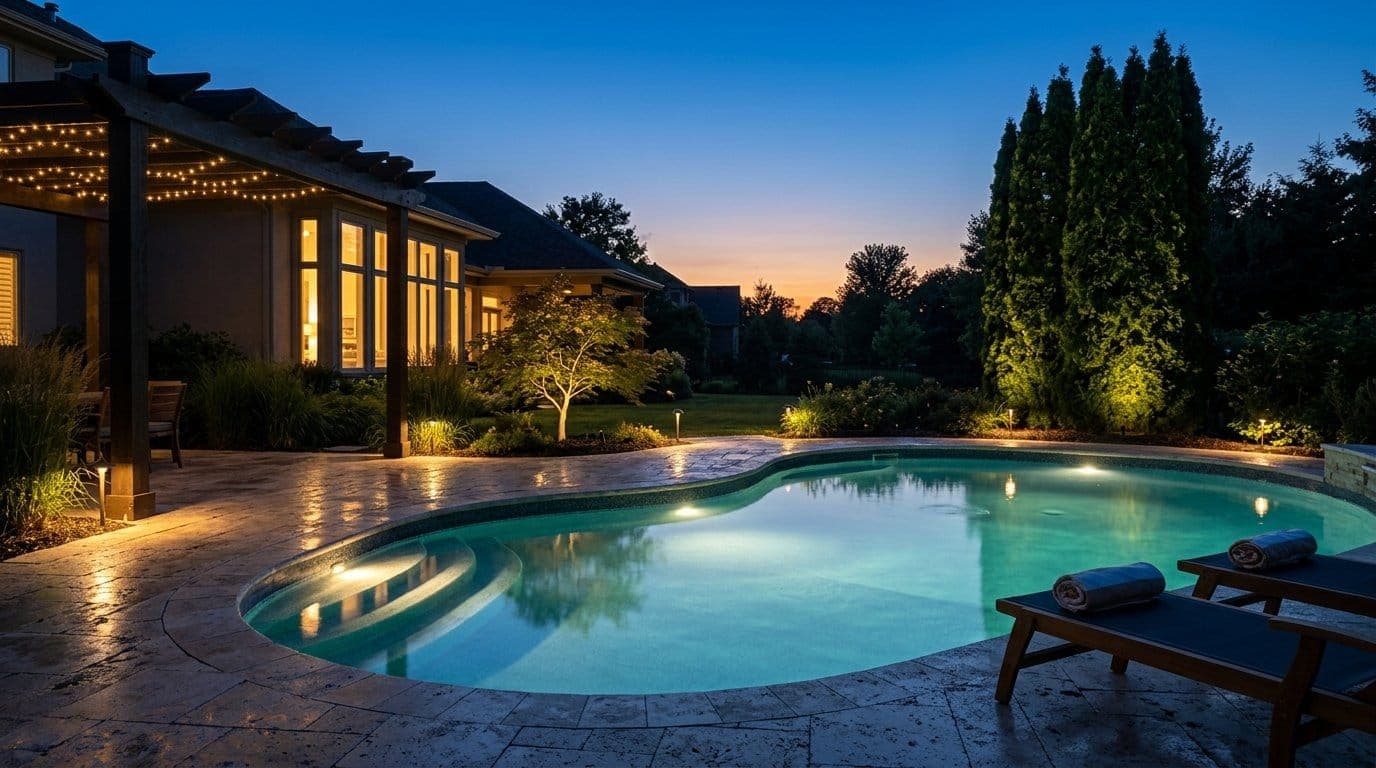
Pool lighting works in three layers:
- In-pool lighting: LED fixtures inside the pool wall make night swimming safe and turn the pool into a focal point after dark.
- Path and step lighting: low fixtures along the deck, walkways, and any change of grade, aimed down to prevent glare.
- Accent lighting: uplights on key plants and trees beyond the deck. A specimen Japanese maple or a tall arborvitae lit from below gives the whole yard depth at night.
Our landscape lighting guide walks through fixture types, wiring, and what a complete system typically costs.
Drainage and Water Management
Pool decks shed a lot of water during rain, and the wrong slope sends it into your beds or back toward the house. Confirm the deck pitches away from the pool and away from the foundation, and that any low spots in the surrounding yard tie into a working drainage plan. Our guide on yard drainage solutions covers the patterns that fail and how to fix them.
If you are installing the pool now, build the drainage solution into the same project. Retrofitting later means cutting into finished hardscape.
Common Pool Landscaping Mistakes
A few patterns show up over and over in pool projects that age poorly:
- Planting too close to the coping: Roots heave pavers, and leaf litter ends up in the pool with every breeze. Pull beds back at least 3 to 4 feet.
- Picking the wrong mulch: Bark mulches float when wet, clog skimmers, and stain decks. Use stone, rubber mulch, or pea gravel in the splash zone.
- Overspraying irrigation: Pop-up heads aimed across the pool waste water and throw fertilizer or hard-water deposits onto the deck. Use drip lines at the bed level.
- Putting tall plants in the wrong place: Anything that will reach 6 feet at maturity blocks sight lines from the house to the water. Keep tall material at the perimeter, not next to the seating area.
- Forgetting winter: Deciduous-only landscaping leaves a stripped scene for six months. Use boxwood, arborvitae, holly, or a small share of evergreens for year-round structure.
Putting It All Together
A great pool landscape does not happen by buying plants one weekend and putting them in another. It happens because someone planned the four zones, picked the right plants for our climate, and made the hardscape, lighting, and planting decisions in the same conversation. If you are thinking through any of those decisions for your own yard, the Colonial Classics Landscape and Nursery team builds pool landscapes across Southern Indiana, Western Kentucky, and Southeastern Illinois. Contact us for a walk-through and a plan that fits your property and how you want to use the space.
Once you have the surrounding landscape mapped out, the next big decision is the pool itself. Our guide on pool landscaping services shows recent projects from the Tri-State area, and our pools overview covers the fiberglass options we install if you are still choosing.