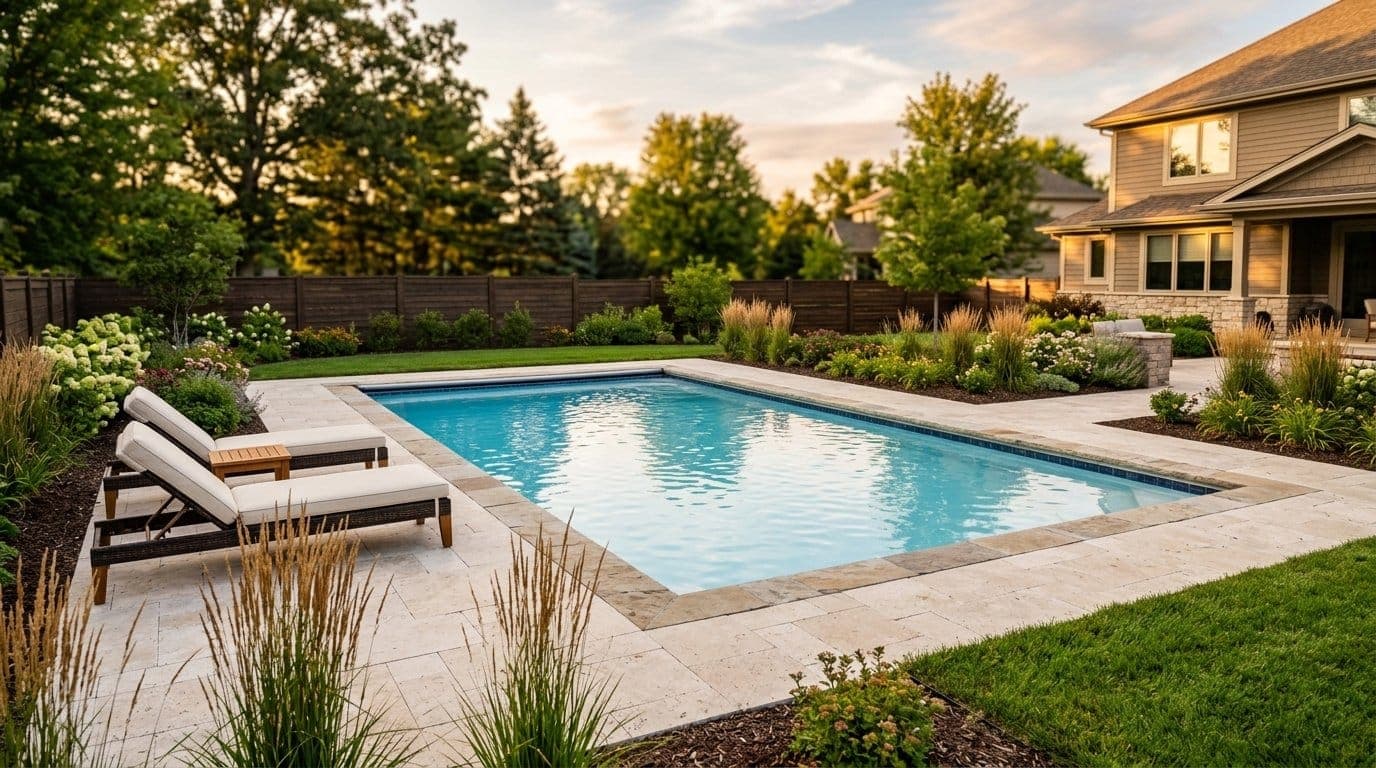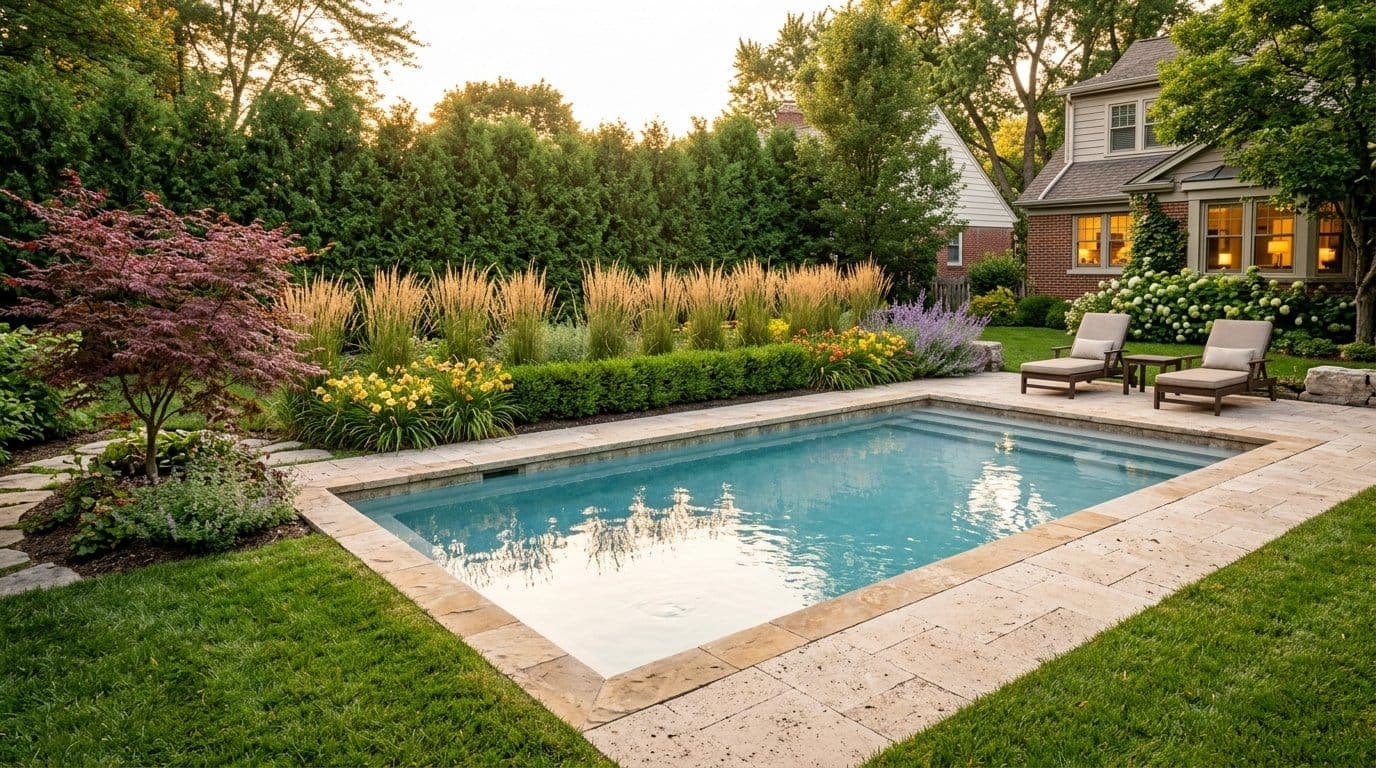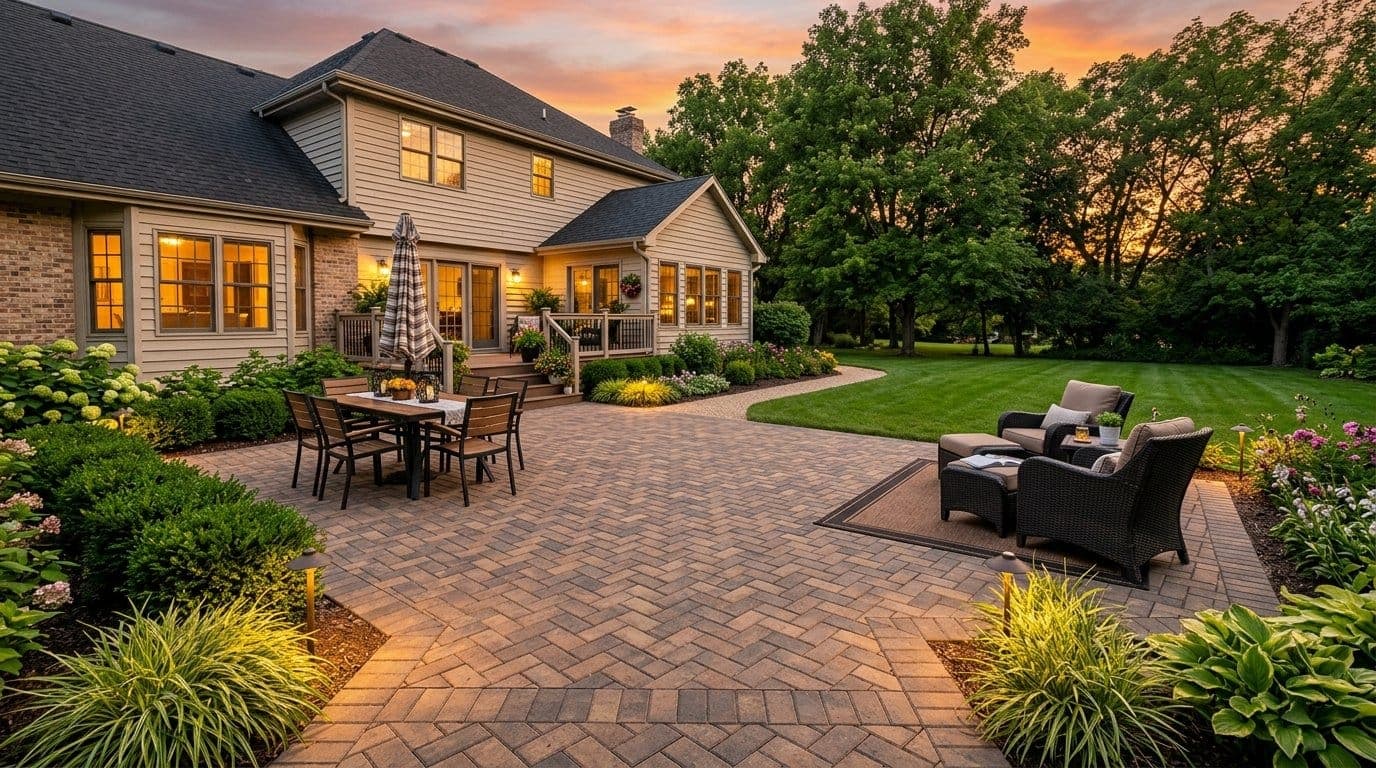
You want heated water in your yard by winter. The moment you start shopping, you run into two very different things wearing almost the same name: a portable hot tub you can have delivered next month, and a built-in spa that gets excavated into your patio.
The difference is simple. A hot tub is a product you place. A spa is a structure you build. One arrives on a truck and can leave the same way. The other is poured, plumbed, and finished into your landscape permanently. Everything else, the cost, the timeline, the upkeep, and what it does to your property, follows from that one distinction.
This guide walks through what each one actually involves, what they cost once they are installed and running, how they hold up through Tri-State winters, and how to tell which one fits your yard and how long you plan to stay in it.
Every project is different. The pricing and timelines discussed here are general estimates based on typical projects in our area. Your actual costs and schedule will depend on your property, materials, scope of work, and other factors. Contact us for a personalized estimate.
The Short Answer
Choose a portable hot tub if you want heated water quickly, you may move within five years, or you want to keep the total spend lower. Choose a built-in spa if this is the home you plan to keep, you want the spa to match your patio and pool, and you would rather buy once for decades than replace in ten to fifteen years.
That covers most people. The rest of this guide is for the cases where the answer is not obvious.
What a Built-In Spa Actually Is
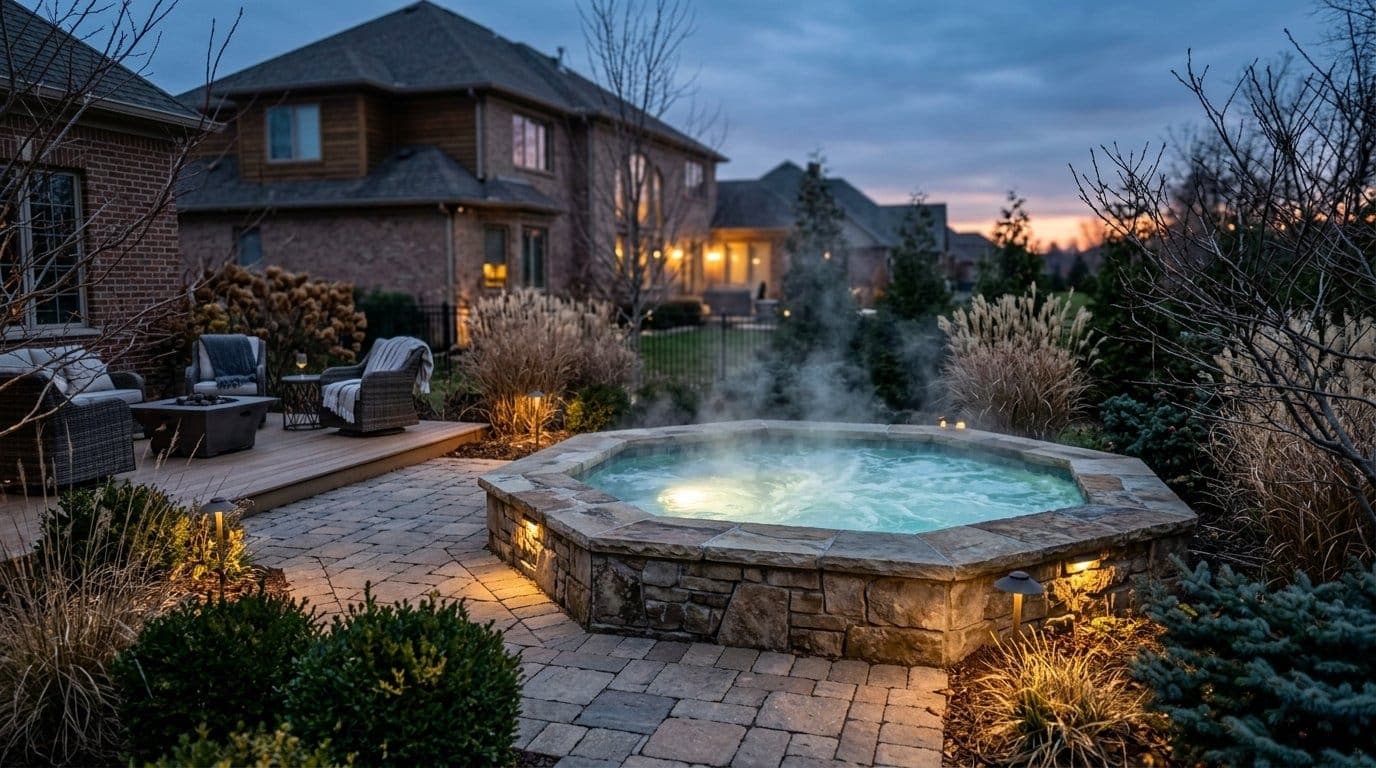
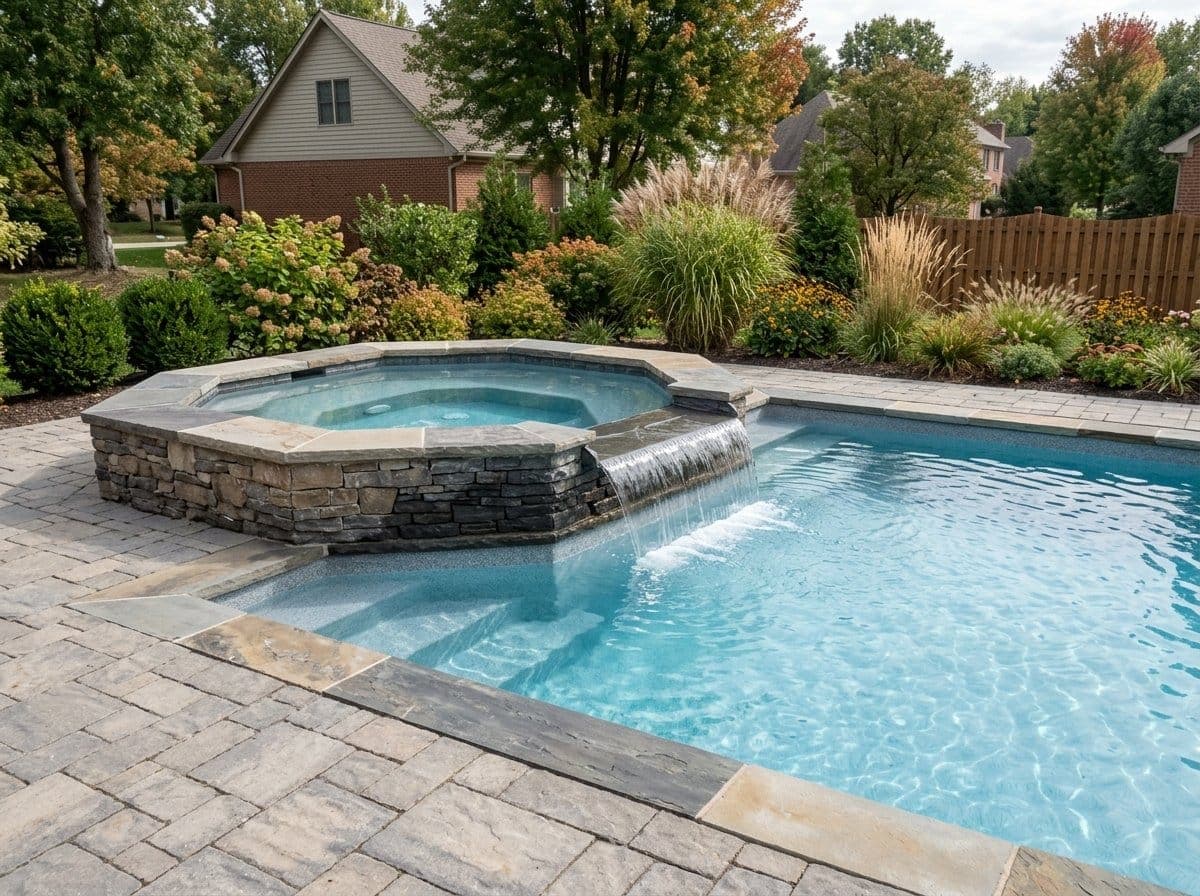
A built-in spa is excavated and constructed in place, then finished so it reads as part of your hardscape rather than as an object sitting on it. It comes in two common forms.
Spillover spa: a raised spa attached to a pool, with water cascading over the edge into the pool below. It shares equipment and plumbing with the pool, so there is one system to maintain instead of two. This is the configuration most people picture when they imagine a spa, and it is almost always built at the same time as the pool.
Standalone built-in spa: the same permanent construction without a pool. It sits in the patio or deck, heats and filters independently, and runs efficiently on its own because you are not circulating a pool's worth of water to warm eight people.
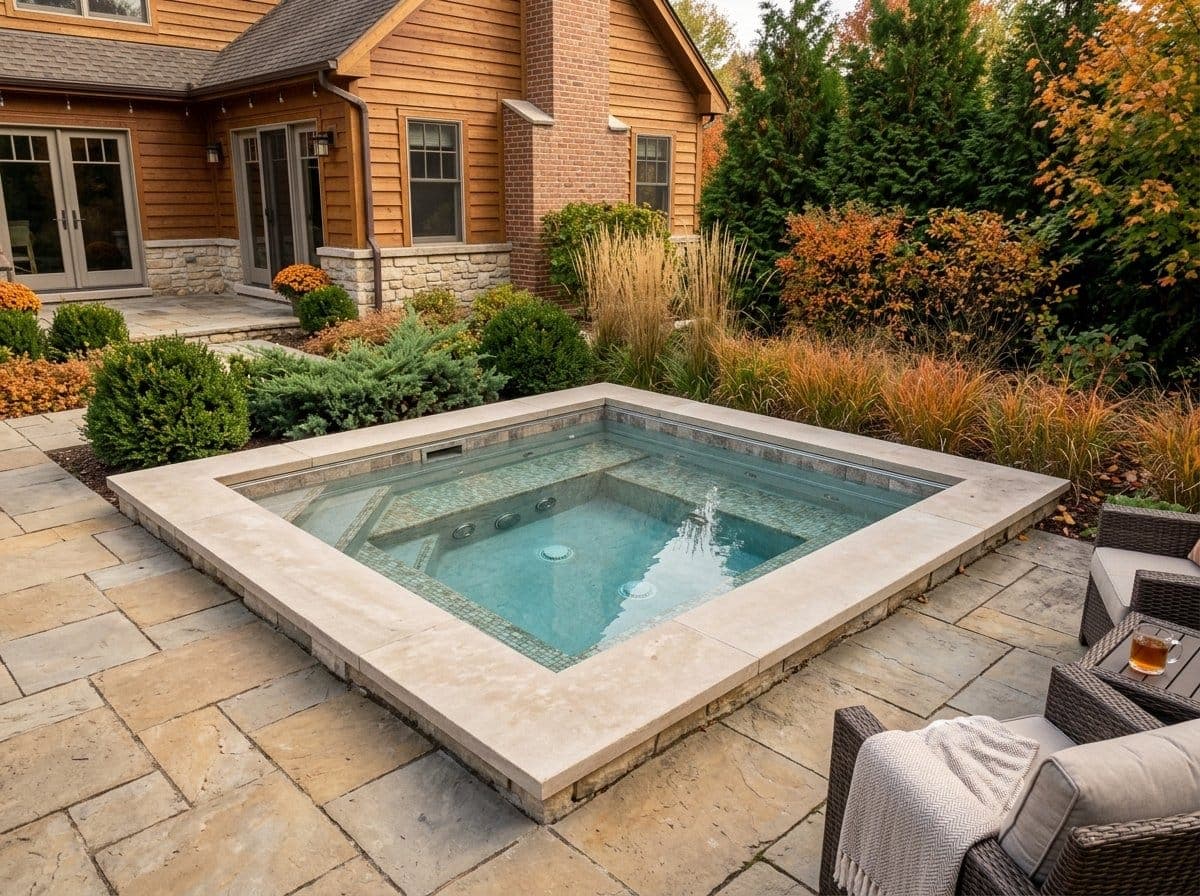
Either way, the finish is what sets it apart. The coping, the stone, and the surround are specified to match the rest of your hardscaping, so the spa does not look like something you bought and set down. That integration is the main reason people choose it.
What you gain
- It lasts decades: A properly built concrete or fiberglass spa shell is measured in decades rather than years, with periodic resurfacing on concrete.
- It is designed, not placed: Seating, jet placement, depth, and step height are specified for your body and your space instead of chosen from a catalog.
- It becomes part of the house: A permanent structure is appraised with the property rather than treated as a piece of equipment.
- One system with the pool: A spillover spa shares filtration and heating with the pool, so there is a single set of equipment to service.
What it costs you
- Time: several weeks to a few months from design through permitting, excavation, and finish work.
- Commitment: It does not move. If you sell in three years, it stays.
- Higher up-front spend: You are paying for excavation, plumbing, structural work, and masonry, not just a shell.
What a Portable Hot Tub Actually Is
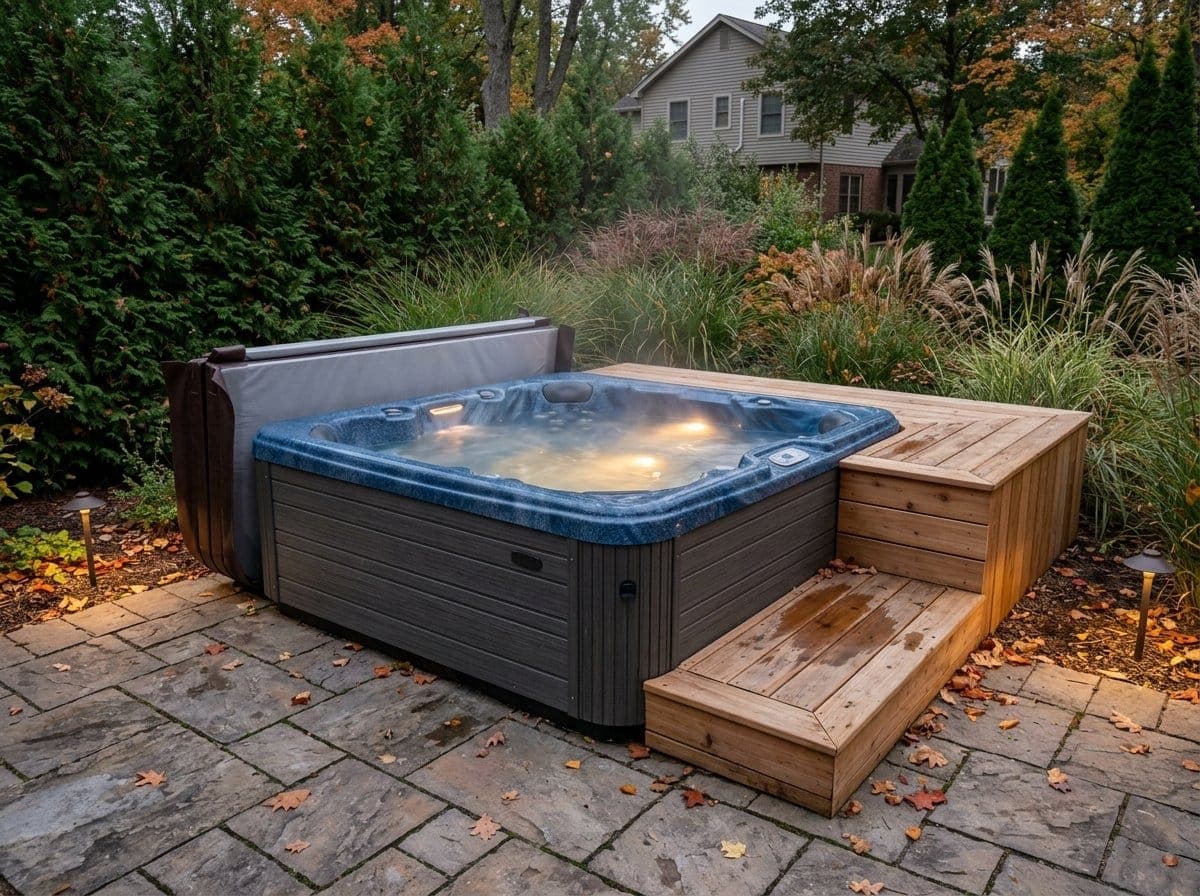
A portable hot tub is a self-contained acrylic shell with its pump, heater, and filter packed into the cabinet underneath. It arrives finished. Set it on a level surface, connect power, fill it, and it works.
"Portable" is doing some work in that name. A filled tub weighs thousands of pounds and is not something you casually reposition. But it can be drained, lifted, and taken to a new house, and that single fact drives most of its advantages.
What you gain
- Speed: weeks rather than months, once the pad and the electrical are ready.
- Lower total spend: The range starts well below what a built-in spa costs.
- It moves with you: the strongest argument for a portable tub if you are not staying put.
- Serviceable in place: The equipment is behind an access panel instead of buried in the ground.
What it costs you
- A shorter life: Acrylic shells and their equipment are generally engineered for roughly ten to fifteen years of service.
- It reads as a product: You can soften it with decking, a surround, and plantings, but the cabinet is still a manufactured object in your yard.
- Fixed configuration: You choose from available seating and jet layouts rather than specifying them.
Built-In Spa vs. Hot Tub, Side by Side
A built-in spa is excavated, permanent, finished to match your patio, and lasts decades. A portable hot tub sits on a pad, installs in weeks, moves with you, and lasts roughly ten to fifteen years. Here is how they compare point by point.
- Built-In Spa
- Excavated and permanent
- Portable Hot Tub
- Self-contained, sits on a pad
- Built-In Spa
- Decades, with resurfacing on concrete
- Portable Hot Tub
- Roughly 10 to 15 years
- Built-In Spa
- Several weeks to a few months
- Portable Hot Tub
- Days to a few weeks
- Built-In Spa
- No
- Portable Hot Tub
- Yes, drained and lifted
- Built-In Spa
- Matched to your patio and coping
- Portable Hot Tub
- Acrylic shell with a cabinet skirt
- Built-In Spa
- Excavation, plumbing, masonry
- Portable Hot Tub
- Level load-bearing pad
- Built-In Spa
- Dedicated, or shared with the pool
- Portable Hot Tub
- Packed into the cabinet
- Built-In Spa
- Permanent improvement
- Portable Hot Tub
- Personal property
Built-In Spa Cost vs. Portable Hot Tub Cost
The number on the showroom tag is not the number you pay. Both options carry site costs that are easy to leave out of a comparison.
A portable hot tub runs from a few thousand dollars for an entry-level plug-in model up to roughly $20,000 for a premium unit. On top of that, budget for a level load-bearing pad, delivery and placement, and in most cases a dedicated 240-volt circuit run from your panel. That electrical work is the line people forget, and the cost of it depends almost entirely on how far the tub sits from the panel.
A standalone built-in spa starts higher and moves with size, shell material, finish, and what your site demands. Excavation on a tight or sloped lot costs more than on an open one. Stone coping costs more than a simple edge.
A spillover spa attached to a new pool is usually quoted inside the pool project rather than as its own line, because it shares the excavation, the equipment pad, and the plumbing. If you are already planning a pool, adding the spa then is far cheaper than adding it later. Retrofitting a spa onto a finished pool means opening up hardscape you have already paid for.
If a pool is anywhere in your five-year plan, decide about the spa now rather than later. Adding a spillover spa during the pool build shares the excavation and equipment. Adding one afterward means cutting into finished patio and re-plumbing. Our fiberglass pool projects are routinely designed with the spa included from the first drawing.
Running Costs and Tri-State Winters
Here is the part that surprises people: the biggest driver of what a spa costs to run is not the heater. It is the cover.
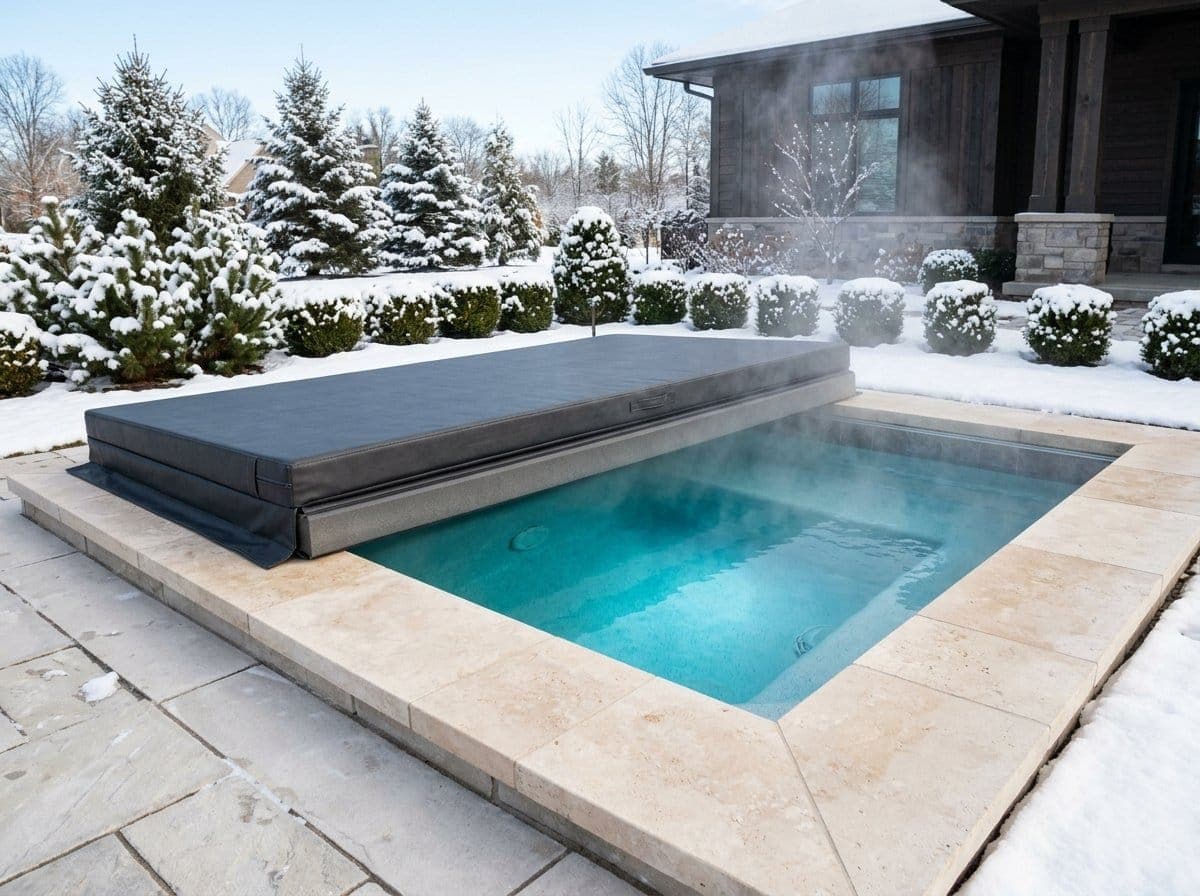
Most of the heat leaving heated water leaves through the surface, which is why a well-fitted, properly insulated cover does more for your operating bill than almost anything else. A cover that has waterlogged and sagged, which happens to most covers after a few years, quietly raises your bill every month until you replace it. Budget for a new cover every few years on either option and treat it as maintenance, not an upgrade.
Beyond the cover, insulation is what separates an efficient unit from an expensive one. On portable tubs, full-foam insulation holds heat better than a partially insulated cabinet. On built-in spas, the efficiency question is mostly about how the spa is heated: a standalone spa with its own heater runs efficiently because it only heats the spa, while a spillover spa that circulates through the main pool system can be expensive to heat if it is run that way in winter. Ask specifically how the spa is isolated from the pool loop in cold weather. A well-designed spillover system can heat the spa alone.
In USDA Zone 7a, which covers Newburgh, Evansville, and the surrounding Tri-State area, both options are genuinely usable twelve months a year. Winter is when a spa earns its keep, and it is the season that makes the whole purchase worthwhile for most owners. The freeze risk is not to the water you are heating, it is to plumbing that sits idle. If you ever shut a spa down for an extended stretch in winter, it needs to be properly winterized, the same way an irrigation system does.
The cover is the most important accessory you will buy. It controls your heating bill, protects the water, and on many properties satisfies the local safety requirement. Replace it when it gets heavy.
Installation and Permits
Both options involve electrical work that has to be done correctly, and in Indiana that work is code-governed and inspected.
The Indiana Residential Code addresses spa and hot tub wiring in Chapter 42. Two requirements apply directly to a home installation:
- Ground-fault protection: The outlet supplying a self-contained spa or hot tub, or a packaged spa or hot tub equipment assembly, must be protected by a ground-fault circuit interrupter (E4202.8).
- Receptacle distance: For a storable or portable spa, receptacles must sit at least 6 feet from the inside walls of the tub, measured along the shortest path a cord would actually travel rather than straight through a wall (E4202.6).
Worth knowing, because it gets quoted at homeowners a lot: the code also requires a clearly labeled emergency shutoff within sight of the spa and at least 5 feet from it, but that section explicitly does not apply to one-family dwellings (E4202.11). If someone tells you your house needs one, check which building you are actually in.
Permit and barrier requirements vary by county and city across Indiana, Kentucky, and Illinois. Some jurisdictions treat a spa holding more than a set water depth the same way they treat a pool, which brings fencing or locking-cover rules into play. Confirm with your local building department before you buy rather than after delivery.
For a portable tub, the site work is a level, load-bearing pad, usually concrete, sized and reinforced for the filled weight. Setting a tub on pavers that were never designed for that load, or on ground that settles unevenly, will eventually stress the shell.
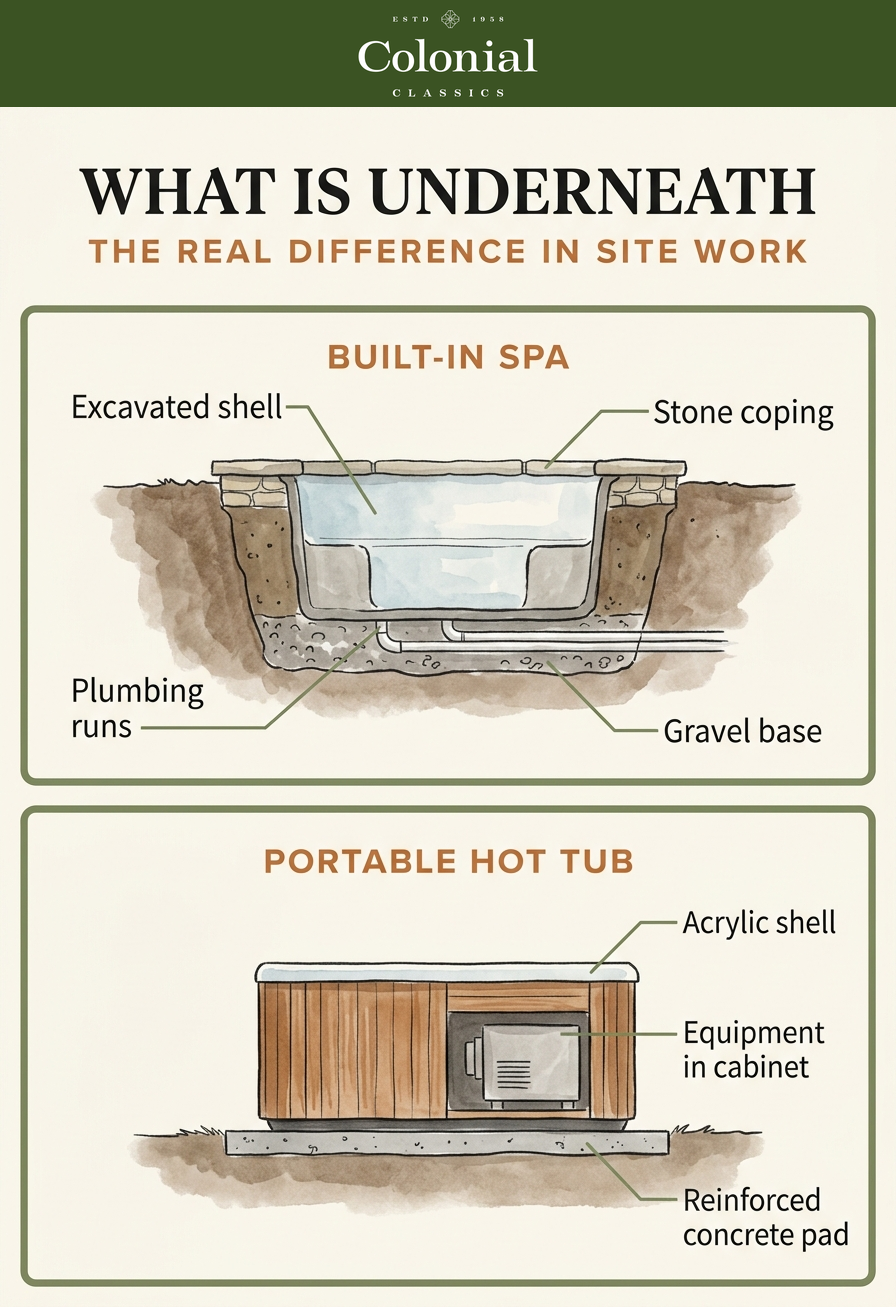
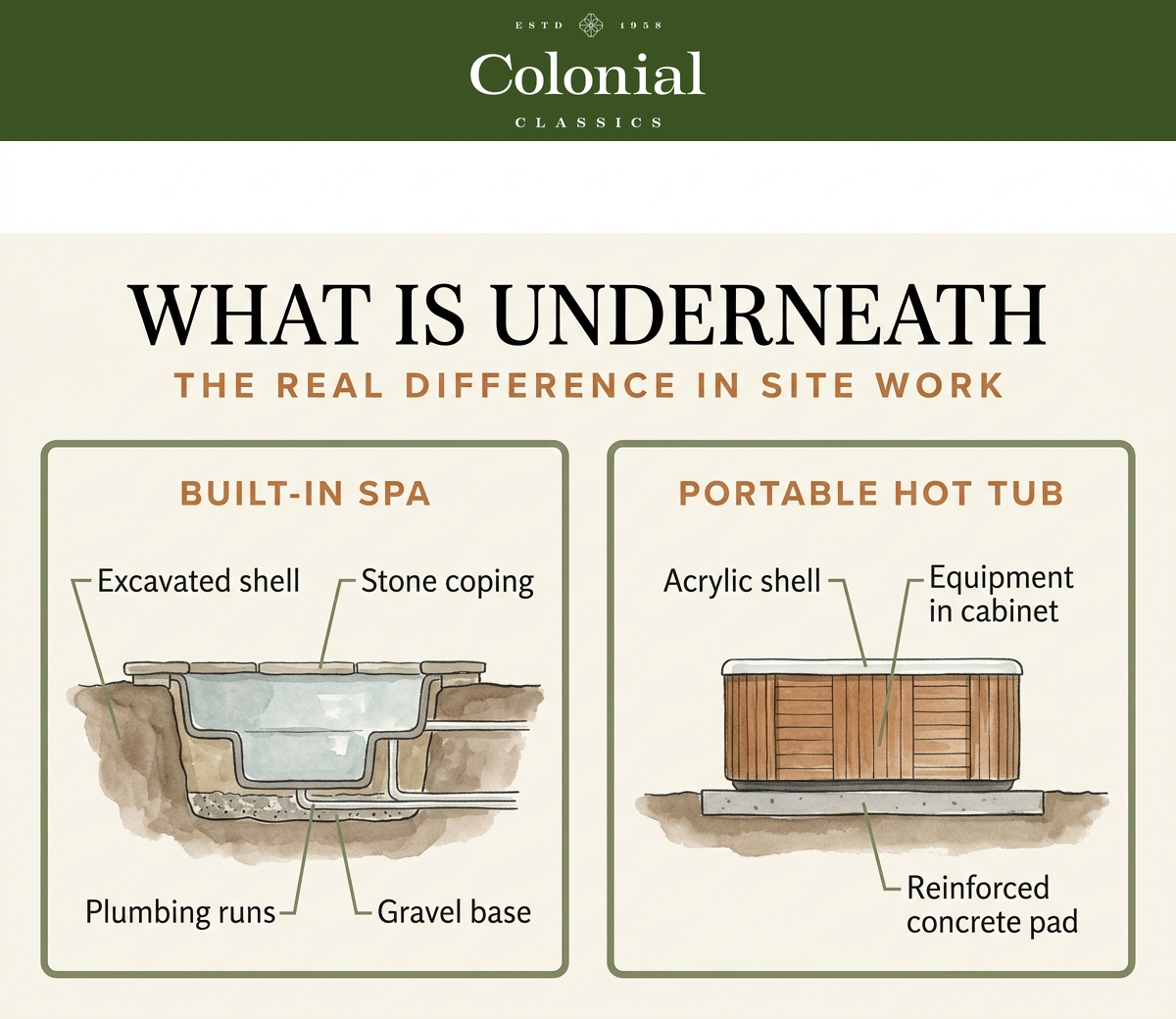
For a built-in spa, the site work is the project: excavation access, plumbing runs, the equipment pad, and the surrounding hardscape all have to be sequenced together. This is why built-in spas are far easier to build alongside a patio or pool project than to insert into a finished yard.
Safety and Water Temperature
Whichever you choose, the temperature guidance is the same. The CDC advises that hot tub water should not be higher than 104 degrees Fahrenheit. The reason is overheating, not burns. Water warmer than your body core gradually raises your own temperature, and the drowsiness and light-headedness that follow are genuinely dangerous sitting in water: a 2026 review of heat illness in bathing found that losing consciousness while immersed leads directly to drowning. That is why the ceiling exists, and why most owners run a few degrees under it and get out before they start to feel woolly rather than soaking at the maximum.
The same CDC guidance says to keep children under five out of hot tubs entirely, and that anyone who is pregnant should talk to a healthcare provider first. Add anyone with a heart or blood pressure condition to that list, and skip the alcohol, which makes the drowsiness worse. It is also worth checking the water with a separate thermometer now and then rather than trusting the display, particularly on an older control board.
Maintenance, Honestly Compared
Neither one is maintenance-free, and the work is more similar than different. Both need balanced water, a clean filter, and periodic draining and refilling.
The differences come down to volume and access. A portable tub holds a few hundred gallons, so chemistry moves fast in both directions. It is quick to correct and quick to go wrong, and draining and refilling is a simple afternoon. A larger built-in spa holds more water, which makes the chemistry more stable day to day but the full drain-and-refill a bigger job.
A spillover spa sharing equipment with a pool is the most convenient of the three on a normal week, because you are treating one body of water and servicing one set of equipment. The tradeoff is that when the shared pump or heater goes down, the pool and the spa go down together.
How to Choose
Work through these in order. The first one that gives you a clear answer usually is the answer.
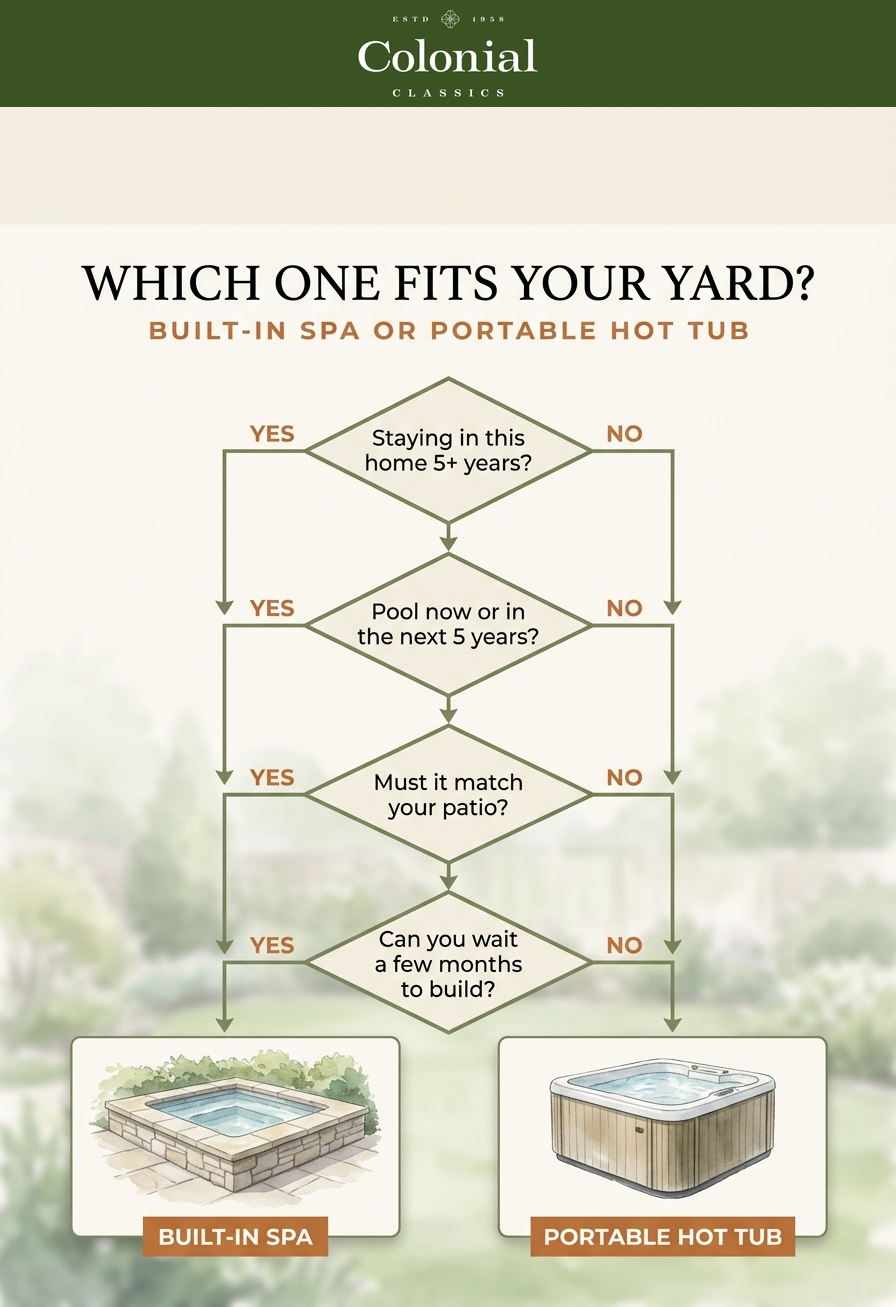
- How long are you staying? Under five years, the portable tub protects your money. Staying put, the built-in spa stops being an expense and starts being part of the house.
- Is there a pool now or later? If yes, a spillover spa built at the same time is the efficient move. If a pool is genuinely never happening, a standalone spa or a portable tub both make sense.
- How much does the finished look matter? If a cabinet in the corner of the patio would bother you every time you looked at it, that is a real answer, and it points to the built-in.
- When do you want to be in the water? Wanting it by the first cold snap points to the portable tub. There is no way to compress permitting and excavation into a few weeks.
- What is the budget once everything is included? Compare installed prices, not shelf prices. The pad and the electrical run belong in the portable tub column.
If you are still split after those five, the tiebreaker is usually the first question. Nearly every regret we hear runs in one direction: someone bought the portable tub, stayed in the house fifteen years, replaced the tub twice, and wishes they had built it in.
Where to Start
Walk the spot you have in mind and note three things: the distance to your electrical panel, whether the ground is level, and what you see from the patio when you look at it. Those three answers narrow the decision faster than any amount of shopping.
From there, it is worth having someone look at the site before you commit to either path, because the yard often decides for you. A steep grade, a tight gate, or a panel on the far side of the house changes the math. We design spas and hot tubs as part of the larger outdoor space rather than as a unit dropped into it, whether that ends up being a spillover spa on a new pool, a standalone built-in, or a portable tub set into a patio with the plantings and lighting handled properly.
If you are still working out the bigger picture, our guides to inground pool types and pool landscaping ideas cover the decisions that usually come alongside this one.
Ready to talk it through? Schedule a free consultation and we will walk your yard with you.