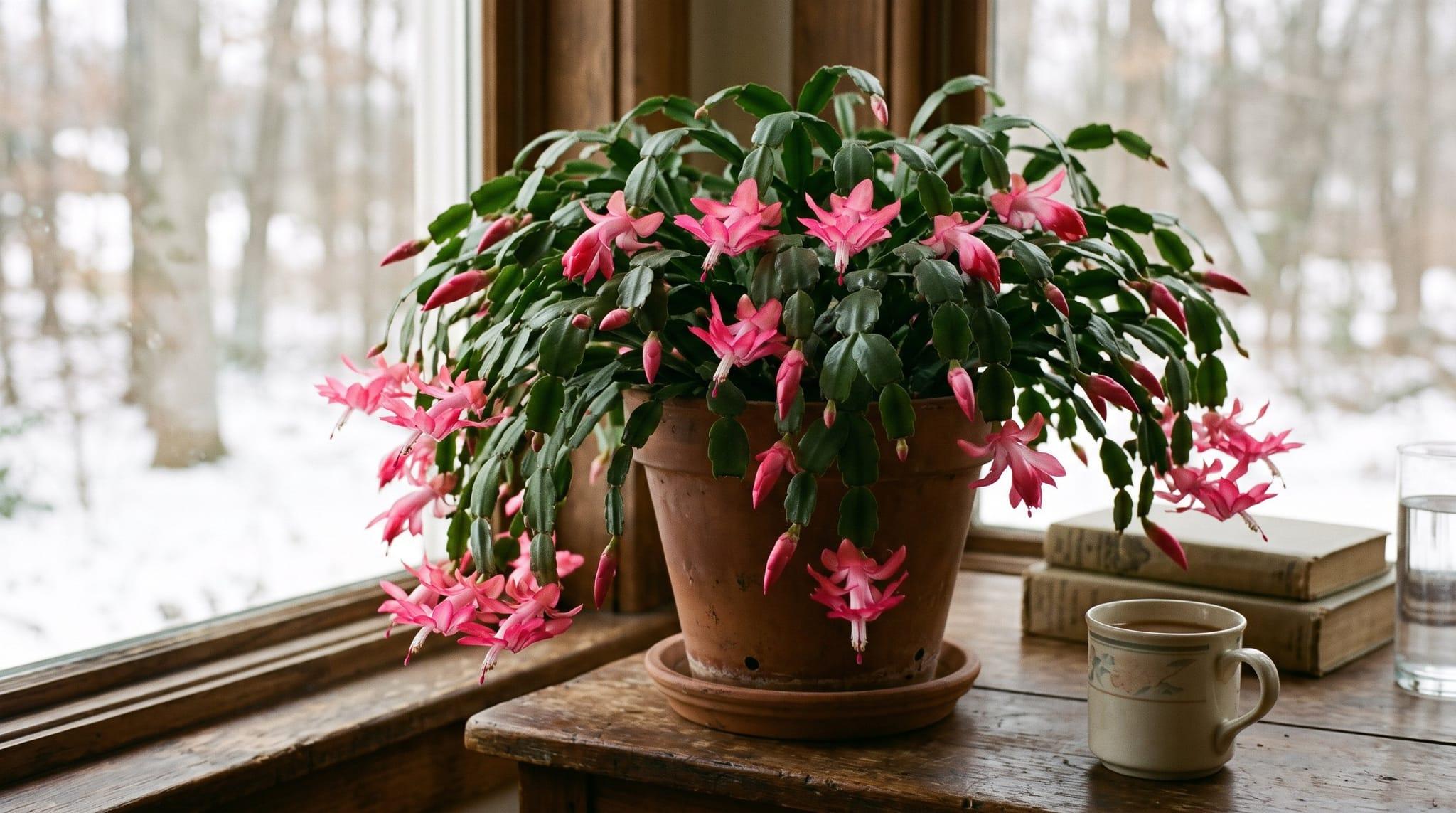
If your "Christmas cactus" blooms every year right around Thanksgiving, nothing is wrong with it. It is almost certainly a Thanksgiving cactus, the plant most often sold under that name. Christmas cactus care is the same for both, and the good news is that either one can bloom for decades with very little effort once you know the one thing that actually makes it flower.
It comes down to three habits: bright indirect light, watering only when the top inch of soil is dry, and giving the plant long, cool nights in the fall. This guide covers all three, plus how to tell which holiday cactus you have, why buds drop before they open, and what to do when the stems turn red or limp. The advice applies anywhere in the Tri-State area, from Southern Indiana into Illinois and Kentucky.
Christmas Cactus Care at a Glance
A Christmas cactus wants bright indirect light, evenly moist but never soggy soil while it blooms, and temperatures between 60 and 70 degrees for most of the year. The only demanding season is fall, when it needs long nights and cooler air to set buds.
| What it needs | The details |
|---|---|
| Light | Bright, indirect light. An east or west window is ideal. |
| Water | When the top inch of soil is dry. Evenly moist while blooming. |
| Daytime temperature | 65 to 70 degrees |
| Night temperature | 55 to 65 degrees. Cooler in fall to set buds. |
| To bloom | 12+ hours of darkness nightly for about 6 weeks in fall |
| Soil | Fast-draining mix with perlite or sand |
| Fertilizer | Monthly in spring and summer. Low-nitrogen or none in fall. None while blooming. |
| Repotting | Every three years or so, in spring |
Is It a Christmas Cactus or a Thanksgiving Cactus?
Check the edges of the flat stem segments. Pointed, claw-like teeth mean a Thanksgiving cactus. Smooth, rounded scallops mean a true Christmas cactus. According to Illinois Extension, most plants sold as "Christmas cactus" are actually Thanksgiving cacti.
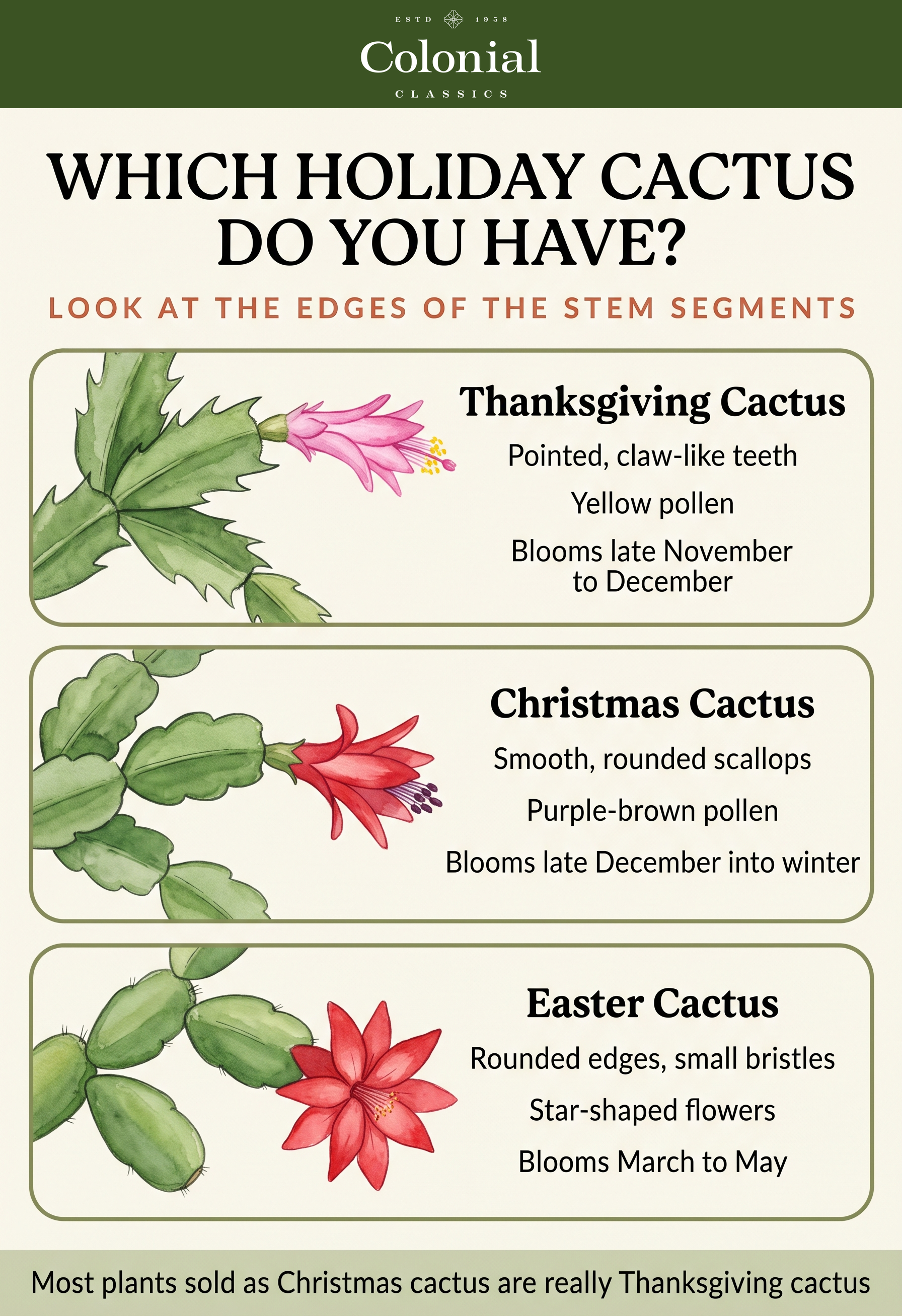
There are three common holiday cacti, and the flowers give a second clue:
- Thanksgiving cactus (Schlumbergera truncata): two to four sharp teeth on each segment, yellow pollen, and blooms from mid to late November through December. This is the one most stores sell, because it is in flower right when holiday shopping starts.
- Christmas cactus (Schlumbergera × buckleyi): smooth, scalloped segments, purple-brown pollen, and blooms from late December into winter. Iowa State Extension notes that many plants sold under this name are really Thanksgiving cacti or hybrids.
- Easter cactus: rounded segments with small bristles and flat, star-shaped flowers that open from March to May. It needs a longer cool period than the other two.
Why does any of this matter? Because the bloom date is part of the plant's nature. If you have a Thanksgiving cactus, no amount of care will hold its flowers for December 25. The care itself is nearly identical, so everything below works for both.
Why It Is Not a Desert Cactus
Holiday cacti grow wild as epiphytes, plants that perch in the branches of trees, in the shady rainforests of Brazil, according to Clemson Cooperative Extension. That one fact explains most of their care.
Unlike a desert cactus, a holiday cactus does not want baking sun or bone-dry soil for weeks. It wants filtered light like the dappled shade under a forest canopy, a loose mix that drains fast like the bark and leaf litter it grows in, and steady moisture without ever sitting wet. Treat it like a desert plant and it shrivels. Treat it like a fern in a heavy pot with no drainage and the roots rot.
How Often to Water a Christmas Cactus
Water thoroughly when the top inch of soil feels dry, which usually works out to every one to two weeks indoors. Check by touch, not by calendar, because a plant in a warm, bright room dries out far faster than one in a cool bedroom.
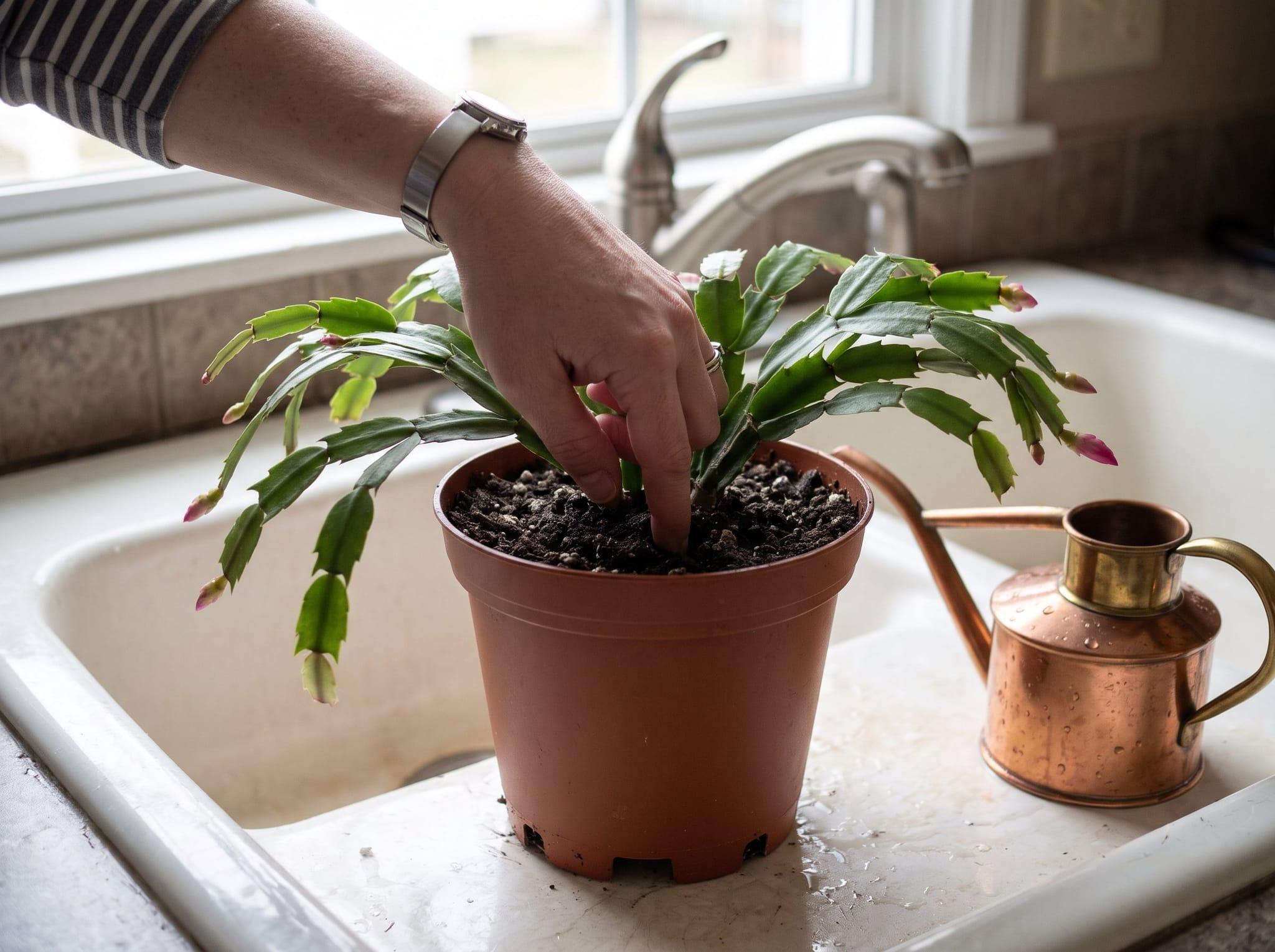
When you do water, take the plant to the sink, soak the soil until water runs out the drainage holes, and let it drain completely before it goes back in its decorative pot. University of Minnesota Extension calls root rot from overly wet soil one of the most common causes of death in these plants, and says to empty excess water from saucers and decorative pots after watering.
How much you water changes with the season:
- While budding and blooming: Keep the soil evenly moist. Iowa State Extension warns that letting it get too dry at this stage can make buds and flowers drop.
- After the flowers finish: Water less often until new growth appears in spring. This is the plant's rest period.
- Spring and summer: Return to regular watering, letting the top inch dry in between.
Limp, wrinkled segments can mean too much water or too little. Feel the soil before you react. Dry soil means it is thirsty. Wet soil with a limp plant means the roots are rotting, and more water will finish it off.
Light and Temperature
Give your Christmas cactus bright, indirect light and keep it between 65 and 70 degrees during the day. An east or west window works well, or a south window with a sheer curtain to soften the midday sun. University of Minnesota Extension describes the ideal as bright but filtered light.
Too much direct sun bleaches the segments pale or turns them red, and Purdue's Indiana Yard and Garden team notes that strong sun can burn the stems or leave them limp. Too little light and the plant grows thin and flowers poorly, because it needs daytime energy to make buds.
Placement matters most in winter. Keep the plant away from heat registers, fireplaces, and drafty doors. Those spots dry it out and swing its temperature up and down through the day, which is the fastest way to lose buds.
Why Your Christmas Cactus Is Not Blooming
The most common reason a Christmas cactus won't bloom is that its fall nights are too bright or too warm. Holiday cacti are short-day plants. They form flower buds only after several weeks of long, uninterrupted nights and cool temperatures, and a typical living room provides neither.
Here is what each extension source agrees on:
- Darkness: at least 12 hours of complete darkness every night for five to six weeks. Iowa State Extension says most cultivars need 14 to 16 hours, though some bloom with 12.
- Cool nights: roughly 50 to 60 degrees. Minnesota Extension says plants kept at about 55 degrees can bloom in five to six weeks, sometimes regardless of day length.
- Not too warm: Iowa State says temperatures above 70 degrees prevent flowering even when the nights are long.
Illinois Extension adds that buds will not set if the darkness is interrupted for too long, two hours or more. A floor lamp switched on each evening, a TV glowing across the room, or a streetlight through the window can all count as daylight to the plant.
Other things that hold back blooms:
- Too much fertilizer in fall: Penn State Extension warns that overfeeding while buds are forming can prevent blooms.
- Too little daytime light: A plant in a dim corner all year may not have the energy to bloom.
- A pot that is too big: Holiday cacti flower best when they are slightly root bound.
Most holiday cacti that refuse to bloom are not sick. They are sitting in a warm room where the lights stay on until bedtime. Give them six weeks of long, dark, cool nights in the fall and they almost always come back into flower.
How to Get a Christmas Cactus to Bloom
Starting in late September or early October, give the plant at least 12 hours of complete darkness every night and keep it in a room that stays between about 50 and 60 degrees. Keep it in bright light during the day. In six to eight weeks, buds should form at the tips of the stems.
You have two ways to do it:
- The darkness method: Move the plant into a closet or an unused room from about 8 PM to 8 AM every night, then back into bright light each morning. Purdue recommends starting in mid-October and continuing for six to eight weeks or until buds form.
- The cool room method: Put the plant in a bright room that holds 50 to 55 degrees at night, such as a cool spare bedroom, a sunporch, or a basement with a window. Purdue notes that a cool treatment started by early November should still have the plant blooming for the holidays.
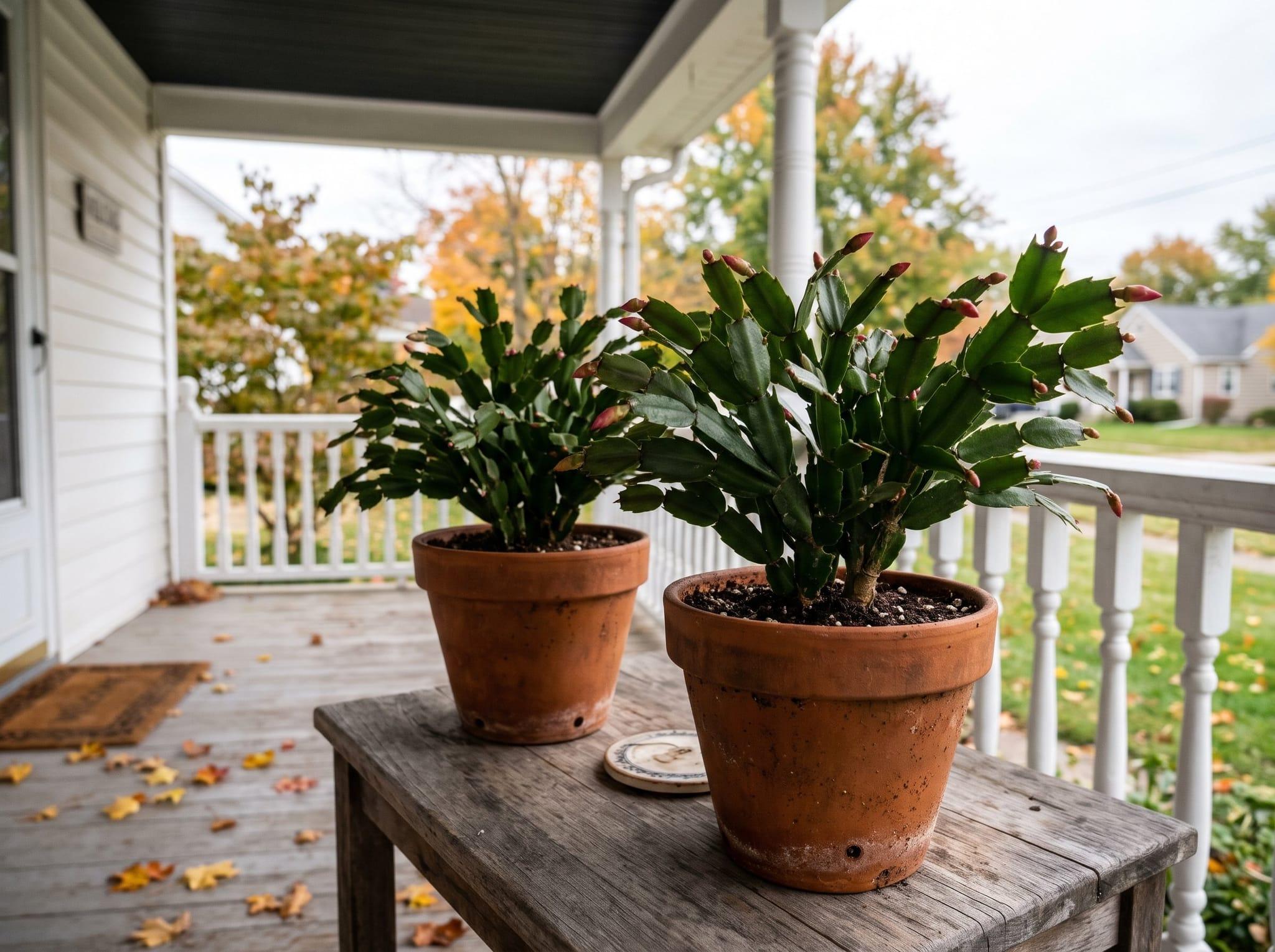
Here in the region, there is an easier option many people stumble onto by accident. Leave your holiday cactus outdoors in a shady spot through early fall. The nights are naturally getting longer and cooler, which is exactly what the plant needs. Bring it inside when nights start dipping into the low 50s, as Illinois Extension recommends, and always before the first frost. Below 50 degrees, buds can drop.
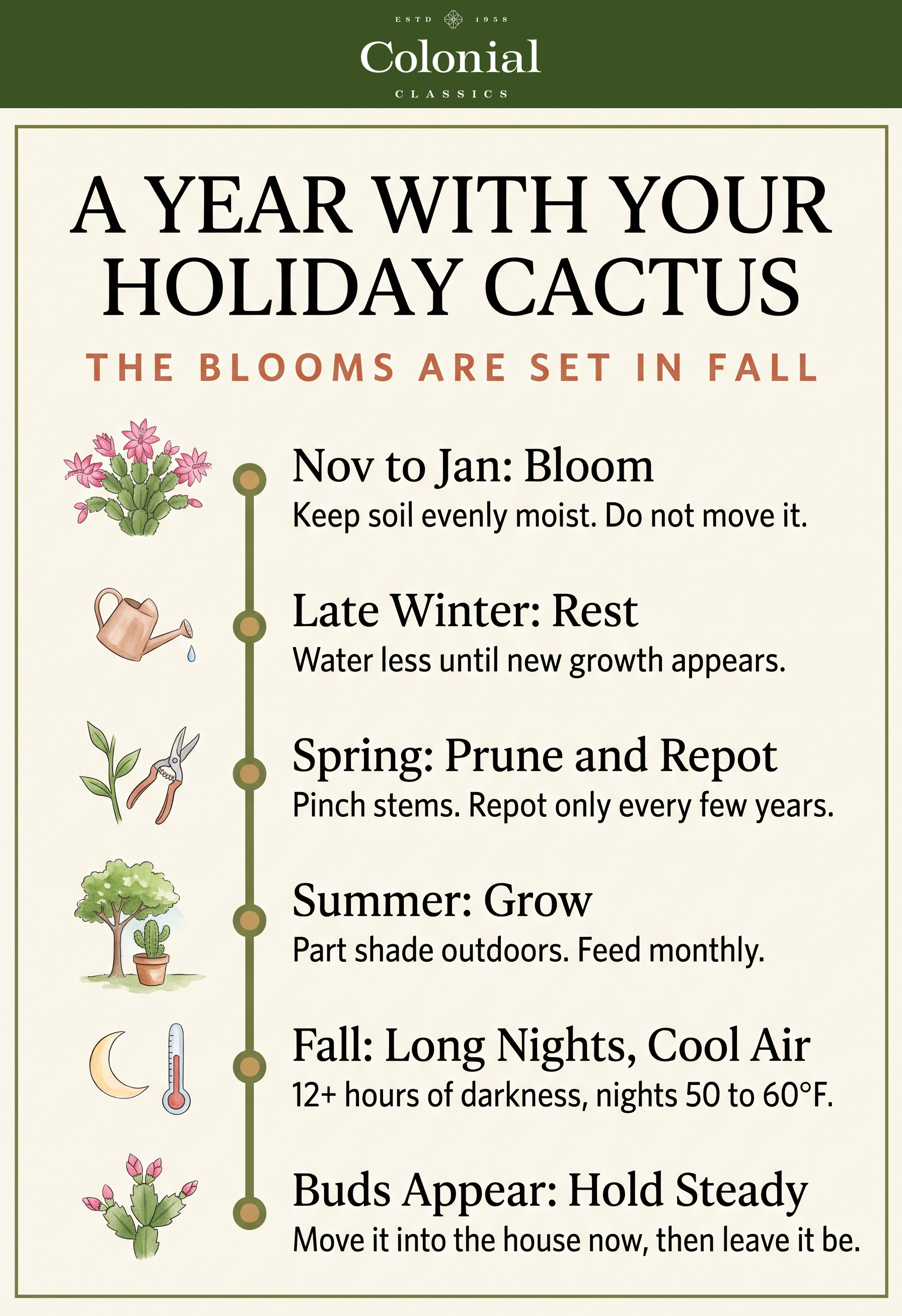
Once you see buds, stop the treatment. The day length does not matter anymore. Move the plant to wherever you want to enjoy it, keep the soil evenly moist, and then leave it alone.
Why Buds Drop Before They Open
Christmas cactus buds drop when the plant goes through a sudden change while it is budding. Moving it, a cold or hot draft, a swing in temperature, or soil that dries out or stays soggy can all make it shed unopened buds. Clemson Extension notes that a plant carrying more buds than it can support may also drop a few on its own.
Do not move it once buds form. Iowa State Extension recommends leaving the plant in place until the flowers start to open. That includes turning it to face the room. Pick its holiday spot before the buds appear.
If buds are falling, run through this list:
- Near a heat vent, fireplace, or door: Move it once, to a stable bright spot, and leave it there.
- Soil bone dry: Water thoroughly. Budding plants need steady moisture.
- Soil soggy: Let it dry slightly and empty the saucer. Check for root rot if the stems are limp.
- Brought home in the cold: Like any tropical plant, a holiday cactus can be shocked by a cold car. Wrap it for the trip and make it your last stop.
Leaves Turning Red, Limp, or Wrinkled
What look like leaves on a holiday cactus are actually flattened stem segments, and their color and texture are a quick health check.
- Red or purple segments: usually too much sun. Purdue notes the stems may turn reddish in excessive light. Move the plant a little farther from the window. Iowa State Extension notes that a lack of water or phosphorus can cause reddening too.
- Limp, wrinkled segments in dry soil: The plant is thirsty. Water thoroughly and it should plump back up within a few days.
- Limp, wrinkled segments in wet soil: root rot. Illinois Extension notes that shriveled stems are usually caused by overwatering that has killed the roots. Take cuttings from healthy stems so you do not lose the plant.
- Pale, washed-out segments: too much direct sun. Minnesota Extension lists pale green stems and sunburn as signs the plant is getting more light than it wants.
- Segments falling off: most often a watering problem in one direction or the other, or a sudden change in conditions.
Repotting, Feeding, and Pruning
Repot a holiday cactus only every three years or so, in spring after it finishes blooming, and go up just one pot size. Feed monthly from spring through late summer, and prune right after flowering to get a fuller plant with more blooms next year.
- Repotting: Holiday cacti flower best when slightly root bound, so do not rush it. Use a fast-draining mix. Purdue suggests a succulent mix, or two parts potting soil to one part sand or vermiculite.
- Feeding: Minnesota Extension recommends a balanced houseplant fertilizer at half strength once a month in summer. In fall, switch to a low-nitrogen bloom formula such as 0-15-10 or stop feeding, and skip fertilizer entirely while the plant blooms.
- Pruning: Twist or snip off a few segments at a joint on each stem after flowering. Illinois Extension notes that pinching stems back in June also encourages branching, which means more stem tips and more flowers.
These are long-lived plants. Penn State Extension notes that well-tended holiday cacti can live for more than 100 years, which is why so many families have one passed down from a grandmother.
Starting New Plants From Cuttings
Holiday cacti root easily from cuttings, which makes them one of the best plants to share. Take a piece two to five segments long, let the cut end dry overnight, and push it about an inch deep into moist perlite or coarse sand. Iowa State Extension says roots form in six to eight weeks.
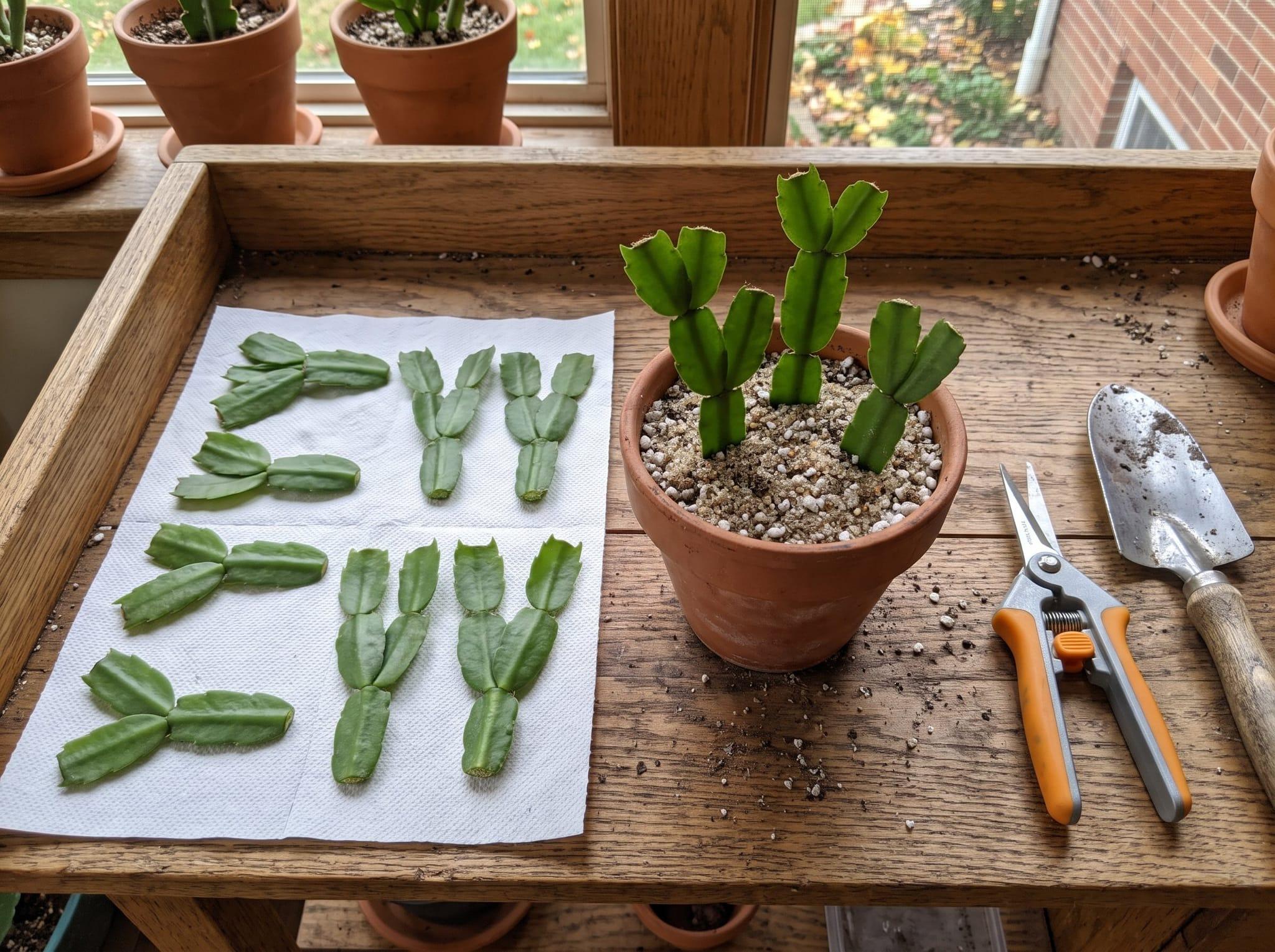
The best time to take cuttings is late spring, when you are pruning anyway. Plant three or four in one small pot and you will have a full, gift-ready plant by the following fall.
Is Christmas Cactus Safe for Pets?
Yes. The ASPCA lists Christmas cactus as non-toxic to dogs, cats, and horses, which makes it one of the safest holiday plants to keep in a house with pets.
A cat or dog that chews through a few segments may still get a mild stomach upset, as with almost any plant material, so keep it out of reach if your pet is a determined chewer. But unlike lilies, which are dangerous to cats, a holiday cactus is not poisonous. If you are comparing holiday plants, our poinsettia care guide covers where that plant really stands on toxicity.
Find Your Holiday Cactus at the Garden Center
A holiday cactus is one of the easiest gifts to get right. It costs little, blooms for weeks, is safe around pets, and with the care above it can come back every fall for years.
Stop by our houseplants and succulents section to pick one out, or browse the holiday and seasonal greenhouse for poinsettias, fresh-cut Christmas trees, wreaths, and garland. If you have a plant at home that will not bloom or is dropping buds, bring a photo or send us a message describing what you are seeing. And if your holiday cactus spends summers on the porch, our guide to overwintering potted plants covers when to bring the rest of your containers inside.