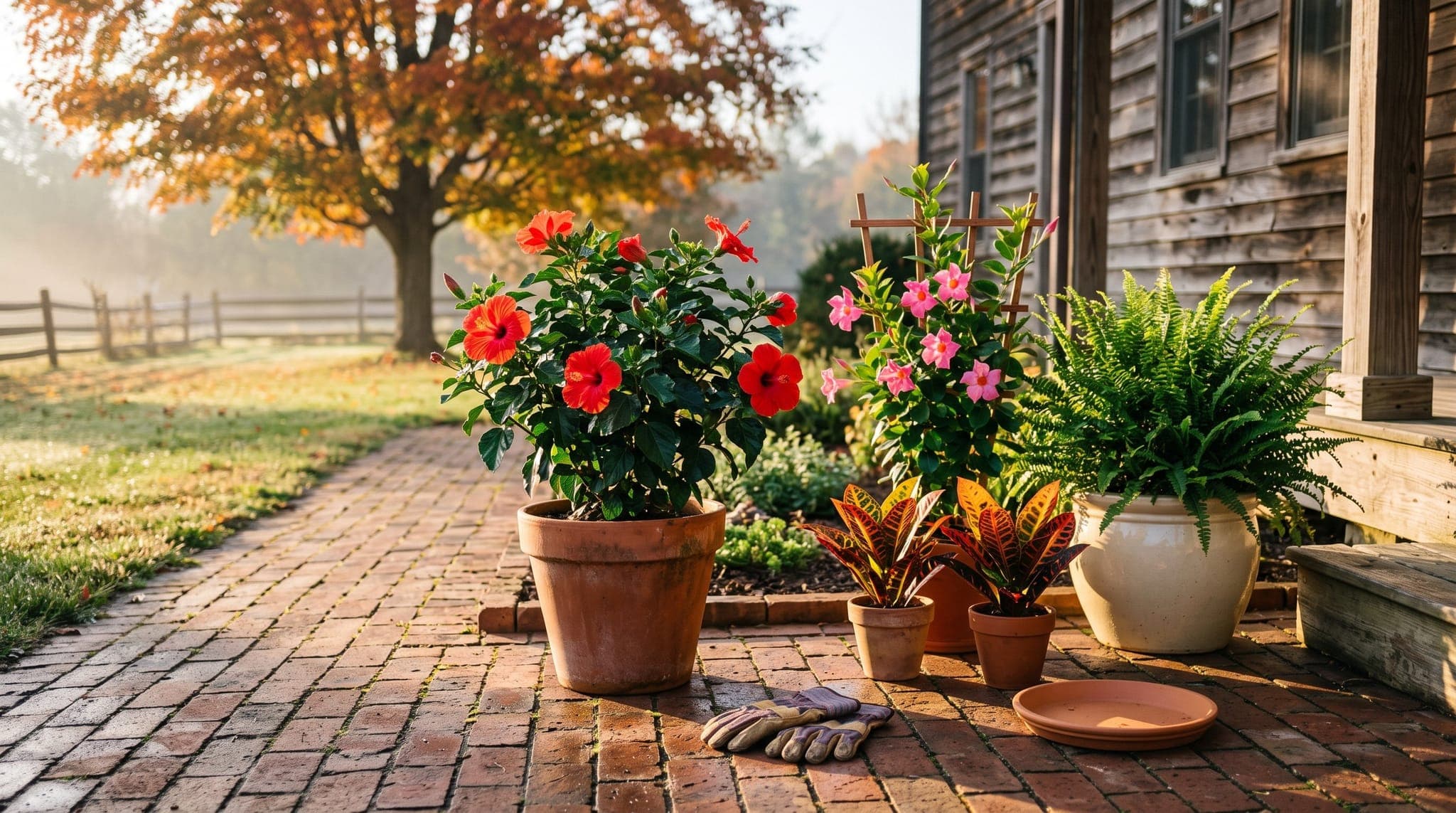
Every October there is a stretch of two or three weeks when the patio still looks like summer and the plants on it are already running out of time. The hibiscus is blooming, nothing has wilted, and there is no reason to think about winter yet. That is exactly the window for overwintering potted plants, and most of the tender ones that die around here were lost in it.
The confusion is understandable, because almost everyone treats the first frost as the deadline. It is not. Frost is when the obvious damage happens. The injury starts weeks earlier, at temperatures that still feel pleasant to you, and by the time a frost warning shows up on your phone a tropical has usually already taken a hit it will not show until January. Doing it well is mostly a matter of acting early and sorting correctly.
The Deadline Is the 50 Degree Night, Not the First Frost
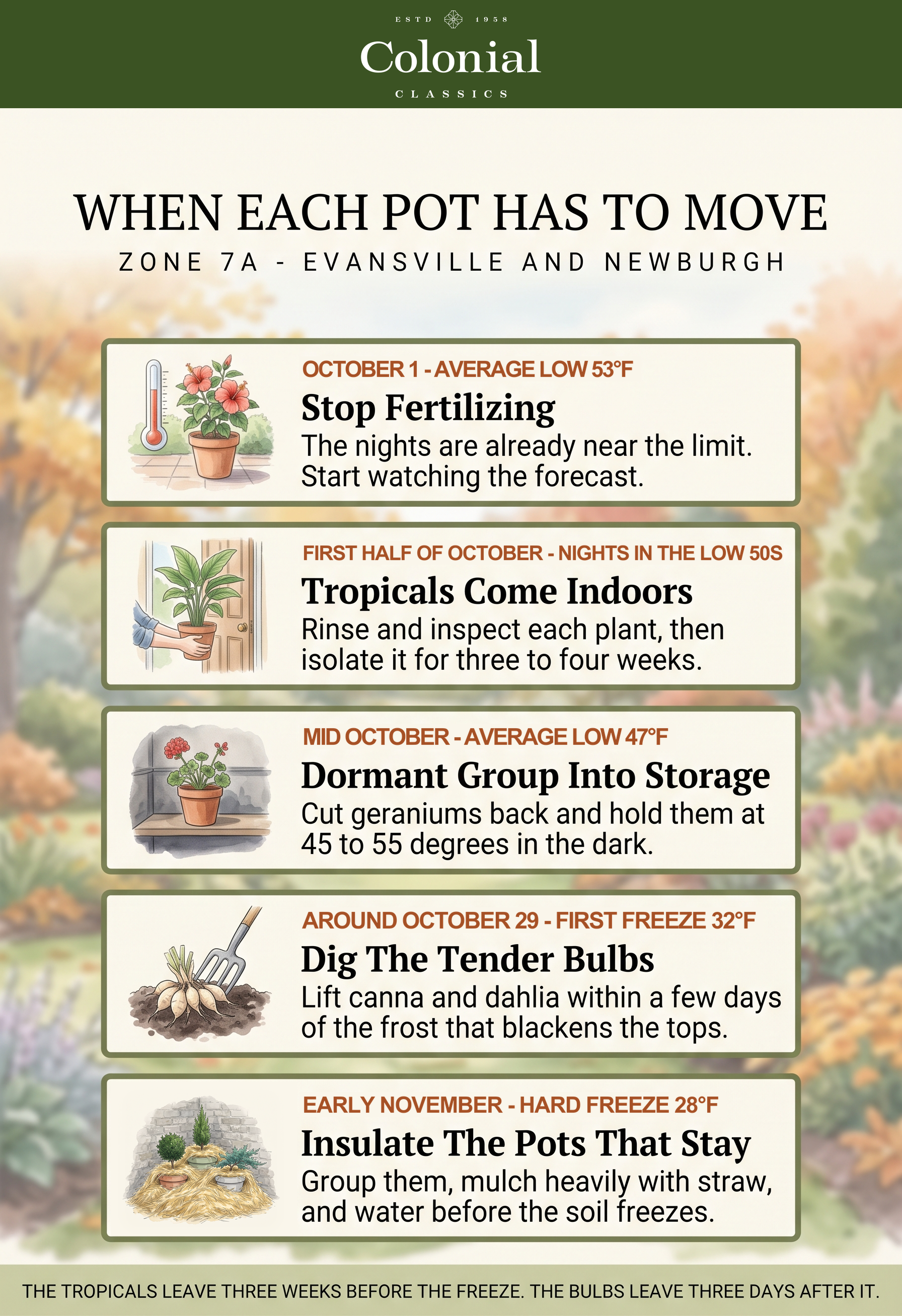
Bring tender tropicals in when overnight lows settle into the 50s, which in the Tri-State area means the first half of October. Iowa State Extension puts the trigger at nighttime temperatures dipping consistently into the 50s and notes that damage occurs in the mid to lower 40s, with most plants dying below freezing.
Now compare that to the calendar. The National Weather Service office in Paducah, which covers Evansville and the surrounding counties in Indiana, Illinois, and Kentucky, puts Evansville's average first freeze at 32 degrees on October 29 and the first hard freeze at 28 degrees on November 8, based on records from 1897 through 2018. But NOAA's 1991 to 2020 normals have the average low in Evansville at 53 degrees on October 1, 47 degrees on October 15, and 42 degrees on October 31.
Read those two numbers together and the picture is clear. We are routinely into the 40s overnight a full two weeks before the average freeze, and already brushing the threshold on the first of the month. The plants hit their limit in early October. The frost arrives at the end of it.
If the overnight forecast drops toward the mid 40s and your tropicals are still outside, move them into a garage or shed for the night, even if that means crowding them together in the dark. A few dim, cramped nights do far less damage than one cold one, and you can sort them into their real winter spots once the weather settles.
Sort Every Pot Into One of Four Groups
There are only four places a container plant can spend the winter, and the whole job gets easier once you decide which one each pot is headed for. The deadlines are different, the destinations are different, and the biggest mistake is defaulting everything to the living room windowsill.
| Group | What's in it | Where it goes | Deadline |
|---|---|---|---|
| Keeps growing | Hibiscus, mandevilla, bougainvillea, croton, ferns, succulents | Brightest window in the house | Nights in the low 50s, early October |
| Goes dormant | Geranium, fuchsia, brugmansia, coleus | Cool dark space at 45 to 55 degrees | Before the first hard freeze |
| Dug and boxed | Canna, dahlia, caladium, elephant ear, gladiolus, tuberous begonia | Packing material at 35 to 60 degrees | Within days after the first light frost |
| Stays outside | Hardy shrubs, trees, and perennials in pots | Grouped and mulched, or an unheated garage | Before the soil freezes |
Walk the patio once with this list and label the pots. It takes ten minutes and it is the difference between an organized afternoon and a January full of regret.
Group One: The Tropicals That Come Inside and Keep Growing
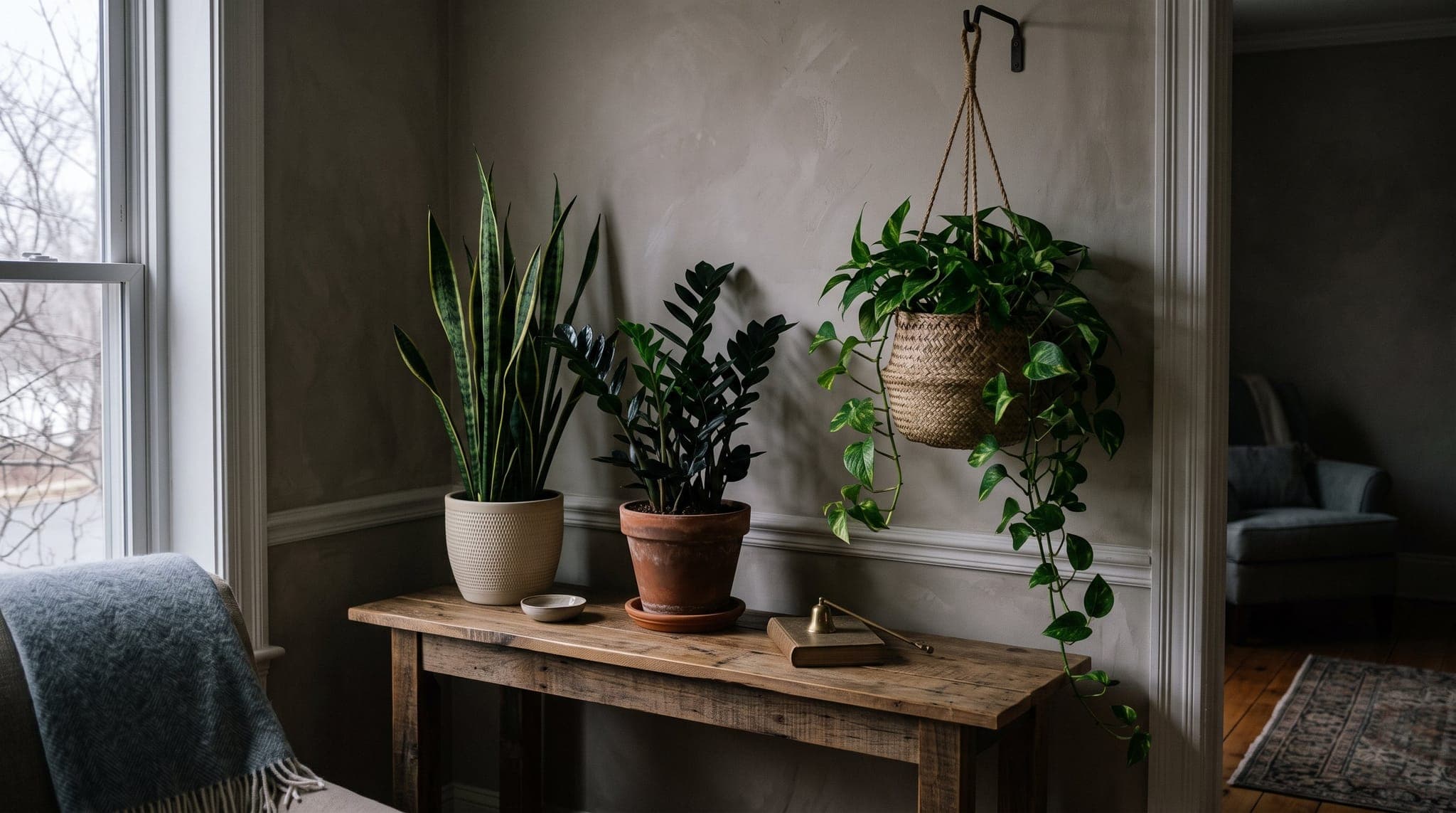
These are the plants that never go dormant, so they come indoors as houseplants and keep their leaves. Mandevilla, hibiscus, and banana plants all fall here, along with crotons, tropical ferns, and most of the succulents that spent the summer on a porch.
Debug the plant before it crosses the threshold
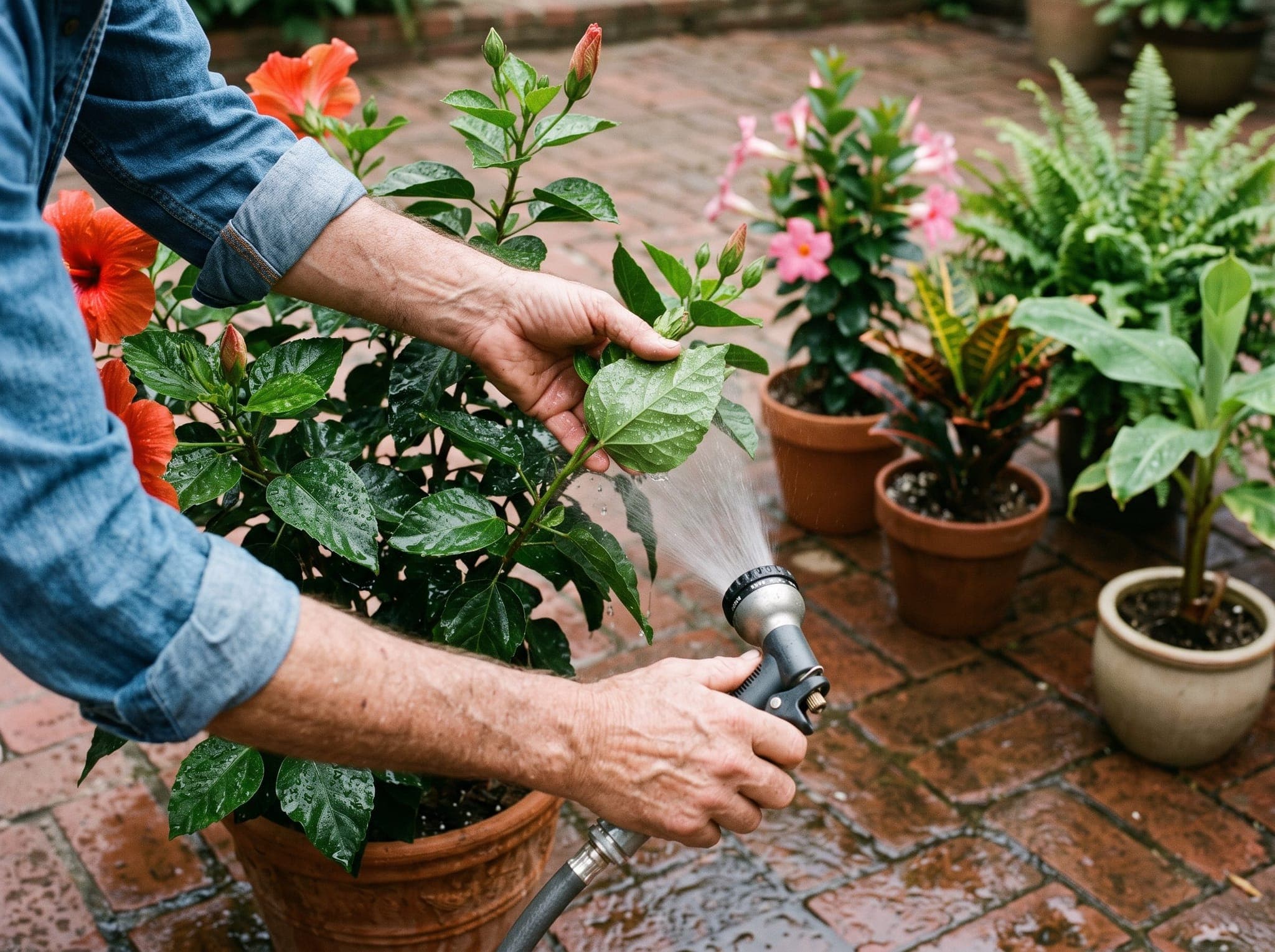
Inspect and rinse every plant outdoors, then isolate it from your other houseplants for three to four weeks. A summer outside is a summer of picking up passengers. Clemson Extension says to inspect the plants carefully, take them out of their pots to see if anything has crawled through the drainage holes, and gently wash the leaves and stems with the hose, treating anything you find with insecticidal soap sprayed over the upper and lower leaf surfaces, the soil, and the pot. Iowa State adds the detail that matters on a cool day: let the foliage dry completely before the plant comes in.
The isolation period is the step people skip and regret. Scale, mealybugs, aphids, and whiteflies usually make themselves obvious within three to four weeks indoors, which is exactly why you want that month to happen in a spare room rather than next to the rest of your collection. If you do find something, treat it with a product labeled for both that specific pest and that specific plant.
Expect leaf drop and change almost nothing else
A plant that drops leaves after moving indoors is adjusting to the light, not dying. Illinois Extension's guide to moving houseplants indoors puts it plainly: light levels indoors are much lower than outdoors, even compared to shaded areas, that reduction in light intensity often results in yellowing leaves and leaf drop, and eventually plants will begin to produce new leaves. Even a bright south window is dramatically dimmer than open shade outdoors.
Illinois is also the source for what to change while that happens, which is less than people expect. Three adjustments carry a plant through the transition:
- Water less, not more. A plant with fewer leaves in cooler, lower light uses far less water, and the usual reaction to a droopy indoor plant is to overwater it into root rot.
- Stop fertilizing until spring. Feeding a plant that is not actively growing pushes weak, stretched growth and leaves salts behind in the soil.
- Give it the best light you have. Brightest window available, and rotate the pot every couple of weeks so it does not lean.
Group Two: Let Them Go Dormant in the Dark
Tender perennials like geranium, fuchsia, and brugmansia do not need light all winter. They need to be held still, somewhere cool and dark, and they will come back faster in spring than a cutting would. University of Wisconsin Extension describes the classic bare root method for geraniums: dig the plants before a hard freeze, shake the soil off the roots, and store them hung upside down in a cool, dry location at 45 to 55 degrees, then cut them back in March before potting them up again.
If hanging bare root plants in a basement is not for you, the simpler version works nearly as well. Leave the plant in its pot, cut it back by a third to a half, water it once, and set it in the coolest, dimmest corner of a basement or attached garage that does not freeze. Water it just enough that the roots never go bone dry, perhaps once a month.
Dormant storage plants are supposed to look terrible. Leafless, pale, and doing nothing is the goal. The failure mode to watch for is a plant that stays warm enough to try to grow, puts out long white stems in the dark, and exhausts itself by February.
Group Three: Dig and Store the Tender Bulbs
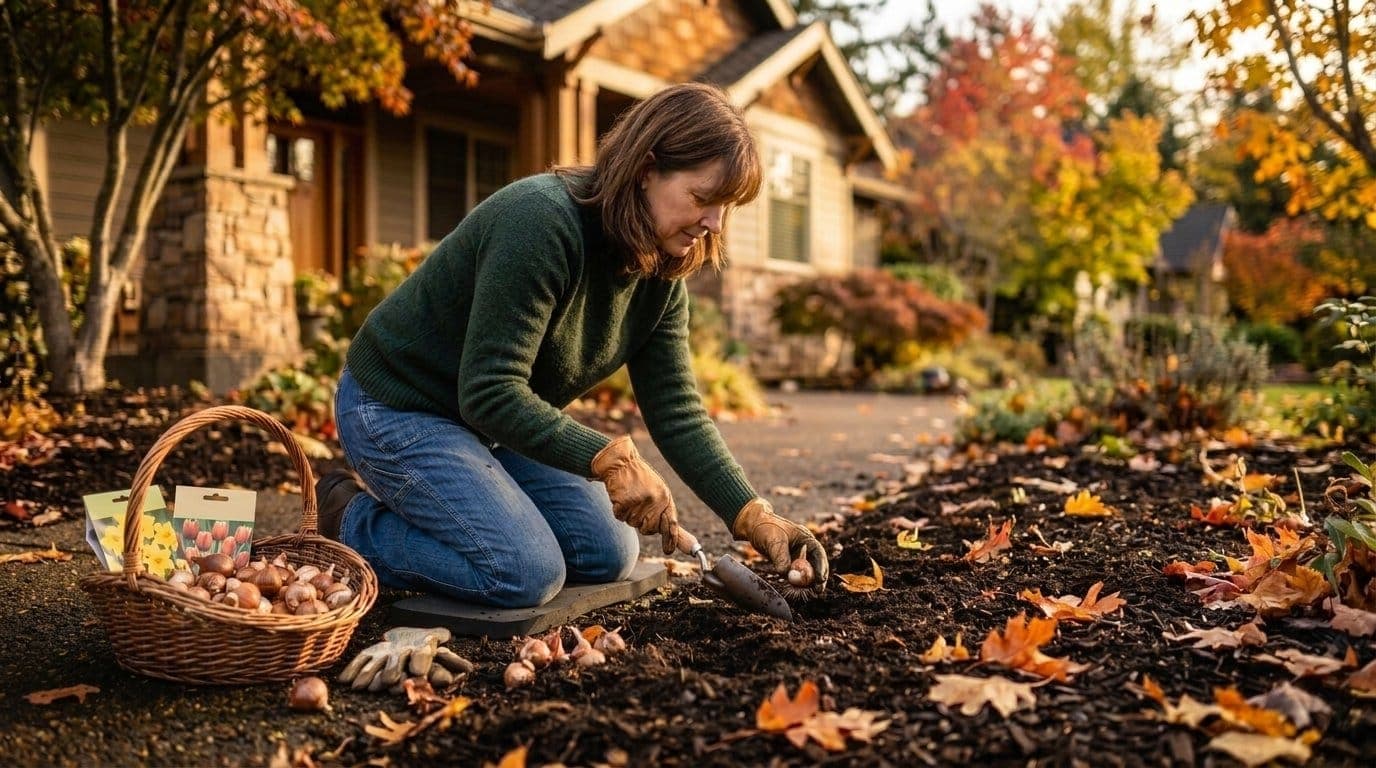
Tender bulbs and tubers are the one group that waits for frost instead of beating it. Purdue Extension times the digging just before, or soon after, a light frost, and Illinois Extension advises lifting them within a few days of a frost to keep rot organisms out. The frost that ends the season for everything else is the signal here.
The sequence matters more than the speed:
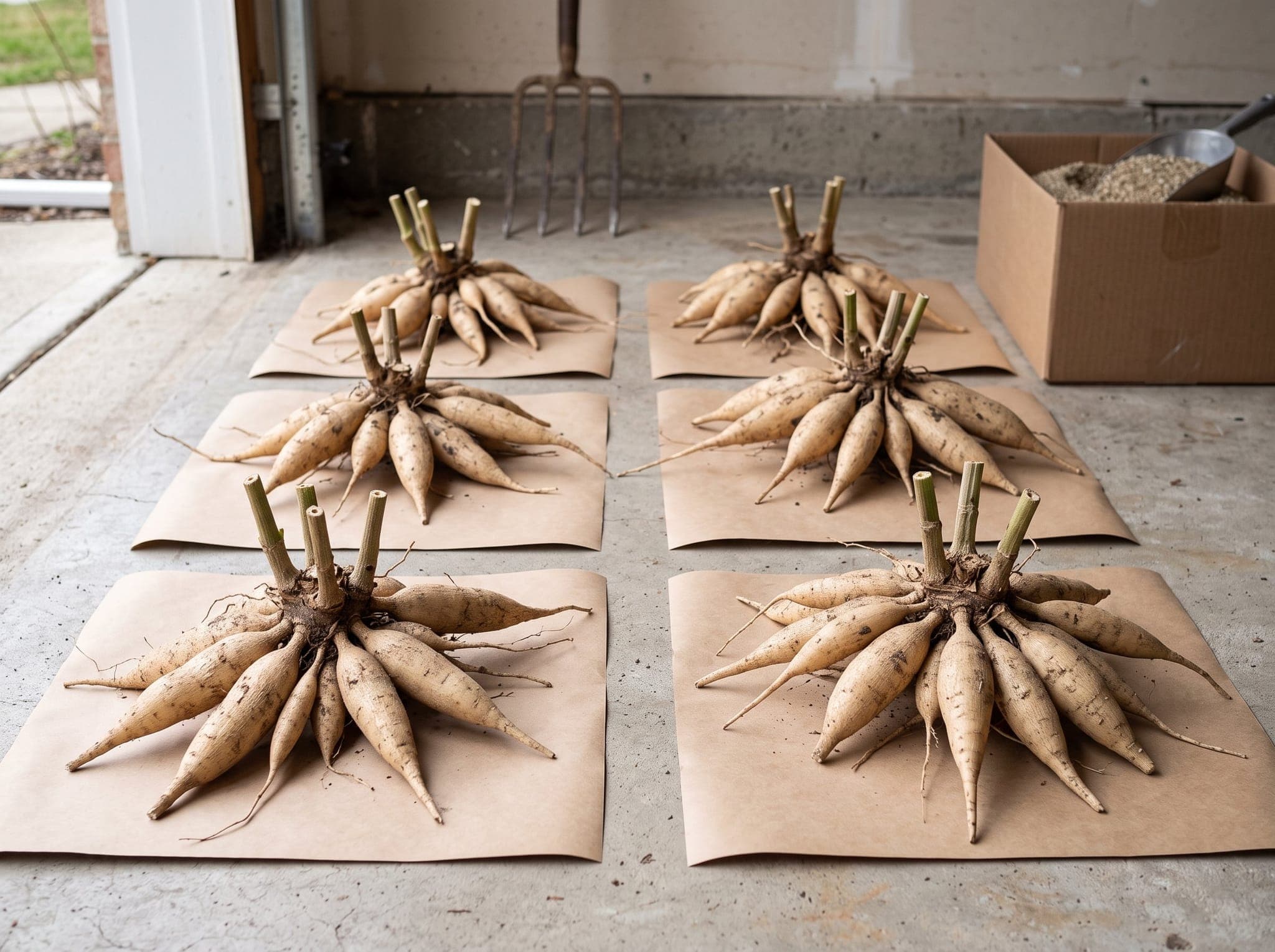
- Wait for the frost to blacken the foliage, then cut the tops back.
- Start digging several inches out from the plant with a fork or spade so you are not slicing through tubers. A nicked tuber is an open door for disease.
- Lift the whole clump, knock off the loose soil, and discard anything damaged or soft.
- Cure them at 60 to 70 degrees out of direct sunlight in a well ventilated spot. Illinois puts this at one to three days for dahlias and cannas and as long as three weeks for gladiolus and callas.
- Pack them in dry vermiculite, peat moss, or sawdust and store each type at its own temperature. Label the boxes now, because a bare tuber in March tells you nothing about what colour it was.
Purdue's storage temperatures are specific by species, and the spread is wider than most people expect:
| Plant | Storage Temperature | When to Dig |
|---|---|---|
| Dahlia | 35 to 40 degrees | Just before or soon after light frost |
| Gladiolus | 35 to 40 degrees | When foliage begins to fade, usually after frost |
| Canna | 45 to 50 degrees | Can wait until after a hard frost |
| Tuberous begonia | 45 to 50 degrees | Just before or soon after light frost |
| Elephant ear (Alocasia, Colocasia) | 50 to 60 degrees | Just before or soon after light frost |
| Caladium | Closer to 60 degrees | Just before or soon after light frost |
Caladiums are the ones that catch people out. At 40 degrees they rot, and a cold garage will finish them. Published figures vary a little between extension services, so treat these as target ranges rather than thresholds, and check the boxes once a month so a single rotting tuber does not take the batch with it.
This is also the moment the two halves of fall bulb work line up. The tender bulbs come out of the ground in the same few weeks the hardy ones go in, so it is worth reading our fall bulb planting guide and doing both jobs in one pass.
Group Four: The Pots That Stay Outside
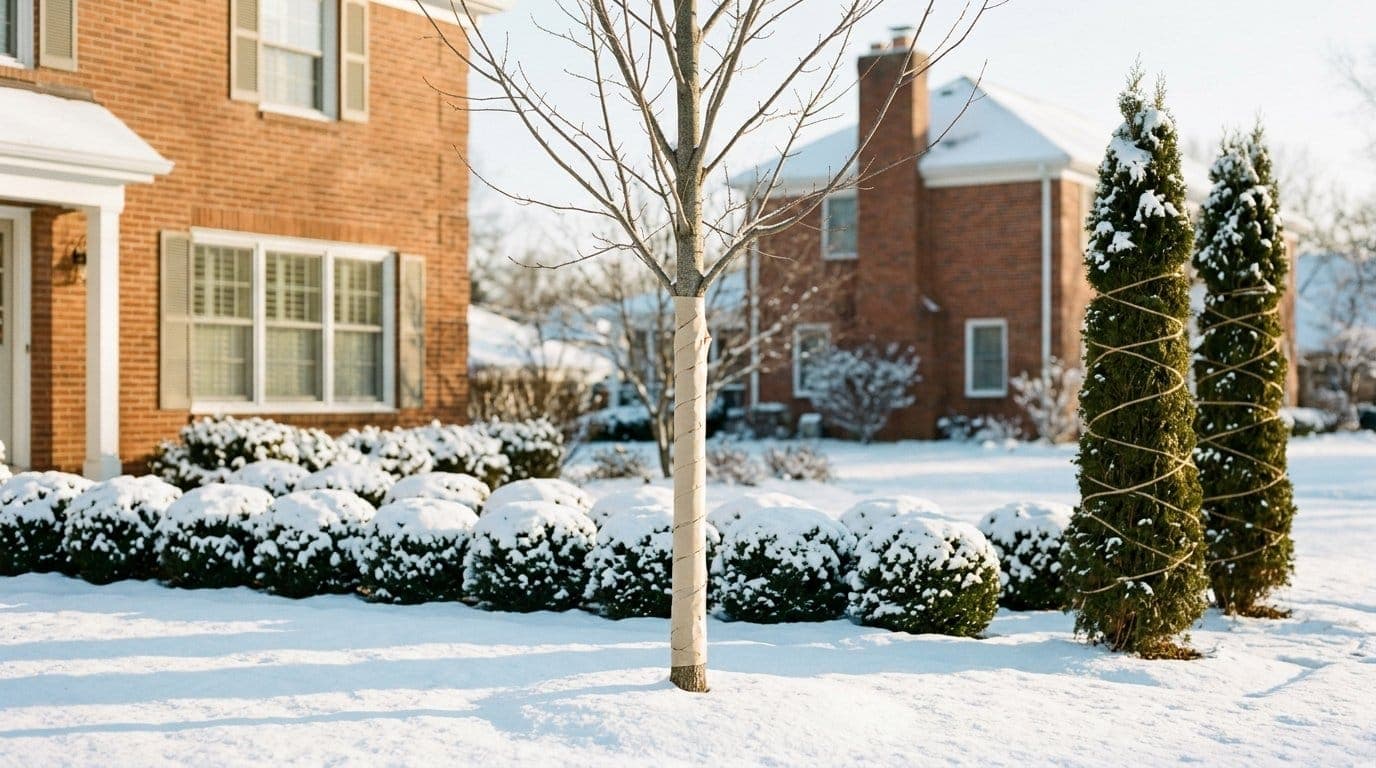
A hardy plant needs to be rated about two USDA zones colder than your own to survive winter in a container. Illinois Extension's container overwintering guide tells gardeners in zones 5 and 6 to choose plants hardy to zone 3 or 4 for an outdoor pot, a two zone gap, because most plants' roots are far less cold hardy than their above ground parts and the limited growing media in a pot will get much colder than soil in a landscape.
Southern Indiana is USDA Zone 7a. In a pot, that means shopping as though you were in Zone 5. A shrub tagged hardy to Zone 7 is hardy in your beds and marginal in your planter, which is why a boxwood that sails through winter in the ground can come out dead in a container three feet away.
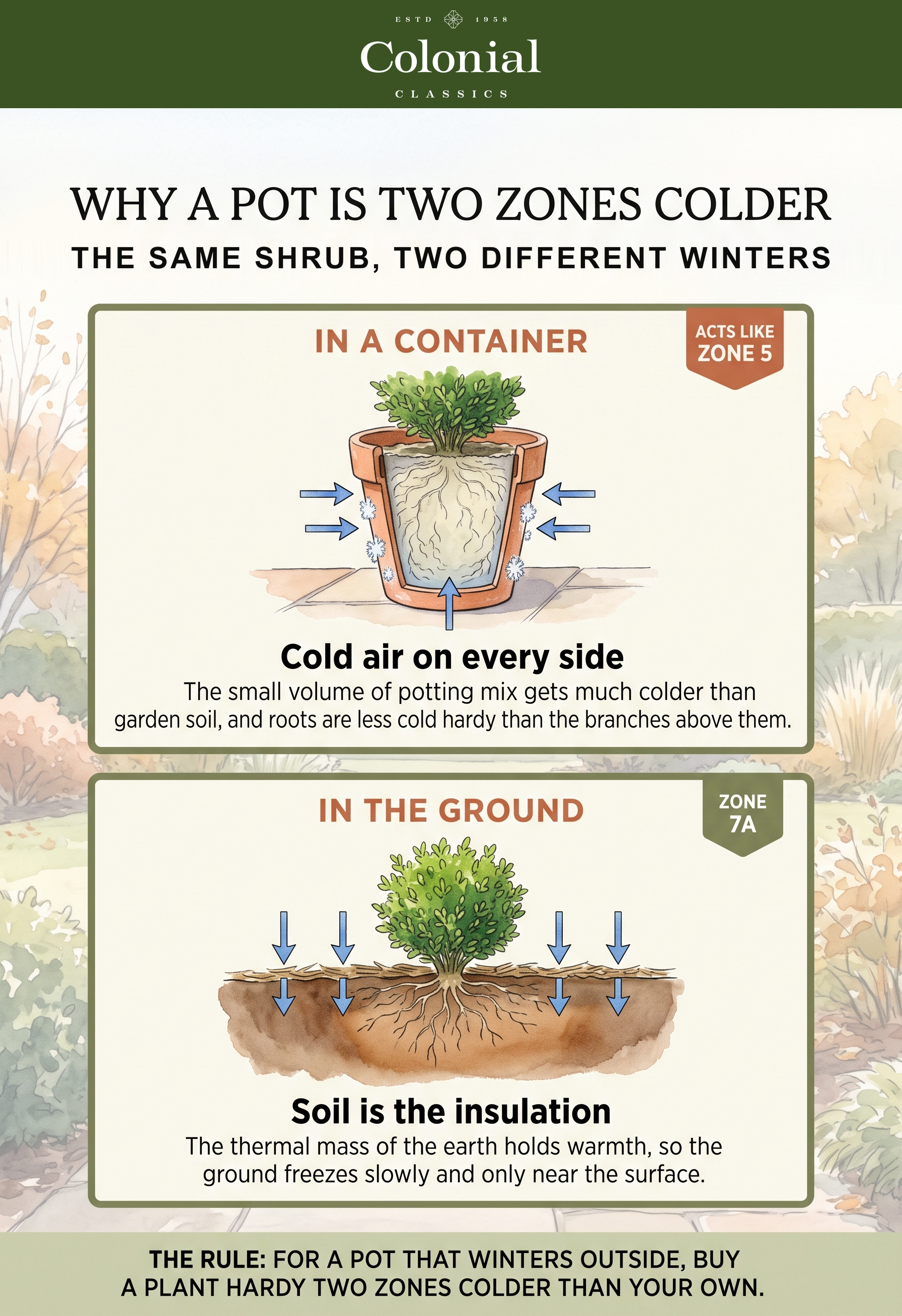
You have three workable options for the containers that stay out, and all three come down to replacing the insulation the pot does not have:
- Group and mulch them. The Illinois container guide calls for clustering the pots in a protected spot away from strong winds and too much sunlight, then mulching them heavily with straw, leaves, or wood mulch. Pack the mulch down into the gaps between the pots and bank it up the outside of the whole group rather than just laying it over the soil, because the walls are where the cold reaches the roots.
- Sink the pots in a bed. Iowa State's guide to overwintering unplanted trees and shrubs calls for digging holes in a garden area and setting the pots in the ground, heeled in after the plants go dormant but before the soil freezes, because soil is a good insulator and will protect the plant's roots from extreme cold. Add 6 to 12 inches of loose mulch on top.
- Move them to an unheated space. An unheated garage, shed, or three season porch works if it holds between 20 and 45 degrees, the range both Illinois and Iowa State give. The risk is instability, since many garages swing well outside that range on a sunny afternoon.
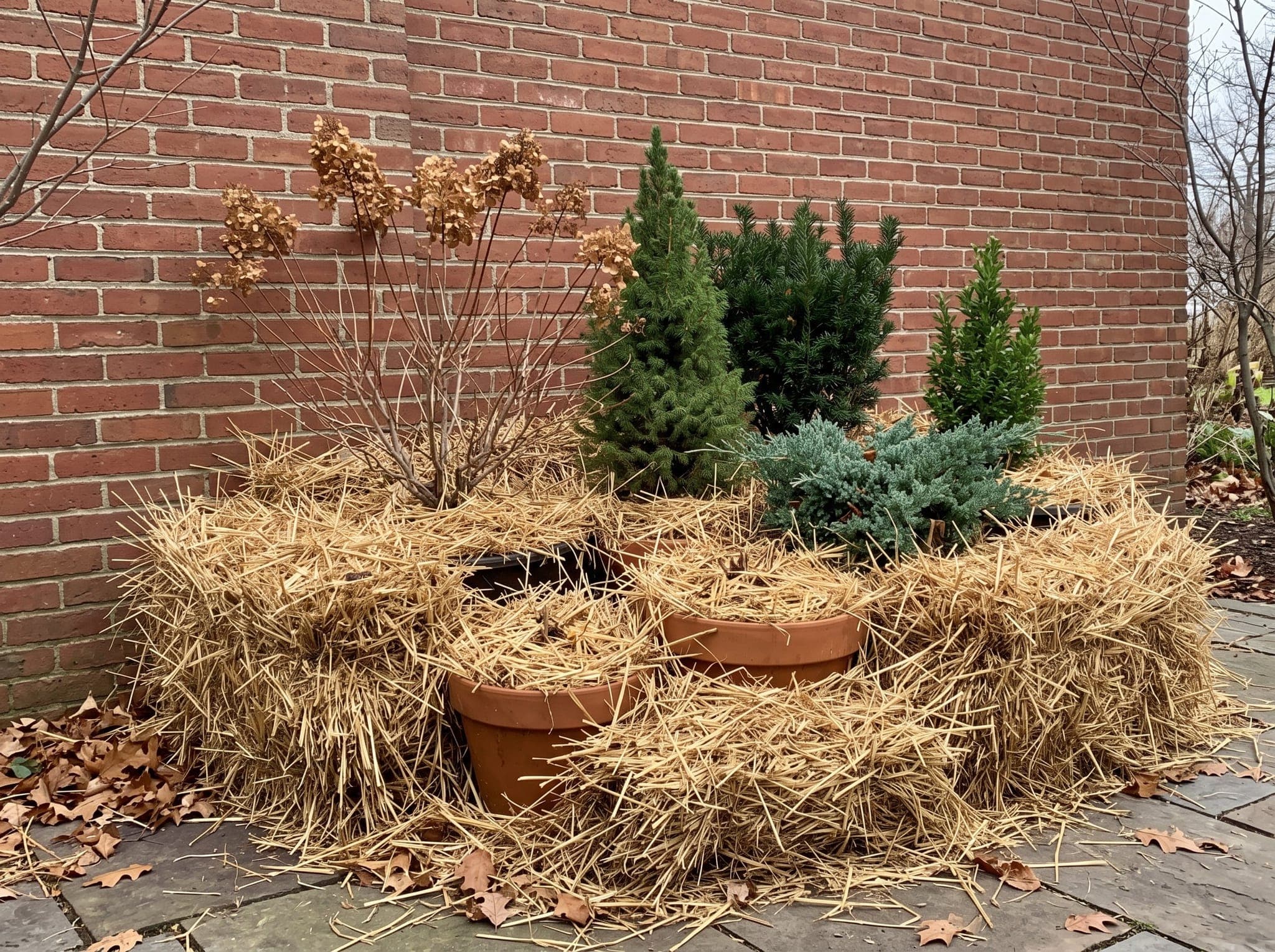
Plants in a garage still need water. Iowa State notes that water may be needed as often as once every two to three weeks when temperatures are above freezing, because dormant roots keep taking up moisture. Dehydration kills more garage stored plants than cold does, and it is entirely preventable.
One thing worth separating out: all of this is about plants in pots. Anything growing in the ground is a different job with a different set of risks, and we covered it in how to protect trees and shrubs in winter.
What Not to Do
- Do not wait for the frost warning. For tropicals, the frost warning is the eulogy. The low 50s is the signal.
- Do not fertilize anything in fall or winter. You are encouraging growth a plant cannot support in low light, and the salts stay in the soil.
- Do not repot before bringing a plant in. Fresh soil asks for new root growth at the worst possible moment. Wait for spring.
- Do not skip the quarantine. Three or four weeks apart from your other houseplants is what keeps one pot's pest problem from becoming a whole winter's project.
- Do not store tender bulbs damp. Cure them dry first, pack them in dry material, and check the boxes monthly.
- Do not seal pots in plastic. Wrapping a container in plastic traps moisture against the roots and cooks the plant on the first sunny day. Mulch, burlap, and soil insulate. Plastic does not.
Your October and November Calendar
Early October, nights in the low 50s. Inspect, rinse, and move the tropicals indoors. Start the three to four week isolation period. Stop fertilizing everything.
Mid October. Cut back and settle the dormant group into cool, dark storage. Decide which hardy pots are staying out and where they are going.
Late October, around the first freeze. Dig the tender bulbs within a few days of the frost that blackens their tops. Cure them at 60 to 70 degrees.
Early November, before the soil freezes. Box the cured bulbs at their proper temperatures. Group, mulch, or heel in the outdoor pots. Give everything a final deep watering.
All winter. Water the garage and basement pots every two to three weeks whenever they are above freezing. Check the bulb boxes monthly.
Tender tropicals come in three weeks before the first freeze, when nights hit the low 50s. Tender bulbs come out of the ground three days after it. Hardy pots need plants rated two zones colder than Zone 7a, plus insulation and winter water. Sort the pots first and every other decision follows.
When to Hand Part of It Off
Overwintering is manageable work until the inventory gets big, the pots get heavy, or the house runs out of windows. If you are looking at a dozen large containers and nowhere bright to put them, it is worth a conversation before you lose plants by default.
The greenhouse team in Newburgh deals with this every October, and they can tell you which of your plants are genuinely worth storing and which are cheaper to replace in May. Some tropicals repay the effort for years. Some annuals are not worth the windowsill. If a container is struggling because of the pot rather than the plant, the pottery and container selection is a better fix than another winter of guesswork, and our seasonal cleanup crews handle the heavy end of fall changeover for properties across Indiana, Illinois, and Kentucky.
Colonial Classics has been in Newburgh for more than 65 years, and the houseplants and succulents side of the greenhouse exists partly because so many customers come in every October with the same question about the same hibiscus. Bring a photo and a rough count. Send us a message or stop by and we will help you sort the patio into those four groups before the first cold night does it for you.