The plants you lose over winter usually do not die of cold. They die of thirst, sunburn, or a rabbit. Knowing how to protect trees and shrubs in winter means heading off those three, and all of it is an afternoon of work in the fall.
That is worth knowing, because winter damage is invisible while it is happening. Nothing looks wrong in January. The bill comes due in April, when a boxwood hedge leafs out brown on one side, a young maple shows a long split down its southwest face, or an arborvitae that was upright in November is permanently splayed open. It comes down to understanding which four things actually cause the damage, then heading each one off at the right time. Everything here is tuned for USDA Zone 7a, which covers Newburgh, Evansville, and the broader Tri-State region across Southern Indiana, Southern Illinois, and Western Kentucky.
What Actually Damages Trees and Shrubs in Winter
Four things cause nearly all winter plant damage, and only one of them is temperature. Purdue Extension describes desiccation, the plant drying out while its roots are locked in frozen ground, and names broadleaved evergreens such as rhododendron and holly as the most susceptible plants in the landscape. The others are sun related bark injury, physical load from snow and ice, and animals looking for food.
| Damage Type | What Causes It | Who It Hits | What You See in Spring |
|---|---|---|---|
| Winter burn | Wind and sun pull water from foliage while roots sit in frozen soil | Broadleaf and needled evergreens, new plantings | Beige to brown leaf edges, curled leaves, red or purple discoloration, brown needle tips |
| Sunscald and frost cracks | Winter sun warms one side of the trunk, then it refreezes after sunset | Young, thin barked trees | Sunken or peeling bark and long vertical splits, almost always facing southwest |
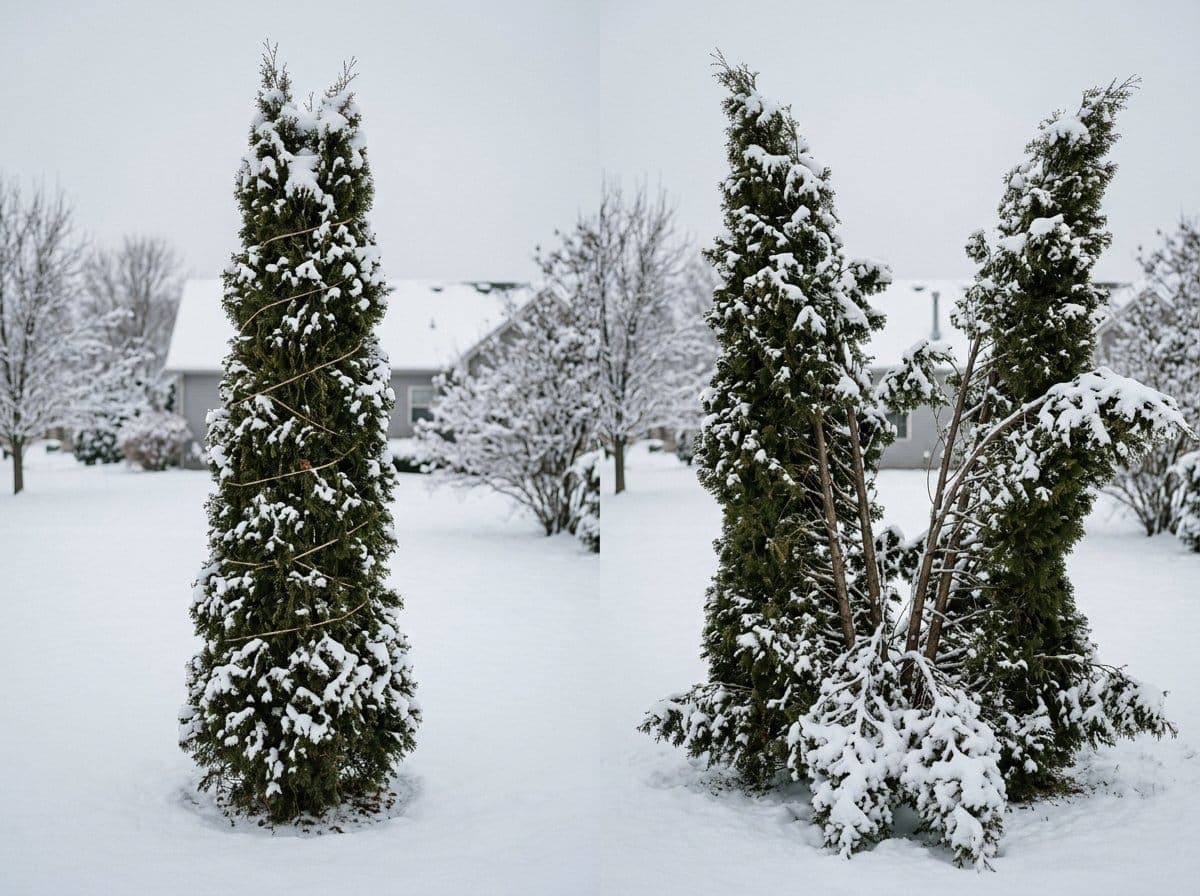
| Snow and ice load | Weight forces stems apart or snaps them | Upright multi stem evergreens, older brittle wood | Splayed open shrubs, broken limbs, permanently bent leaders |
| Animal damage | Bark eaten or rubbed off when other food is gone | Young trees, anything under 4 feet | Gnawed bark near the base, stripped bark higher up from antler rubbing |
The pattern worth noticing is that three of the four have nothing to do with how low the thermometer goes. A plant that is properly hydrated, shaded from winter sun, and physically protected will come through a hard Tri-State winter in good shape. A plant that went into December dry will struggle through a mild one.
Which Plants Need Protecting and Which Do Not
Focus on evergreens, young trees, and anything you planted in the last two years. Established deciduous trees and shrubs that have been in the ground for years generally need nothing at all, and fussing over them is wasted effort.
The high risk group is short:
- Broadleaf evergreens: boxwood, holly, rhododendron, and cherry laurel. They keep full leaves all winter and keep losing water through them, which is why Purdue names rhododendron and holly as the most vulnerable plants in the landscape.
- Recent plantings: anything installed in the last two growing seasons, regardless of species. The root system has not spread far enough to reach reliable moisture.
- Thin barked young trees: maple, ash, linden, apple, and peach are the species University of Illinois Extension calls out specifically for sunscald.
- Upright evergreens: arborvitae and columnar junipers, which have no structure to resist snow load.
- Plants near salted pavement: anything within splash or spray range of a drive, walk, or road.
If your yard is mostly mature oaks, maples, and old shrub borders, your entire winter prep is a fall watering and a mulch check. Match the effort to the actual risk.
Water Deeply Until the Ground Freezes
Deep fall watering is the single most effective thing you can do, and it is the step people skip. The Morton Arboretum advises continuing to water evergreens in fall for as long as the soil will still accept water, which in the Evansville and Newburgh area usually means into late November or early December.
The reasoning is simple. Once the ground freezes, roots cannot take up moisture at all, but the foliage above ground keeps losing it every time the wind blows or the sun comes out. Whatever water the plant is holding when the ground locks up is the entire reserve it has until thaw. Send it into winter dry and it will run out.
- How much: a slow soak that wets the soil 8 to 12 inches deep, not a quick spray.
- How often: every week or two through fall whenever you go more than a week without meaningful rain.
- What to prioritize: evergreens first, then anything planted in the last two years, then everything else.
- When to stop: when the soil no longer absorbs water and simply pools on frozen ground.
A warm spell in January is also a watering opportunity. If the ground thaws and stays above freezing for a few days, an exposed evergreen will benefit from a drink. This is one reason we recommend blowing out irrigation lines but keeping a hose accessible. Our guide to sprinkler winterization covers getting the system itself safely shut down.
Mulch the Root Zone, Not the Trunk
Two to three inches of shredded hardwood mulch over the root zone insulates the soil, holds moisture, and slows the freeze and thaw cycling that pushes shallow roots up out of the ground. It is cheap, fast, and does more good per dollar than almost anything else on this list.
The one rule that matters: keep it away from the trunk. Iowa State Extension recommends keeping wood mulch at least six inches back from the trunks of small trees. Mulch mounded against bark stays permanently damp, softens the bark, invites rot, and gives voles a covered tunnel to chew the trunk all winter where nothing can see them. The volcano of mulch piled up around a trunk is a genuinely harmful habit, not just an ugly one.
Fallen leaves work as an insulating layer too, if you shred them first. We go through the options in what to do with fall leaves.
Winter Burn on Evergreens
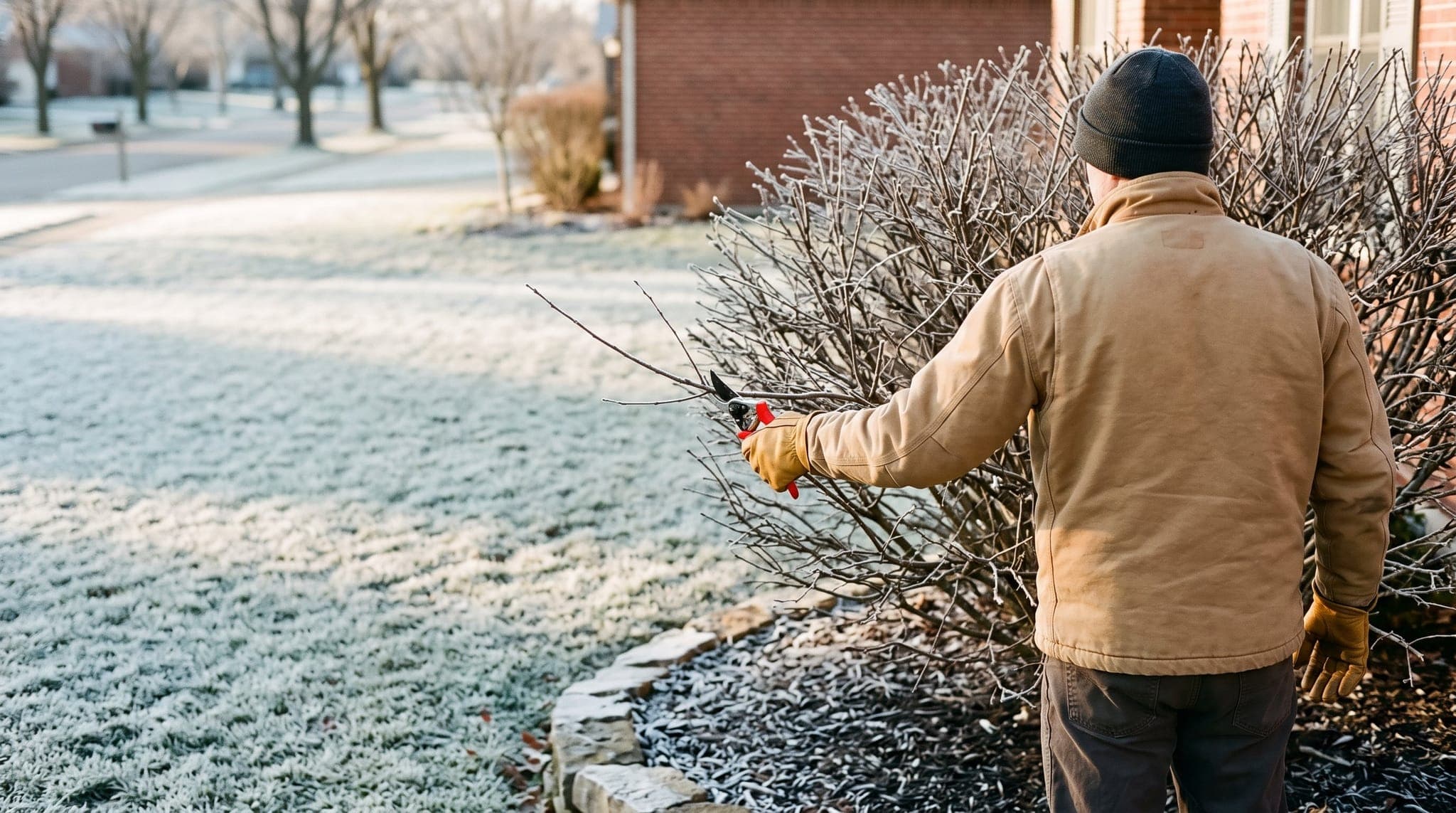
Winter burn is water loss, so the fix is water and wind protection rather than warmth. The symptoms Purdue describes are beige to brown leaf edges that curl, or red and purple discoloration on broadleaf evergreens, and brown needle tips or fully brown needles on conifers. The damage almost always shows up worst on the side facing the prevailing wind or the afternoon sun.
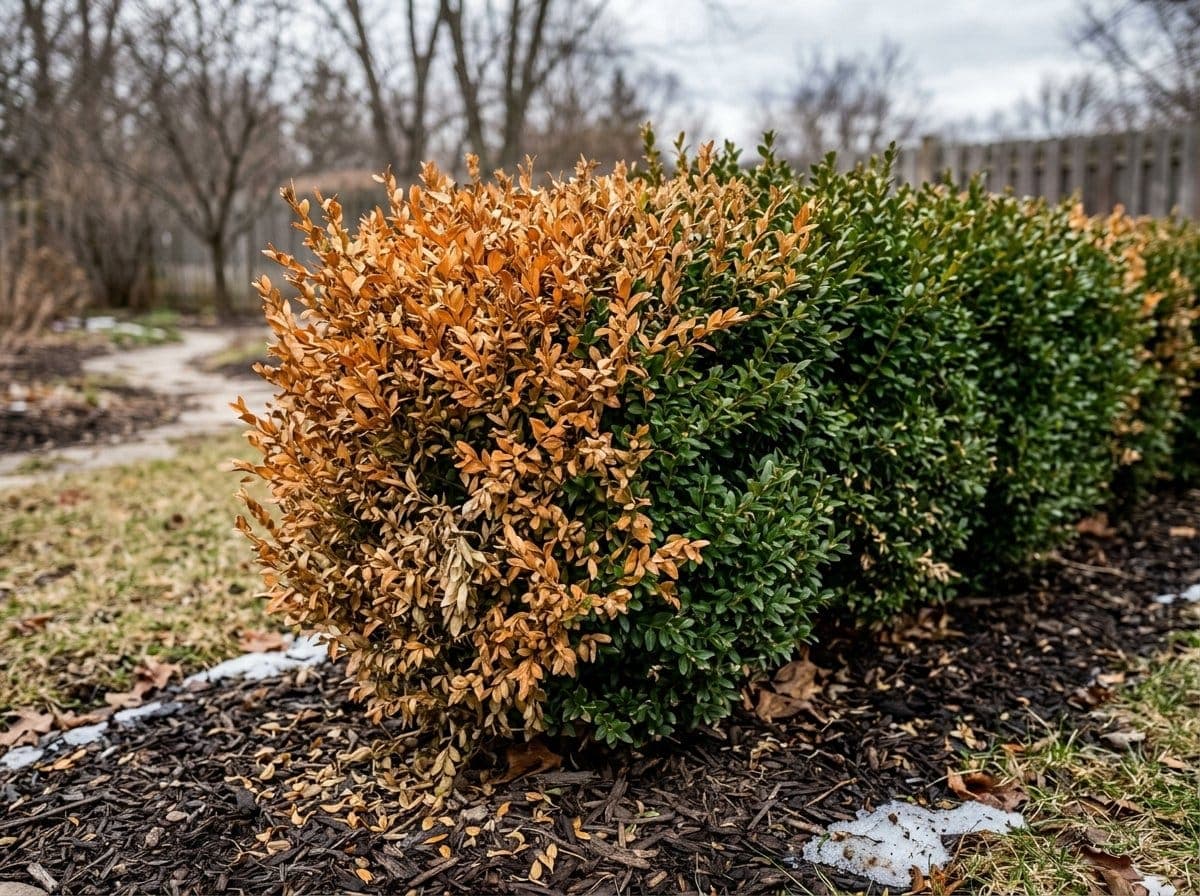
Three measures work, roughly in order of effectiveness:
- Water deeply in fall. Covered above, and it outperforms everything else.
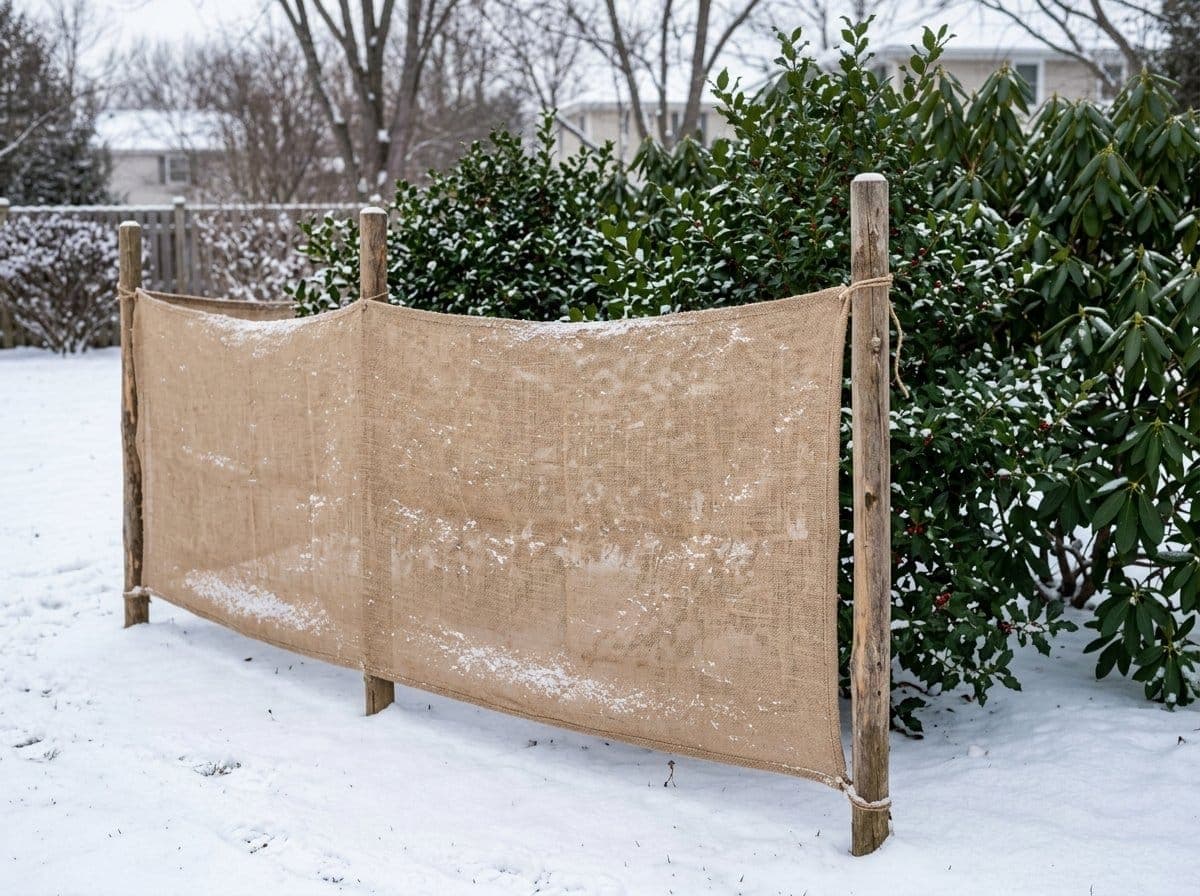
- Screen the wind. Set burlap on stakes on the windward side of exposed plantings, leaving the top open so air still circulates. Purdue recommends exactly this for broadleaf evergreens. Do not wrap the plant tightly like a package, which traps moisture against the foliage and creates a disease problem in place of a drying problem.
- Consider an anti-desiccant. These sprays coat the leaves with a waxy film that slows transpiration. Morton advises applying starting in late fall and notes that two applications per season may be needed for full coverage. They are genuinely useful on exposed boxwood and rhododendron, but treat them as a supplement. A spray will not save a plant that went into winter thirsty.
If a plant browns anyway, do not reach for the pruners in March. Scratch the bark on an affected branch with your thumbnail. Green underneath means living tissue, and the plant will very often push new growth from buds that survived. Wait until late spring and prune only what stays dead. Our guide on when to prune shrubs covers the timing in more detail.
Sunscald and Frost Cracks on Young Trees
Both are caused by the same thing: winter sun heating one side of the trunk far above air temperature, then that side refreezing fast after sunset. The Morton Arboretum measures the difference at up to 20 degrees warmer on the sunlit side of a trunk than the surrounding air. That warmth signals the bark tissue to come out of dormancy, and then it freezes and dies a few hours later.
This is why the damage is so predictably on the south and southwest face. It is the side that catches low winter sun in the afternoon.
Sunscald kills patches of bark, which then sink, darken, and eventually peel. Frost cracks are long vertical splits from the same daily temperature swing, and Morton lists London plane, maples, crabapples, fruit trees, lindens, poplars, birches, and willows as the species most prone to them.
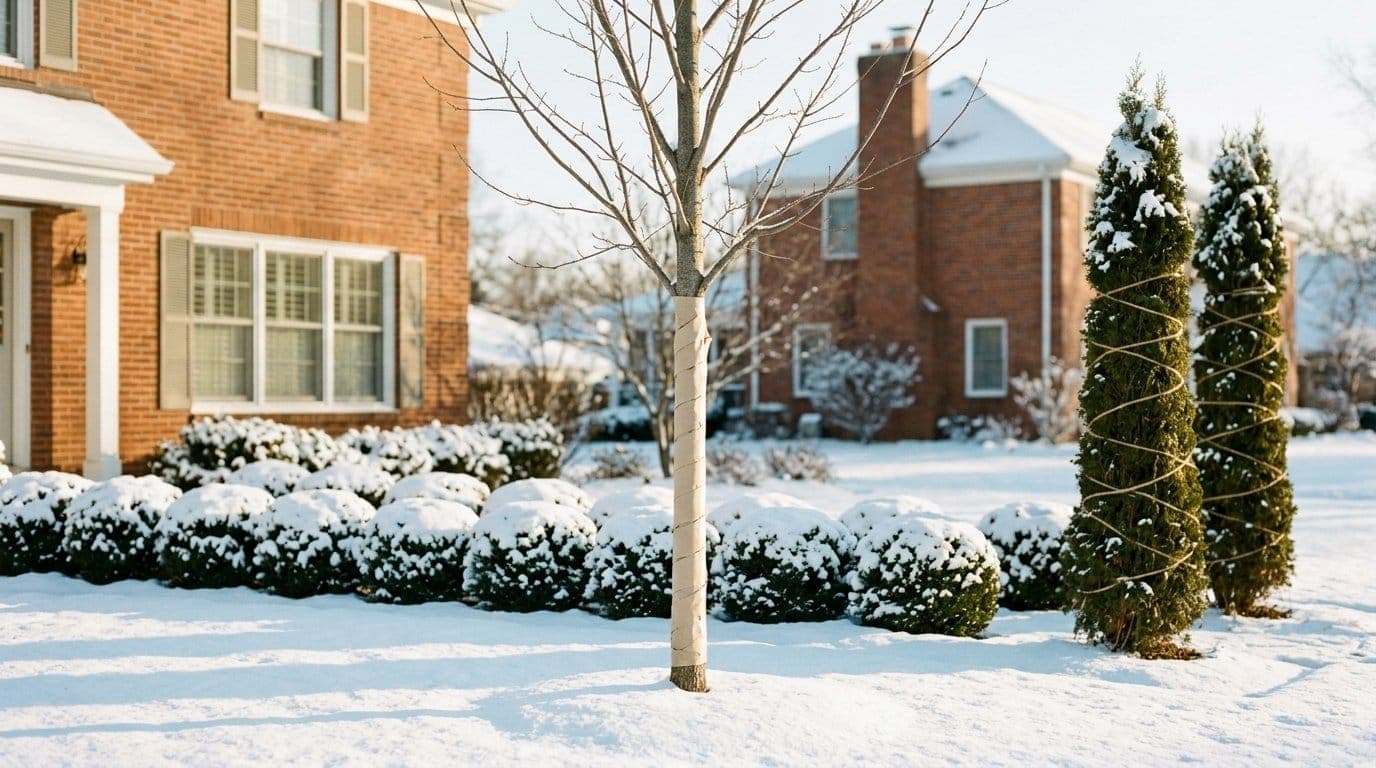
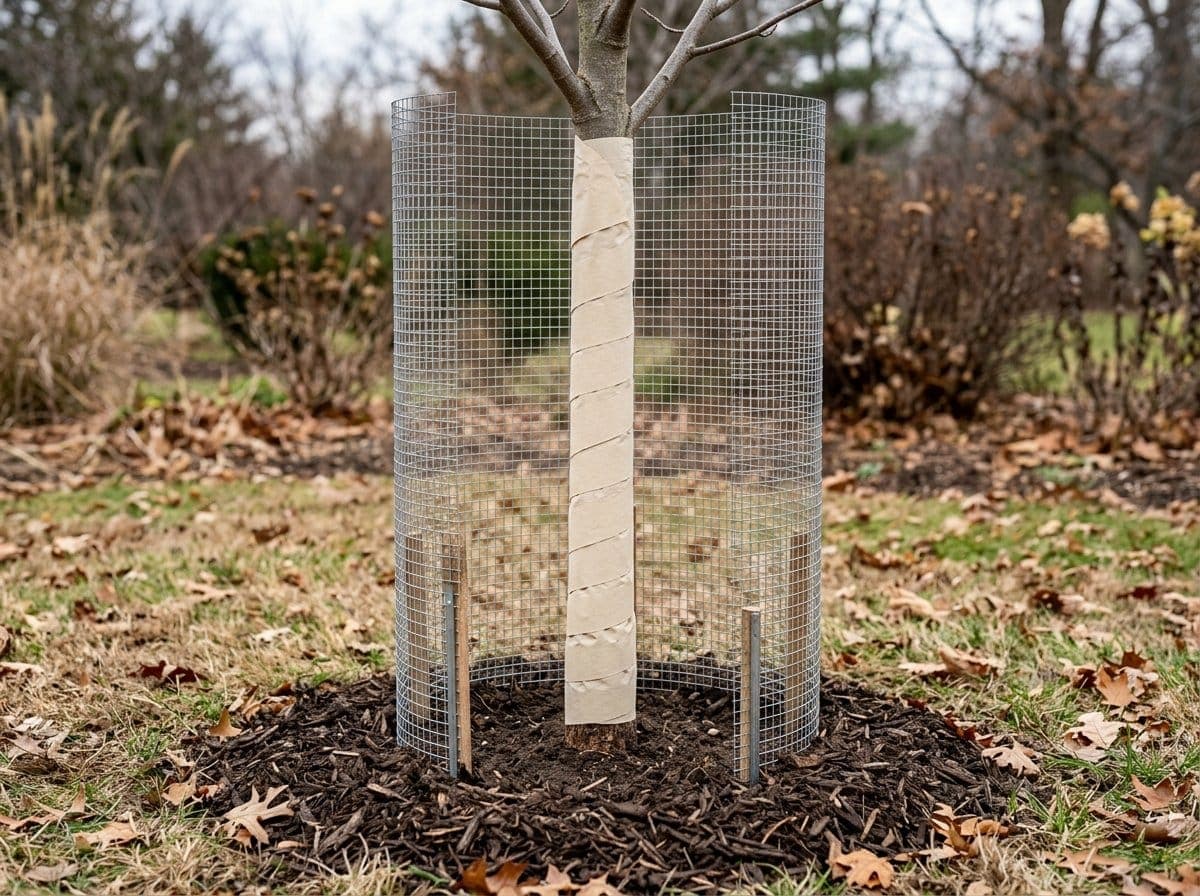
The prevention is light colored commercial tree wrap, applied to the trunks of young thin barked trees. Wrap from the base up to the first branches, overlapping in a spiral. Illinois Extension is precise about the window: put it on in November and take it off in April. Both halves matter. Wrap applied in early fall traps warmth and moisture during mild weather, and wrap left on through summer can damage the trunk and restrict its growth.
Most trees outgrow the need after four or five winters, once the bark thickens and roughens enough to insulate itself.
Deer, Rabbits, and Voles
Animal damage peaks in late winter, when the easy food is gone and bark becomes worth eating. The three culprits need three different defenses.
- Voles chew bark at and just below the soil line, hidden under mulch and snow. Iowa State recommends a cylinder of quarter inch hardware cloth with the bottom two to three inches buried in the soil so they cannot tunnel under it.
- Rabbits work from the snow surface up. A guard 24 to 36 inches tall handles them, but measure from the expected snow line rather than the ground, since packed snow effectively raises a rabbit's reach by however deep it lies.
- Deer do two kinds of damage. Bucks strip bark rubbing antlers in fall, which is best prevented with stakes or a cage installed by mid August and removed in spring. Browsing pressure then peaks in late winter. Iowa State notes that repellents have limited success over winter because reapplying them in freezing weather is difficult, so physical barriers do the real work.
Hold any trunk guard an inch or two off the bark rather than tight against it, so air moves through and the guard does not abrade the trunk. If deer are a standing problem on your property, plant selection is the durable answer, and our guide to deer resistant plants covers which species hold up.
Snow, Ice, and De-Icing Salt
Upright evergreens need their stems tied before the first heavy snow, and everything else needs to be left alone during the storm. Spiral soft jute twine loosely around arborvitae and columnar junipers so the stems brace each other instead of splaying apart under load. Never use wire or bungee cord, which cut into bark, and remove the twine in spring before it girdles the growing stems.
After a storm, brush light snow off gently with a broom, sweeping upward from underneath so you lift rather than press. Leave ice completely alone. Frozen wood is brittle and shatters when struck. Purdue's advice on limbs that are bent but not broken is to be patient, because the wood fibers take time to return to their natural position and usually do. A limb that has actually broken and is hanging in the canopy is different, and should be removed and the stub cut cleanly to the branch collar as soon as the weather allows. That is pruning work worth handing to someone with the right equipment, particularly anything overhead.
Salt is the quieter problem. Sodium chloride, the standard cheap de-icer, does the most damage, both as spray thrown onto foliage and as sodium accumulating in the soil where snowmelt drains. Calcium chloride and magnesium chloride are gentler on plants, and calcium magnesium acetate is gentler still, though all of them cost more. The most practical fixes are to use less, to redirect where you pile shoveled snow, and to put a burlap or tarp barrier between plant beds and any pavement that gets treated, which is what Morton recommends for roadside plantings. If a bed takes salt every year, a long soaking in early spring helps flush the accumulation down past the root zone, and it is worth choosing salt tolerant species when you replant. Sugar maple is one of the most salt sensitive trees you can put near a driveway.
What Not to Do Before Winter
Some well intentioned fall habits cause the damage they are meant to prevent.
- Do not prune in fall. Cuts made in fall heal slowly and push tender new growth that will not harden off before the first freeze. Late winter, while plants are fully dormant, is the right window for most species.
- Do not fertilize late. A nitrogen application in fall encourages soft growth at exactly the wrong time. Feeding belongs earlier in the season.
- Do not wrap plants tightly in plastic. It traps moisture, cooks foliage on sunny days, and turns a drying problem into a disease problem. Burlap on stakes, open at the top, is the correct approach.
- Do not pile mulch against trunks. It softens bark and gives voles cover.
- Do not leave wraps and guards on year round. Tree wrap, twine, and burlap all come off in April.
Your Winter Protection Calendar
Timing decides whether any of this works. Here is the whole sequence for a Zone 7a yard, from the first deep watering in September through taking the wraps back off in April. If you use an anti-desiccant, the first application goes on alongside the November tree wrap.
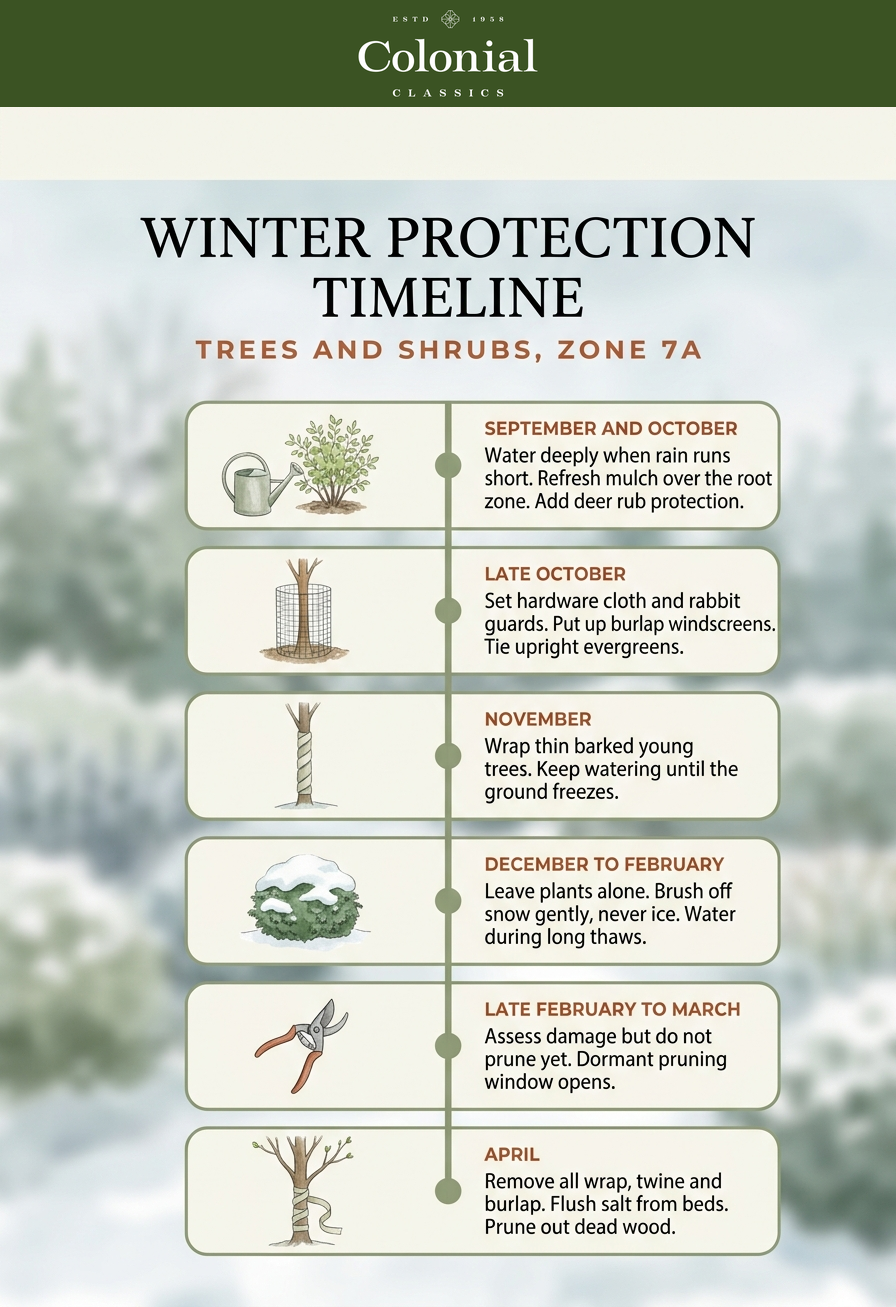
If you only do one thing this fall, water your evergreens and your newest plantings deeply until the ground freezes. Desiccation is the winter damage you have the most control over, and a hose is what fixes it.
When to Bring in Help
Most of this is homeowner work. A few situations are not.
Anything requiring a ladder or overhead saw work belongs to a crew with the equipment and insurance for it, especially storm damaged limbs still hanging in a canopy. Large scale protection, like screening a long roadside hedge or guarding dozens of young trees on an acreage, is worth scheduling as part of a seasonal cleanup rather than spending three weekends on it. And if you are choosing new plants for an exposed site, a salted frontage, or a property with heavy deer pressure, getting the species right at the start saves years of protection work later. Our team at the garden center can point you toward the plants that handle those conditions without annual intervention.
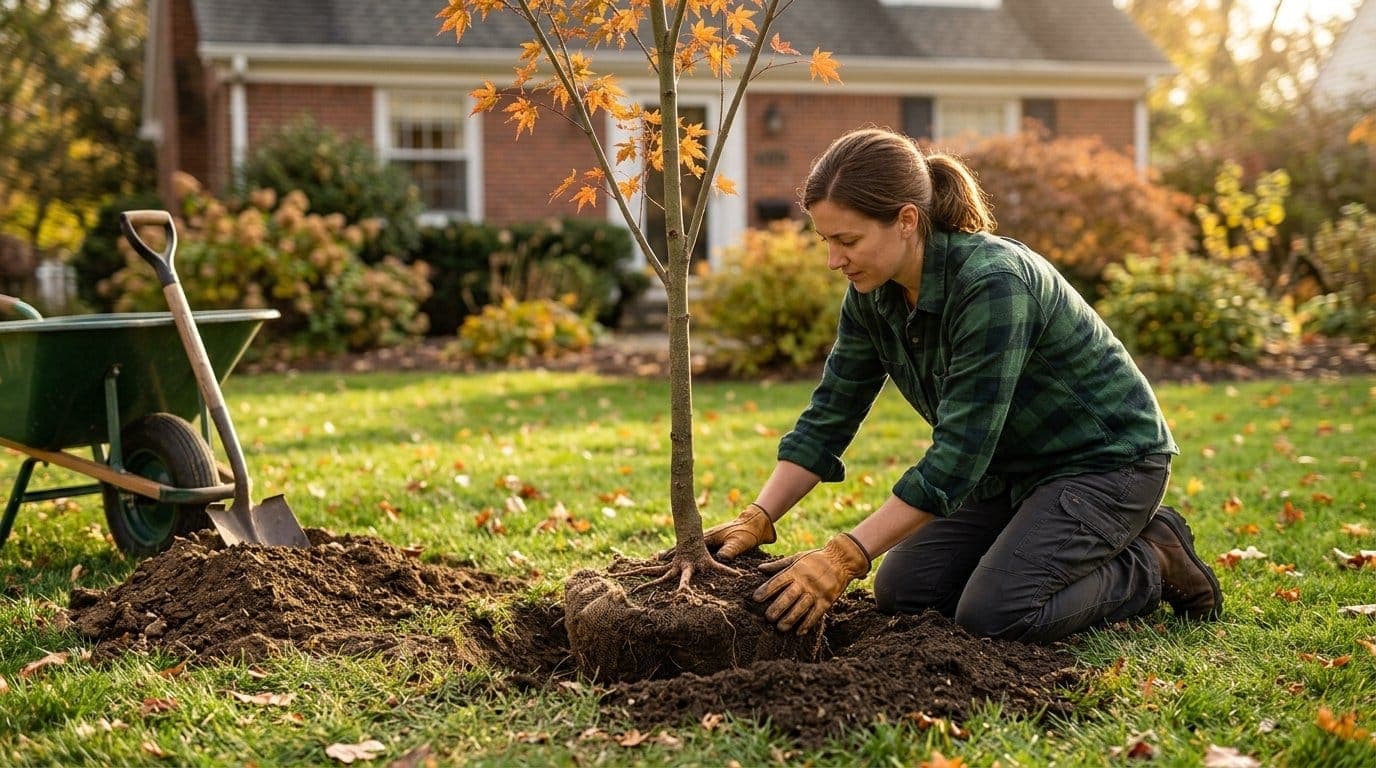
The broader principle is that winter hardiness is mostly decided before winter starts, by what you planted, where you planted it, and how well you set it up in the fall. Plants installed at the right time of year go into their first winter with a real root system underneath them, which is a large part of why fall is such a strong time to plant trees in the Tri-State area.
Spend an afternoon in November, and you will not spend April replacing things.