Most of the leaves in your yard should never leave it. The fastest, cheapest, and healthiest thing you can do with the majority of them is run them over with your mower and let the pieces disappear into the lawn. What you haul to the curb should be the leftover, not the plan.
That runs against how most of us were raised to handle fall. Raking, bagging, and dragging bags to the street feels like the responsible version of yard care. But multiple university turf programs have now put the question to a multi-year test, and the results all point the same direction: shredded leaves are a free soil amendment, and the lawns that get them do at least as well as the lawns that get scraped bare.
This guide covers how to mulch them properly, how to tell when you have too many, and exactly where the extra should go. The timing here is written for Southern Indiana and the rest of the Tri-State area we serve across Indiana, Illinois, and Kentucky. All of it sits in USDA Zone 7a, so the same leaf calendar works whether you are in Newburgh, across the river, or west toward Illinois.
Should You Rake Leaves or Mow Them Into the Lawn?
Mow them in. Two university turf programs have tested it directly and neither found a downside. Michigan State mulched maple and oak leaves into established Kentucky bluegrass across two consecutive fall seasons, and Purdue applied up to 4,000 pounds of maple leaves per acre to Indiana turf in a single application, in a study documented by Virginia Cooperative Extension's lawn leaf management publication.
Here is what they measured:
- No harm to the turf: Purdue found that mulching leaves in had "no undesirable effects on turf quality or color, growth, thatch accumulation, soil pH, weed populations, or disease pressure." The wider body of leaf mulching research reports the same for turf density, shoot growth, and soil organic matter.
- Fewer dandelions: Michigan State counted up to 80 percent fewer after one season of applications at a heavy rate, and 53 percent fewer measured after two. The mechanism is physical rather than chemical: leaf confetti settles into thin spots and bare soil, which is exactly where dandelion seed needs light and contact to germinate.
- Faster spring green-up: Those same mulched plots came out of winter earlier than the plots that had their leaves removed.
- A small fertility credit: Leaves carry a little nitrogen of their own, nowhere near what a bag of fertilizer delivers, so a season of mulching feeds the lawn slightly on its way to breaking down.
That credit is real but small. It does not replace a feeding program, and Purdue is clear that leaves are not a substitute for proper fall nitrogen. Our fall lawn fertilizer schedule covers what the lawn still needs on top of this.
How to Mulch Leaves With Your Mower
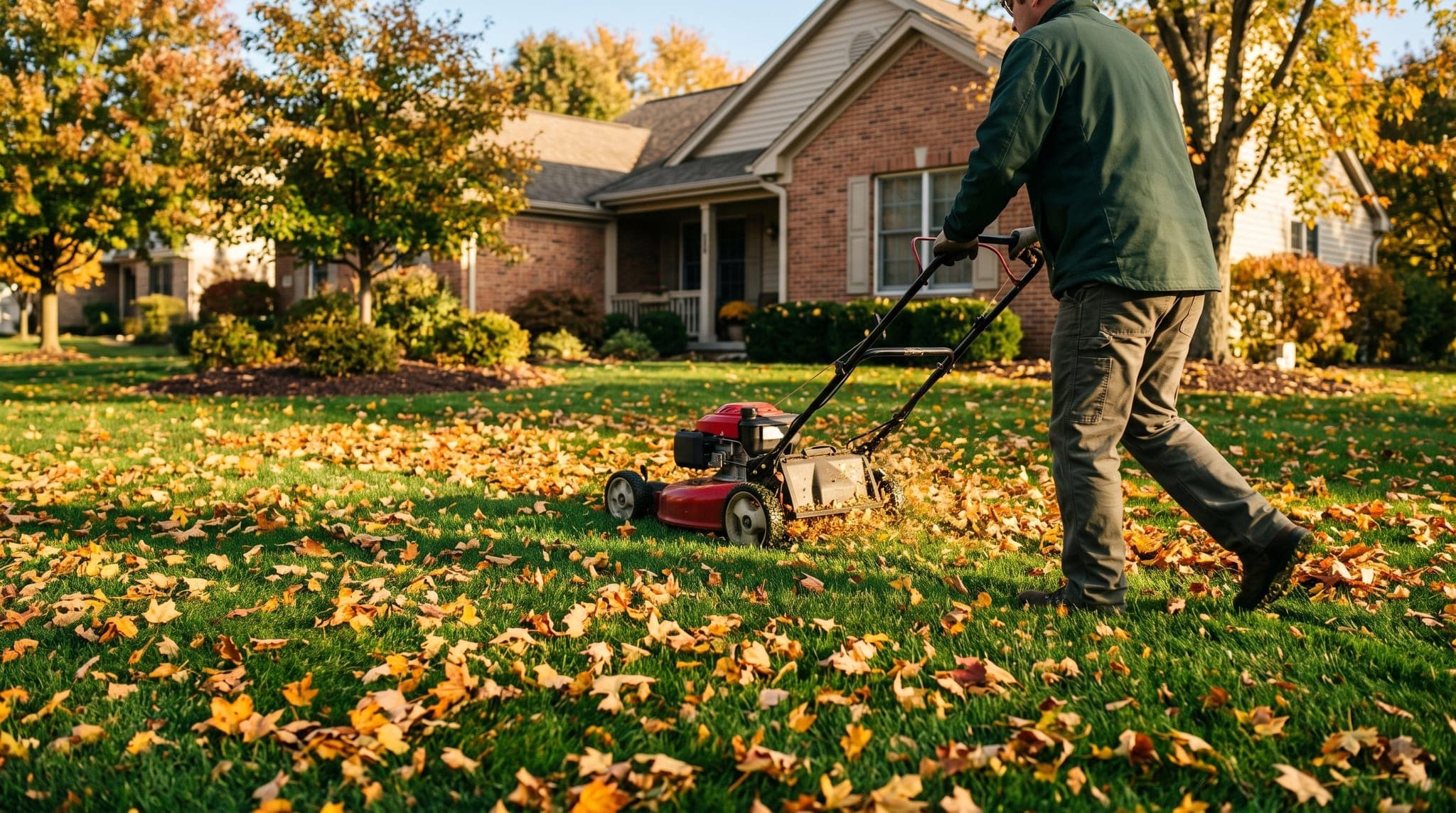
Mow more often, in slightly dry conditions, until the pieces are about the size of a dime. That is the whole technique, but each part of it matters.
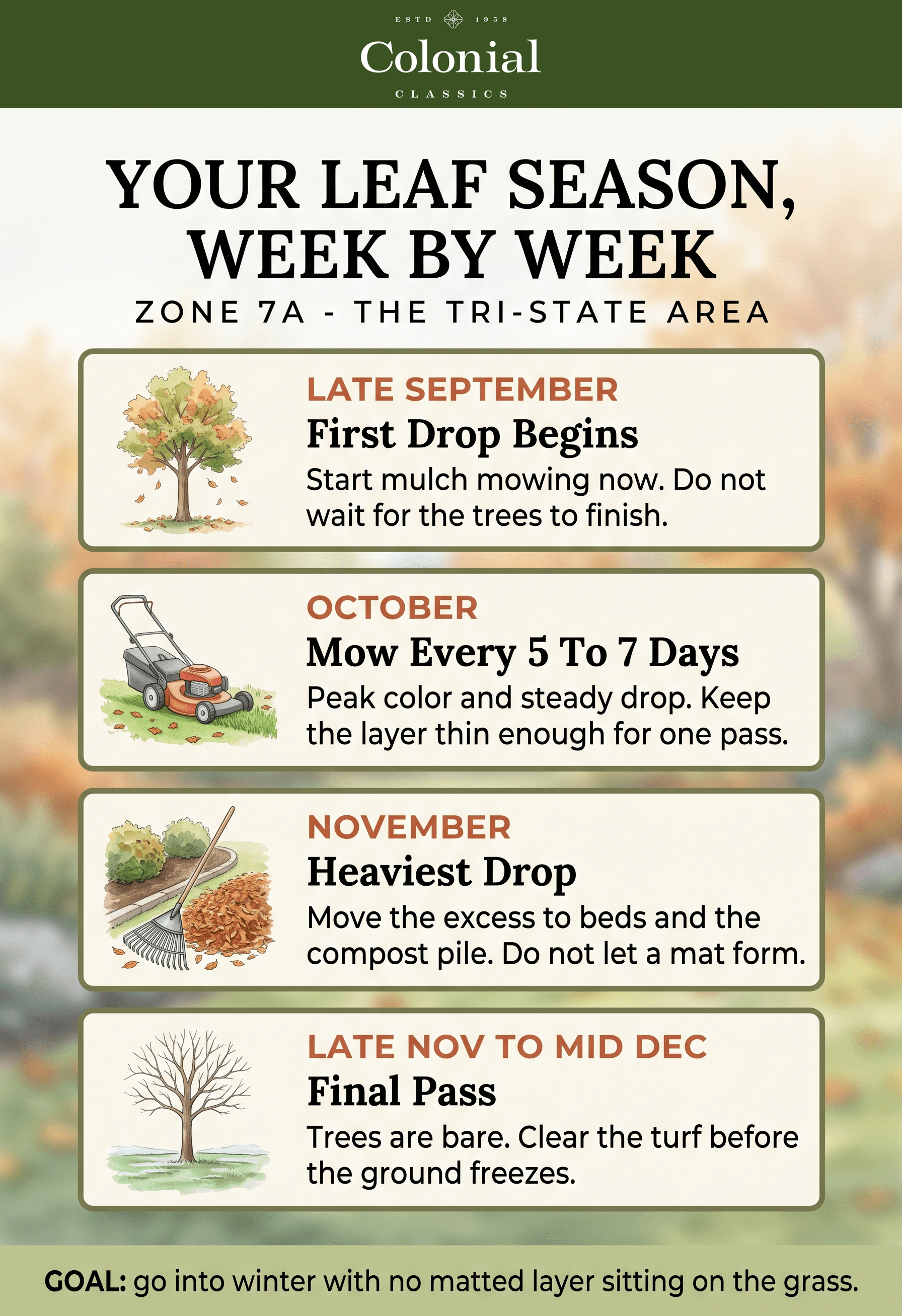
- Start early and mow often: The single biggest mistake is waiting until the trees are bare. A yard that would have been effortless in five sessions becomes a genuine chore in one. Through peak drop, plan on mowing every five to seven days whether the grass needs cutting or not.
- Pick your moment: Slightly damp or dry leaves shred cleanly. Wet leaves clump, pack under the deck, and strain the engine. Fully dried and brittle leaves work but throw a lot of dust. Late morning, once the dew has burned off, is usually the sweet spot.
- Keep your height up: Stay at your normal 2.5 to 3.5 inch cutting height. Scalping the lawn in November is bad for the turf regardless, and taller grass gives the shredded pieces somewhere to fall instead of leaving them stacked on top of the canopy.
- Use what you have: A dedicated mulching mower and a sharp mulching blade do the job in fewer passes, but Virginia Cooperative Extension notes that almost any rotary mower will suffice. Pulling the bag off and making a second overlapping pass at a right angle gets most machines there.
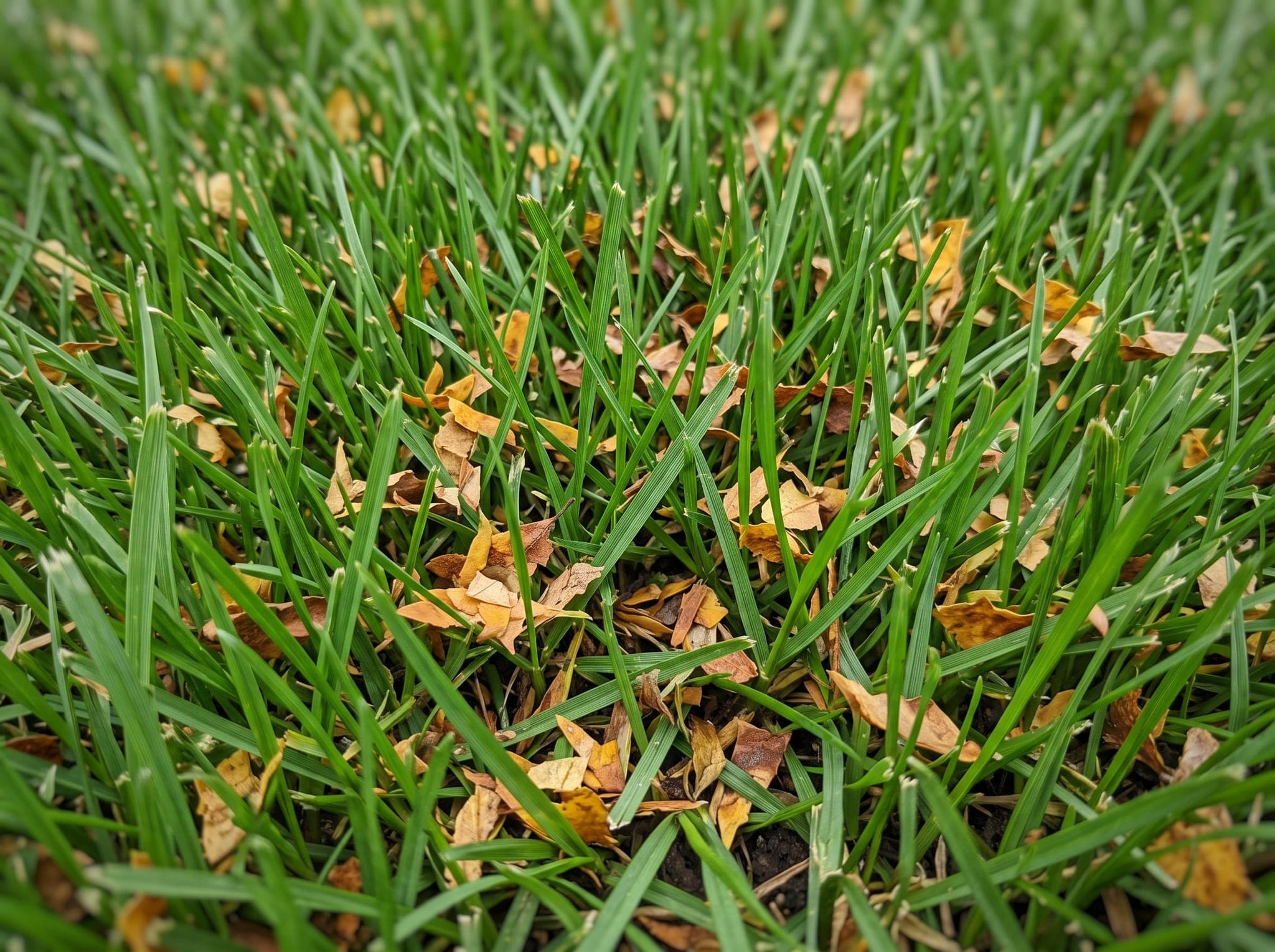
Use the last mow of the year twice. Your final cut of the season is a good moment to make an extra pass over the beds' edges and blow stray leaves back out onto the turf where the mower can reach them. It is easier than raking them out of the mulch later.
That last mow is one point on a season that starts earlier than most people expect. Here is how the whole stretch runs in our area.
How Many Leaves Are Too Many?
Research summarized by Virginia Cooperative Extension puts the upper limit at about 6 inches of leaves mulched at one time, with the caveat that performance depends heavily on the mower. That figure comes from research plots and commercial equipment, so treat it as the ceiling rather than the target.
The practical test needs no measuring. After your last pass, look straight down at the lawn. If you see mostly green with leaf bits scattered through it, you are done. If the surface is still covered in shredded material, you have exceeded what that lawn can absorb and the excess needs to move somewhere else.
What you are trying to avoid is a mat. Whole leaves left to pack down under rain and snow form a solid, wet layer that blocks light and traps moisture against the crowns of the grass. Purdue's turf program is blunt about the consequence: tree leaf cover "favors a damaging winter turf disease called snow mold", which surfaces as matted, straw-colored patches when the snow pulls back in late winter. Unlike the summer lawn diseases that do most of the damage around here, you set this one up months ahead of time by what you leave sitting on the grass in November.
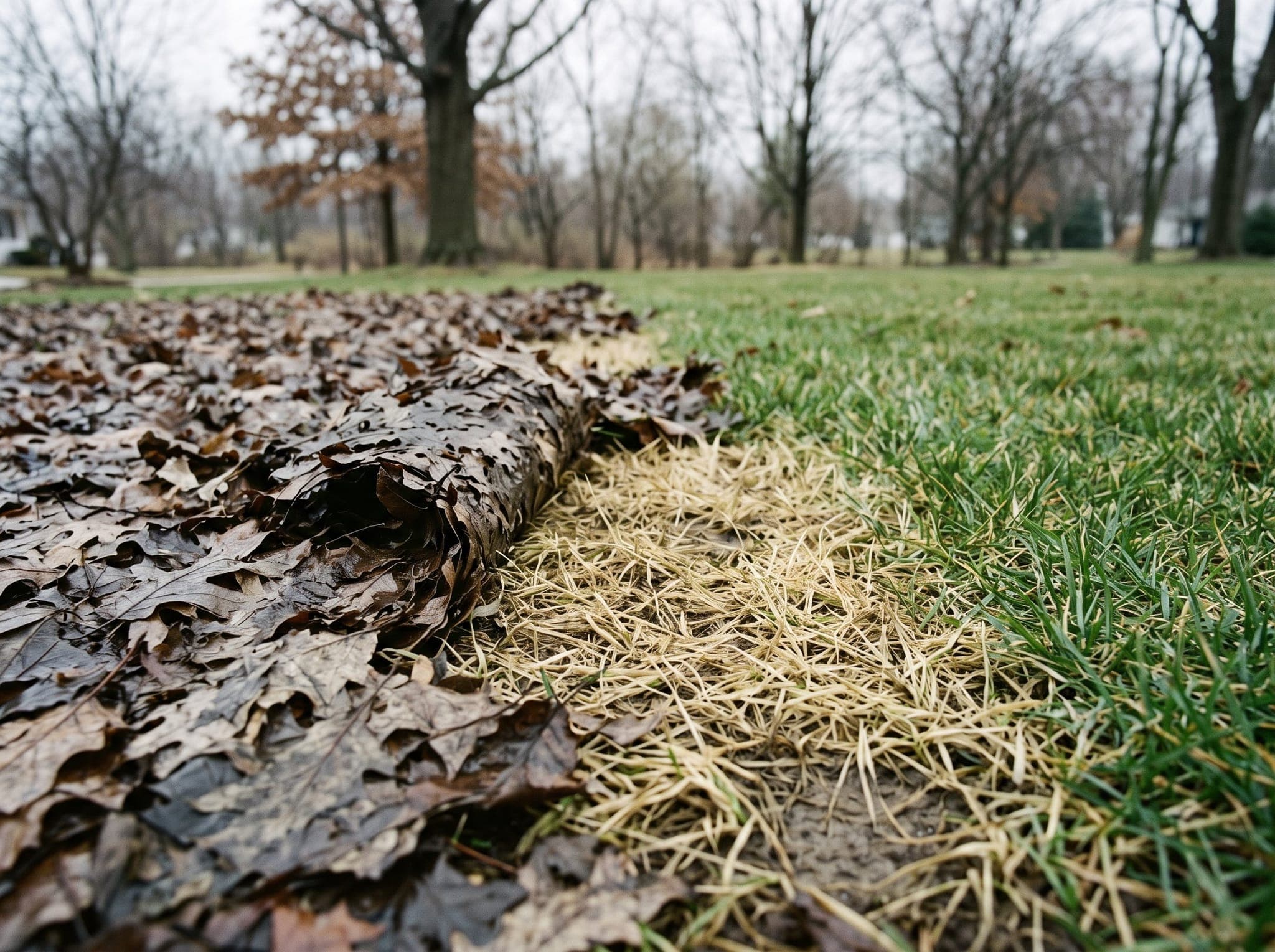
A matted layer does not fix itself. Once leaves have packed into a wet mat over turf, mowing will not shred them and the grass underneath is already being smothered. Rake or blow that layer off and move it to a bed or compost pile instead.
Where the Extra Leaves Should Go
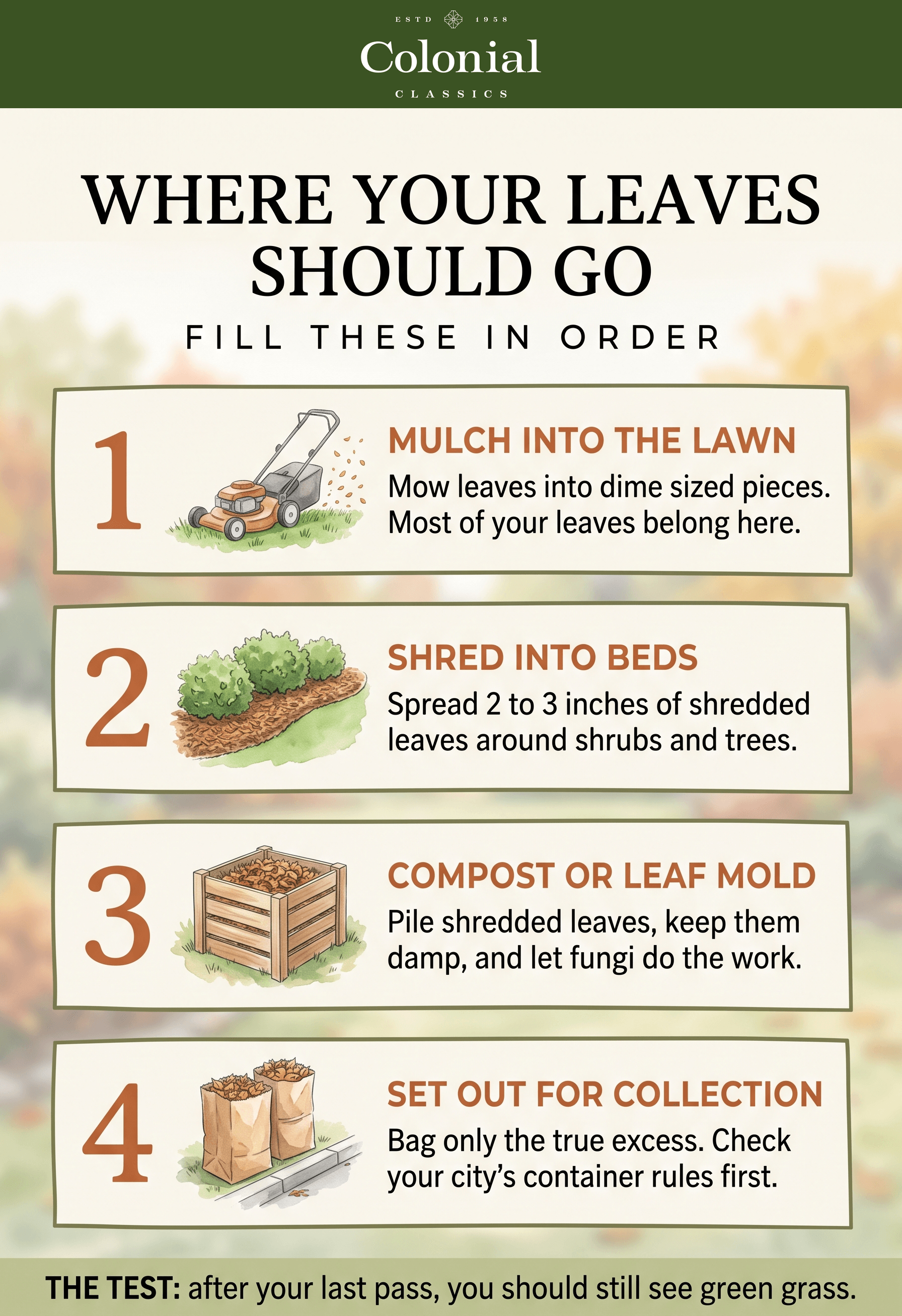
Whatever the lawn cannot absorb should go to your landscape beds first, the compost pile second, and the curb last. All three are genuinely useful, and working down them in order means very little ever has to leave the property. Here is the whole order at a glance, with the lawn you have already filled sitting at the top.
Shred Them Into Your Landscape Beds
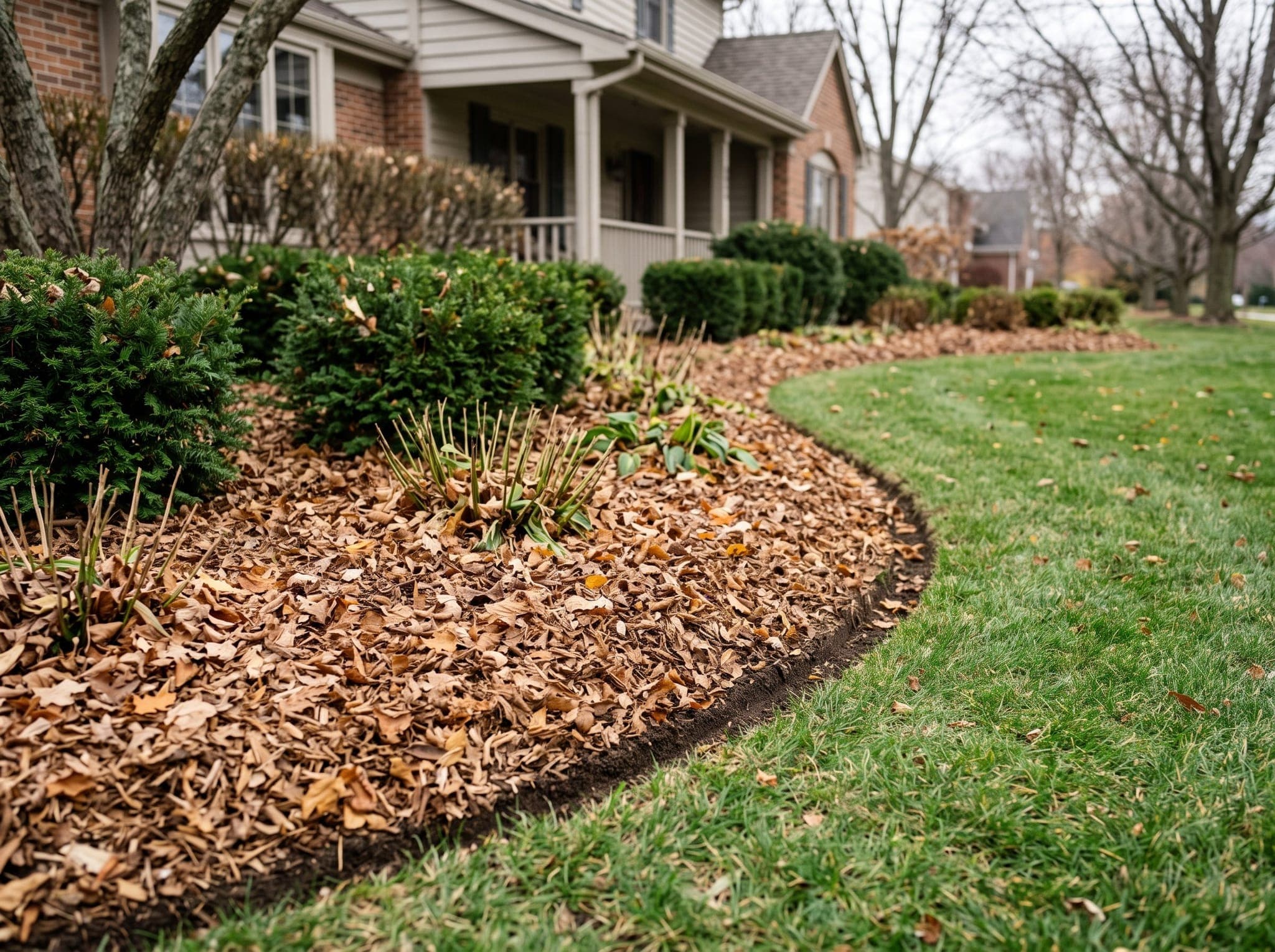
Shredded leaves work as a functional bed mulch at 2 to 3 inches deep. The shredding step is not optional. Whole leaves in a bed mat into a shingled layer that sheds water instead of letting it soak in and can block oxygen from reaching the root zone. Run them through the mower first, or over them with a bagging mower, and they behave like any other fine mulch.
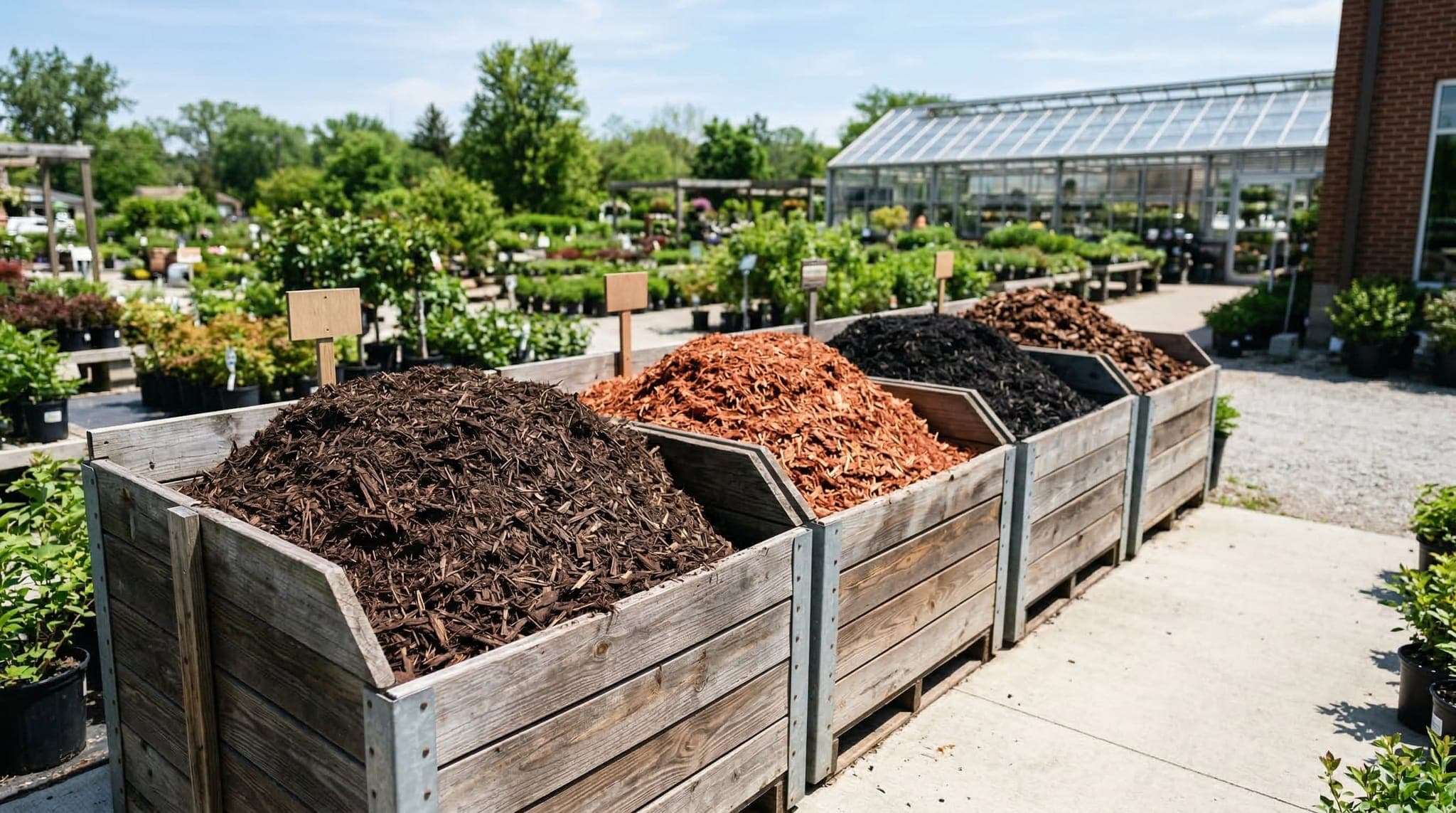
The tradeoff against hardwood mulch is longevity and looks. Leaves break down faster, so they feed the soil sooner but need replacing sooner, and they will never give you the crisp uniform edge of a fresh bark mulch. Many homeowners split the difference: leaves in the back beds and around trees, bark mulch where the beds are visible from the street. Our mulch buyer's guide walks through how the bagged and bulk options compare if you want that contrast.
Make Leaf Mold or Add Them to Compost
Leaf mold is the easiest compost there is, because it is just leaves, moisture, and patience. Pile shredded leaves in a corner, keep them damp, and fungi will slowly convert them into a dark, crumbly soil conditioner. Whole leaves take a couple of years. Shredded and kept moist, you can have usable material in under a year.
If you want faster results, treat leaves as the carbon half of a real compost pile. Fallen leaves are firmly in the "brown" category. Cornell Cooperative Extension puts leaves and foliage at 40:1 to 80:1 carbon to nitrogen, against the roughly 30:1 a pile wants, which is far too carbon heavy to heat up on its own. Layer them with a nitrogen source such as grass clippings, garden trimmings, or kitchen scraps and the pile will actually cook.
Set Out What Is Left for Collection
If leaves still remain after all of that, most of our service area has a seasonal collection program. Evansville runs a fall leaf collection from late October through mid December through Evansville Water and Sewer Utility, and it has specific rules worth reading before you spend a Saturday bagging: leaves must be in biodegradable plastic or paper leaf bags, in your regular trash cart, or in containers under 40 pounds. Loose leaves raked to the curb are not collected, and bags that do not meet the requirements get left behind.
Programs, dates, and container rules vary by city and county across the Tri-State area, and they change from year to year, so check with your own municipality before you commit to a method.
Leave Some Leaves for the Pollinators
Leave them in beds and under trees, not on the turf. This is the one place where doing less is genuinely better, and it costs you nothing if you route the leaves correctly.
The Xerces Society points out that the great majority of butterflies and moths do not migrate. They overwinter right in the landscape as eggs, caterpillars, chrysalises, or adults, and leaf litter is where a lot of that happens. Luna moths and swallowtails camouflage their cocoons and chrysalises to look like dried leaves. Mourning cloak butterflies shelter in brush piles and emerge on the first warm days of spring. Rake all of it to the curb and you are hauling off next summer's butterflies with the yard waste.
The fix is placement, not sacrifice. Leaves in planting beds, around tree bases, and in back corners give insects what they need. Leaves matted on turf help nobody. If you are already planting for pollinators, our guide to native plants for pollinators covers the other half of that equation.
One timing note: hold off on the hard spring cleanup of those beds until things have genuinely warmed up. Clearing every bed the first mild week of March undoes the whole point by evicting the insects before they emerge.
What About Burning Them?
Indiana allows residential leaf burning as an exempt activity under state rules, but a lot of local governments do not, and it is rarely the right call anyway. IDEM's exempt burning activities page permits homeowners to burn clean brush and leaves under specific conditions: daytime hours only, someone with the fire at all times, extinguished before sunset, firefighting equipment on hand, and no burning during high winds or on Air Quality Action Days.
Those state-level allowances do not apply everywhere. Residential burning is prohibited outright in Clark, Floyd, Lake, and Porter counties, in apartment and mobile home communities and buildings with five or more units, and in any city or county that has passed an ordinance banning it. Plenty of incorporated towns have done exactly that, so the rules where you live may be stricter than the rules for the state.
Check your own city and county ordinance before you light anything. And weigh it against the alternatives: burning converts a free soil amendment into smoke and a fine particulate problem for your neighbors, which is a poor trade when mulching takes less work.
Leaves That Should Not Go Into the Lawn
Pine needles and heavily diseased leaves are the only two real exceptions. Everything else can be mulched in, though a few species ask more of the mower than others.
- Mulch into the lawn?
- Yes, the easiest
- What to know
- Thin and soft, usually one pass is enough
- Mulch into the lawn?
- Yes, with an extra pass
- What to know
- Tougher and slower to decompose, so shred them finer
- Mulch into the lawn?
- No
- What to know
- Resist microbial breakdown and stay intact for months. Route them to beds as bedding mulch instead
- Mulch into the lawn?
- No
- What to know
- Keep them out of beds near the same species and send them to collection, not a cold compost pile
Whatever is falling in your yard, walk it before the first pass and pick up any branches. Sticks are hard on the blade and the machine, and they will not shred.
If you change one habit this fall, mow more often instead of raking less often. A yard mulched five times between late October and early December is easier than the same yard raked once in November, and the lawn is measurably better for it.
Common Fall Leaf Mistakes
Most leaf problems come down to timing rather than technique. These are the ones that show up most often on properties around Newburgh and Evansville:
- Waiting for every leaf to fall: The one-and-done approach guarantees a load too heavy to mulch and turns a maintenance task into a project. Mow through the drop instead.
- Mulching soaking wet leaves: They clump, they pack the underside of the deck, and they bog the engine. Wait a day.
- Leaving a mat over winter: This is the mistake that actually damages turf. Blocked light and trapped moisture through a Tri-State winter sets up snow mold and thin, slow-to-recover spring turf.
- Raking every last leaf out of the beds: Beds are where leaves belong. Stripping them removes free mulch, free organic matter, and overwintering habitat all at once.
- Bagging leaves and then buying mulch: Shredded leaves are the same product you are about to pay for, minus the color. At minimum, run them into the back beds first.
- Skipping the fall feeding because leaves "fertilize" the lawn: The nitrogen credit from leaves is real but small. It supplements a fall program, it does not replace one.
- Leaves piled against downspouts and drains: Wet leaves are excellent at plugging drainage, and a clogged outlet in November becomes a standing water problem all winter.
When It Makes Sense to Hand It Off
Leaf management is a genuinely doable homeowner job on most lots. What makes it hard is not difficulty but frequency, since the whole method depends on showing up every five to seven days for six or eight weeks during the busiest stretch of the year. Large lots, mature tree canopy, and steep or heavily bedded properties all raise the bar further.
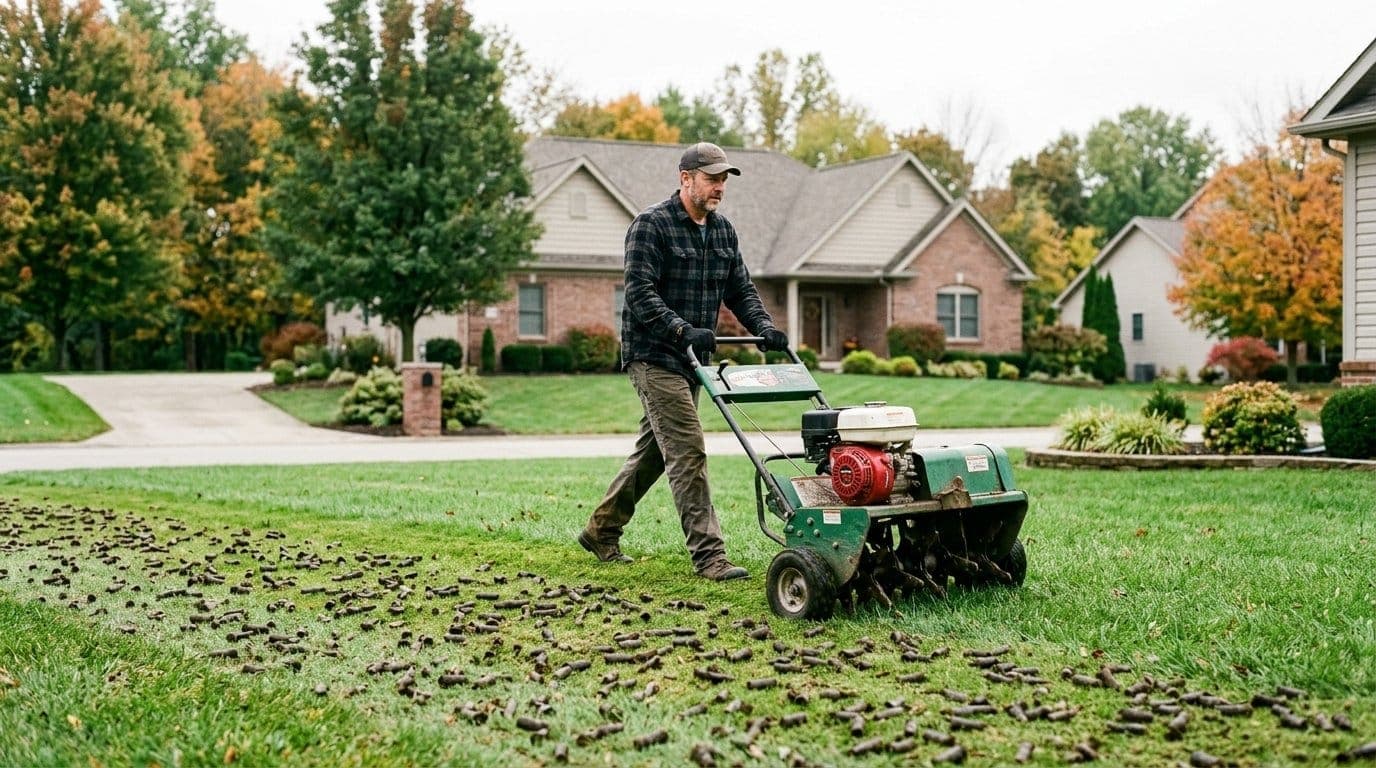
If keeping up with the drop is not realistic this year, our seasonal cleanup service handles leaf cleanup, bed preparation, and perennial cutbacks across the Tri-State area, and it pairs naturally with regular mowing through the fall and mulch and bed care heading into spring. If you are also aerating this fall, our guide to core aeration and overseeding covers that window and the full process, and it is worth keeping leaves off any newly seeded areas so the seedlings get light.
The short version: mow them in early and often, shred what is left into your beds, compost the remainder, and bag only what is genuinely excess. Reach out if you would rather have someone else keep up with it this year.
Sources: Virginia Cooperative Extension, Lawn Leaf Management (430-521); Purdue Turfgrass Science; Kowalewski et al., Mulched Maple and Oak Leaves Associated with a Reduction in Common Dandelion Populations in Established Kentucky Bluegrass, HortTechnology 19(2), 2009.