A real Christmas tree should still be drinking water on New Year's Day. Plenty of them stop drinking in the first week, shed half their needles by the middle of December, and get written off as a bad tree. Most of the time the tree was fine. What went wrong happened in the first hour after it got home.
Picking well comes down to four decisions: which variety you start with, how fresh the tree was when you found it, whether it actually fits the room, and what you do to the trunk before it goes in the stand. This guide covers all four for the Tri-State area, including Newburgh, Evansville, and the surrounding parts of Southern Indiana, Southern Illinois, and Western Kentucky.
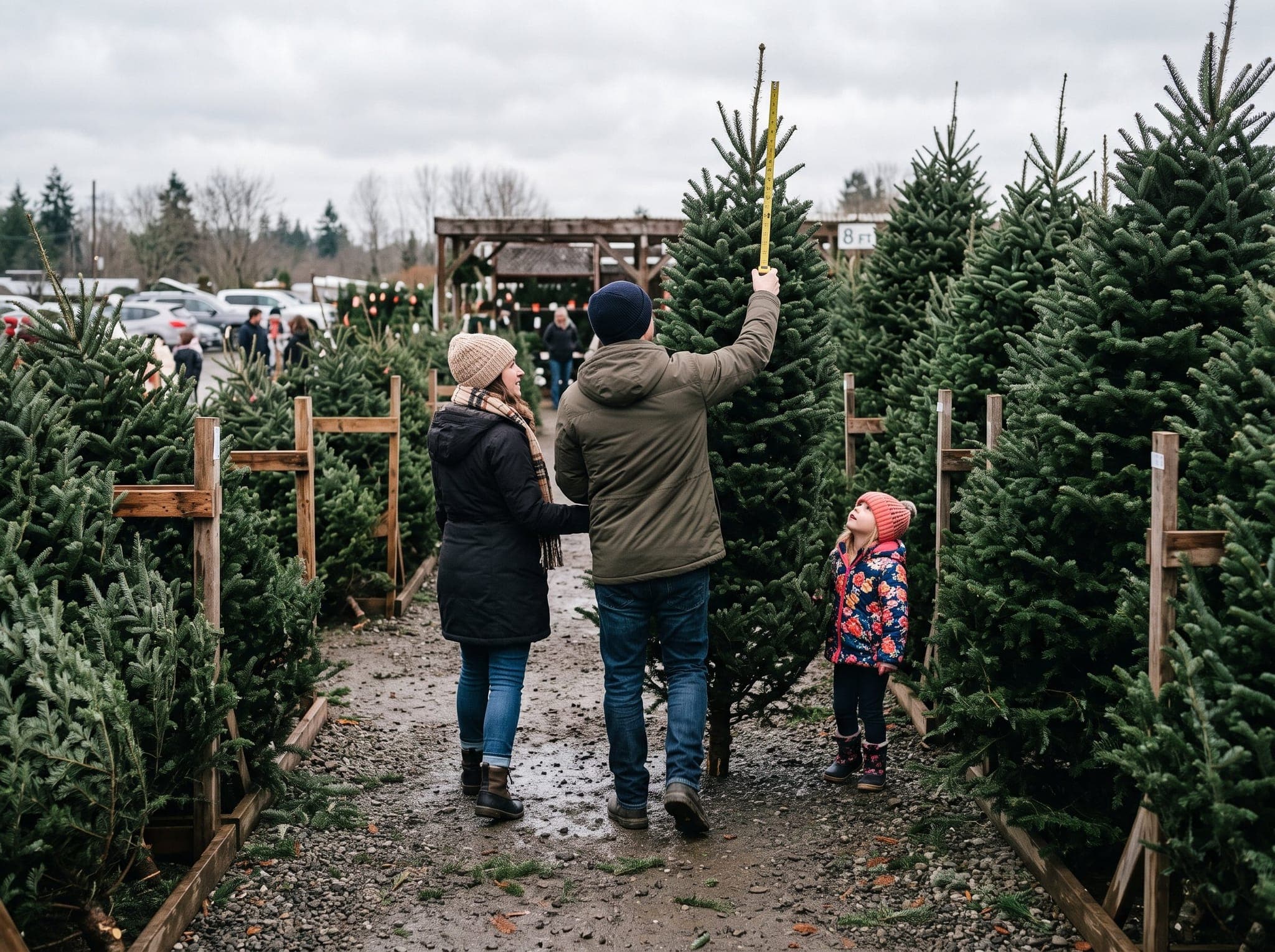
Which Christmas Tree Variety Holds Its Needles Longest?
Fraser fir is the best all-around choice for most homes. Purdue Extension rates its needle retention as excellent and its branches as stiff, and describes the needles as beautiful dark green with a silvery underside. Excellent retention plus stiff branches is the combination that matters if you hang anything heavy.
Five varieties earn that top retention rating from Purdue: Fraser fir, concolor fir, Canaan fir, Scotch pine, and eastern white pine. Douglas fir comes in at good. Both spruces, blue and Norway, are rated only fair, which is the single most useful thing to know before you fall in love with a blue spruce on the lot.
Branch stiffness is the spec people forget. Purdue is direct about eastern white pine: the branches are not stiff and the tree "will not hold heavy ornaments." It is a genuinely beautiful tree with long soft needles, and it is the wrong tree for a collection of glass and pewter. Fraser, concolor, blue spruce, and Norway spruce all rate as stiff.
- Needle retention
- Excellent
- Fragrance
- Fragrant
- Branch stiffness
- Stiff
- Needle length
- 1"
- Best for
- The all-around pick, heavy ornaments
- Needle retention
- Excellent
- Fragrance
- Citrus
- Branch stiffness
- Stiff
- Needle length
- 2"
- Best for
- Silver-blue color, a different scent
- Needle retention
- Excellent
- Fragrance
- Fragrant
- Branch stiffness
- Moderately stiff
- Needle length
- 1"
- Best for
- A close stand-in for Fraser
- Needle retention
- Excellent
- Fragrance
- Pine-like
- Branch stiffness
- Good
- Needle length
- 1.5" to 3"
- Best for
- Holding needles over a long season
- Needle retention
- Excellent
- Fragrance
- Pine-like
- Branch stiffness
- Not stiff
- Needle length
- 2.5" to 5"
- Best for
- Soft full look, lightweight ornaments
- Needle retention
- Good
- Fragrance
- Fragrant
- Branch stiffness
- Moderately stiff
- Needle length
- 1"
- Best for
- A soft, full, traditional shape
- Needle retention
- Fair
- Fragrance
- Pungent
- Branch stiffness
- Stiff
- Needle length
- 1.5"
- Best for
- Color and strong branches, living trees
- Needle retention
- Fair
- Fragrance
- Pungent
- Branch stiffness
- Stiff
- Needle length
- 1.5"
- Best for
- Living trees, shorter display window
Fragrance is worth a thought too, because it is not all the same smell. Concolor fir smells like citrus rather than pine, which surprises people who assume every real tree gives off the same scent. The spruces are pungent. The firs are the classic holiday smell most people are actually picturing.
If you only remember one pairing, remember this one: excellent needle retention and stiff branches together point at Fraser fir, concolor fir, and Canaan fir. Everything else is a trade.
One local detail that explains a lot about what you will find on lots around here. Purdue notes that Fraser fir and Canaan fir only grow on well-drained soils, need fertilization, and are "in relatively short supply as choose-and-cut trees, especially in southern Indiana." Canaan fir has caught on at choose-and-cut farms across Indiana "except the southwestern portion," which is exactly where we are. Scotch pine remains the most commonly grown Christmas tree in the state.
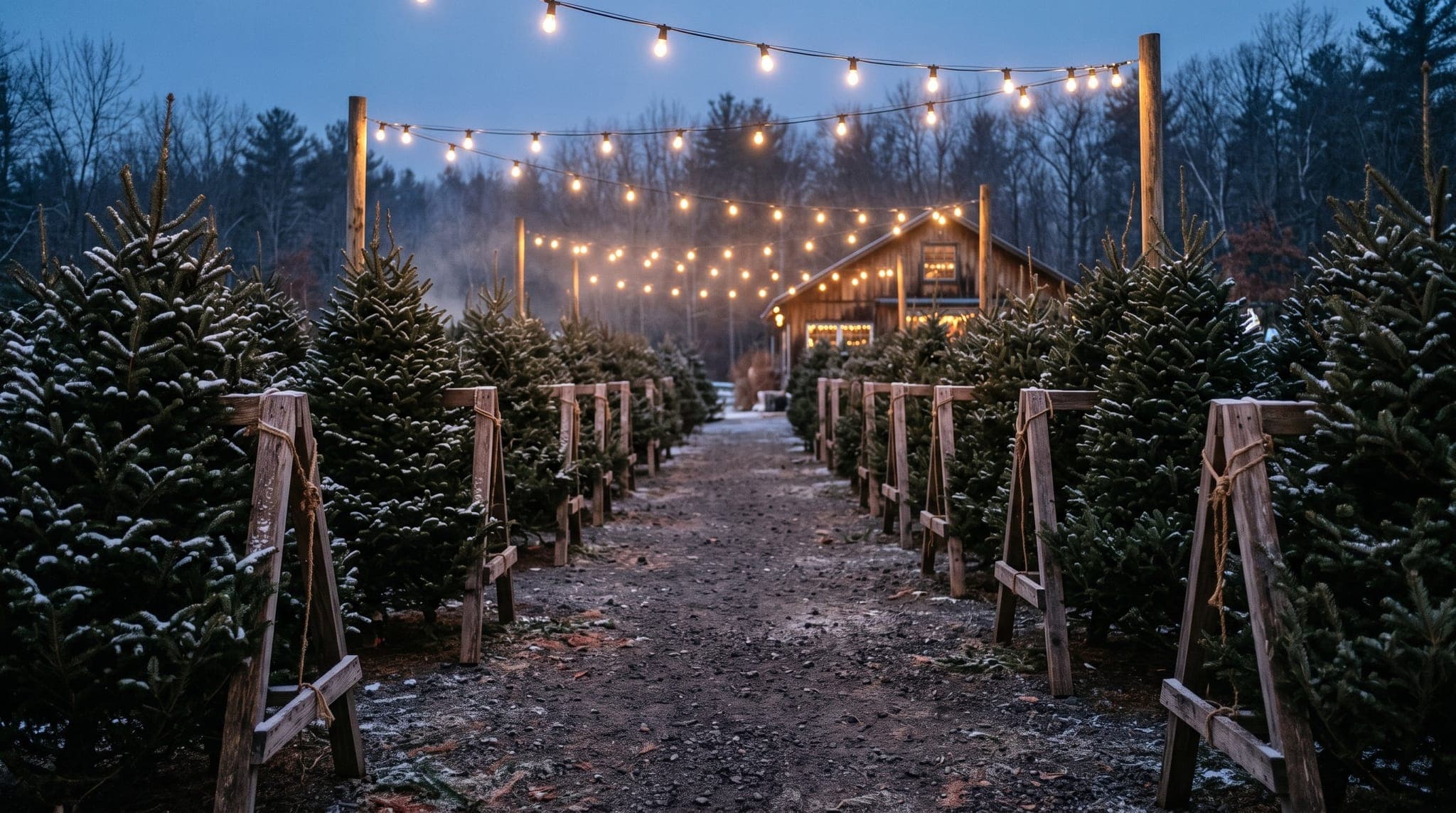
So if your heart is set on a Fraser, the practical route in this corner of Indiana is a lot that brings in fresh-cut trees on a schedule rather than a field you walk with a saw. Our holiday and seasonal lot takes deliveries weekly through the season and carries fir, spruce, and pine from tabletop size up to twelve feet.
The Three Tests That Tell You a Tree Is Fresh
Three quick checks separate a fresh tree from one that has been cut and sitting for weeks, and all three take about fifteen seconds.
Iowa State Extension describes them plainly. The needle test: "The needles on a fresh tree will be pliable. Those on a dry tree will be brittle." The branch test: "Gently bend the outer branches. Fresh trees will have pliable branches that don't easily snap." And the bounce test, which is the one most people skip. Lift the tree by the trunk and bounce the base against the ground. "Heavy needle drop indicates a dry tree."
Penn State Extension adds a useful piece of reassurance about what is not a problem. Look for "flexible needles that remain firmly attached when you tug on them," and treat it as a warning sign if they "pull out easily, or if they appear dull, lifeless green." But brown needles deep inside the tree are normal, because "all needled evergreens shed their oldest needles every year." Inner browning is the tree's ordinary housekeeping. Outer needles letting go is the problem.
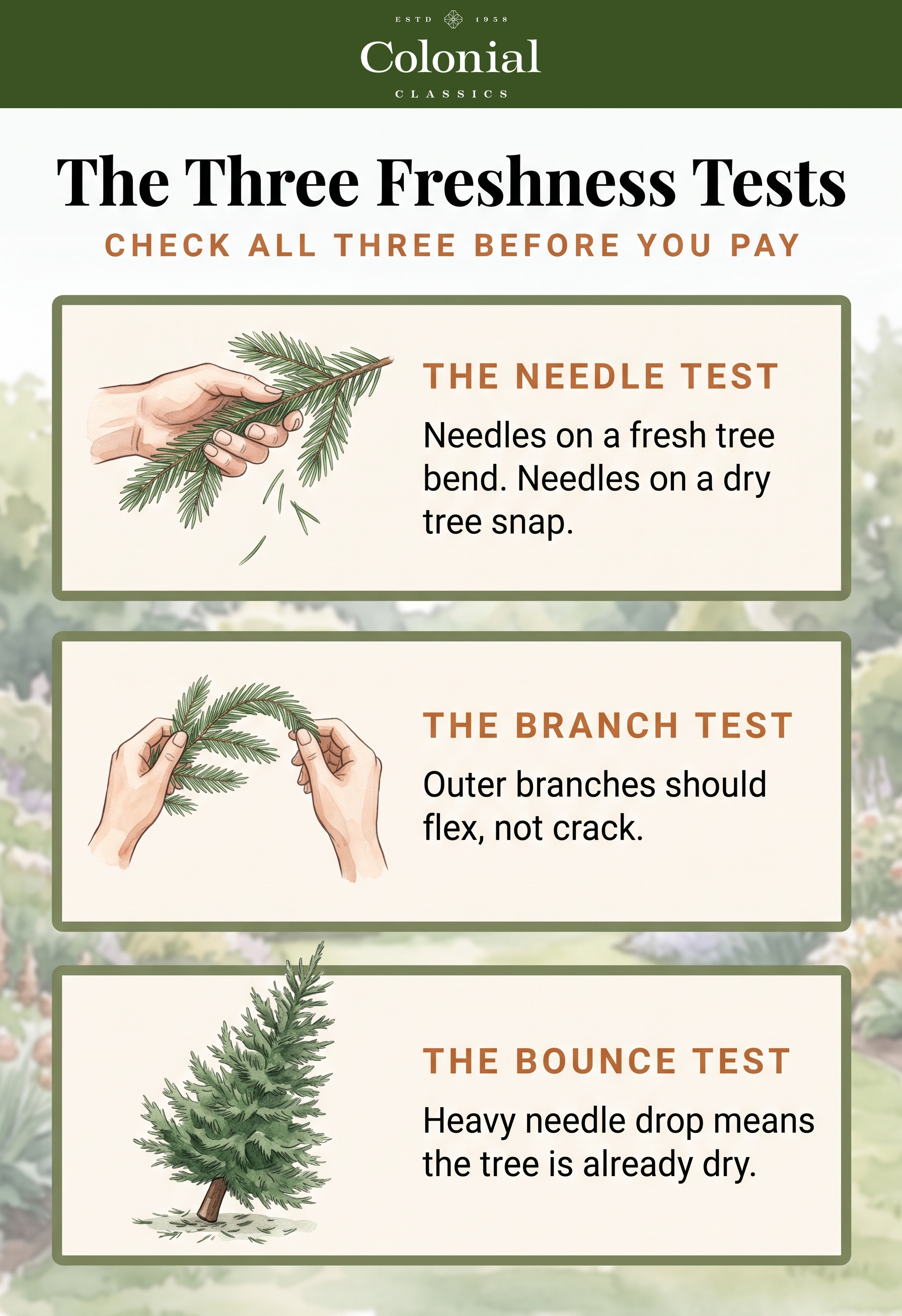
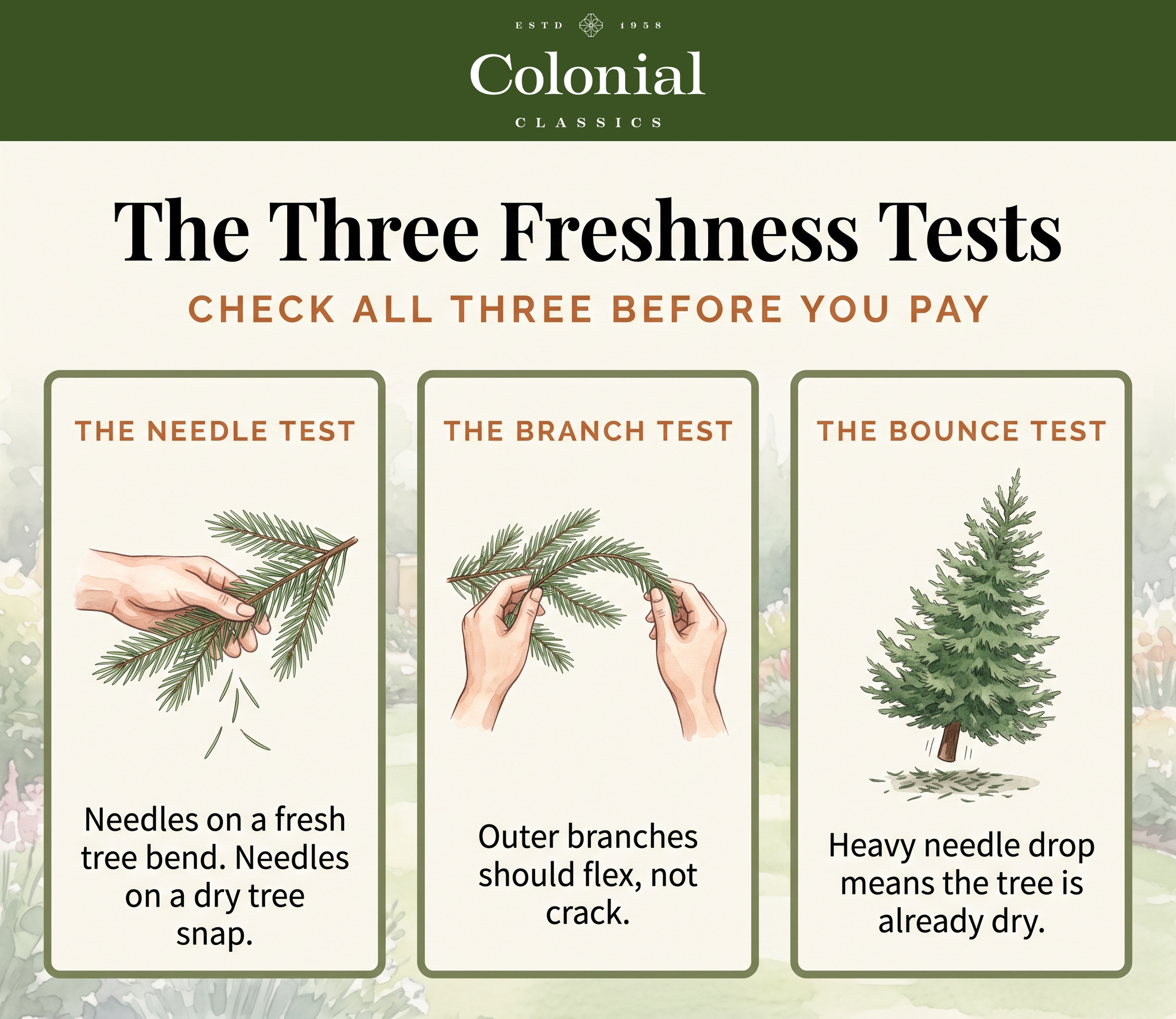
Bring a pair of gloves and use your bare hand anyway. The needle and branch tests both depend on feeling whether the needles bend or crack, and you cannot feel that through a winter glove. Check two or three branches at different heights, not just the one at eye level.
What Size Tree Actually Fits Your Room
Measure your ceiling first, then subtract. A tree stand lifts the trunk a few inches off the floor, and a topper needs its own clearance above the leader, so the tree itself has to be noticeably shorter than the ceiling is tall. For a standard eight foot ceiling, a seven foot tree is usually the honest maximum and a six and a half foot tree looks better.
Width is the measurement people skip and regret. A full Fraser or Douglas fir can run four to five feet across at the base, and that footprint has to clear furniture, walkways, and whatever the tree skirt and presents need. If the tree is going in a corner, measure the corner. If it is going in front of a window, measure the window.
Then account for the illusion, which is real and catches almost everyone. Iowa State Extension puts it directly: "trees in a field or outdoor lot will not look as tall or wide as it will in your home." Open sky and neighboring trees shrink everything. The fix is free. Bring a tape measure to the lot and use it.
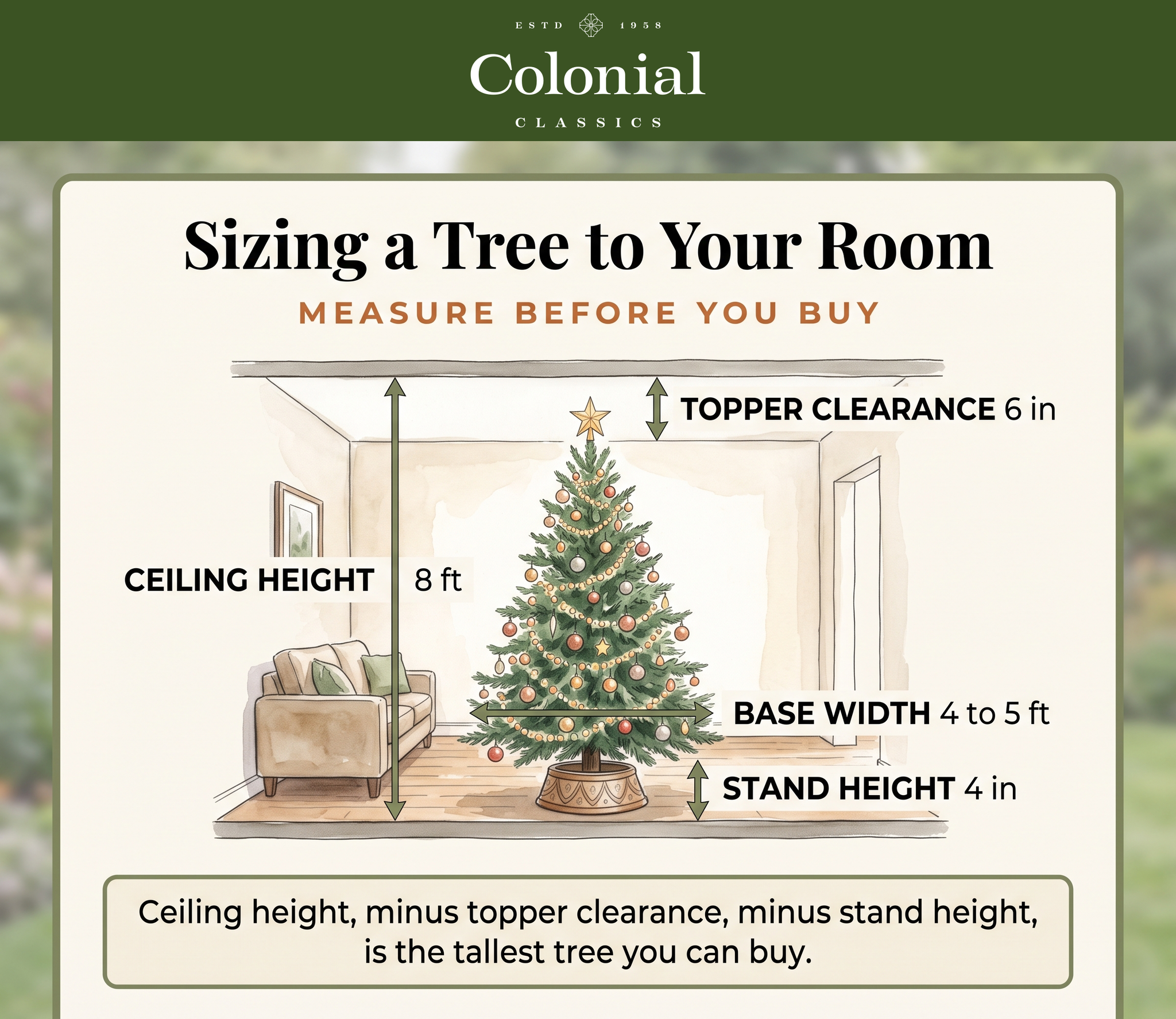
A practical note on doorways. A tree that measures five feet wide in the field goes through a thirty six inch door without trouble, because the branches fold up when you carry it butt first. Width limits where the tree can stand, not whether it can get inside.
When to Buy a Christmas Tree
Buy when the fresh trees first arrive if selection matters to you, which around here means the week before Thanksgiving. Popular sizes and the most wanted varieties move quickly, and the lot thins out in both directions as the season goes on. Early shoppers get the widest choice.
Here is the part that runs against intuition. Buying later does not get you a fresher tree. Penn State Extension notes that "most commercially available Christmas trees are harvested the first couple weeks of November," so the tree you buy on December 10th was very likely cut within days of the one you would have bought on November 22nd. What separates them is how they were stored in between, and whether anyone kept them in water.
That makes the storage question the one worth asking out loud at the lot. A tree kept shaded, out of the wind, and standing in water is in better shape three weeks after harvest than a tree that spent one week leaning dry against a sunny fence.
If you buy early and decorate later, store the tree properly in between. Purdue says a tree that will not be set up for a few days or longer "should be stored in a cool location out of the wind and sun," and that cutting a half inch off the trunk and standing it in cool water will help it stay fresh. An unheated garage or the shaded north side of the house works. Leaning it dry against the siding does not.
Setting It Up So It Keeps Drinking
The fresh cut is the whole ballgame, and it is the step most people skip. Purdue Extension explains the mechanism: a tree cut more than six to eight hours ago "will not be able to absorb water, because the exposed cells become blocked." Saw a fresh disk off the base and "water will again be able to move upwards." Penn State says a quarter inch disk is all it takes, cut straight across rather than at an angle or into a V shape.
Everything else follows from keeping that fresh cut underwater from then on.
Size the stand to the trunk, not to the tree. Purdue recommends a reservoir holding "at least one quart for each inch of stem diameter," and Penn State Extension adds that most trees want a stand holding at least a gallon. Then expect the tree to drink hard at first: Purdue says "a seven-foot tree may easily take two quarts of water a day for the first week," slowing down after that.
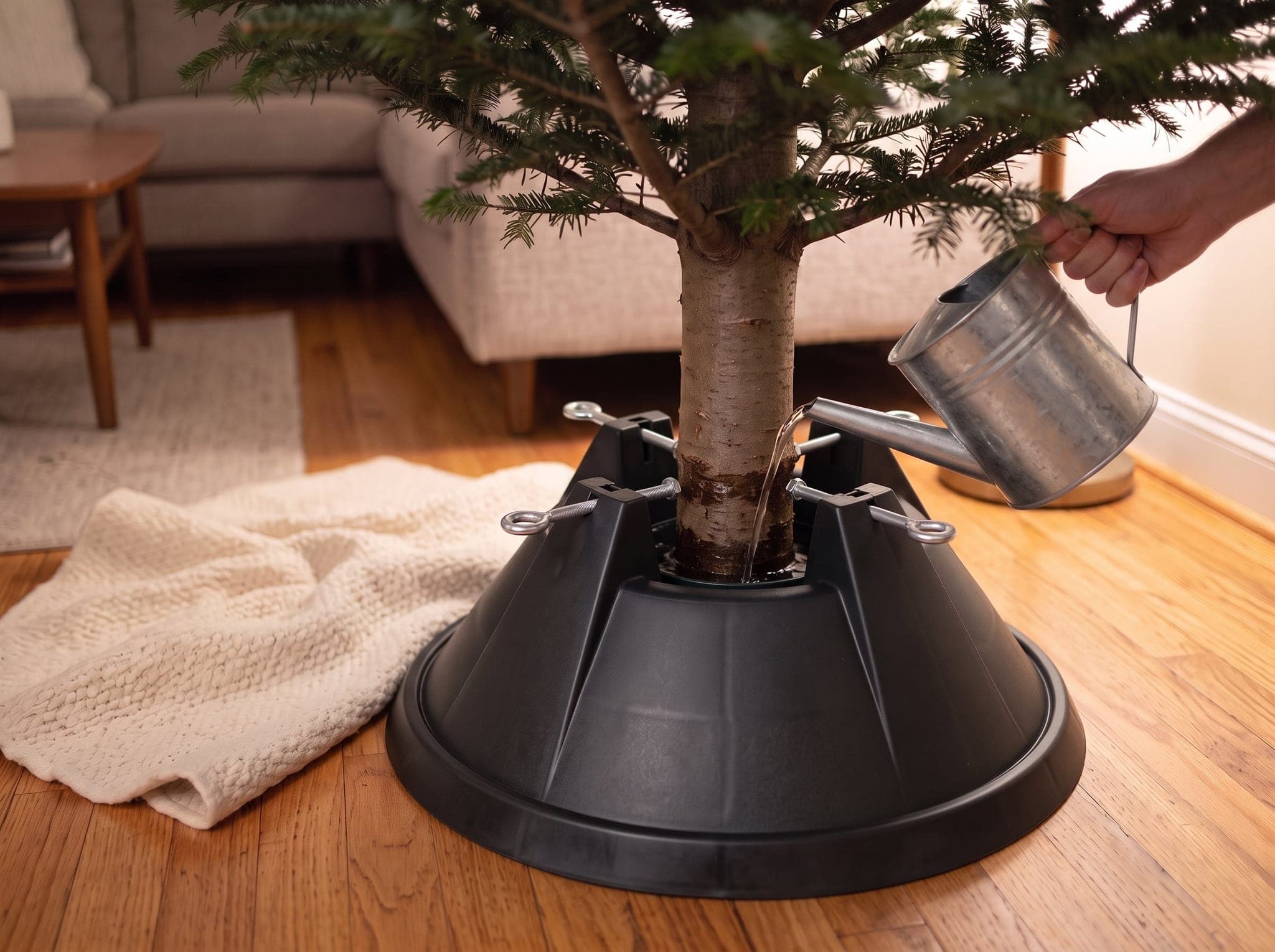
Two more things worth getting right:
- Plain water, nothing added: Penn State says "clean water is all that is needed to maintain freshness," and Purdue agrees that additives "probably do not add to the tree's life once it is cut." Aspirin, sugar, bleach, and soft drinks are all folklore.
- Never shave the trunk to fit the stand: Iowa State Extension warns against it because the outer layer of wood just under the bark does most of the water uptake. Shaving it off defeats the fresh cut you just made. Buy the bigger stand.
And keep it away from heat. Fireplaces, wood stoves, floor and wall vents, and sunny windows all pull water out of the needles faster than the trunk can replace it. A cooler room means less daily watering and a tree that holds on longer. If you also have fresh wreaths or garland in the house, the same logic applies to them, and we go deeper on conditioning cut greenery in our guide to keeping a fresh wreath from drying out.
What If You Want a Tree That Lives
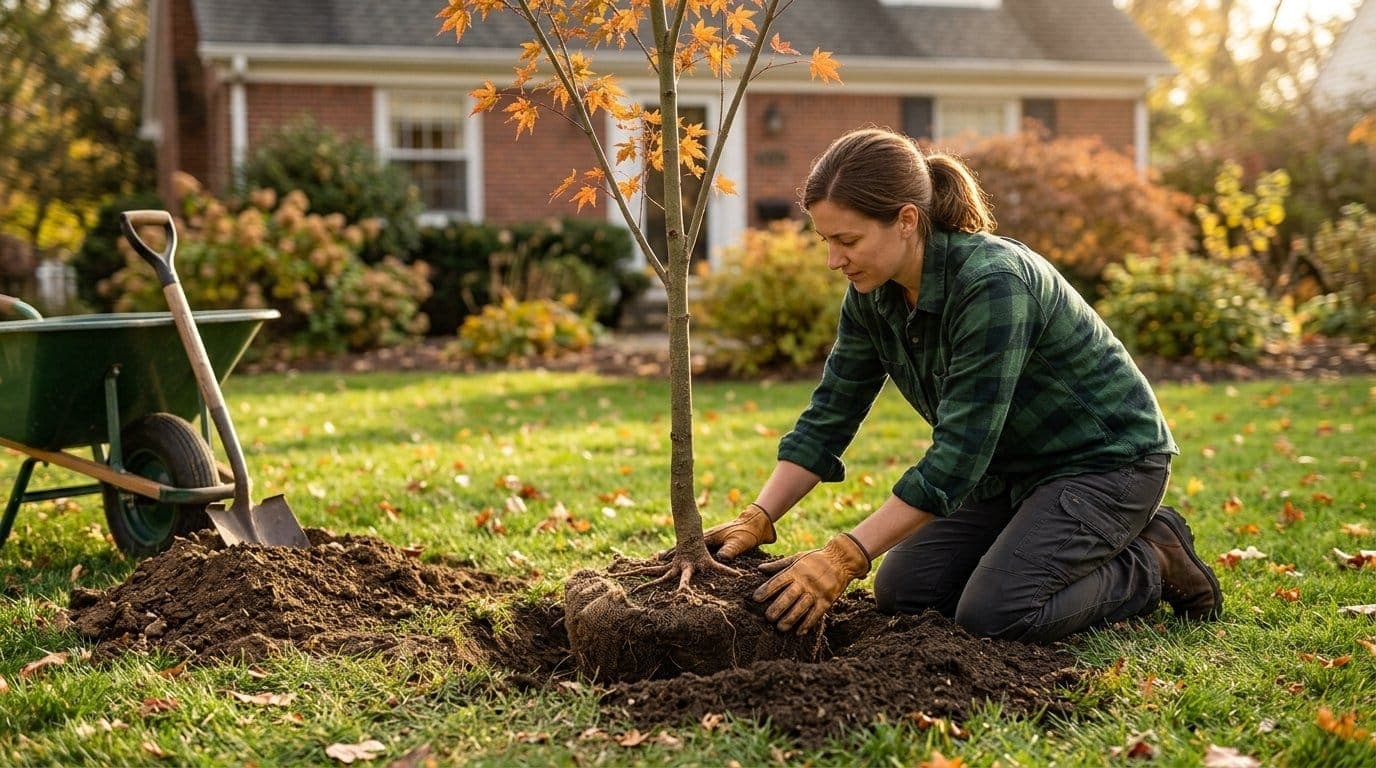
A living tree in a root ball is a real option here, with two hard rules. Purdue Extension is specific: a living tree bought in late November or December is dormant and "should not be brought into a warm house for more than about ten days." Past that it starts to break dormancy, and a tree that breaks dormancy in your living room "will likely die" once it goes in the ground.
The second rule is about the transition. Do not move the tree from a warm house straight out into the cold. Purdue says to let it shift from warm to cool to cold "a few days at a time." A garage makes a good middle step.
Dig the hole before the ground freezes, which is the piece people discover too late. Purdue recommends preparing the planting hole in advance, filling it back with the loose soil, and covering the pile with leaves and weighted plywood so it does not freeze solid. Then the hole is ready in January when you need it. If the ground does freeze before you get to it, keep the tree in its container somewhere sheltered from sun and wind, keep it watered, and plant in spring.
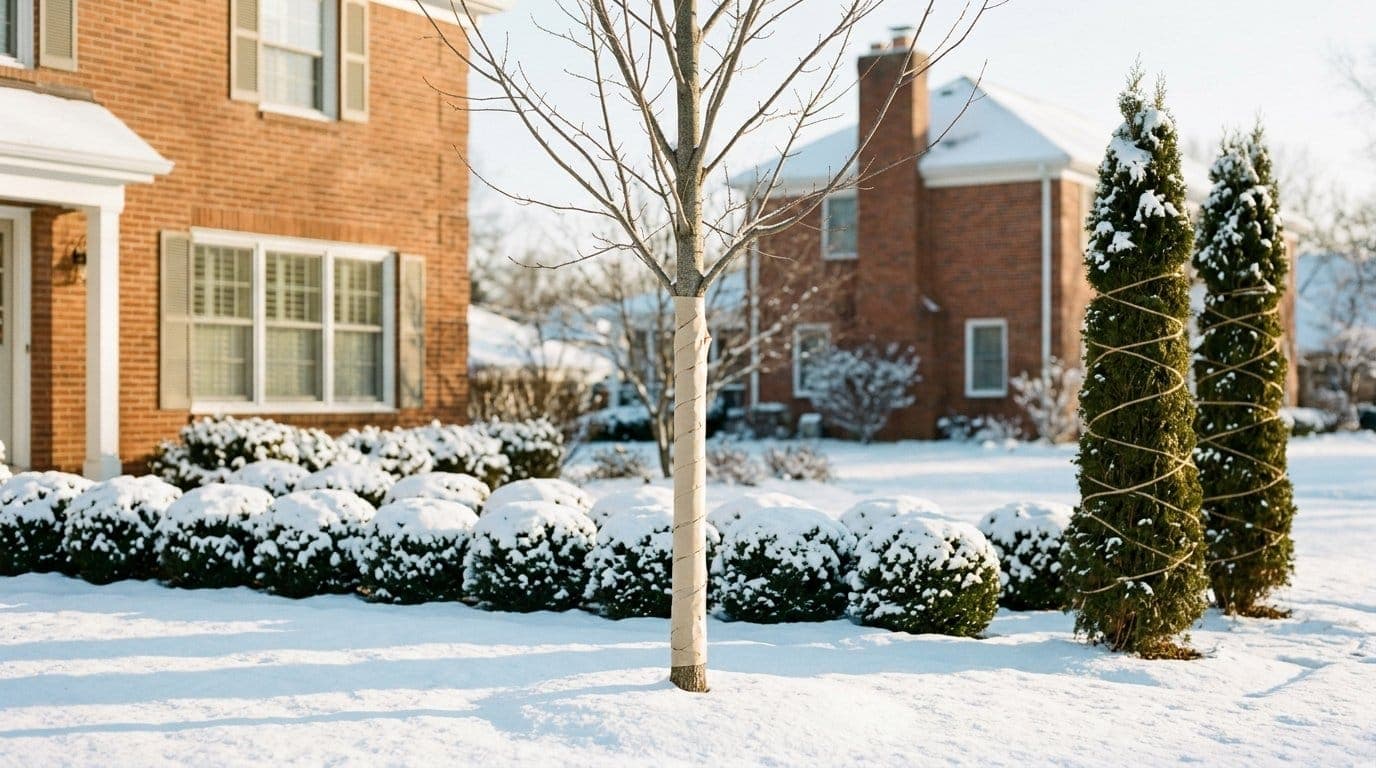
Once it is planted, treat it like any new evergreen going into its first winter: water it deeply until the ground freezes and shield it from drying wind. We cover the details in our guide to protecting trees and shrubs in winter.
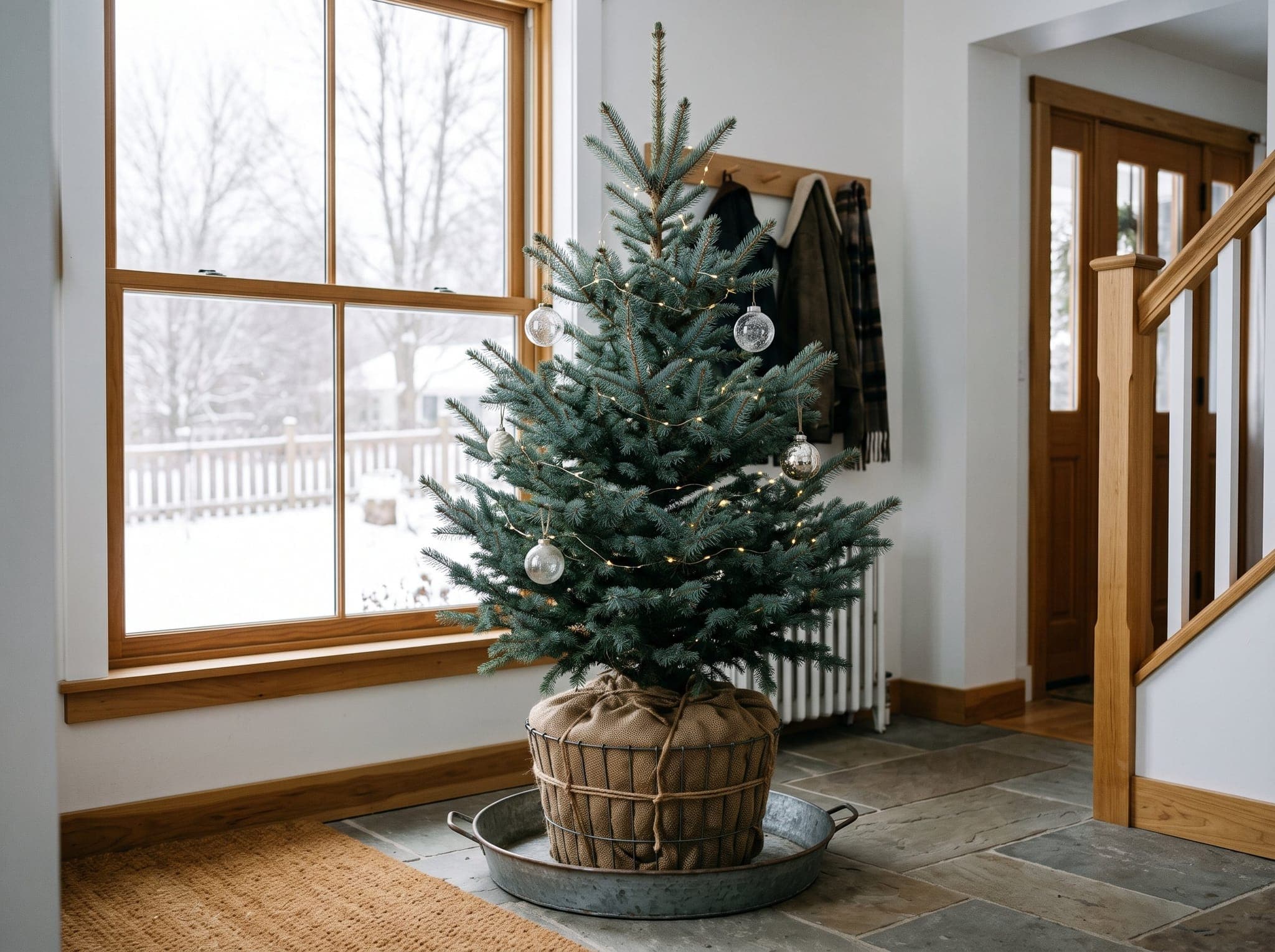
Species matters more for a living tree than a cut one, because now you are choosing a permanent landscape plant. Purdue ranks the easiest to transplant as white pine and spruce, followed by concolor fir and Douglas fir. Fraser fir is "particularly difficult to raise," and Scotch pine is prone to insect and disease problems and develops poor form as it ages. Blue spruce and Norway spruce are the traditional living-tree picks for good reason.
Keep the lights sparing on a living tree. Purdue notes the heat from Christmas lights "can kill living cells in the needles and bark." We stock balled and container-grown evergreens in trees and shrubs, and if you would rather not wrestle a two hundred pound root ball in January, our planting services team can put it in the ground for you. Southern Indiana sits in USDA Zone 7a, which gives you a wide range of evergreens that will be comfortable here for decades.
Keeping the Tree Safe Through the Season
A watered tree is a safe tree, and a dry one is genuinely dangerous. This is the real reason the daily water check matters beyond keeping the needles on.
NFPA puts it at 35 percent: "More than one-third (35 percent) of U.S. home fires involving Christmas trees occur in January." That is after the decorating is over and the tree has spent six weeks drying out in a heated house. The hazard is almost never the fresh tree in early December. It is the forgotten one after New Year's.
These fires are rare but serious when they happen. NFPA counts an annual average of 143 home structure fires starting with Christmas trees between 2020 and 2024, causing seven deaths, 13 injuries, and $15 million in property damage each year. The reason the water matters is simple enough that NFPA states it outright: "A dried-out Christmas tree will burn much more quickly than a well-watered one."
Three habits cover most of the risk: keep the reservoir full, keep the tree at least three feet from any heat source, and use lights rated for the job. Purdue recommends using "only approved ornamental lights, which produce low heat." Turn them off when you leave the house and before bed.
When and How to Take It Down
Take the tree down once it stops drinking and the needles stop feeling pliable, whether or not the calendar says the season is over. The needle test that got you the tree is the same test that tells you when it is finished.
Disposal options in the Tri-State area change from year to year and differ by county. Some communities run curbside tree collection on set dates, some county recycling districts take trees at a drop-off site during business hours, and some years neither one runs on the schedule you remember. Check with your own city or county solid waste district in early December for that season's dates and locations rather than relying on what happened last year. Strip every ornament, hook, light strand, and length of tinsel first, because almost no program will take a decorated tree.
Get it out of the house and into that program promptly rather than parking it somewhere convenient. NFPA recommends using the local community's recycling program and says trees "should not be put in the garage or left outside," because a dried tree leaned against the house is the same fire load it was indoors.
Two things to never do with a cut tree: do not burn it in a fireplace or wood stove, because the resin burns hot and fast and builds creosote in the flue, and do not sink it in a pond without checking local rules first. If recycling is genuinely not an option and you have the acreage, a cut tree makes decent winter cover for birds, but keep it well away from the house and any outbuilding for the reason above, and clip the branches off in spring to mulch beds.
Picking Yours Out
The short version: look for excellent needle retention and the branch stiffness your ornaments need, run the three freshness tests before you pay, measure your ceiling and your corner before you leave the house, and make a fresh cut across the trunk the hour the tree arrives. That is most of the difference between a tree that quits in two weeks and one that is still holding needles when the decorations come down.
Fresh-cut trees arrive at our holiday and seasonal lot the week before Thanksgiving and run through Christmas, in fir, spruce, and pine from tabletop to twelve feet, with new deliveries weekly through the season. Wreaths, garland, poinsettias, and custom planters go up at the same time, and the team runs make-and-take wreath and planter workshops through the holidays. Come walk the rows, bring your tape measure, and ask whoever is out there which trees came off the truck that morning. Get in touch if you want to know what is on the lot before you drive out.