
A fresh wreath that goes up the day after Thanksgiving should still look good on New Year's Day. Plenty of them are shedding by the second week of December, and it is almost never the cold that does it. Cut greenery dies of thirst, and the two things that dry it out fastest are afternoon sun and the warm air coming out of your own house.
That is worth knowing because thirst is the one problem you can actually solve. How to keep a fresh wreath from drying out comes down to three decisions: which evergreen you start with, what you do to it in the first twenty four hours, and where you hang it. Get those right and the same wreath that used to quit in three weeks carries the whole season. This guide covers all three for USDA Zone 7a, which takes in Newburgh, Evansville, and the wider Southern Indiana, Southern Illinois, and Western Kentucky region.
How Long Does a Fresh Wreath Last?
Outdoors in our climate, a well made fresh wreath usually runs five to eight weeks, which is Thanksgiving through New Year's with room to spare. Indoors it is a few weeks at best, and a week or less if nothing was done to condition it first. Illinois Extension says cut evergreens can be enjoyed indoors for "at least a few weeks time" when they are cared for properly, and that qualifier is carrying real weight.
The gap between those two numbers is entirely about air. Our winter air is cold and damp, which is exactly what cut greenery wants. Indoor air in December is warm and bone dry because the furnace is running, and a wreath hanging in it loses water through its needles all day with no roots to replace what it loses.
That is also why the same wreath can give you wildly different results depending on nothing more than which door it goes on, which is covered in detail further down.
Cold and shade are free, and they matter more than any product you can buy. The single best spot for a fresh wreath is the door that gets the least afternoon sun.
Why Fresh Greenery Browns in the First Place
Browning is dehydration, not cold damage. A cut branch keeps transpiring, which is the ordinary process of losing water vapor through its foliage, but it no longer has roots pulling replacement water up from the ground. Everything in its reservoir is everything it will ever have.
That reframes the whole job. You are not trying to keep a wreath warm or protect it from frost. Frost is fine. You are trying to slow the rate it gives up water and to send it into the season carrying as much water as it can hold. Three things speed that loss up, and all three are within your control:
- Heat: Warm air holds more water vapor and pulls harder on the foliage. This is why a heated room is harder on a wreath than a January cold snap.
- Direct sun: Sun heats the needles themselves, well above the surrounding air temperature, even on a cold day.
- Moving air: A wreath hanging in a wind tunnel between two buildings, or directly under a heat register, dries faster than one in still air.
Frost will not hurt a fresh wreath. The greenery on it was grown outdoors in a colder climate than ours and was fully cold hardy when it was cut. A hard freeze does not damage it. The only real enemies are heat, sun, and time.
Which Evergreens Last Longest When Cut
Fraser fir, balsam fir, boxwood, and magnolia last the longest as cut greenery. Hemlock and spruce last the shortest, and the difference is dramatic enough that the species you choose matters more than anything you do to it afterward.
Clemson Extension puts it directly: "Pines, firs, and cedars are good to use for indoor decoration since they dry out slowly and hold their needles best at warm interior temperatures. They may last for several weeks if properly treated and cared for." It credits firs with "excellent color and needle retention," calls boxwood "long lasting," and notes that magnolia will "hold up very well, even without water."
On the other end, Purdue Extension's guide to holiday greens is blunt about what to skip: "Avoid hemlock and spruce for indoor use since they drop their needles quickly." Both are perfectly good outdoors in the cold. It is the warm room that finishes them.
Boxwood, magnolia, and holly sit in the table below too. All three are broadleaf evergreens, so they carry leaves rather than needles and are judged on how long those leaves hold. Purdue singles out holly and boxwood, noting that "broad-leaved evergreens are commonly used as holiday greens" and that "holly and boxwood are excellent choices." Magnolia is the one that holds up even without water, which is why it works so well in wreaths and garland that never get a drink.
- Holds up
- Excellent
- Indoors?
- Yes
- Fragrance
- Strong
- Notes
- Best all around choice, stiff branches hold ornaments
- Holds up
- Excellent
- Indoors?
- Yes
- Fragrance
- Strongest
- Notes
- The classic holiday scent, slightly softer needles
- Holds up
- Good
- Indoors?
- Yes
- Fragrance
- Sweet
- Notes
- Soft and full, needles bruise if handled roughly
- Holds up
- Good
- Indoors?
- Yes
- Fragrance
- Mild
- Notes
- Long soft needles, the usual backbone of garland
- Holds up
- Good
- Indoors?
- Yes
- Fragrance
- Mild
- Notes
- Stiff needles that stay put, good for exposed doors
- Holds up
- Good
- Indoors?
- Yes
- Fragrance
- Sharp, clean
- Notes
- Blue berries and a silver cast, best worked into a mixed wreath
- Holds up
- Excellent
- Indoors?
- Yes
- Fragrance
- Faint
- Notes
- Broadleaf, the traditional kissing ball and tabletop green
- Holds up
- Excellent
- Indoors?
- Yes
- Fragrance
- None
- Notes
- Holds without water, bronze leaf backs are the look
- Holds up
- Good
- Indoors?
- Yes
- Fragrance
- None
- Notes
- Berries drop before leaves do, keep away from pets
- Holds up
- Poor
- Indoors?
- No
- Fragrance
- Mild
- Notes
- Sheds fast in a warm room, fine outdoors
- Holds up
- Poor
- Indoors?
- No
- Fragrance
- Sharp
- Notes
- Sheds fast indoors, fine on an outdoor door
Most premium wreaths sold around here are Fraser fir, which is the same species that dominates the fresh-cut Christmas tree lot for the same reason. Mixed wreaths that blend fir with cedar, juniper, and pine look richer and last nearly as long.
The Overnight Soak Is the Whole Ballgame
Soaking a fresh wreath overnight before you hang it does more for its lifespan than every other care step combined. Clemson Extension's instruction is to "immerse greenery in water overnight before arranging, allowing the cuttings to absorb the maximum amount of moisture," and to "crush the ends of woody stems to allow the cutting to take in more water."
Almost nobody does this, which is why so many wreaths quit early. A wreath comes home, goes straight on a nail, and starts the season already partly dehydrated from however long it sat on a rack.
The practical version:
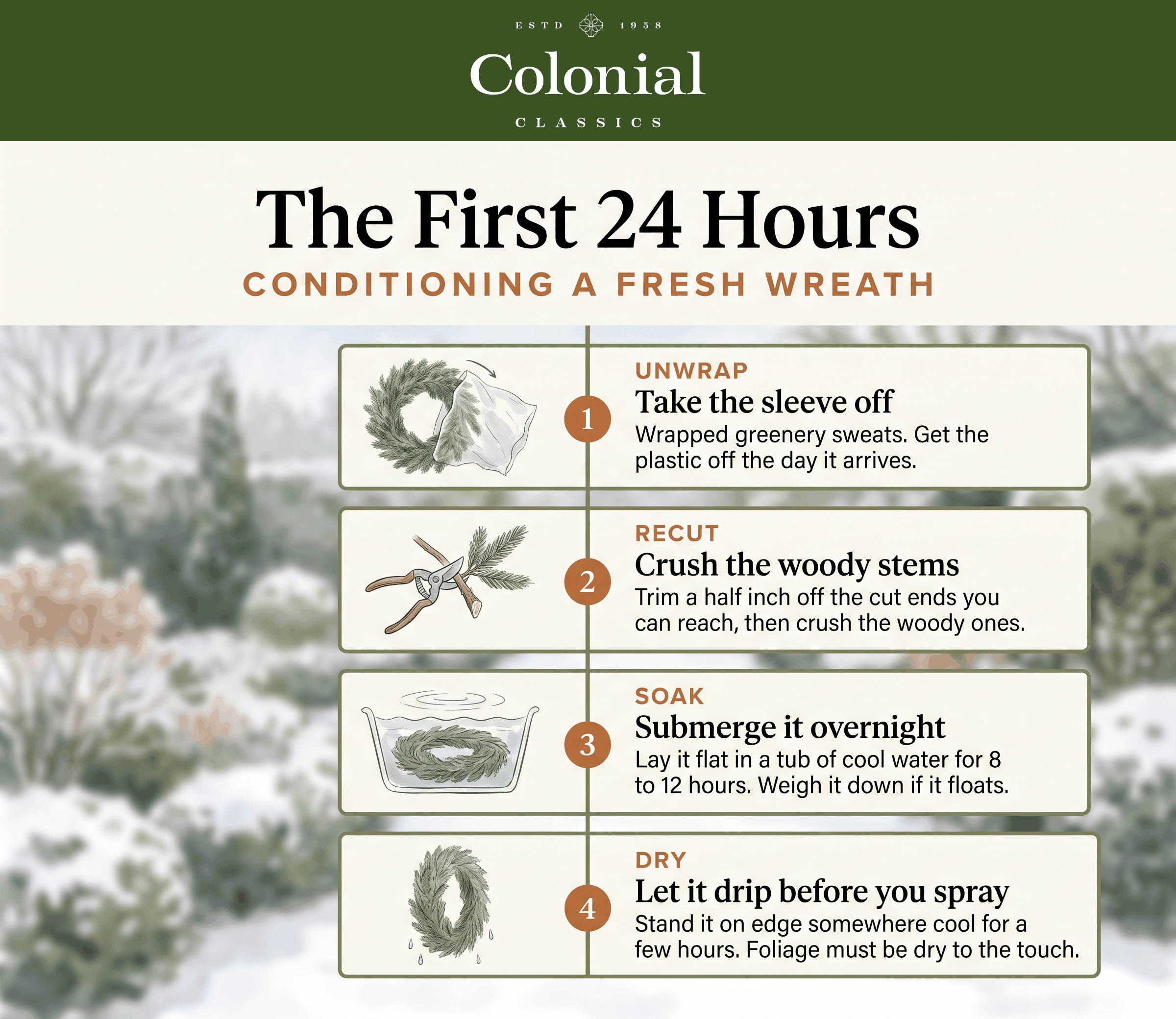
- Unwrap it immediately. If it came in a plastic sleeve, get the sleeve off the day it arrives. Wrapped greenery sweats, and trapped moisture against the foliage causes matting and mold well before drying is ever an issue.
- Recut and crush what you can reach. Trim about half an inch off the cut ends you can get to on the back, and crush the woody ones with pruners or a hammer.
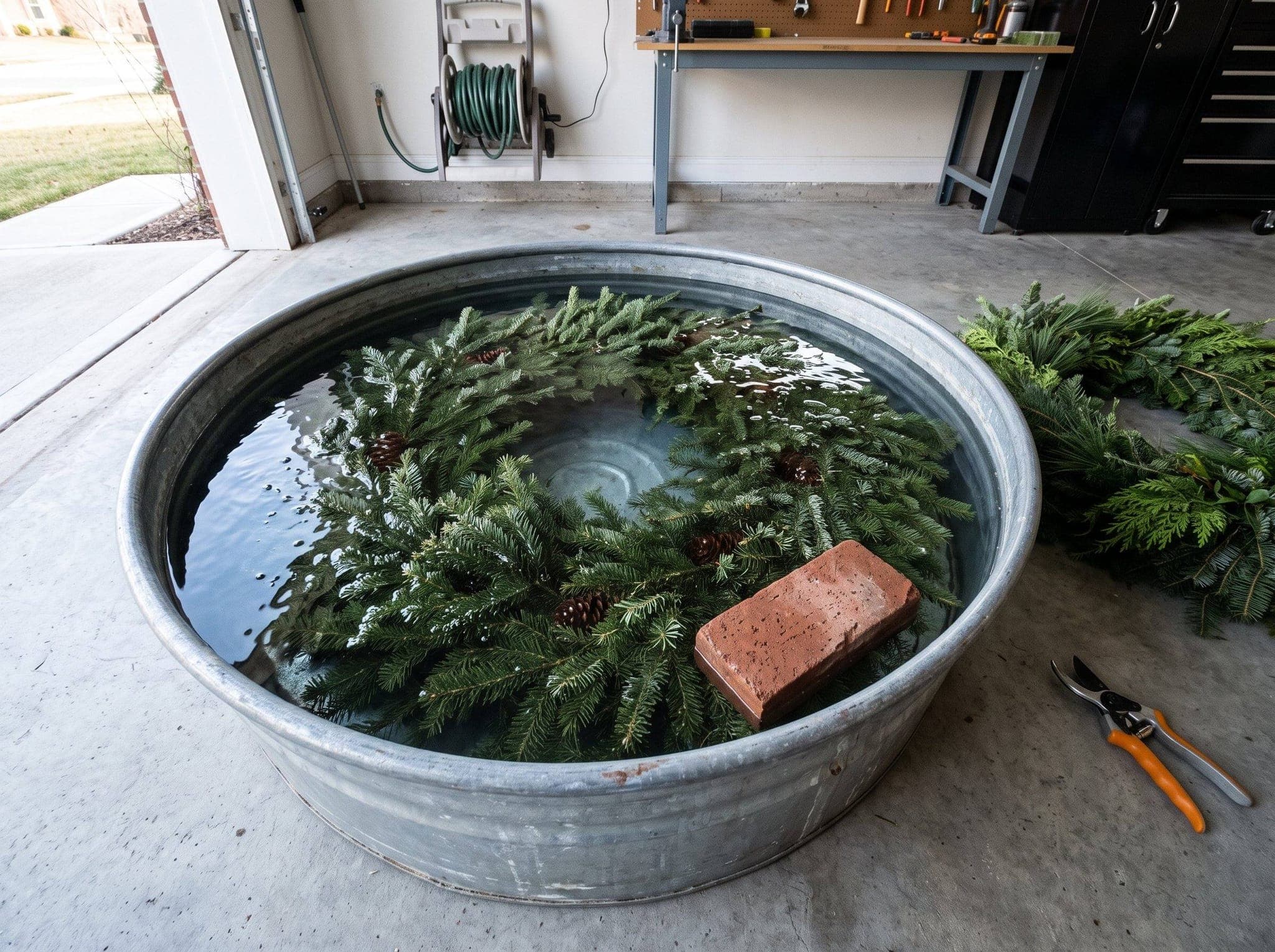
- Submerge it flat for eight to twelve hours. Cool water, fully covered. Weigh it down with a brick if it floats.
- Let it drip dry. Stand it on edge somewhere cool for a few hours. Foliage has to be dry to the touch before any spray or bow goes on.
Garland and roping are easier to soak than wreaths. Coil the whole length loosely into a big tub or a clean trash can and fill it. Because garland has far more cut ends per foot than a wreath does, it takes up water well and the soak pays off even more. If you only remember one thing about how to keep garland fresh, it is this step.
Anti-Transpirant Sprays, and the Three Greens to Never Spray
Anti-transpirant sprays like Wilt-Pruf work by leaving a thin flexible film on the foliage that slows water loss, and extension services do recommend them for cut greenery. Clemson Extension's guidance is to "allow the foliage to dry and spray it with an anti-transpirant, such as Wilt-Pruf, to help seal in moisture."
Then comes the part that gets left out of nearly every holiday article, and it is the reason people ruin good wreaths every year.
Never spray an anti-transpirant on juniper berries, cedar, or blue spruce. Clemson Extension names all three specifically. The blue and silver cast on those greens, and the frosted look of juniper berries, is a natural waxy bloom sitting on the surface. Anti-transpirants dissolve it. You get a wreath that holds moisture slightly better and has lost the exact color you bought it for.
Two more things worth knowing before you spray anything:
- The foliage has to be dry first. Spraying over surface water leaves an uneven film that seals in nothing. Wait until the wreath is dry to the touch after its soak.
- Sticky sprays belong outdoors. Purdue notes that resin-based products "can make the foliage sticky and should be used only on decorations for outdoors or those out of reach indoors." A sticky garland on a stair rail is a mistake you make once.
If your wreath is a mixed one with cedar or juniper worked into it, the simplest call is to skip the spray entirely and lean harder on the soak and on placement. Those two do most of the work anyway.
Does Misting Actually Work?
Misting helps a little, and it is not a substitute for a water source or an overnight soak. Illinois Extension's assessment is that "spritzing regularly with water may help them remain hydrated just a little bit," and that the best bet for a long life is to provide an actual water source.
That is a more honest answer than most holiday advice gives you. The reason misting underdelivers is that surface water on needles evaporates in a couple of hours, and evergreen foliage is built specifically to resist absorbing water through its surface. Waxy needles are a drought adaptation. They shed water by design.
Where misting genuinely earns its place is indoors, where the air is driest and the wreath has no other help coming. If you are misting an indoor wreath every day or two, keep doing it. Just do the soak first, because that is where the actual gain is.
For arrangements that sit on a table, wet floral foam is a real water source and changes the math completely. Illinois Extension recommends it for centerpieces, candle rings, and even wreath bases. Our flower shop builds custom table arrangements to order if you would rather not put one together yourself.
Where You Hang It Matters More Than What You Spray On It
The single highest impact decision is which door the wreath goes on. A north facing door in full shade and a south facing door in direct afternoon sun will take the same wreath to two very different places by Christmas.
Clemson Extension's placement rule is to "never place fresh greenery near heat sources, such as space heaters, heater vents, or sunny windows" and to "keep completed wreaths, garlands, and arrangements in a cool location until use."
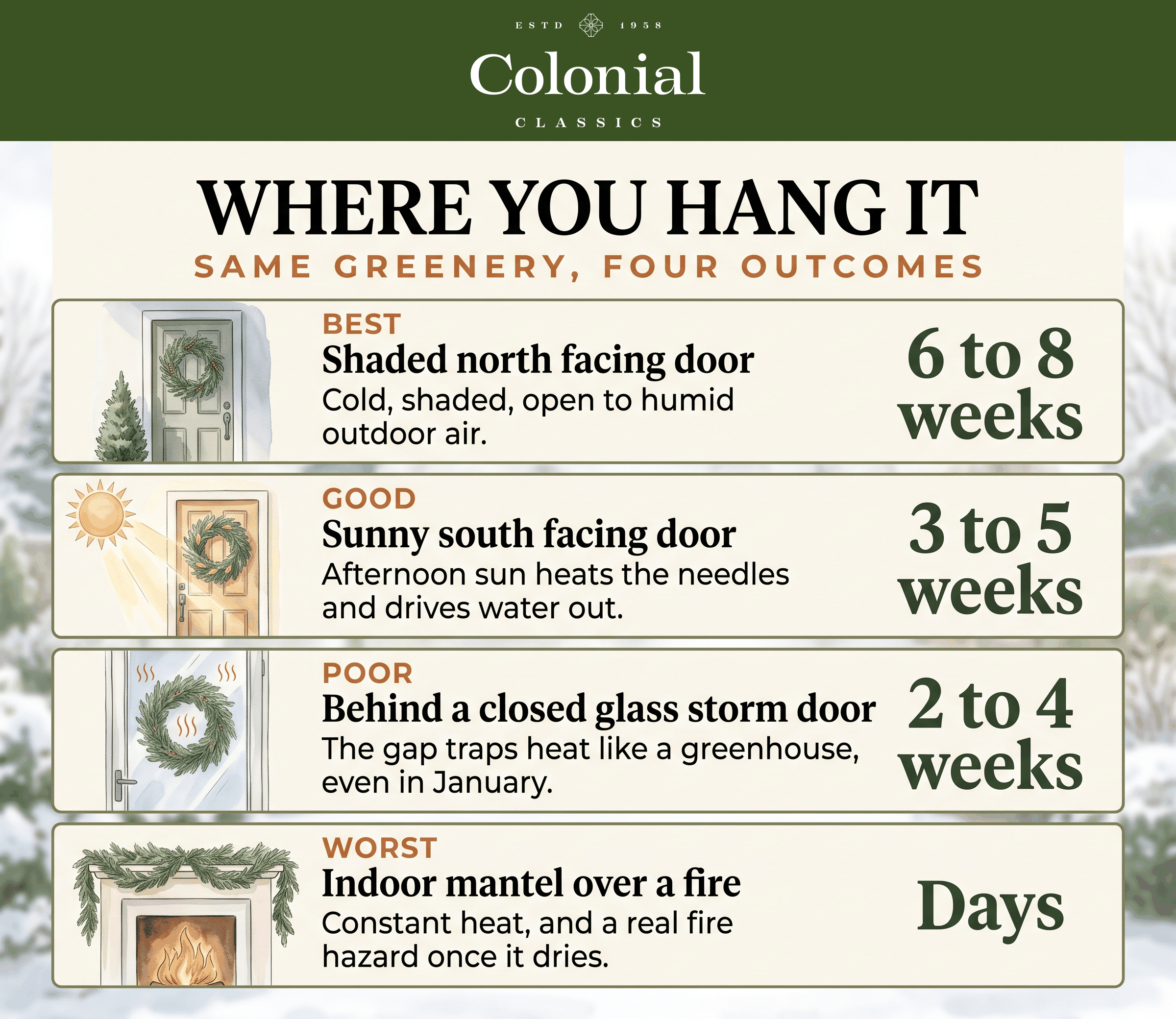
Three placement problems come up over and over in our area:
- The closed glass storm door: This is the one that surprises people. A wreath hanging in the gap between a storm door and the front door sits in a sealed air pocket that heats up in sun like a small greenhouse, even on a cold day. Hang the wreath on the storm door itself, on the outside, or leave the storm door propped.
- The mantel over a working fireplace: Garland over a lit fireplace is both the fastest way to dry it out and a genuine fire risk. If the look matters to you, use a preserved or artificial garland there and save the fresh greenery for somewhere cooler.
- Directly above a heat register: A floor vent under an entry table will cook an arrangement sitting on that table. Move the arrangement, or close that one register.
The same logic applies to anything you have already planted outside. Winter sun and wind dry out evergreen shrubs the same way they dry out a cut wreath, which is covered in our guide to protecting trees and shrubs in winter.
Fresh Greenery and Fire Safety
Dry evergreen decorations burn fast and hot, which makes taking them down on time the last real step in fresh greenery care. According to NFPA data covering 2020 through 2024, US fire departments responded to an average of 835 home structure fires per year that started with decorations other than Christmas trees, causing an annual average of 3 deaths, 29 injuries, and $18 million in property damage. Home Christmas tree fires added another 143 per year.
The timing detail is the useful one. NFPA reports that more than a third of home Christmas tree fires happen in January, after the decorating is over and the greenery has spent six weeks drying out in a heated house. The hazard is not the fresh wreath in December. It is the forgotten one in January.
Purdue is direct about candles too: "candles present a very real fire hazard in close proximity to cut greens. They should be lighted only when someone will be in the room." A candle ring built on fresh greenery is beautiful and should never be left burning unattended, which includes leaving the room for five minutes.
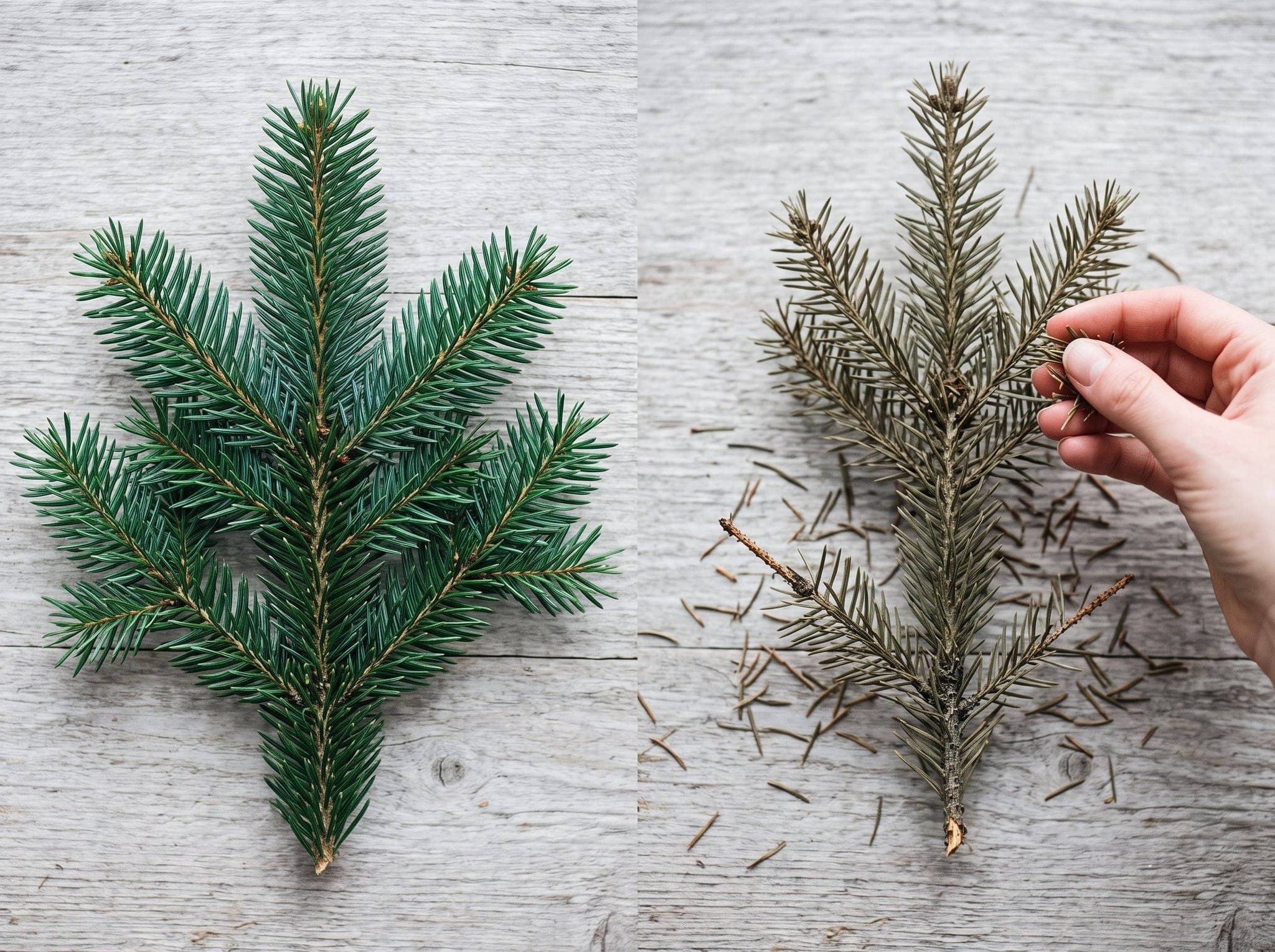
Do the pliability check every week or two. Run a hand through the foliage. If needles come away easily and the small stems snap instead of bending, the greenery is done. Purdue's summary is that the best precaution is to remove or replace greens once they lose their freshness.
Can You Save a Wreath That Has Started to Brown?
No, and any article that tells you otherwise is selling something. Browned needles are dead tissue. Water will not bring the color back, and neither will misting, spray, or a preservative.
What you can do is stop the rest of it from following and make the wreath presentable again:
- Move it colder and shadier. If it has been on a sunny door, relocating it to a shaded entry will slow down the greenery that is still good.
- Replace the worst sprigs. Pull out the browned pieces and tuck fresh boughs into the same spots, binding them in with florist wire. A few fresh cuttings hide a surprising amount of damage.
- Refresh the accents instead of the greens. A new bow, fresh berries, or a handful of pinecones pulls the eye toward the trim and away from thinning foliage.
- Retire it outside. A wreath that is past saving indoors often still looks fine on a garage door or a garden gate for a few more weeks in the cold.
When the season is genuinely over, natural greenery composts or chips. One thing not to do with it: do not burn evergreen boughs in a fireplace or wood stove. Resinous conifer wood flares unpredictably and contributes to creosote buildup in the flue.
Build Your Own, or Let Us Build It for You

Colonial Classics has been in Newburgh for over 65 years, and the holiday season here means fresh-cut Fraser firs, Douglas firs, and blue spruces alongside wreaths, garland, poinsettias, and hundreds of custom holiday planters. Everything is cut and delivered through the season rather than stocked once in November, which is the other half of why a wreath lasts.
If you would rather make your own, the team runs make-and-take wreath and planter workshops every year. Dates go up on our events page as they are set. And if you want a planter or a table arrangement built to fit a specific spot, our flower shop takes custom orders year round.
Come walk the holiday and seasonal displays, pick your greenery in person where you can feel whether it is fresh, and ask us anything at the counter. If you want to talk through a bigger seasonal display for your home or business, get in touch and we will help you plan it.