Fall bulb planting is the single easiest way to guarantee a colorful spring. You dig a few holes in October, drop in the bulbs, cover them up, and forget about them all winter. Then, while the rest of the yard is still brown and asleep, daffodils and tulips push up and bloom on their own. A little work now buys you weeks of the first color of the year, right when you need it most.
This guide covers everything you need to plant spring bulbs successfully in the Tri-State, from timing and depth to which bulbs come back year after year and how to keep the squirrels out of them. Everything here is tuned for USDA Zone 7a, which covers Newburgh, Evansville, and the wider Southern Indiana, Southern Illinois, and Western Kentucky region.
When to Plant Fall Bulbs in the Tri-State
Plant spring-blooming bulbs from October through November, once the soil has cooled to about 55 degrees but before the ground freezes. That cool soil is the signal bulbs are waiting for. It tells them to grow a strong root system through late fall without pushing up leaves that winter would kill.
In Zone 7a, that window is generous. Our first hard frost usually lands in late October, but the soil several inches down stays workable well past Thanksgiving and often into early December. The sweet spot is mid-October through late November. Plant too early, in warm September soil, and bulbs can sprout prematurely or rot. Wait too long and you lose rooting time, though a late planting still beats no planting at all.
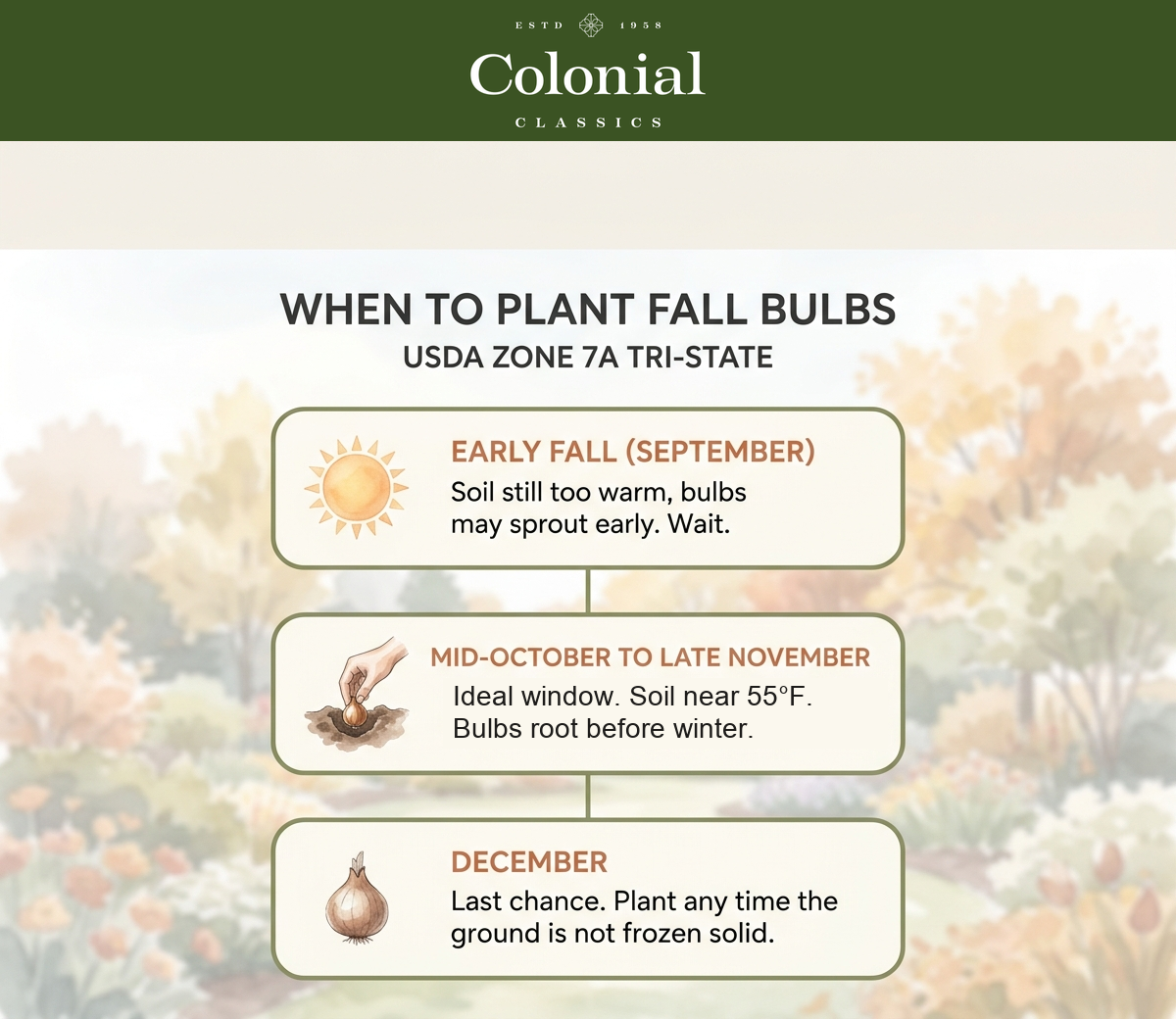
One thing you do not need to do here is refrigerate your bulbs first. Spring bulbs need roughly 12 to 16 weeks of cold below 45 degrees to trigger blooming, and our winters deliver that chilling for free. Pre-chilling in the fridge is only necessary in Zone 8 and warmer. In the Tri-State, you plant straight into the ground and let winter do the work. Purdue Extension recommends getting bulbs in the ground with enough time to root before hard freezes set in.
Which Bulbs to Plant in Fall
The bulbs you plant in fall are the spring bloomers, the ones that need a cold winter to flower. Daffodils, tulips, crocus, hyacinths, alliums, and grape hyacinth are the classics, and each brings something different to the spring garden. Summer bloomers like dahlias and gladiolus are the opposite, they are planted in spring, so leave those for later.
Here is how the most popular spring bulbs compare for our region, so you can match them to your sun, your critters, and how much you want to replant.
- Bloom Time
- Early to mid spring
- Critter Proof
- Yes
- Returns Yearly
- Yes, multiplies
- Best For
- Naturalizing, low maintenance color
- Bloom Time
- Mid to late spring
- Critter Proof
- No
- Returns Yearly
- Often just 1 to 3 years
- Best For
- Bold color, formal beds
- Bloom Time
- Very early spring
- Critter Proof
- No
- Returns Yearly
- Yes, multiplies
- Best For
- First color, lawns and borders
- Bloom Time
- Mid spring
- Critter Proof
- Yes
- Returns Yearly
- Yes, slowly fades
- Best For
- Fragrance near doors and paths
- Bloom Time
- Late spring
- Critter Proof
- Yes
- Returns Yearly
- Yes
- Best For
- Architectural globes, pollinators
- Bloom Time
- Mid spring
- Critter Proof
- Yes
- Returns Yearly
- Yes, spreads freely
- Best For
- Edging, drifts under trees
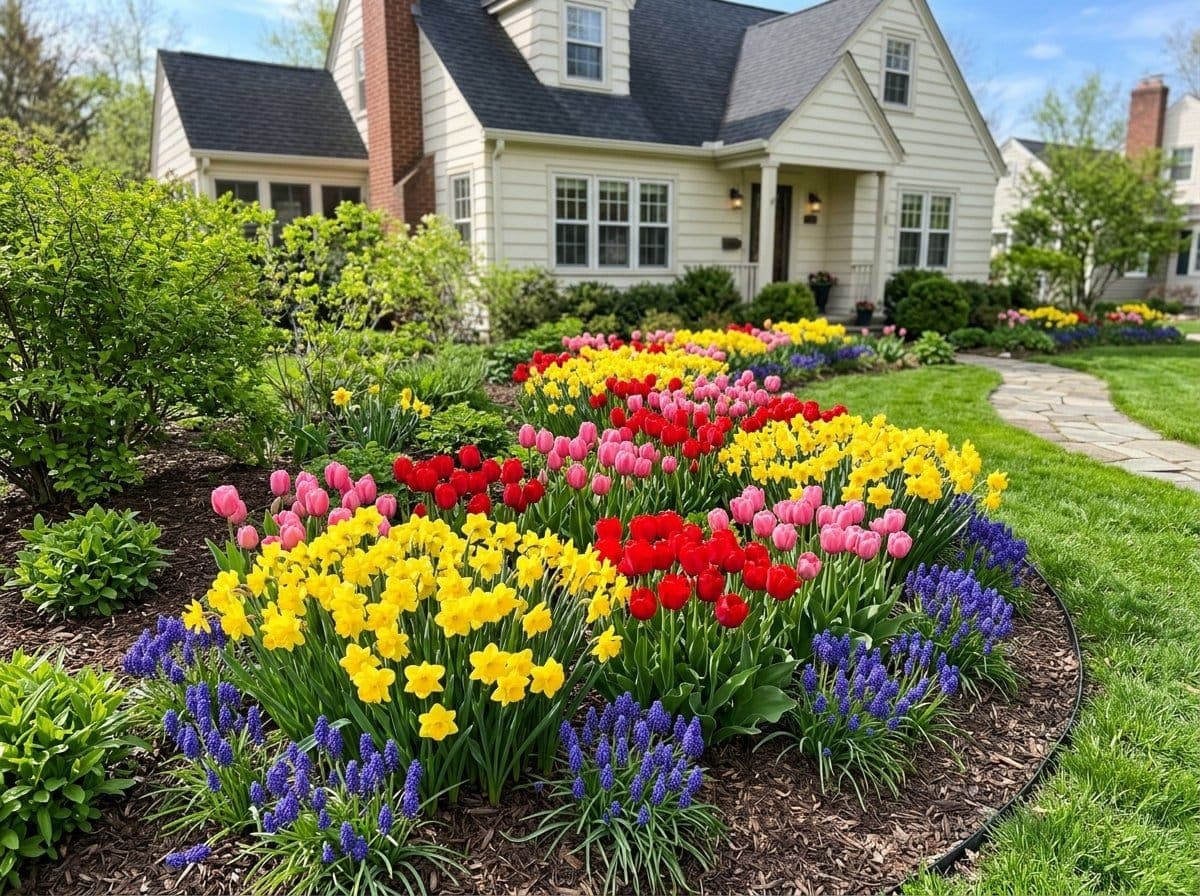
If you want the most reward for the least work, plant daffodils. They are poisonous to deer and squirrels, they come back and multiply for decades, and they thrive in our clay. Tulips deliver unbeatable color but tend to be short-lived here, so many gardeners treat them as annuals and replant favorites each fall. For the earliest color of all, tuck crocus into the lawn and beds where they will bloom before winter is even over.
Buy the biggest, firmest bulbs you can find. Bulb size directly determines flower size, and a soft or moldy bulb rarely recovers. A top-size daffodil or tulip bulb should feel heavy and solid, like a fresh onion.
How to Plant Fall Bulbs Step by Step
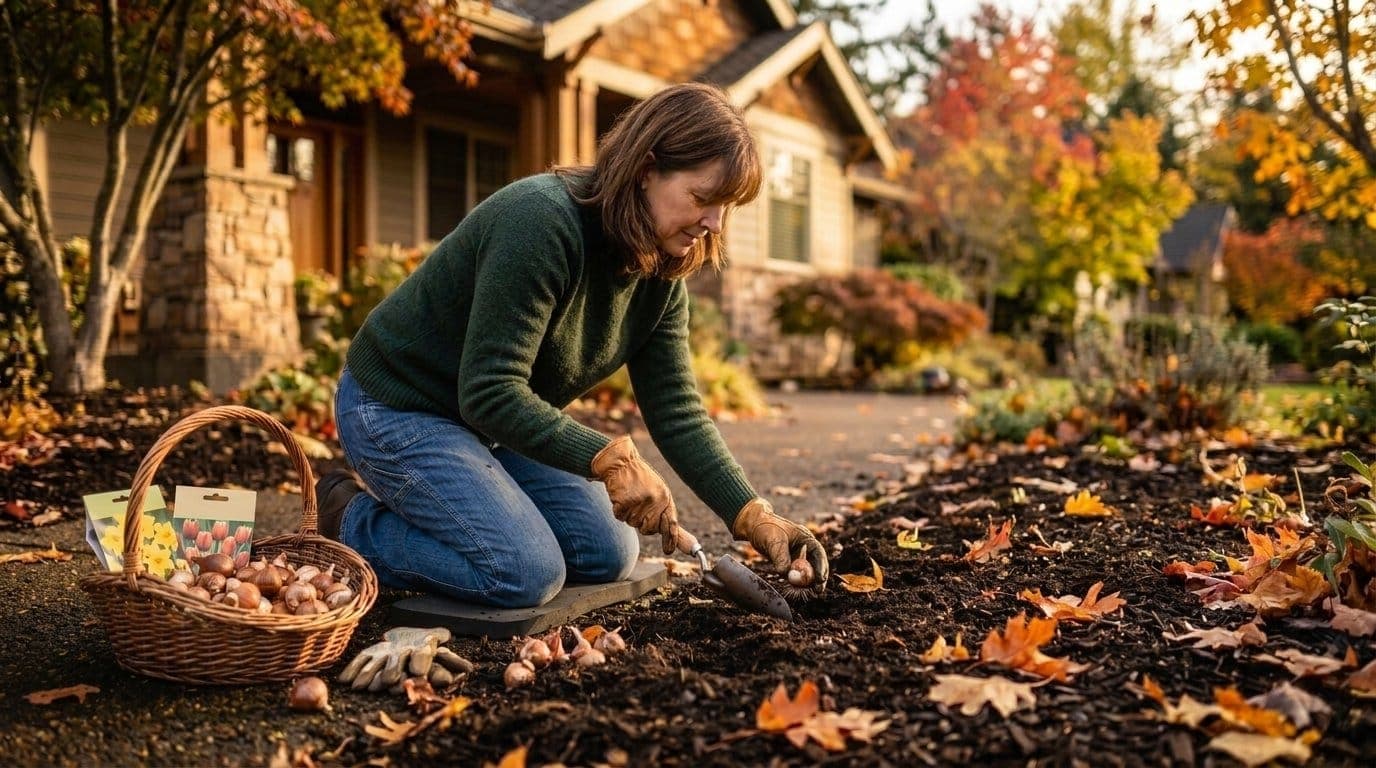
Planting bulbs is genuinely simple, and getting the depth and drainage right is most of the battle. Here is the full process from start to finish.
- Wait for cool soil. Hold off until the soil temperature drops to around 55 degrees, which in our area means October into November. Cool soil tells the bulb to root instead of sprout.
- Pick a sunny, well-drained spot. Bulbs want at least six hours of sun and soil that never stays soggy. Most spring bulbs bloom before trees leaf out, so beds under deciduous trees work fine. Avoid low spots where water collects.
- Improve heavy clay. Our native soil runs to clay, which holds water and can rot bulbs. Work two to three inches of compost into the bed before planting to loosen it and improve drainage.
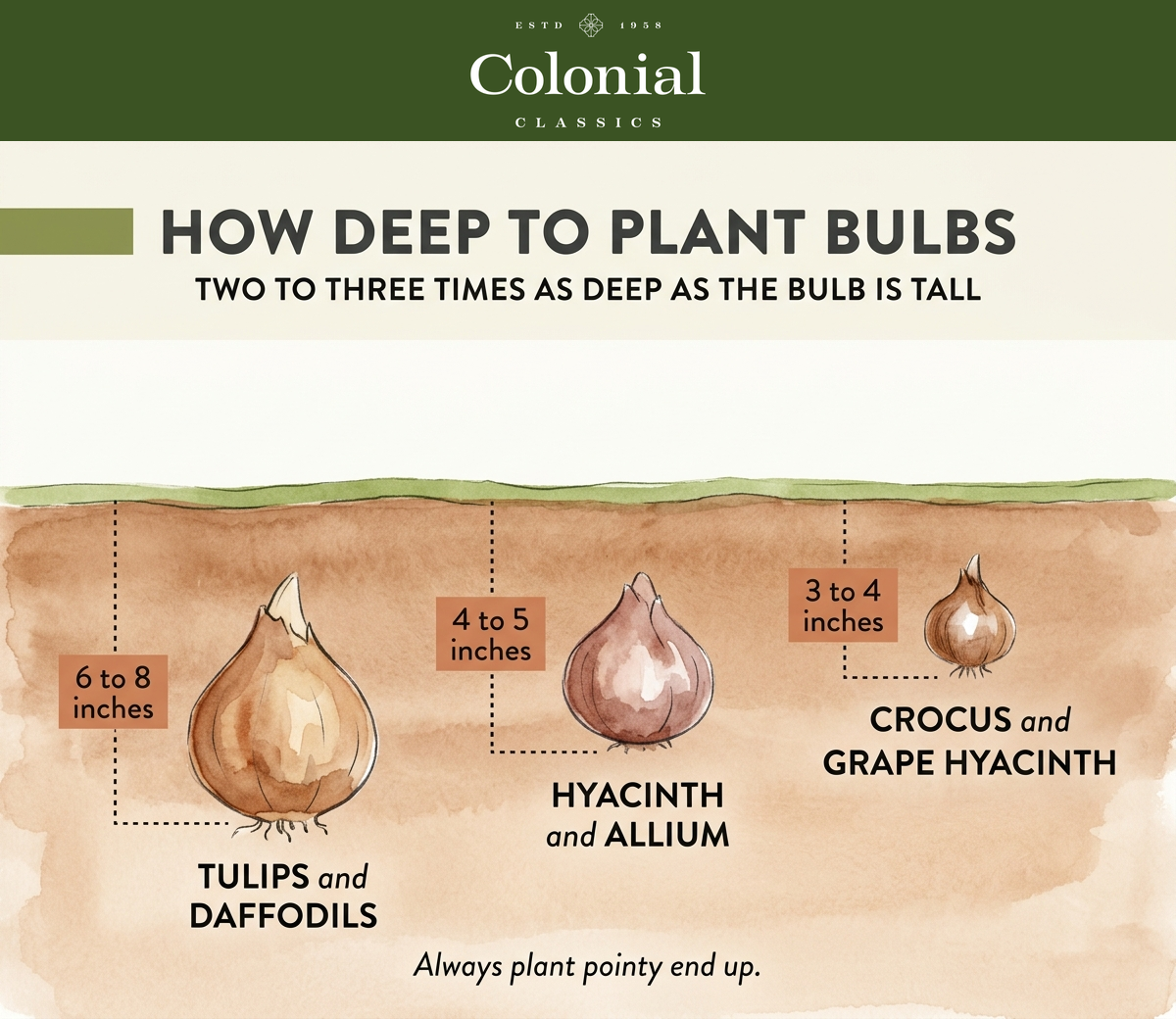
- Dig to the right depth. Plant each bulb two to three times as deep as it is tall. Large bulbs go six to eight inches deep, small bulbs three to four inches, a rule University of Illinois Extension uses too. Measure from the base of the bulb, not the tip.
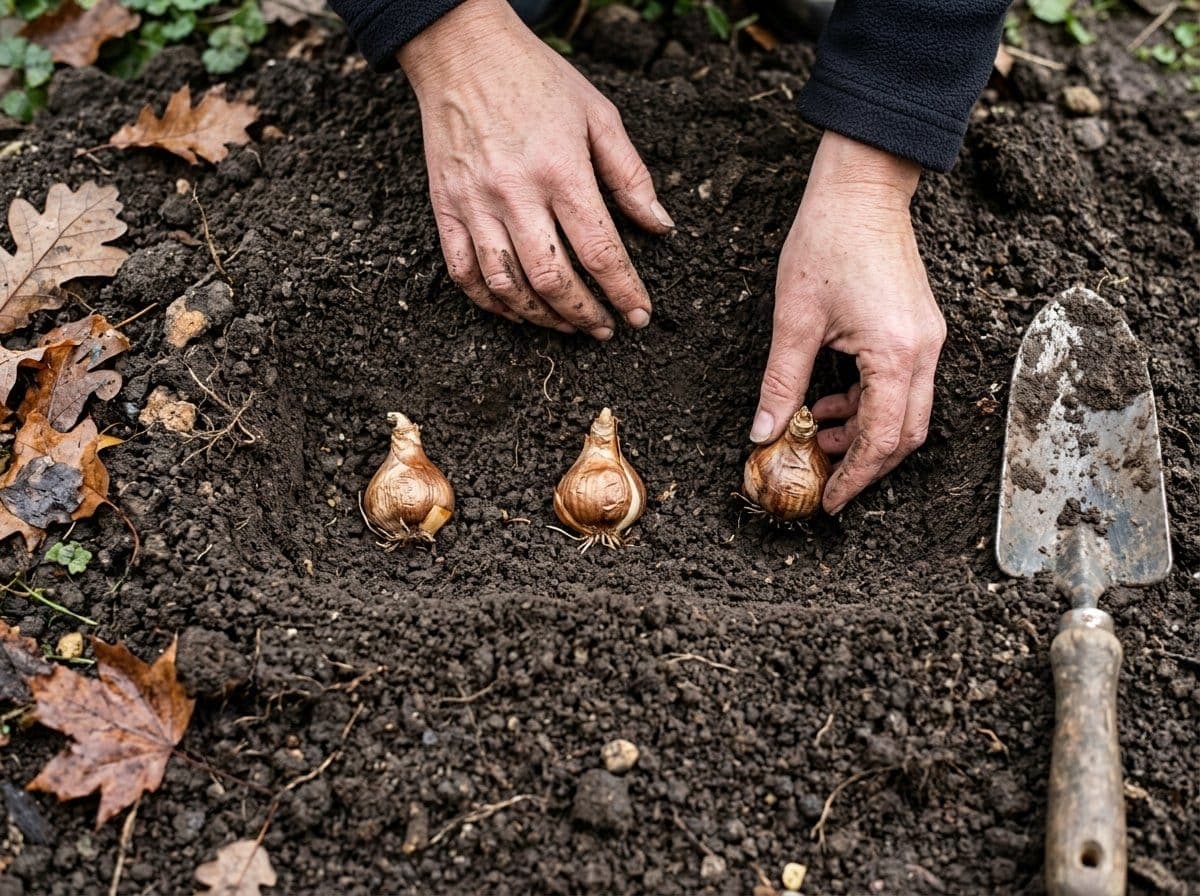
- Set the bulb pointy end up. The pointed growing tip goes up, the flat base with the root scar goes down. If you cannot tell, plant the bulb on its side and it will straighten itself out.
- Space and cluster. Space large bulbs four to six inches apart, small bulbs two to three inches. Plant in generous clusters of a dozen or more rather than single soldier rows. Clumps and drifts read as intentional; lonely singles read as an accident.
- Water and mulch. Water the bed well right after planting to settle the soil and kick off rooting, then spread two to three inches of mulch to hold moisture and even out soil temperature through winter.
How to Keep Deer and Squirrels Out of Your Bulbs
The best defense against deer and squirrels is to plant bulbs they refuse to eat. Daffodils, alliums, hyacinths, grape hyacinth, fritillaria, and snowdrops all contain bitter or toxic compounds that animals learn to avoid, so they get left alone year after year. If critters are a serious problem in your yard, build your display around these and you will barely need to fight for it.
Tulips and crocus are the exception. Deer browse tulip buds like candy, and squirrels dig fresh crocus and tulip bulbs right back out of the ground in fall. If you want them anyway, you have a few good options:
- Lay chicken wire over the bed: After planting, pin a sheet of chicken wire or hardware cloth over the soil surface and cover it lightly with mulch. Shoots grow up through the holes in spring, but digging paws hit the wire.
- Interplant with daffodils: Surrounding tulips with daffodils masks their scent and creates a barrier of bulbs that deer and squirrels will not cross.
- Skip the bone meal: Old advice says to add bone meal to planting holes, but its smell actually attracts squirrels and dogs to dig. Use a balanced bulb fertilizer or compost instead.
Deer pressure is heavy across much of the Tri-State, especially near wooded lots and creek corridors. If deer regularly visit your yard, lean hard on daffodils and alliums and treat tulips as an experiment rather than a centerpiece.
Caring for Bulbs After They Bloom
What you do after the flowers fade determines whether your bulbs return next year. The single most important rule is to leave the foliage alone until it yellows and dies back naturally. Those green leaves are recharging the bulb for next spring, and cutting them early, or worse, braiding or tying them, starves the bulb and weakens next year's bloom.
Follow these steps once flowering ends:
- Deadhead the spent flowers so the plant puts energy into the bulb instead of setting seed. Leave the stems and leaves.
- Let the leaves yellow fully before you cut or pull them, usually four to six weeks after bloom. Interplanting bulbs with perennials or annuals hides the ripening foliage nicely.
- Feed lightly with a balanced bulb fertilizer or compost as the leaves die back, which supports next year's flower forming inside the bulb.
- Divide crowded clumps every few years, in early summer after the foliage dies, if bloom starts to thin out. Lift, separate the bulbs, and replant them with fresh spacing.
The golden rule of bulbs: never cut the leaves until they turn yellow on their own. The foliage is what feeds next spring's flowers, and removing it early is the number one reason bulbs fail to return.
Common Fall Bulb Planting Mistakes
Most bulb failures trace back to a handful of avoidable mistakes. Steer clear of these and your first spring will be a strong one.
- Planting too shallow: Shallow bulbs heave out of the ground in freeze-thaw cycles and get eaten. Commit to the full recommended depth.
- Planting in soggy soil: Bulbs rot in standing water. If a spot puddles after rain, either fix the drainage or plant somewhere else.
- Waiting too long to buy: The best bulbs sell out early, and bulbs left in a warm garage all fall dry out. Buy fresh in early fall and plant when the soil cools.
- Cutting foliage too soon: As above, this is the top reason bulbs do not come back. Patience through the ugly yellowing stage pays off.
- Planting single bulbs in rows: A lonely bulb here and there looks sparse. Plant in clusters and drifts for real impact.
- Skipping the water: Bulbs need that first deep watering to start rooting. Do not assume fall rain will handle it.
Plant This Fall for a Brighter Spring
Colonial Classics Landscape & Nursery has been helping Tri-State gardeners for over 65 years, and fall bulb planting is one of the most rewarding things you can do in the yard before winter. We stock fresh, top-size daffodils, tulips, alliums, and specialty bulbs every fall at our garden center, along with the compost and bulb food that give them the best start in our clay soil.
Not sure what will work in your beds, or want a designed display instead of a random handful? Stop by and talk to our team, browse the perennials and grasses that pair beautifully with bulbs, or have our landscape design team plan a spring bloom sequence for your whole property. A little planting now is a gift to yourself come March. Schedule a free consultation and we will help you fill next spring with color.