You spent real money on your patio, so the first icy morning of the season comes with a small knot of worry. The bag in the garage says "concrete safe," the one at the store says "pet friendly," and a neighbor swears plain salt will eat your pavers alive. Choosing ice melt for pavers feels like a guess with an expensive downside.
Here is the part that surprises most people: plain rock salt is the de-icer the paver industry actually recommends. Several of the blends sold as gentler alternatives do more harm to concrete, not less. Where rock salt does cause problems is in the planting beds, on metal, and on your dog's paws, and each of those has a simple fix.
This guide covers what each type of ice melt does to pavers, plants, and pets, which one to keep in the garage, and how to use it so your patio comes through winter looking the way it did in fall. It applies across Southern Indiana, Kentucky, and Illinois, where Zone 7a winters swing above and below freezing again and again.
Every project is different. The pricing and timelines discussed here are general estimates based on typical projects in our area. Your actual costs and schedule will depend on your property, materials, scope of work, and other factors. Contact us for a personalized estimate.
Is Salt Bad for Pavers?
No. Used sparingly, rock salt is the least damaging de-icer for concrete pavers. The Concrete Masonry and Hardscapes Association, the trade association for the concrete paver industry, states that rock salt "is the least damaging to concrete materials and should be used whenever possible."
That runs against a lot of what you hear, so it helps to know why. Quality pavers are manufactured to be very dense, and that density limits how much salty water can get into them. Pavers made to the ASTM C936 standard are tested for freeze and thaw durability, with an optional test in a saltwater solution for regions with severe winters. They are built for exactly this.
Independent research backs it up. Purdue University tested de-icers for the Indiana Department of Transportation by exposing concrete to sodium chloride, calcium chloride, magnesium chloride, and blends of them. Sodium chloride alone caused the least damage. Calcium chloride and magnesium chloride caused the most, with magnesium chloride starting slower but ending up just as bad.
So when pavers do get damaged in winter, salt is rarely the whole story. The usual culprits are:
- Too much product: Heavy piles of any de-icer leave concentrated brine soaking into the surface.
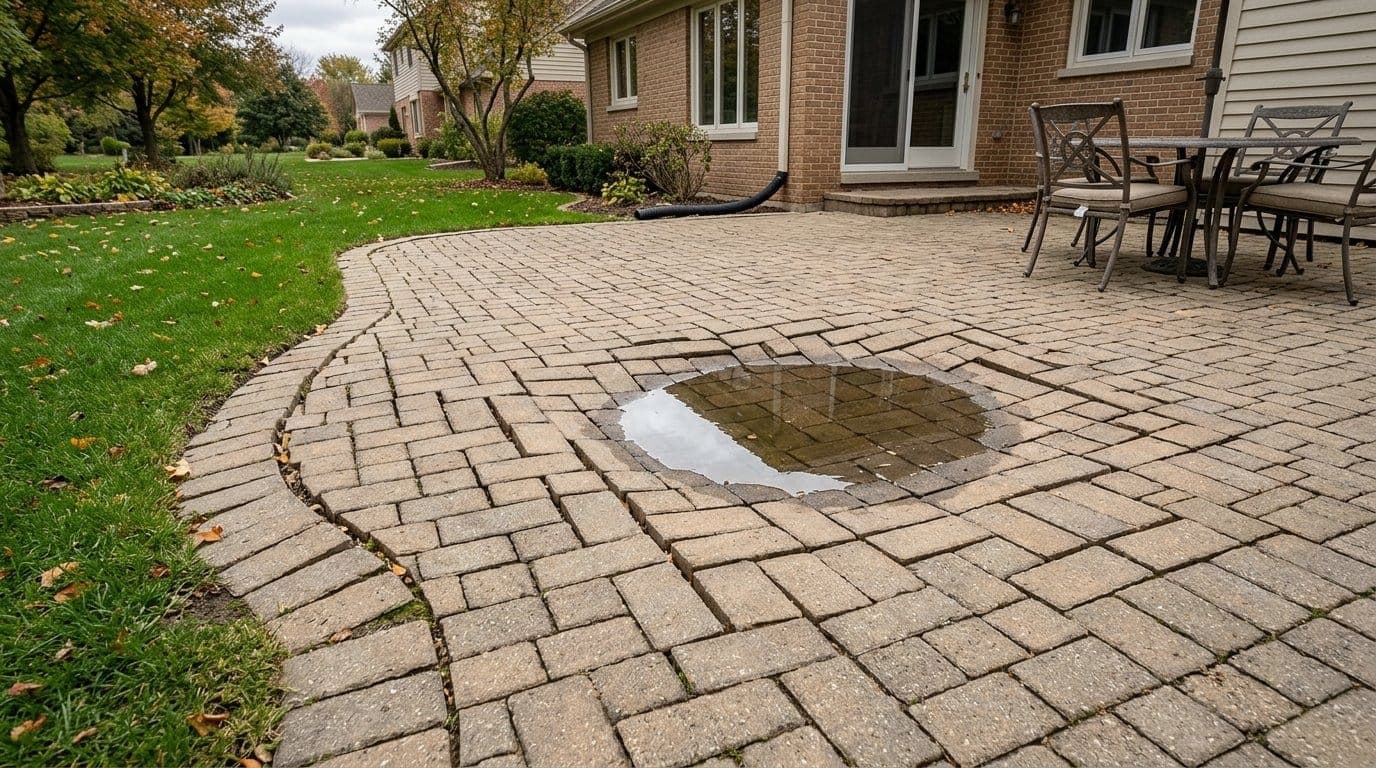
- Water that cannot drain: A low spot that holds slush refreezes over and over, and every cycle works on the surface.
- The wrong chemical: magnesium chloride, acetate blends, and lawn fertilizer used as ice melt (more on that below).
- Steel blades on raised edges: A shovel or plow catching a paver lip chips the corner.
What Ice Melt Actually Does to Concrete
Ice melt damages concrete in two ways: by adding freeze and thaw cycles, and in some cases by reacting chemically with the cement itself. Knowing which is which explains why the "safe" label on a bag does not tell you much.
The first is physical. De-icers turn ice into salty water, and that water soaks into the surface. If the temperature drops again before it drains or gets shoveled off, it refreezes inside the top layer of the concrete and expands. Repeat that enough times and the surface starts to flake and pit, which is called scaling. Every de-icer can contribute to this, which is why thin application and prompt cleanup matter more than brand.
The second is chemical, and this is where the alternatives get into trouble. At high concentrations, calcium chloride reacts with compounds in cement paste and forms an expansive crystal, called calcium oxychloride, that breaks concrete apart from the inside. Purdue's concrete research shows this reaction can damage concrete even when nothing freezes. Magnesium chloride is no gentler. The CMHA's maintenance guide puts it plainly: magnesium chloride and calcium magnesium acetate "can chemically degrade all types of concrete."
The worst offenders are ammonium based products. Some people grab a bag of lawn fertilizer, ammonium nitrate or ammonium sulfate, because it melts ice. The Pennsylvania Aggregates and Concrete Association warns that these are "too aggressive and will easily destroy a concrete surface." Never use fertilizer as ice melt on any hardscape.
Read the ingredient list, not the front of the bag. "Concrete safe" and "pet friendly" are marketing claims, not standards. Many blends that carry them are built on magnesium chloride or urea. The ingredients printed on the back tell you what you are actually spreading.
Ice Melt Types Compared
Each de-icer trades off cost, how cold it works, and what it does to pavers, plants, and pets. No single product wins every column, which is why the right choice depends on where you are spreading it.
- Works Down To
- About 16°F
- On Pavers
- Least damaging, recommended
- Near Plants
- Most harmful to plants and soil
- Around Pets
- Can irritate paws; harmful if eaten
- Cost
- Lowest
- Works Down To
- About -25°F
- On Pavers
- OK in small amounts
- Near Plants
- Low risk at label rates
- Around Pets
- Can irritate paws; can cause mouth ulcers
- Cost
- Higher
- Works Down To
- About 5°F
- On Pavers
- Avoid, degrades concrete
- Near Plants
- Low risk at label rates
- Around Pets
- Gentler; common in pet blends
- Cost
- Higher
- Works Down To
- About 12°F
- On Pavers
- Higher damage rates reported
- Near Plants
- Low risk
- Around Pets
- Can irritate if eaten
- Cost
- Higher
- Works Down To
- Below 0°F
- On Pavers
- Avoid, degrades concrete
- Near Plants
- Very low risk
- Around Pets
- Can upset a stomach if eaten
- Cost
- Highest
- Works Down To
- About 15°F
- On Pavers
- Higher damage rates reported
- Near Plants
- Can harm plants; runoff pollutes water
- Around Pets
- Common in pet blends
- Cost
- Higher
Temperature, plant, and cost ratings come from Purdue Extension's guide to salt damage in landscape plants. Paver ratings come from the CMHA and the concrete industry guidance above, and pet notes from the ASPCA. Published temperature ratings vary from source to source, so treat them as rough guides and check the label on the product you buy.
The Best Ice Melt for Pavers
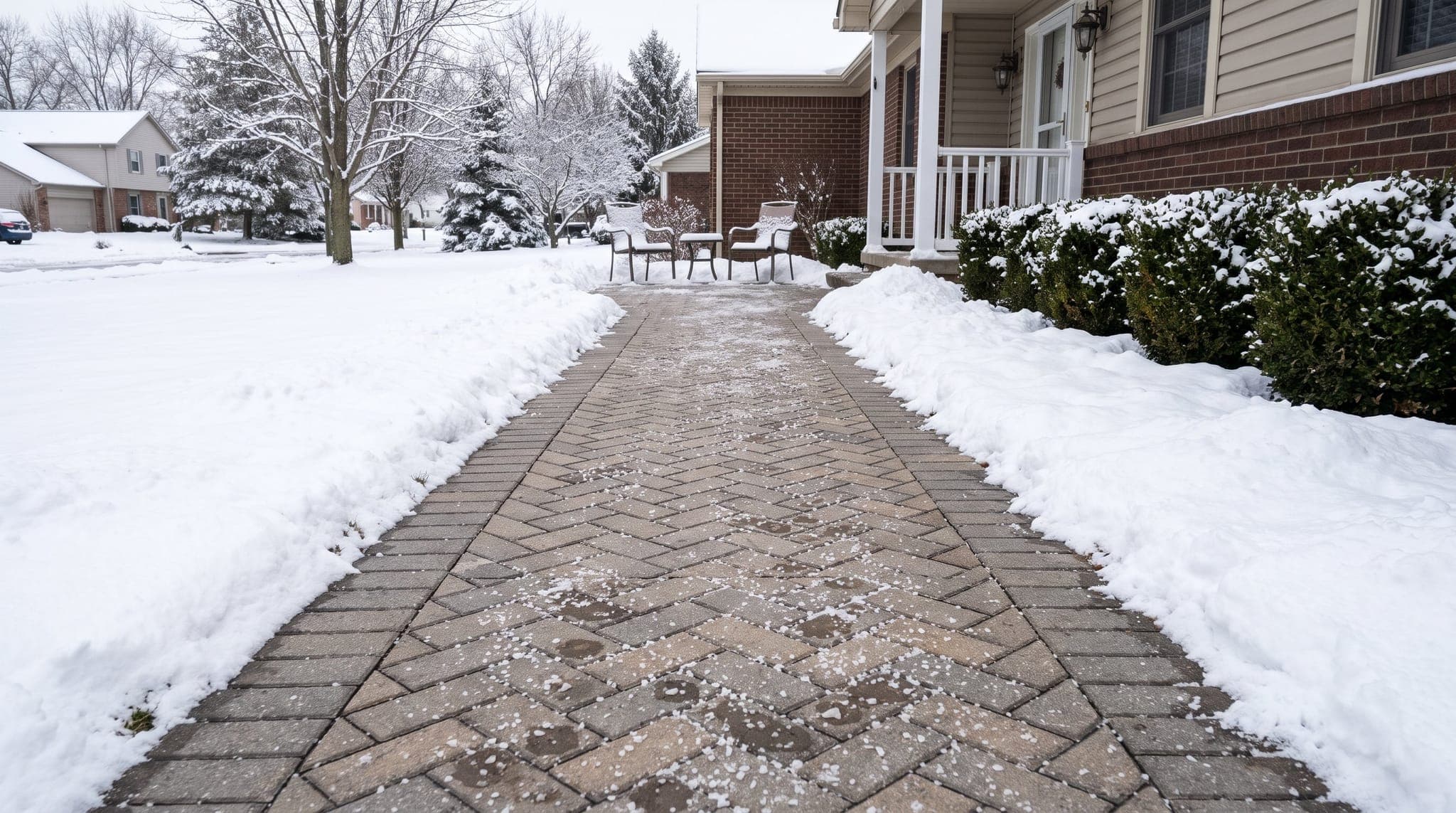
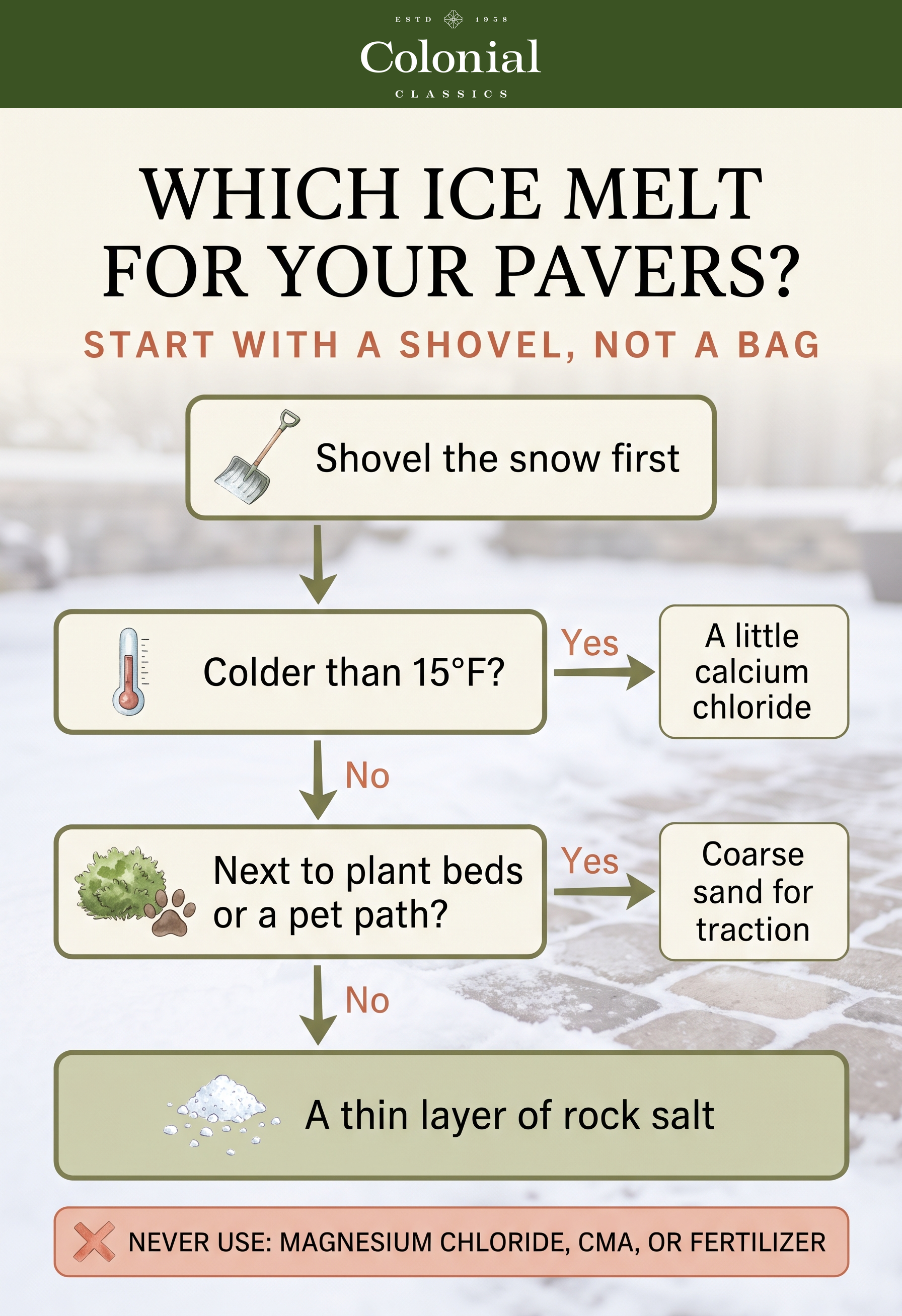
For most patios and walks in the Tri-State area, plain rock salt applied thinly after shoveling is the best ice melt for pavers. It is the cheapest option, it is what the paver industry's trade association recommends, and most winter days here stay above the temperature where it stops working.
Keep a small bag of calcium chloride as a backup for the handful of mornings each winter that drop well below 15°F, when rock salt slows to a crawl. The CMHA's maintenance guide calls for "judicial use" of calcium chloride, meaning a little, when you need speed. Skip magnesium chloride, CMA, and anything containing ammonium.
Shovel first, then scatter a thin layer of rock salt on the pavers. Use calcium chloride only for deep cold, sand near beds and pet paths, and never use fertilizer as ice melt.
The trade off is that rock salt is hard on everything around the pavers. Two areas need a different approach: the paths your pets walk and the edges where your patio meets a planting bed.
What About Pet Safe Ice Melt?
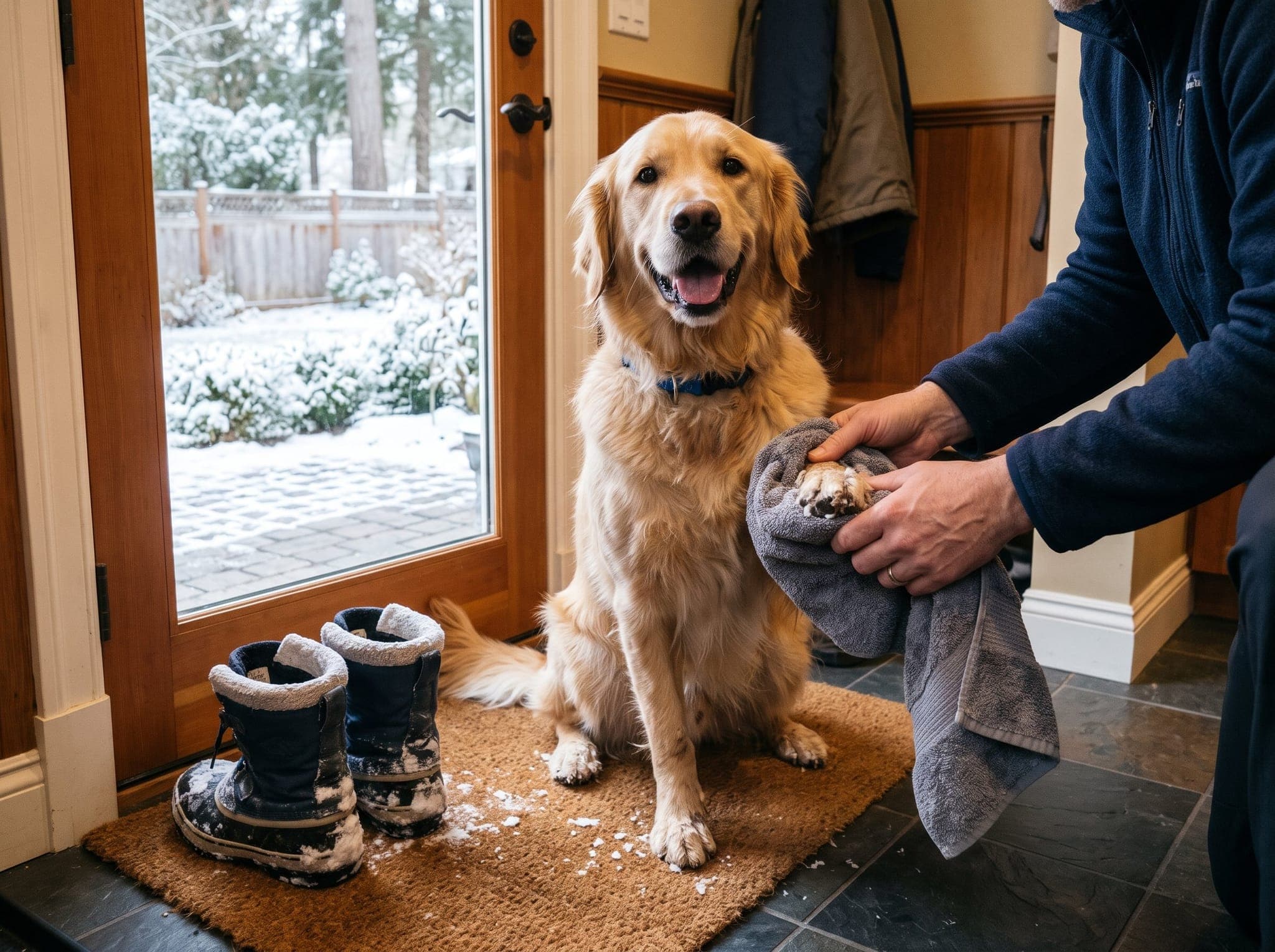
There is no ice melt that is fully safe for both pets and pavers, so the best plan combines a little rock salt with sand and clean paws. According to the ASPCA, pets are mostly exposed by licking their feet after a walk or eating treated snow, and the most common result is an upset stomach.
The risks by ingredient:
- Rock salt: It dries and irritates paw pads. Eaten in quantity, it can raise sodium levels enough to cause tremors and seizures.
- Calcium chloride: It can irritate paws like other salts, and the ASPCA notes it can also cause ulcers in the mouth.
- "Pet friendly" blends: These typically contain urea or magnesium chloride. They are gentler on pets but can still upset a stomach, and magnesium chloride is one of the de-icers the paver industry says to avoid.
That last point is the catch. Spreading a pet friendly blend across a paver patio trades a paw problem for a concrete problem. A better routine:
- Use sand on the route your dog takes from the door to the yard. It gives traction without chemicals.
- Salt the main walk thinly and shovel the slush off once it loosens, so there is less brine to step in.
- Wipe paws with a damp cloth every time your dog comes inside, before they have a chance to lick.
- Store ice melt where pets cannot reach it. Some dogs like the taste and will eat it straight from the bag.
If you think your pet has eaten ice melt, call your veterinarian or the ASPCA Animal Poison Control Center at (888) 426-4435.
Protecting Plants and Lawn Next to Your Pavers
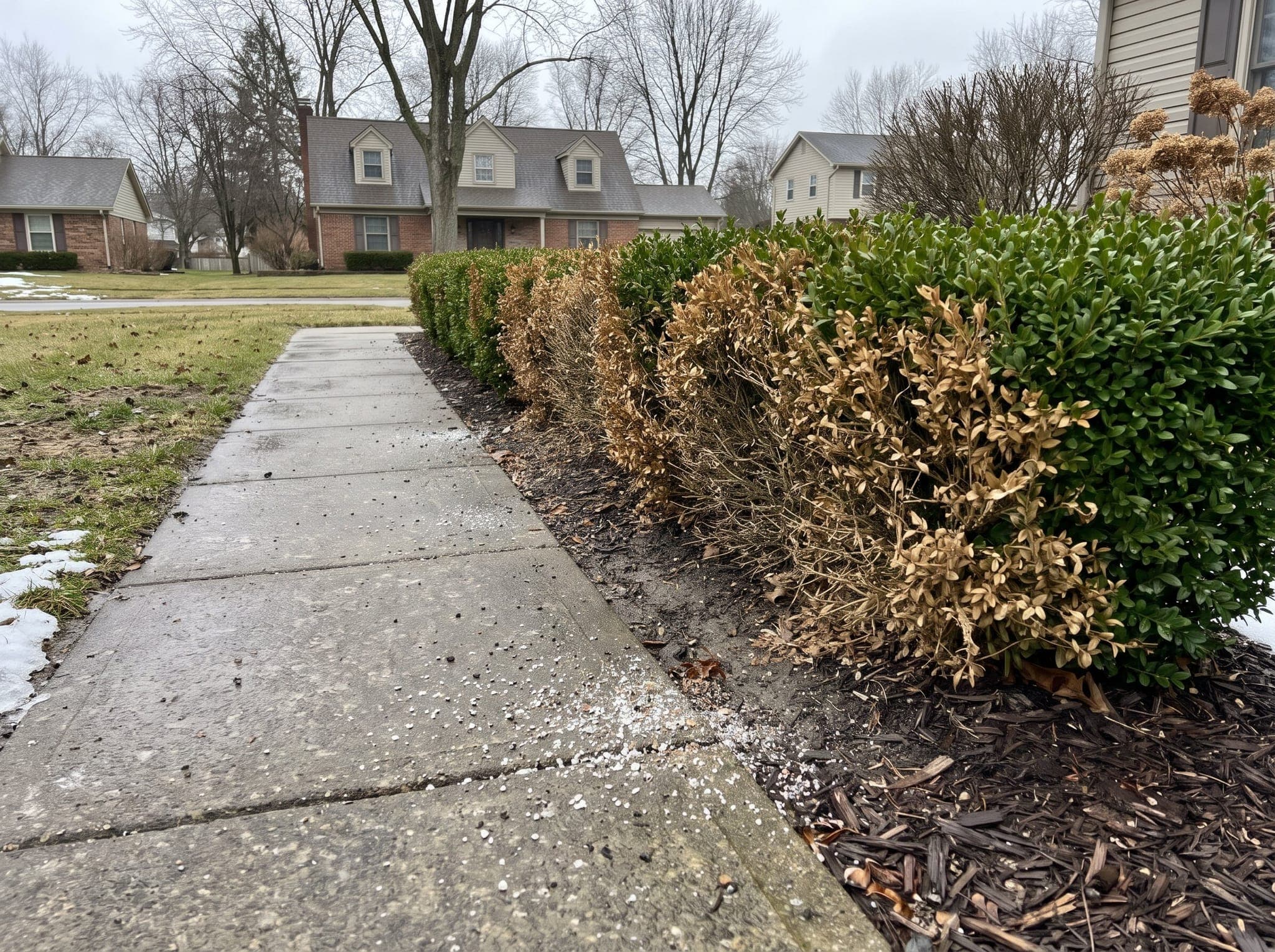
Sodium chloride is the de-icer most likely to damage plants, so keep salty slush out of the beds and flush the soil in spring. Purdue Extension explains that sodium in the soil crowds out the potassium, calcium, and magnesium plants need, while chloride travels to the leaves and interferes with photosynthesis.
Salt damage shows up on the side of the plant facing the walk or drive. On evergreens like boxwood and yew, needles and leaves brown from the tips in late winter. On deciduous shrubs, buds facing the pavement leaf out late or not at all.
To protect the plants along your patio:
- Shovel away from the beds: Throw salty snow and slush onto the lawn or a gravel area, not on top of your shrubs. The CMHA's maintenance guide also advises against leaving salty snow piled on the pavers.
- Use sand at the edges: Within a foot or two of a planting bed, sand gives traction without adding salt to the soil.
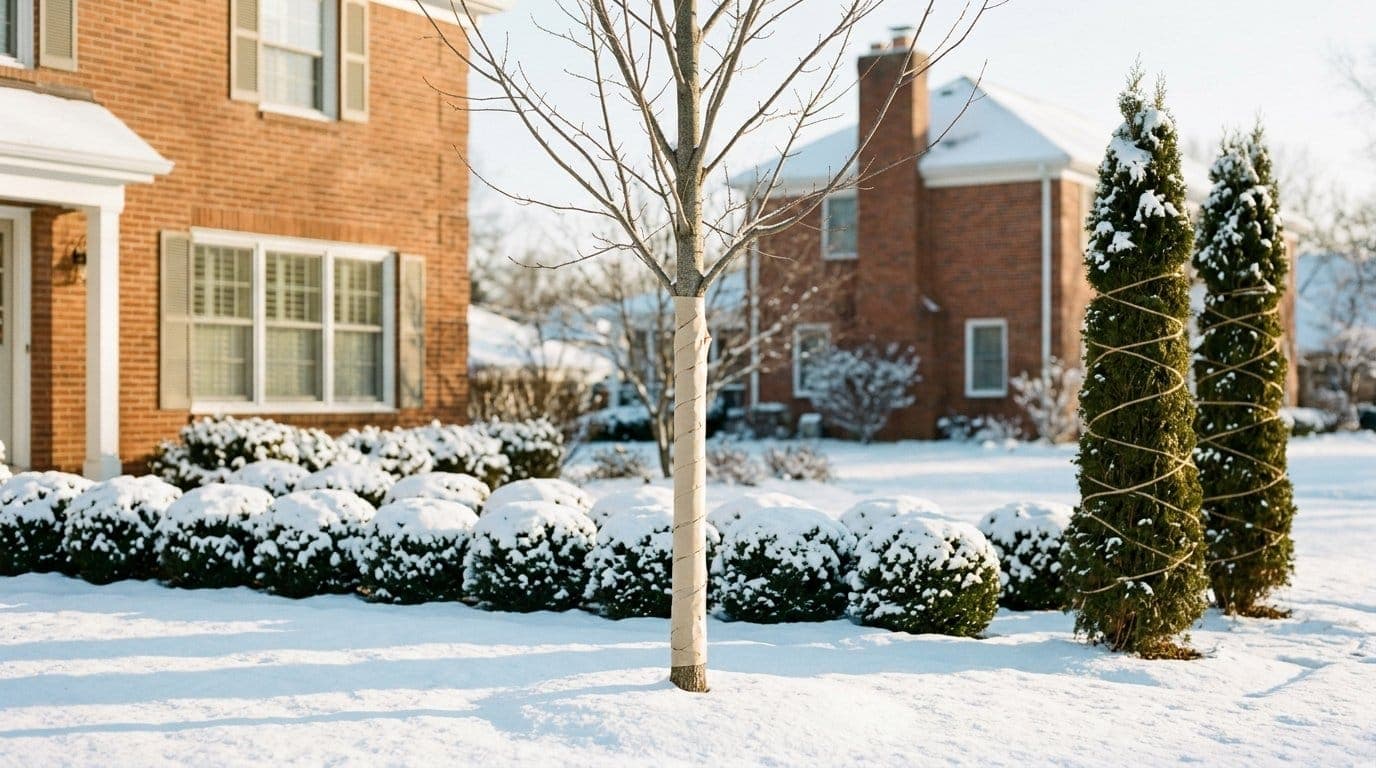
- Screen sensitive shrubs: A burlap screen on stakes between the walk and the bed blocks salt spray from shovels and snow blowers.
- Water deeply in spring: A thorough soaking after the last freeze helps leach salt below the root zone before growth starts.
For a full winter plan for the shrubs and trees around your property, see our guide to protecting trees and shrubs in winter.
How to Use Ice Melt Without Damaging Your Patio
The way you apply ice melt matters more than which bag you buy. The CMHA's maintenance guide comes down to two rules: follow the label dosage instead of over-applying, and save de-icers for ice rather than using them in place of a shovel.
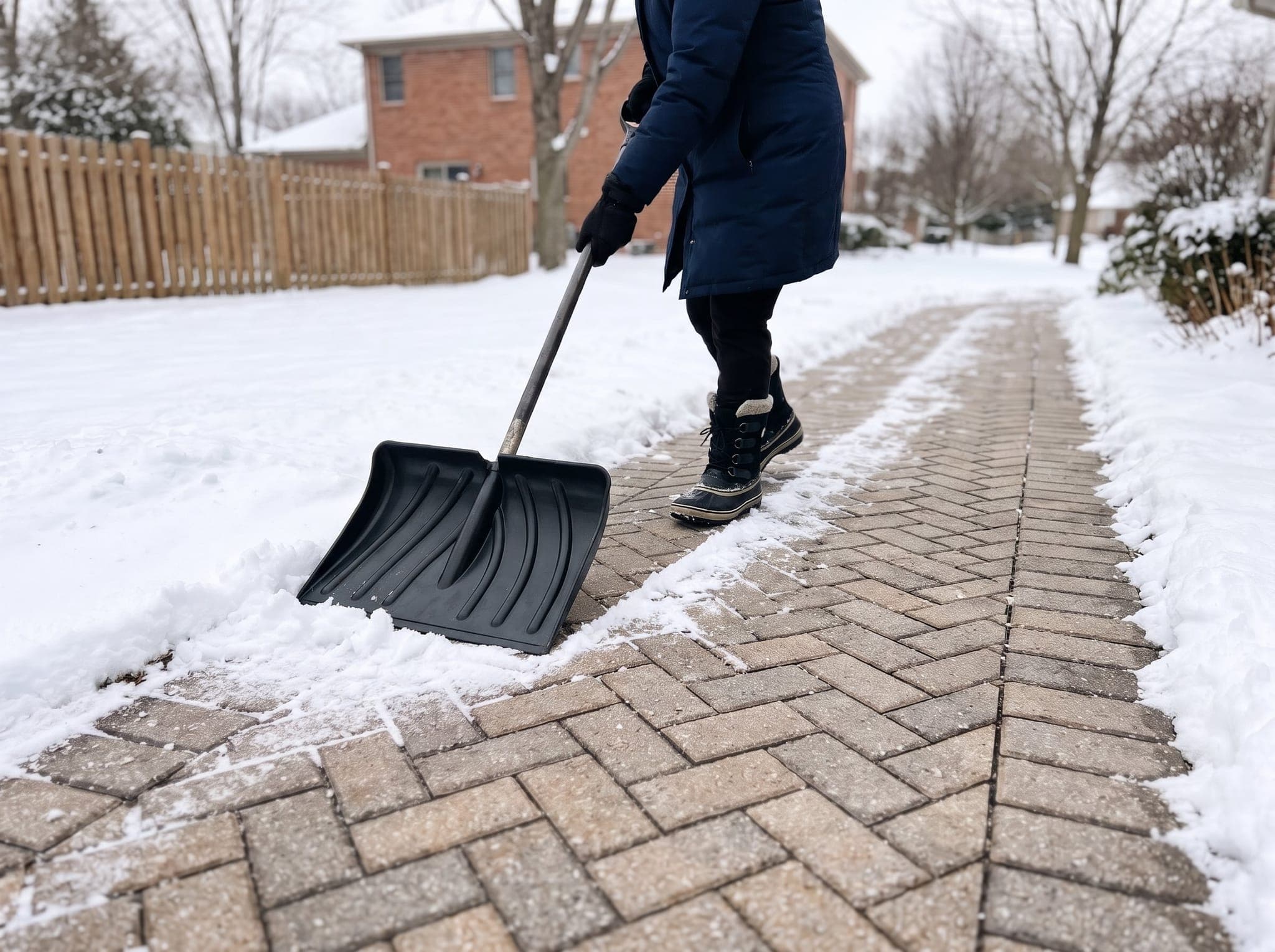
- Shovel before you salt. De-icers are meant for the thin glaze from freezing rain or refrozen meltwater, not for melting several inches of snow.
- Shovel diagonally to the joints. A blade moving at an angle rides over raised edges instead of catching them. Plastic or rubber edged blades are kinder to the surface than bare steel.
- Scatter thinly, at the label rate. Ice melt works by making brine that spreads under the ice. Piles do not work faster; they just leave concentrated salt behind.
- Add sand for traction. In deep cold or near beds, coarse sand gives grip and settles into the joints as the ice melts. Skip sand on permeable pavers, where it clogs the open joints that drain water.
- Clear the slush promptly. Shovel loosened ice off the pavers before it refreezes and concentrates.
- Sweep and rinse in spring. Leftover sand grinds against the pavers underfoot, and a good rinse washes residue off the surface and out of the edges of the beds.
Fix raised pavers before the snow flies. The CMHA recommends repairing any paver edge sitting more than 1/8 inch above its neighbors. Those are the edges a shovel or snow blower catches, and a fall repair is easier than a cracked corner in January.
New Concrete, Sealed Surfaces, and Permeable Pavers
Freshly poured concrete should go without de-icers for its first year, but that rule is written for poured slabs, not pavers. The two get confused because they are both concrete. Pavers are manufactured and cured before they reach your yard, and the paver industry's de-icing guidance does not include a waiting period.
- Poured concrete less than a year old: Concrete industry guidance from the Pennsylvania Aggregates and Concrete Association is to avoid de-icers during the first year after placement. Use sand for traction in the meantime.
- Sealed concrete: The same source notes that penetrating silane or siloxane sealers give poured concrete the most resistance to de-icers. Sealing pavers is a finish choice rather than a structural fix, as we cover in our paver patio repair guide.
- Permeable pavers: Do not use sand, which fills the joints that let water drain through. The CMHA's maintenance guide says sand should not be applied to permeable pavers. Shovel and use de-icer sparingly.
Signs Winter Has Damaged Your Pavers
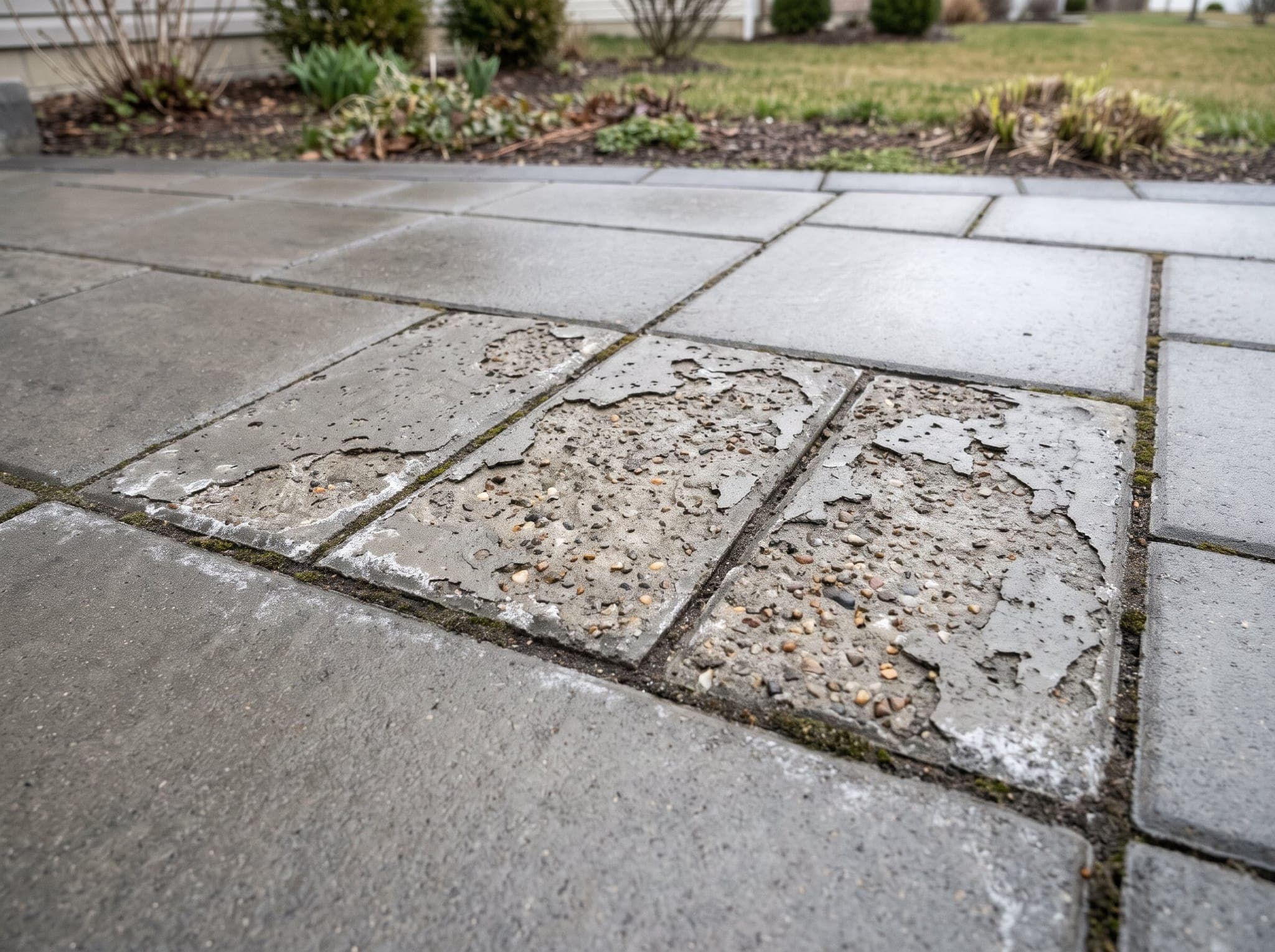
Check your patio once the snow is gone for scaling, washed out joints, and heaved or sunken pavers. Catching these in spring keeps a small fix from turning into a reset.
- Scaling or pitting: a rough, flaking surface on individual pavers. This usually points to heavy de-icer use, slush left to refreeze, or a low spot that holds water.
- White residue: Dried salt rinses away with water. A chalky haze that keeps returning is more likely efflorescence, a natural mineral deposit the CMHA's maintenance guide describes as cosmetic rather than structural.
- Empty joints: Joint sand that washed or blew out over the winter needs topping up so the pavers stay locked together.
- Heaved or sunken pavers: Freeze and thaw cycles move pavers that sit on a base holding water. That is a drainage and base problem, not a salt problem, and our guide to why pavers sink and how to fix them walks through the diagnosis.
When to Call a Hardscape Contractor
Call a contractor when damage goes beyond the surface: pavers that rock, settle, or heave, or water that pools on the patio after every thaw. Those are signs the base or drainage underneath needs work, and no ice melt choice will fix them.
Our hardscaping team builds and repairs paver patios, walks, and steps across the Evansville and Newburgh area and the wider Tri-State region, and we design them with winter in mind: proper base depth, slope for drainage, and edges that stay put under a snow shovel. If you are planning a new patio, our paver patio cost guide is a good place to start. If yours came through winter with problems, contact us and we will take a look.