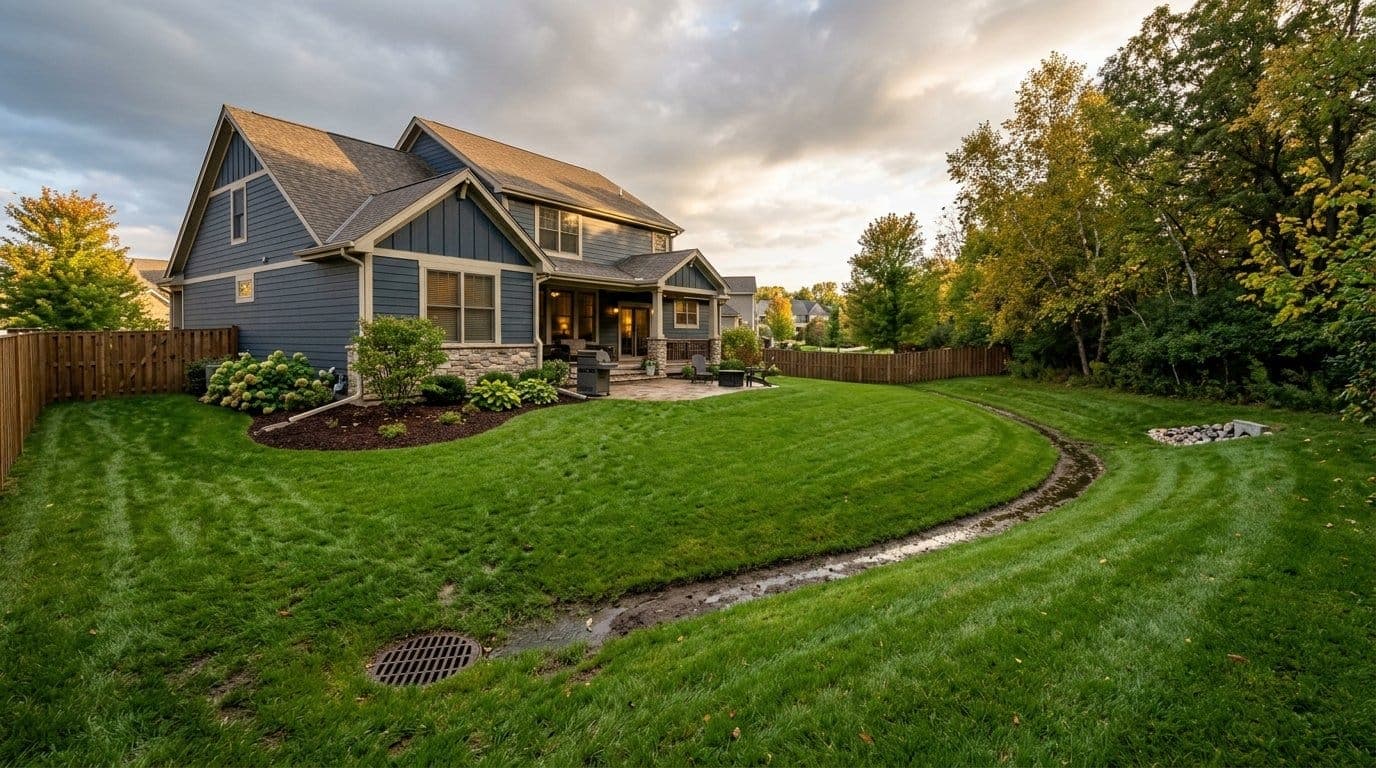
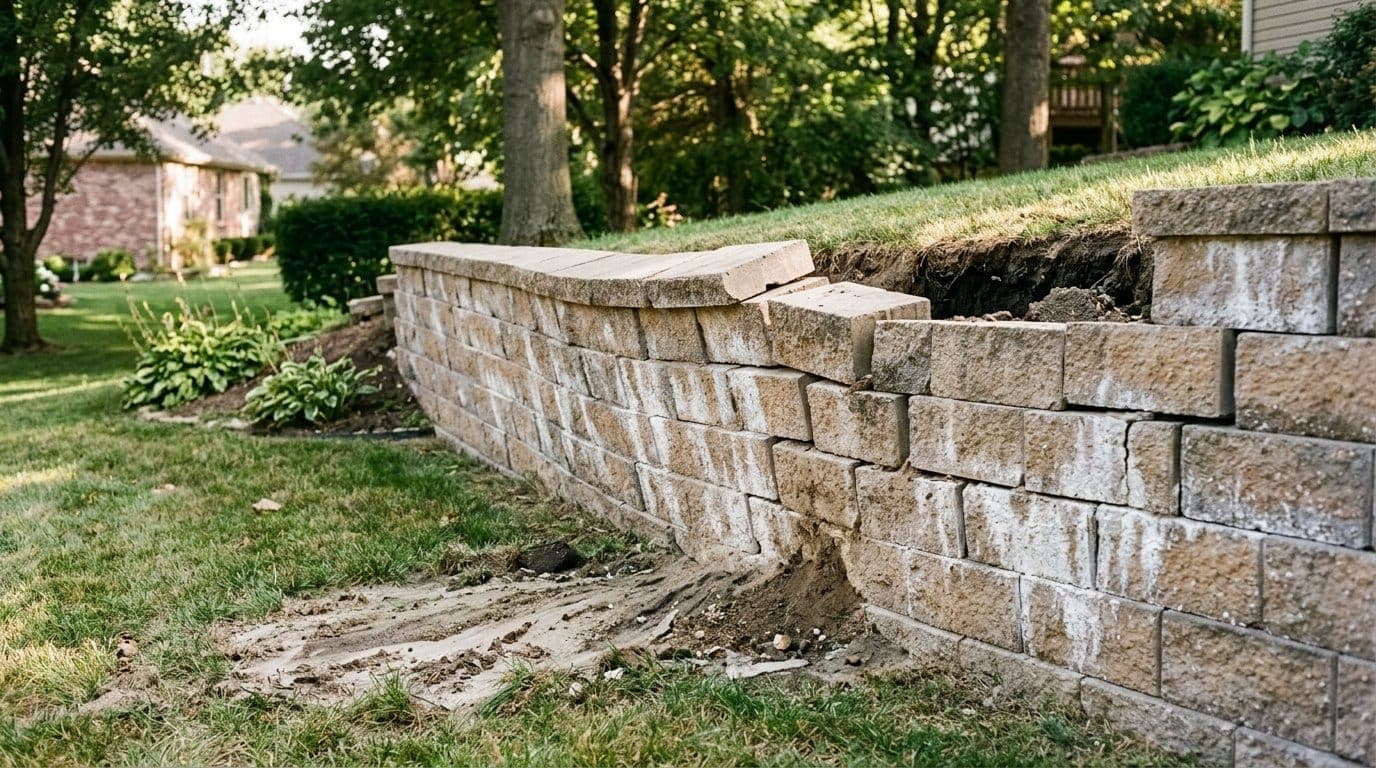
Your retaining wall is leaning, the blocks have stepped out of line, or a bulge has appeared where the face used to be flat. It looks like the wall is failing. What is actually failing is almost always behind it.
Retaining walls fail because of water, not because of the blocks. When drainage behind a wall clogs or was never built correctly, soil saturates, gets heavy, and pushes. The wall is just the part you can see moving. That distinction matters, because it decides whether you are looking at a $400 repair or a rebuild.
This guide covers how to read the warning signs, why walls fail across Southern Indiana, Kentucky, and Illinois, what the common repairs cost, and how to tell whether your wall is worth saving.
Every project is different. The pricing and timelines discussed here are general estimates based on typical projects in our area. Your actual costs and schedule will depend on your property, materials, scope of work, and other factors. Contact us for a personalized estimate.
Warning Signs Your Retaining Wall Is Failing
Retaining walls rarely collapse without warning. They give you two to three seasons of increasingly obvious signals first. Here is what to watch for, roughly in the order it tends to show up.
The Wall Is Leaning Forward
A forward lean is the clearest sign of a structural problem. Most segmental block walls are intentionally built with a slight backward tilt into the slope, called batter, so leaning back is normal and correct. Leaning out, away from the hill, means soil pressure has overcome the wall.
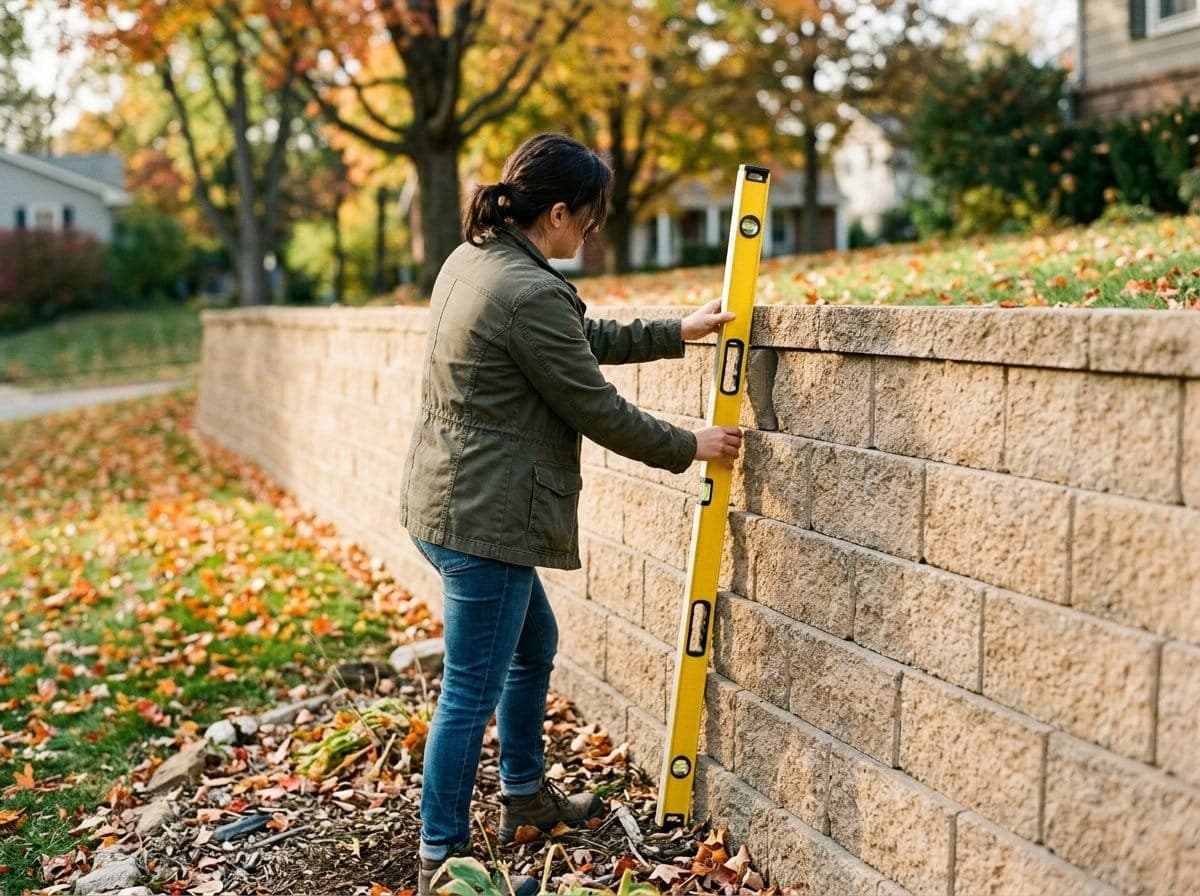
Hold a level against the face. A wall that has moved more than about an inch per foot of height is past the point where cosmetic fixes will help.
A Bulge Has Formed in the Middle
Bulging means pressure is concentrated in one spot, usually where water collects. The top and bottom of the wall stay put while the middle pushes outward. This is common on walls built without geogrid, the reinforcing mesh that ties the blocks back into the soil behind them.
Bulges get worse quickly. Once the blocks in the middle lose their interlock with the courses above and below, the wall has lost the thing holding it together.
Blocks Have Shifted Out of Line
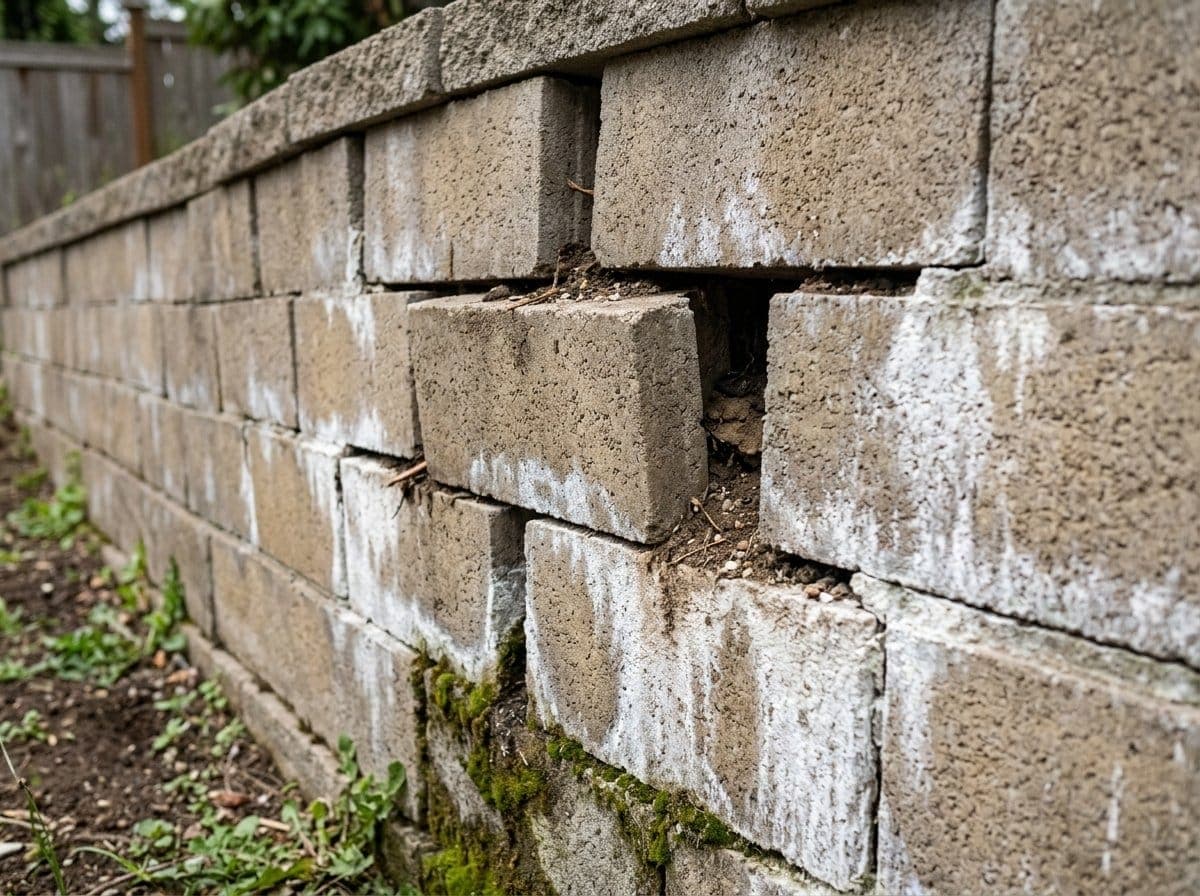
Run your eye down the length of the wall from one end. Individual blocks stepping forward or backward out of the line of their neighbors tell you the courses are no longer locked together. On a wall with caps, shifted or loose cap stones are often the first thing homeowners notice.
Cracks Are Running Through the Wall
Hairline surface cracks in a single block are usually cosmetic. Vertical cracks that run through several courses are structural and mean the wall is being pulled apart by uneven settlement below or pressure behind.
Water Is Seeping Through the Face
Water coming through the wall face instead of out of the drain at the base means the drainage system is not working. So does efflorescence, the chalky white mineral staining left behind as water passes through concrete block and evaporates. Both say the same thing: water is moving through the wall rather than around it.
The Soil Behind the Wall Is Sinking
A dip, a sunken track, or a gap opening between the soil and the back of the top course means material is washing out from behind the wall. That soil is going somewhere, usually through the wall and out the bottom, and the void it leaves takes the wall's support with it.
Why Retaining Walls Fail in the Tri-State Area
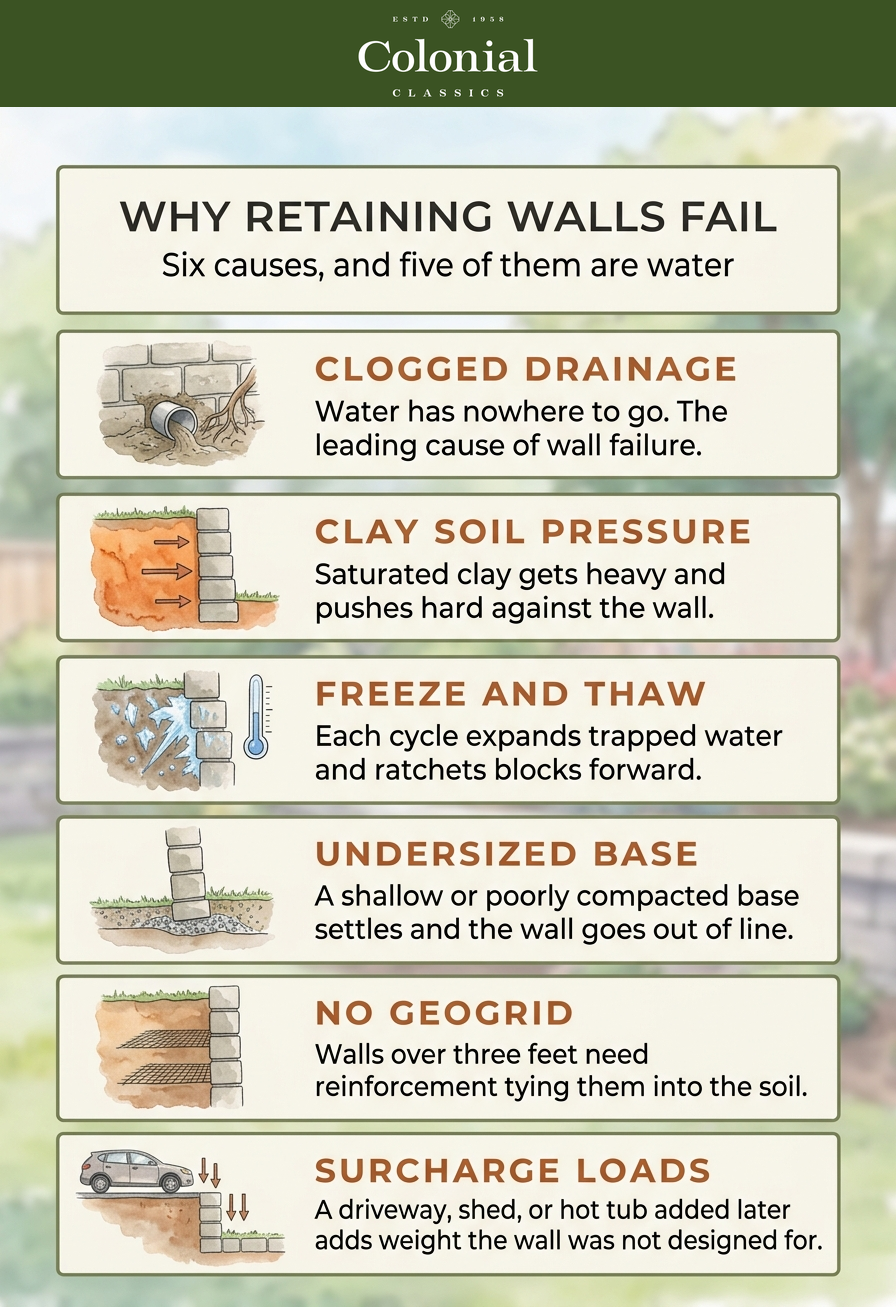
Poor drainage is the leading cause of segmental retaining wall failure. The Concrete Masonry and Hardscapes Association, which publishes the design manual for these walls, treats both surface and subsurface drainage as core design considerations rather than optional extras. Our regional soil and climate make the problem worse than average.
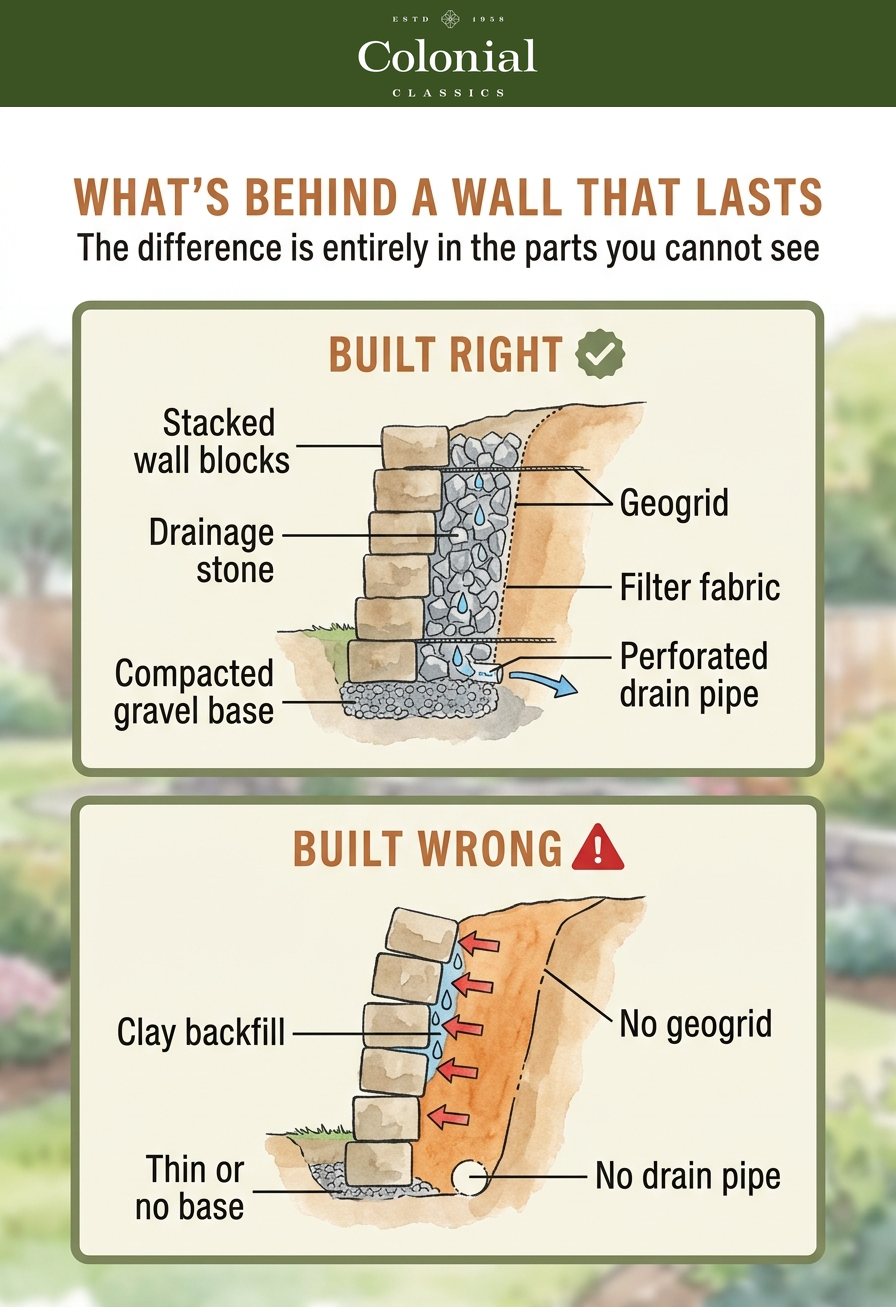
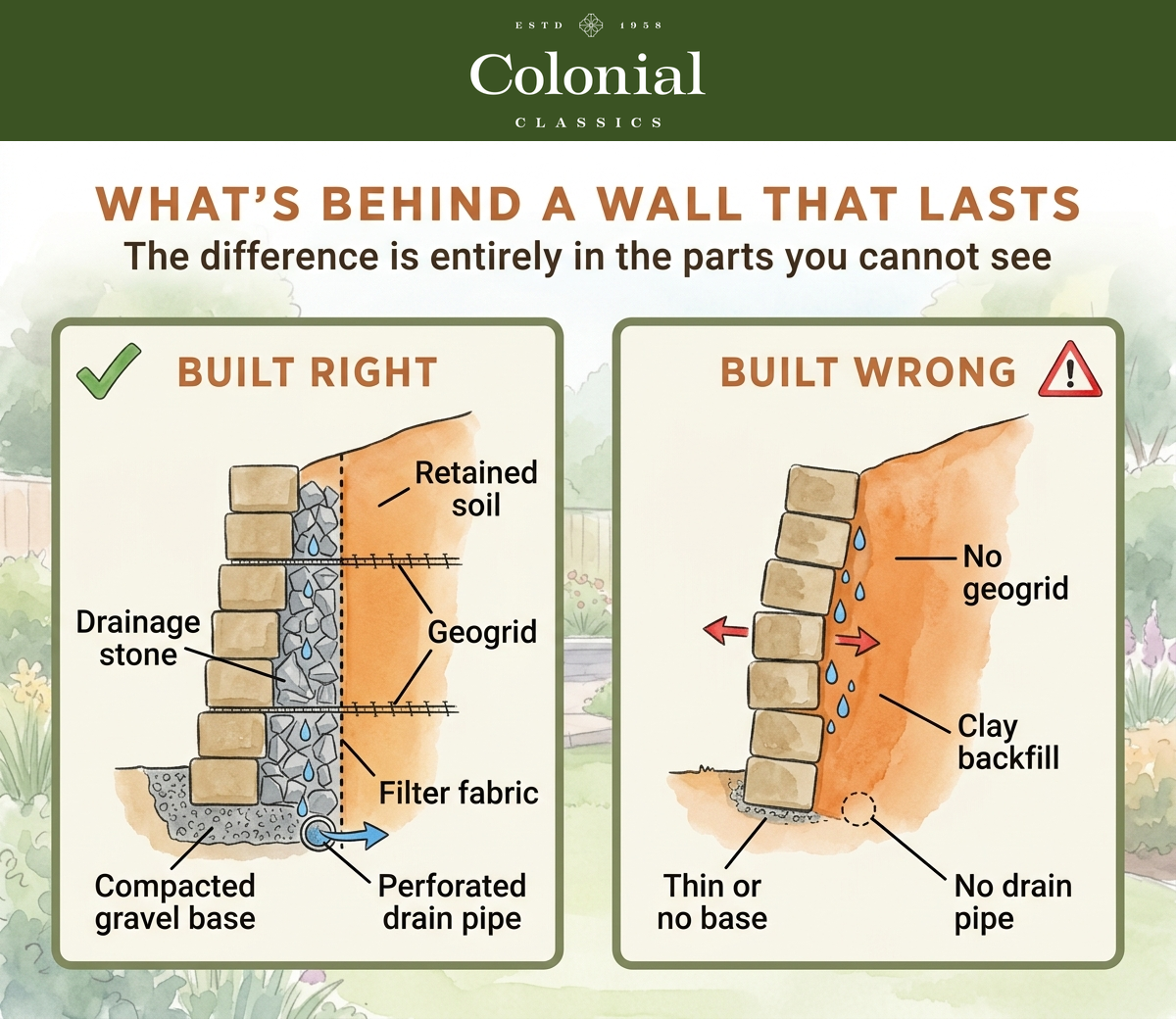
- Drainage that clogged or was never installed: A correctly built wall has clean drainage aggregate, filter fabric, and a perforated pipe behind it that carries water to an outlet. Skip any of those and water has nowhere to go. Even a well-built wall clogs eventually if the outlet gets buried, silted in, or filled with roots.
- Clay soil and hydrostatic pressure: The clay-heavy soils across Southern Indiana, Western Kentucky, and Southeastern Illinois hold water instead of draining it. Saturated clay gets dramatically heavier and pushes with far more force than dry soil. You can look up your property's soil composition on the USDA Web Soil Survey to see what your wall is holding back.
- Freeze and thaw cycles: We sit in USDA Zone 7a, which means winter crosses the freezing line repeatedly rather than staying frozen. Each cycle expands the water trapped behind the wall and ratchets the blocks forward a little more. A wall that survives one winter with poor drainage may not survive five.
- An undersized or poorly compacted base: The gravel base carries the entire wall. If it is too shallow, too narrow, or was not compacted in layers, it settles unevenly and the wall above it goes out of line. This failure shows up as leaning and stepped blocks rather than bulging.
- Missing geogrid reinforcement: Walls over about 3 feet need layers of geogrid extending back into the soil so the wall and the earth behind it work as one mass. Walls built without it rely on the weight of the block alone, which is not enough once the soil saturates.
- Loads added after the wall was built: Putting a driveway, parking pad, shed, or hot tub near the top of a wall adds what engineers call a surcharge load. A wall designed for soil alone will not carry it.
Repair or Rebuild? How to Tell
The base decides it. If the bottom of the wall is still sound and straight, the problem is above it and repairable. If the base has settled or the wall is moving at the bottom course, the foundation failed and no amount of work on the face will hold.
| What you are seeing | Likely cause | Usual fix |
|---|---|---|
| Loose or shifted cap stones | Normal weathering, freeze and thaw | Repair. Re-set and re-adhere the caps |
| Top one or two courses out of line | Minor settlement, frost at the top | Repair. Take down and reset the top courses |
| Hairline cracks in single blocks | Surface weathering | Monitor. Cosmetic in most cases |
| Water seeping through the face | Clogged or missing drainage | Repair. Retrofit drainage before it becomes structural |
| Bulge in the middle of the wall | Missing geogrid, water pressure | Usually rebuild that section |
| Forward lean over 1 inch per foot | Base failure or saturated backfill | Rebuild |
| Movement at the bottom course | Undersized or failed base | Rebuild. The foundation is gone |
| Soil sinking behind the wall | Backfill washing out through the wall | Rebuild, and fix the drainage first |
The honest version: a wall that has moved at the base is not a repair candidate. Contractors who offer to straighten it without addressing the base are selling you two or three years, not a fix. Ask any contractor to explain what they found behind the wall, not just what they plan to do to the face.
What Retaining Wall Repair Costs
Most retaining wall repairs run $250 to $1,250, with a national average near $750, according to Fixr's 2025 retaining wall repair cost data. Structural work runs considerably higher. Here is how the common fixes price out.
| Repair | Typical Cost | Best For |
|---|---|---|
| Crack repair | $150 to $400 | Cracks in an otherwise sound wall |
| Reinforcing an existing wall | $50 to $75 per linear foot | Early movement, base still solid |
| Straightening a leaning wall | $60 to $80 per linear foot | Lean without base failure |
| Anchoring with tiebacks | $60 to $80 per linear foot | Bulging walls that need restraint |
| Retrofitting drainage | $70 to $90 per square foot | Any wall where water is the cause |
| Rebuilding a section | $70 to $125 per linear foot | Failed base or missing geogrid |
| Removing a failed wall | $500 to $1,500 | Full teardown before a rebuild |
Two costs worth budgeting for separately: a professional inspection runs $150 to $300, and if your wall is over 4 feet or supports a structure, a structural engineer runs $100 to $200 per hour. On a tall wall, that engineering is not optional, and it is cheap compared to rebuilding twice.
For a full teardown and replacement, you are back to new construction pricing. See our breakdown of what a new retaining wall costs for pricing by material and height.
Get the drainage retrofit quoted separately, even if you are only doing a partial repair. It is the one line item that changes whether the rest of the work lasts, and it is far cheaper to install while the wall is already open than to come back for it later.
How the Most Common Repairs Actually Work
Retrofitting Drainage
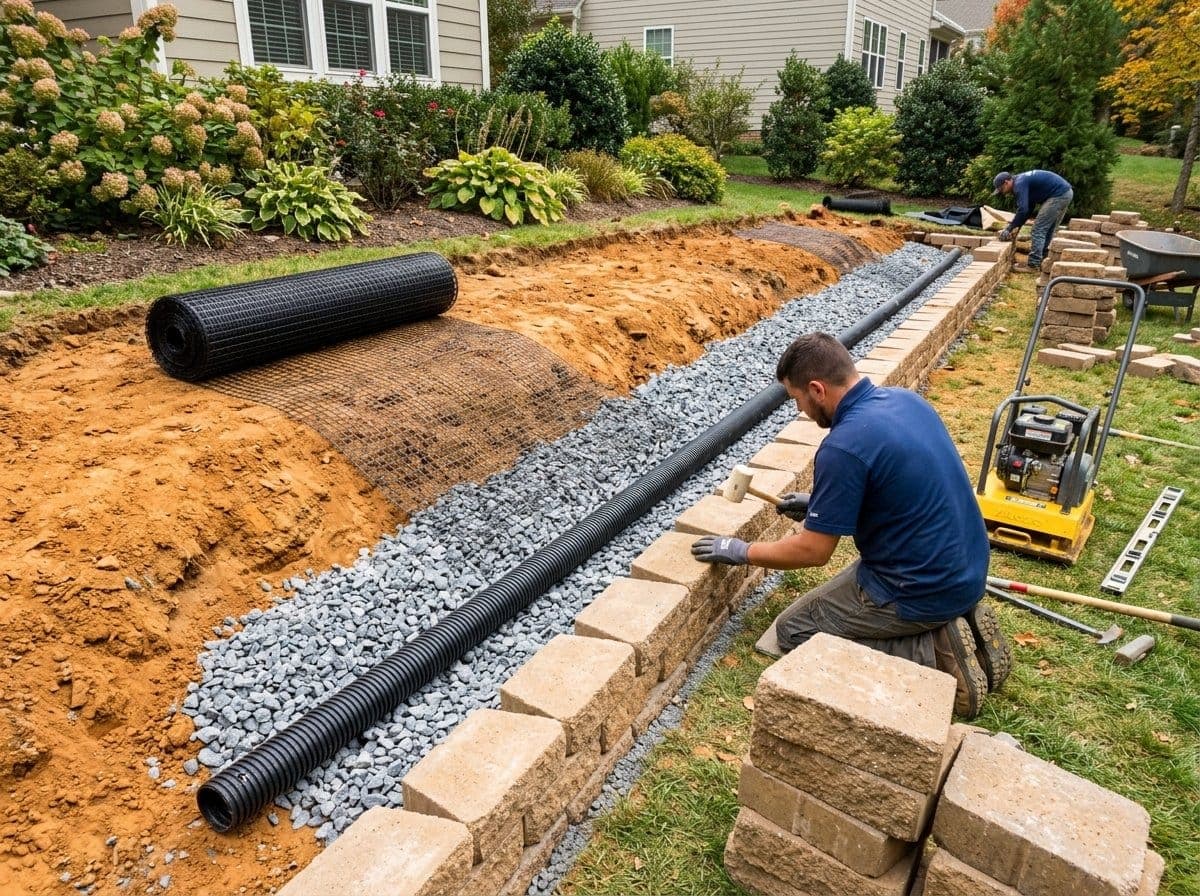
The wall comes apart in the affected section, the old backfill gets excavated, and clean drainage stone, filter fabric, and a perforated pipe go in behind the blocks with a real outlet at the low end. This is the repair that addresses the cause rather than the symptom, which is why it is worth doing even when the wall itself only needs minor work.
Resetting the Top Courses
When the base is sound and only the top has moved, the caps and upper courses come off, the drainage behind that zone is corrected, and the blocks go back with proper interlock and adhesive on the caps. This is the least invasive structural repair and the one with the best cost-to-lifespan ratio.
Rebuilding a Section
A failed section is taken down to solid base material, the base is rebuilt and compacted in lifts, geogrid is added if the height calls for it, and the blocks are relaid. Matching existing block on an older wall can be the hard part, since discontinued colors and textures often mean sourcing a close match or rebuilding a longer run for a consistent look.
Anchoring and Tiebacks
Anchors run from the wall face back into stable soil behind the failure zone and hold the wall in place. This works on walls that are bulging but otherwise intact. It does not work on a wall whose base has failed, because there is nothing solid to anchor.
What You Can Fix Yourself and What You Should Not
Safe to handle yourself: re-adhering loose cap stones with masonry adhesive, clearing silt and roots out of a blocked drain outlet, pulling mulch and soil back from weep holes, and regrading the surface above the wall so runoff sheds away from it instead of soaking in behind it. That last one is genuinely useful. Fixing where the water comes from can slow a developing problem considerably.
Leave to a professional: anything that involves taking the wall apart, any wall over 3 feet, any wall that leans or bulges, and any wall holding back a driveway, a structure, or your home's foundation.
A failing retaining wall is a load, not a decoration. A 4-foot wall can be holding back several tons of saturated soil. Walls fail suddenly and usually during or right after heavy rain. If yours is leaning or bulging, keep vehicles, equipment, and people off the ground above it and away from the base until it has been assessed.
Inspect Your Wall Before Winter
Late summer and fall are the right time to look at this, for two reasons. The soil is at its driest, so excavation and compaction go better and cost less. And getting repairs finished before winter means your wall is not holding saturated, freezing soil through the freeze and thaw cycles that do the most damage.
Walk your wall and check five things: sight down its length for bulges, hold a level against the face to check for forward lean, look for gaps and stepped blocks along the joints, confirm the drain outlets actually run after a rain, and check the ground above and below for sinking or washout.
If your wall came through the summer looking the same as it did in spring, you are in good shape. If any of those five checks turned up something, you have the fall to deal with it on your terms rather than in an emergency in February.
A repaired retaining wall lasts only as long as its drainage. If a contractor's plan for your leaning wall does not include what happens to the water behind it, it is not a repair. It is a delay.
Get an Honest Assessment
The hardest part of a failing retaining wall is not the repair. It is knowing whether you are looking at a weekend of cap stones or a rebuild, and most homeowners cannot tell from the outside because the cause is buried behind the wall.
We build and repair retaining walls across Newburgh, Evansville, and the wider Tri-State area, and we would rather tell you a wall has three more good years than sell you a rebuild it does not need. If water is collecting in more places than just behind the wall, it is worth reading our guide to fixing yard drainage problems too, since walls and drainage almost always turn out to be the same conversation.
Reach out for an assessment and we will tell you what we find behind the wall, not just what we see on the face of it.